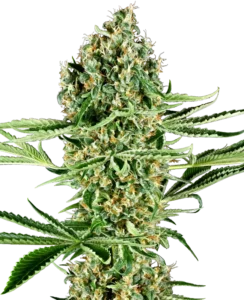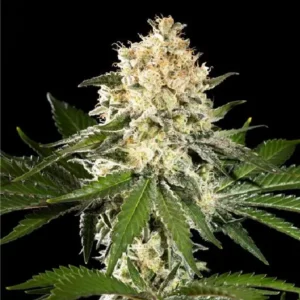


Hyperion F1 is an autoflowering F1 hybrid from Royal Queen Seeds with a genetic background derived from Amnesia, Lemon and Sin Tra Bajo Automatic. It is one of the taller F1 autoflowers in the breeder’s current catalog, combining fast growth, vigorous branching and an 80–85 day total lifecycle from sprouting.
Current Hyperion F1 Auto seeds are officially listed at 60–90 cm tall, with 45–55 days of flowering and an XXL yield classification. Royal Queen Seeds currently describes the THC level as very high rather than publishing a specific percentage.
Recommended Strains

Hyperion F1 Auto

|
THC | 23% - 24% (High) |

|
Lineage | Amnesia x Lemon x Sin Tra Bajo Automatic |

|
Type | Autoflowering |

|
Height | 3.94 ft | 1.2 m |

|
Yield | Low |

|
Yield Indoor | 0.82 - 0.98 oz/ft² | 250 - 300 g/m² |

|
Yield Outdoor | 4.23 - 8.82 oz/plant | 120 - 250 g/plant |

|
Life Cycle | 9 - 10 weeks |

|
Phenotype | 40% Indica / 40% Sativa / 20% Ruderalis |

|
Effects | Giggly, Uplifted, Relaxed, Sleepy |

|
Flavors | Earthy, Herbal, Pepper, Pine |

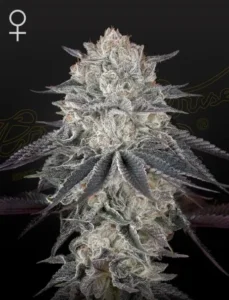
Epsilon F1 Auto
|
|
THC | 21% - 22% (Medium) |
|
|
Lineage | Blue Dream x Blueberry x Amnesia Lemon Haze x Black Domina |
|
|
Type | Autoflowering |
|
|
Height | 2.3 ft | 0.7 m |
|
|
Yield | Low |
|
|
Yield Indoor | 1.07 - 1.23 oz/ft² | 325 - 375 g/m² |
|
|
Yield Outdoor | 2.12 - 3.88 oz/plant | 60 - 110 g/plant |
|
|
Life Cycle | 8 - 10 weeks |
|
|
Phenotype | 40% Indica / 40% Sativa / 20% Ruderalis |
|
|
Effects | Calming, Relaxed |
|
|
Flavors | Blueberry, Citrus, Herbal, Lavender, Lime |
| Hyperion F1 Grow Info | Current specification |
|---|---|
| Breeder | Royal Queen Seeds |
| Type | F1 Hybrid auto |
| Genetic background | Amnesia × Lemon × Sin Tra Bajo Automatic |
| THC | Very high |
| Flowering time | 45–55 days |
| Total lifecycle | 80–85 days after sprouting |
| Height | 60–90 cm |
| Yield | XXL |
| Climate | Short summers |
| Major terpenes | Farnesene, Myrcene, Ocimene, Terpinolene |
| Flavor | Earthy, Herbal, Pepper, Pine |
| Reported effects | Laughter, Motivating, Physically Relaxing, Sleepy |
Hyperion F1 Genetics
Hyperion F1 is a true autoflowering F1 hybrid developed from highly pure inbred lines with genetic backgrounds descending from Amnesia, Lemon and Sin Tra Bajo Automatic.
The F1 breeding approach is designed to produce a more uniform population with strong vigor and predictable growth characteristics. Royal Queen Seeds describes Hyperion as one of the tallest and fastest-growing autoflowering F1 hybrids in its catalog, with vigorous side branching and numerous flowering sites.
Growers comparing Hyperion with other genetics from the same breeder can explore the wider Royal Queen Seeds collection.
Is Hyperion F1 Indica or Sativa?
Royal Queen Seeds does not currently publish a numerical Indica, Sativa and Ruderalis ratio for Hyperion F1.
The cultivar is officially classified as an F1 Hybrid auto with genetic background from Amnesia, Lemon and Sin Tra Bajo Automatic. For that reason, an exact ratio such as 40% Indica, 40% Sativa and 20% Ruderalis should not be treated as current breeder-verified data.
RQS instead emphasizes the hybrid’s growth characteristics and effects, describing a combination of motivating and laughter-inducing mental effects with physical relaxation and sleepiness.
How Much THC Does Hyperion F1 Have?
Royal Queen Seeds currently classifies Hyperion F1 as having very high THC, but its present technical data sheet does not provide an exact THC percentage.
Older or third-party listings may show figures such as 23–24%, but those numbers should not be presented as current verified breeder data without an additional analytical source for this exact seed line.
The important distinction is that Hyperion F1 is currently positioned as a high-potency F1 hybrid rather than a moderate-THC autoflower. Individual harvested plants can still vary according to phenotype, cultivation conditions, maturity and post-harvest handling.
Hyperion F1 Flavor and Terpenes
Hyperion F1 has an earthy, herbal and pine-driven sensory profile with a noticeable peppery component. These flavors differ substantially from older descriptions that characterize the cultivar as citrus-forward.
Royal Queen Seeds currently identifies farnesene, myrcene, ocimene and terpinolene as its major terpenes. These compounds form part of the breeder-documented aromatic profile, but they should not be used to make guaranteed medical or therapeutic claims.
The overall character is fresh and resinous, combining pine and herbs with earthy depth and spice as the flowers mature.
How Long Does Hyperion F1 Take to Grow?
Hyperion F1 has an official 80–85 day total lifecycle from sprouting to harvest.
Within that complete cycle, Royal Queen Seeds lists approximately 45–55 days of flowering. These two figures should not be confused. Flowering is one stage within the full autoflower lifecycle rather than an additional 45–55 days added after an 80-day vegetative period.
Hyperion begins flowering according to age and development. Growers do not need to trigger bloom by changing the photoperiod, and individual plants can mature slightly faster or slower than the published range.
Does Hyperion F1 Need a 12/12 Light Cycle?
No. Hyperion F1 is an autoflowering F1 hybrid and does not require a 12/12 light schedule to begin flowering.
Its flowering transition occurs automatically according to age and development. Royal Queen Seeds’ documented indoor grow used continuous 24-hour lighting during early growth and later moved to an 18/6 schedule while the plants were flowering.
That example does not mean every grower must copy those exact hours, but it clearly demonstrates that a photoperiod reduction to 12/12 is unnecessary for Hyperion F1.

Hyperion F1 Height and Plant Structure
Royal Queen Seeds currently lists Hyperion F1 at 60–90 cm, making it one of the taller cultivars within its autoflowering F1 range.
The plant develops rapidly and produces substantial side branching with numerous flowering sites. This gives Hyperion a larger, more open structure than many compact autoflowers despite its relatively short total lifecycle.
Individual variation is still possible. In a breeder-hosted indoor grow report, three plants finished at approximately 78, 90 and 110 cm. The tallest specimen exceeded the official range, illustrating why growers should leave some additional vertical clearance rather than designing a space around exactly 90 cm.
Growing Hyperion F1 Indoors
Hyperion F1 can develop a surprisingly substantial canopy for an autoflower. Indoor growers should therefore plan around both its height and its strong lateral branching.
Royal Queen Seeds classifies its yield potential as XXL, but does not currently provide an official grams-per-square-meter figure. Avoid using older 250–300 g/m² values as though they were the current breeder specification.
Because the plant progresses according to age, stable early development is important. Chronic overwatering, root problems or aggressive high-stress training can consume valuable development time that cannot simply be recovered by extending a vegetative phase.
The objective indoors should be steady growth, adequate root space, even light access and enough room for the branches to expand as flowering advances.
Growing Hyperion F1 Outdoors
Hyperion F1 is also suitable for outdoor cultivation and is specifically listed for climates with short summers.
Its automatic flowering behavior means bloom is not dependent on shortening autumn days, which allows the complete 80–85 day cycle to be positioned within a favorable weather window.
The official height specification remains 60–90 cm, although individual plants can exceed that range. Outdoor size and production still depend on sunlight, root space, weather and early plant health.
Royal Queen Seeds classifies the overall yield as XXL rather than publishing a separate current grams-per-plant figure, so outdoor production should not be represented with an unsupported universal number.
Hyperion F1 Yield
The current official Hyperion F1 specification is simply XXL yield.
Royal Queen Seeds does not currently publish a universal indoor g/m² or outdoor g/plant figure for this cultivar. For that reason, older numerical values should not replace the current breeder classification.
A documented breeder grow provides useful real-world context: three indoor plants produced 168 g of dry flowers in total, averaging 56 g per plant. That result reflects one specific cultivation setup rather than the genetic yield specification.
Use grow diary results to understand variability and realistic plant behavior, not to promise a particular harvest weight.
How to Germinate Hyperion F1 Seeds
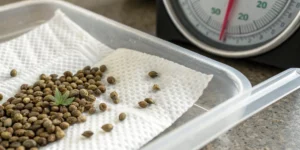
Hyperion F1 does not need a unique germination technique. The priority is providing consistent moisture, suitable warmth and enough oxygen while avoiding prolonged saturation.
Once a taproot appears, transfer the seed carefully into an appropriate growing medium and avoid unnecessary root disturbance. Early watering should match the small developing root system rather than the needs of a mature autoflower.
Because the total lifecycle is relatively short, avoiding severe stress during establishment helps the plant use more of its available development time for healthy growth.
For more detail, see the cannabis seed germination temperature and humidity guide.
Early Growth and Automatic Flowering
Hyperion F1 develops quickly from the beginning, establishing branches early and increasing substantially in height before and during the flowering transition.
Unlike a photoperiod cultivar, it does not have a vegetative stage that the grower can extend indefinitely. Early growth moves naturally into pre-flower as the plant matures.
This means a rigid schedule that waits until week seven and then changes the lights to 12/12 does not reflect how Hyperion F1 actually develops. The plant begins flowering automatically while continuing to add height and branch structure.
Use the breeder’s 80–85 day total lifecycle as the main calendar reference and assess the actual development of the individual plant rather than forcing it into photoperiod-style stages.
Documented Hyperion F1 Grow Diary
Royal Queen Seeds has published a detailed grow report based on three Hyperion F1 plants cultivated indoors.
All three completed the cycle in 78 days from sprouting, slightly faster than the official 80–85 day range. The tallest plant reached 110 cm, while the other two finished around 90 cm and 78 cm.
Together, the three plants produced 168 g dry, averaging 56 g each. One plant developed a CalMag deficiency during flowering, while the others did not show the same problem.
These results are valuable because they show real-world variability. They should not be converted into universal height, nutrient or yield specifications for every Hyperion F1 seed.
Training Hyperion F1
Hyperion F1 develops vigorous lateral growth, so gentle canopy management can be useful where branches begin competing heavily for the same space.
Low-stress branch positioning can spread growth outward and improve access to light without imposing a lengthy recovery period. This approach suits a fast autoflower better than treating topping or other high-stress techniques as mandatory.
In the breeder-hosted grow diary, light defoliation during early flowering was used to improve airflow through denser lower growth.
Any defoliation should remain selective. The goal is to improve canopy access and circulation rather than repeatedly removing healthy foliage from a plant with a limited lifecycle.

Feeding Hyperion F1
Hyperion F1 does not require one universal strain-specific nutrient formula.
Feeding should be based on the growing medium, fertilizer system, water quality, root development, plant size and visible response. There is no need to prescribe a fixed nitrogen-heavy phase followed automatically by large increases in phosphorus and potassium.
One plant in the official grow diary developed a CalMag deficiency, but that individual observation does not establish a universal Hyperion F1 calcium or magnesium requirement.
Treat actual plant symptoms as evidence. Avoid adding supplements preemptively simply because a different grower encountered a deficiency under different water, substrate and lighting conditions.
Watering Hyperion F1
Hyperion F1’s water use changes substantially as its root system and canopy develop.
Young plants require relatively small amounts, while the vigorous branching and rapid growth later in the cycle can increase demand considerably. Avoid watering according to a fixed number of days without checking the root zone.
In containers, substrate moisture, pot weight and plant size provide more useful information than a rigid calendar. Good drainage also matters because a saturated root zone can restrict oxygen and slow early development.
The autoflower watering guide explains how irrigation needs change as automatic plants progress through their lifecycle.
Airflow and Canopy Management
Hyperion F1 produces strong side branching and can develop dense lower growth as flowering progresses.
Even airflow through the canopy can help prevent humid air from remaining trapped around leaves and developing flowers. The objective is steady circulation rather than directing excessive wind at individual branches.
The breeder-hosted grow report used light defoliation during early flowering to open the lower canopy. That provides a practical example of responding to plant structure rather than following a mandatory defoliation schedule.
For more detail on flower-level moisture and stagnant microclimates, see the guide to airflow and microbial risk in cannabis growing.
Common Hyperion F1 Growing Problems
One major avoidable problem is treating Hyperion F1 like a photoperiod cultivar. Switching to 12/12 is unnecessary and should not be used as the trigger for flowering.
Early root stress, chronic overwatering and aggressive training can also limit development because the plant continues progressing according to age.
Nutrient problems should be diagnosed individually. The CalMag deficiency reported in one documented plant does not mean every Hyperion F1 needs CalMag supplements.
Finally, plan extra vertical room. Although the official specification is 60–90 cm, the breeder’s own grow diary documented one plant reaching 110 cm.
When to Harvest Hyperion F1
Royal Queen Seeds currently lists Hyperion F1 for harvest approximately 80–85 days after sprouting.
Its flowering component lasts around 45–55 days, but the full lifecycle is the more useful harvest-planning figure for an autoflower.
Individual plants can mature slightly outside the official range. A breeder-hosted grow finished at 78 days, showing that some plants may be ready earlier under particular conditions.
Use the expected timeline together with direct observation of flower maturity rather than harvesting automatically on one predetermined day or relying on one fixed percentage of amber trichomes.
Drying Hyperion F1 After Harvest
Drying begins after the plant has been harvested and is not part of Hyperion F1’s 80–85 day lifecycle.
The objective is controlled moisture removal rather than drying the flowers as quickly as possible. Excessive heat can accelerate drying unevenly and reduce aromatic quality, while flowers that remain excessively wet for too long can create microbial concerns.
Dense flowers may dry differently internally than they feel on the surface, so post-harvest conditions should be monitored consistently. Curing should only begin once the flowers have completed an appropriate drying stage rather than according to a fixed calendar date.
Hyperion F1 Effects
Royal Queen Seeds currently describes Hyperion F1 with reported effects including laughter, motivation, physical relaxation and sleepiness.
The combination reflects the breeder’s description of an initially activating mental character alongside stronger physical relaxation.
These effects remain subjective rather than guaranteed outcomes. RQS classifies THC as very high, but dose, tolerance and the chemical composition of an individual harvest can substantially influence the experience.
Hyperion F1 FAQs
How long does Hyperion F1 take from sprout to harvest?
Royal Queen Seeds currently lists Hyperion F1 at 80–85 days from sprouting to harvest, with roughly 45–55 days of flowering within that total cycle. A breeder-hosted grow diary finished three plants in 78 days, showing that individual plants can mature slightly earlier than the published range under specific conditions.
Does Hyperion F1 need a 12/12 light cycle?
No. Hyperion F1 is an autoflowering F1 hybrid, so it begins flowering according to age and development rather than a 12/12 light-cycle change. The breeder’s documented grow kept plants under 24/0 during early growth and later 18/6, confirming that shortening the photoperiod is not required to trigger flowering.
How tall does Hyperion F1 grow?
Royal Queen Seeds currently lists Hyperion F1 at 60–90 cm tall. However, a breeder-hosted indoor grow report recorded three plants finishing at approximately 78, 90 and 110 cm, with the tallest exceeding the official range. Treat 60–90 cm as the current specification while allowing extra vertical space for individual variation.
How much THC does Hyperion F1 have?
Royal Queen Seeds currently describes Hyperion F1 as having very high THC but does not publish an exact percentage in its current data sheet. For that reason, figures such as 23–24% should not be presented as verified current breeder data unless a separate analytical source supports them for this exact seed line.
How much does Hyperion F1 yield?
Royal Queen Seeds currently classifies Hyperion F1 yield as XXL rather than publishing a grams-per-square-meter or grams-per-plant specification. A documented breeder grow produced 168 g dry from three indoor plants, averaging 56 g each, but that diary is one cultivation example and should not replace the official XXL yield classification.
Is Hyperion F1 Indica or Sativa?
Royal Queen Seeds does not currently publish a numerical Indica/Sativa/Ruderalis ratio for Hyperion F1. It classifies the cultivar as an autoflowering F1 hybrid with genetic background from Amnesia, Lemon and Sin Tra Bajo Automatic. Describing it with an exact 40/40/20 ratio would therefore go beyond the breeder’s current specification.