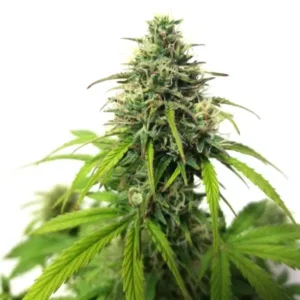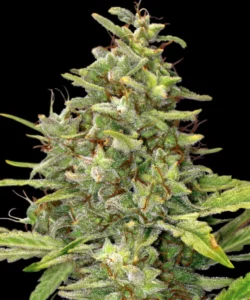


Wedding Cake Auto is an indica-dominant autoflower built on Wedding Cake x BF Super Auto #1 genetics: dessert-sweet flavor, a thick coat of resin, and a short seed-to-harvest cycle. It is one of the easier high-potency autos to run start to finish, which is why it suits both a first grow and an experienced grower who wants a fast turnaround.
Wedding Cake is a benchmark dessert strain, and the autoflowering version makes it easy to keep in rotation. Our Wedding Cake Auto delivers that sweet, slightly earthy flavour and a heavy, soothing effect on a fast, resinous plant, a great pick for anyone who loves rich, cakey genetics.
Recommended Strains
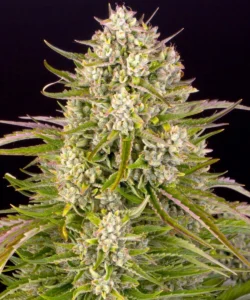
Wedding Cake Auto

|
THC | 26% - 27% (High) |

|
Lineage | Wedding Cake x BF Super Auto #1 |

|
Type | Autoflowering |

|
Height | 3.61 ft | 1.1 m |

|
Yield Outdoor | 6.35 - 8.82 oz/plant | 180 - 250 g/plant |

|
Life Cycle | 9 - 11 weeks |

|
Phenotype | 65% Indica / 35% Sativa |

|
Effects | Calming, Euphoric, Relaxed |

|
Flavors | Fruity, Berry |
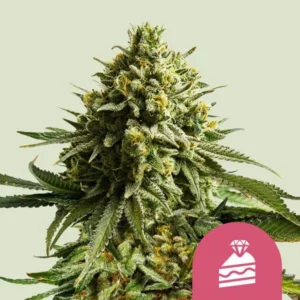
Wedding Cake
|
|
THC | 19% - 20% (Medium) |
|
|
Lineage | Girl Scout Cookies x Cherry Pie |
|
|
Type | Feminized |
|
|
Height | 3.94 ft | 1.2 m |

|
Yield | High |

|
Yield Indoor | 1.47 - 1.64 oz/ft² | 450 - 500 g/m² |
|
|
Yield Outdoor | 19.4 - 21.16 oz/plant | 550 - 600 g/plant |
|
|
Flowering Time | 8 - 10 weeks |
|
|
Phenotype | 80% Indica / 20% Sativa |
|
|
Effects | Giggly, Relaxed |
|
|
Flavors | Cookie, Earthy, Fruity |
Wedding Cake is a benchmark dessert strain, and the photoperiod version is well worth growing. Nirvana’s Wedding Cake brings that sweet, tangy, slightly earthy flavour and a heavy, soothing effect to a resinous plant, a great pick for anyone who enjoys rich, cakey genetics with a serious trichome coat.
One thing to be straight about before you plant. Growlantis carries more than one Wedding Cake Auto seed line, and while they share the same named parental cross and a similar fast lifecycle, they are not identical plants. Potency, height, yield, and the exact indica/sativa split differ between lines. For that reason this guide uses ranges rather than presenting one product’s numbers as universal, and it tells you where to check the exact figure for your pack.
Wedding Cake Auto Grow Info
| Trait | Wedding Cake Auto (across current Growlantis lines) |
| Genetics | Wedding Cake x BF Super Auto #1 |
| Seed type | Autoflowering |
| Genetic profile | Indica dominant, roughly 65-75% indica depending on the line |
| THC | Approximately 19-26% |
| Full life cycle | About 70-75 days from germination (10-11 weeks) |
| Flowering time | 50-55 days where the seed line publishes it |
| Indoor height | About 60-100 cm |
| Indoor yield | About 400-550 g/m² |
| Outdoor height | About 70-120 cm |
| Outdoor yield | About 70-250 g per plant |
| Effects | Euphoric and relaxing, leaning uplifting or calming by line |
| Flavor | Sweet fruit, berry, candy, citrus, pine, and cake-like notes |
These figures consolidate the Wedding Cake Auto lines currently sold at Growlantis. When you need an exact THC percentage, genetic ratio, height, or yield, check the specification on your own seed pack. Growlantis currently stocks a higher-THC Wedding Cake Auto line and a second, more compact line.
What Makes Wedding Cake Auto Worth Growing
The pitch is simple: high potency on a short, low-effort timeline. You get buds in the 19-26% THC range with a sweet berry and cake flavor, on a plant that usually stays under a meter tall and finishes without any light-cycle juggling. That mix of strength, speed, and small size is rare.
The high leans indica. Expect a short euphoric, creative lift that settles into heavy body relaxation, so it fits the evening better than the morning. One line reads a little more uplifting, another a little more calming, which tracks with the potency and ratio differences between them. The BF Super Auto #1 parent also adds real resistance to pests and mold, a genuine advantage on dense buds.
If you were after the photoperiod original, our Wedding Cake grow guide covers that one. Everything here is about the autoflower.
Is Wedding Cake Auto Indica or Sativa?
Wedding Cake Auto is indica dominant, but the exact ratio depends on the seed line. Current versions run from roughly 65% to 75% indica. One line lists 35% sativa, while another splits the rest into 20% sativa and 5% ruderalis.
That indica influence shows up as a compact, bushy structure with dense flower. Calling it “indica dominant” is more honest than pinning one universal percentage on every Wedding Cake Auto.
Flowering Time vs Full Grow Time
This is the single most misread spec on an autoflower, so it is worth getting right.
- Flowering time: 50-55 days. This is the bloom stage only, the window where buds form and ripen. One current Wedding Cake Auto line publishes this number.
- Full grow time (seed to harvest): 70-75 days, about 10-11 weeks from germination. This covers the whole cycle: establishment, veg, the flowering stretch, bud fill, and final maturation.
The flowering stage happens inside the 70-75 day lifecycle, not after a separate long veg period. If you treat 70-75 days as flowering and add veg on top, you will badly overestimate your total grow time. For planning, use the full 70-75 day figure, and use 50-55 days only as a flowering reference when your exact seed line specifies it.
Does Wedding Cake Auto Need a 12/12 Light Cycle?
No. Wedding Cake Auto flowers on age, not day length, so it does not need a 12/12 photoperiod to start blooming.
Indoors you can run a longer schedule such as 18/6 or 20/4 from seedling all the way to harvest. Dropping to 12/12 just because flowering started is pointless and only cuts daily light, which costs you yield. What actually matters is light intensity, a stable environment, and enough dark time if your strategy includes a daily rest period.

Wedding Cake Auto Grow Timeline, Week by Week
Because it flowers on age, the schedule is predictable. Treat this as a development pattern, not a fixed biological deadline, since phenotype and environment shift the dates.
- Weeks 1-2: germination and seedling. The taproot and first true leaves establish. Water demand is low even in a big final pot. Aim for steady, uninterrupted establishment, not aggressive feeding.
- Weeks 3-4: vegetative growth and preflower. The plant stacks nodes fast and may show its first pistils. This is the window for gentle low stress training while stems are still soft.
- Weeks 5-6: stretch slows, buds set. Vertical growth eases off and flower sites fill in. Water demand rises, so follow the root zone, not the calendar.
- Weeks 7-8: main flower development. Energy goes into bud mass and resin, and the sweet berry and cake aromas get loud. Keep conditions stable rather than intervening hard.
- Weeks 9-11: maturation and harvest. Most plants reach the 70-75 day window here. Judge each plant by its trichomes, not by the day count alone.
A real example for context: one documented indoor grow of a current line started compact, then stretched to roughly 32 cm by Week 3, 55 cm in Week 4, around 80 cm in Week 5, and about 95 cm at finish. It took close to 12 weeks to fully ripen and gave around 75 g from the single plant. That is longer than the breeder estimate, and nothing was wrong. It is a good reminder that the published ranges are planning tools, not guarantees.
Choosing Your Setup: Space, Light and Pots
You do not need much room. A 2×2 or 2×4 ft tent handles one to four plants, and since the plant tops out near a meter you only need a little headroom for the light and the early flowering stretch.
Light drives most of your yield. A full-spectrum LED at 25-35 watts per square foot gives dense buds without scorching the tops, starting 12-18 inches above the canopy and adjusting from there. Add an inline exhaust fan and a carbon filter, because the aroma turns strong by week five.
Pot choice matters more than people expect with autos. Plant straight into the final 3-5 gallon fabric pot and skip transplanting, which this strain dislikes. Fabric pots air-prune the roots and keep the root ball healthy across the short cycle.
Germinating and Raising Seedlings
The paper towel method is the easy, reliable start. Soak the seeds in room-temperature water for 12-24 hours, then set them between two damp paper towels on a covered plate, kept dark at 70-90°F (21-32°C). A taproot usually shows in two to three days.
When the root reaches about 1-2 cm, plant it root-down a knuckle deep in the final pot and keep the surface moist until the seedling breaks ground. Go easy on water and skip nutrients at this stage. New to this part? Our beginner growing guides walk through it step by step.
The Vegetative Stage and Low Stress Training
Veg is short on an auto, usually three to four weeks, so this is the time to build structure. Keep nitrogen available for leafy growth, hold temperatures in the low to mid 70s°F, and start any training while the branches are still soft.
Low stress training is the technique that pays off here. Tying the main branches outward opens the canopy and gets light to the lower bud sites, which adds real weight by harvest. Be cautious with topping and other high-stress cuts. The biological clock keeps running regardless of recovery, so a hard slowdown in Week 2 or 3 cannot be made up by extending veg. For most growers, steady uninterrupted growth plus good branch spacing beats stacking several training methods on a ten-week plant.
Feeding and Watering Wedding Cake Auto
Keep feeding light. Autos run a smaller root system than photoperiod plants, so start nutrients at about half the label strength and build up only if the plant asks. Use a nitrogen-forward base through veg, then move to a bloom formula higher in phosphorus and potassium once flowering is established. This strain burns more easily than it starves, so clawing, crispy tips mean back off, not push harder. There is no need to treat Cal-Mag, bloom boosters, or a long flush as mandatory.
Water by root-zone moisture, not a fixed timetable. Early on a small plant occupies only a fraction of a large pot, and soaking the whole medium leaves the young roots short on oxygen. As the plant grows, irrigation demand climbs quickly. Increase it gradually with actual demand, judged by pot weight and how fast the top layer dries.

Flowering and Knowing When to Harvest
Flowering begins on its own around week four. Early on you will see a short stretch and the first white pistils. Through the middle weeks the buds fatten and the smell peaks, which is when airflow and your carbon filter earn their keep. Dense, resin-heavy colas trap moisture, so keep air moving above and below the canopy and do not pack plants too close.
As the 70-75 day window approaches, let the plant decide, not the calendar. Check trichomes under a loupe and harvest when most read milky with a few turning amber. A plant still pushing fresh white pistils is not done just because Day 70 arrived. Drying and curing come after the cut and are not part of the seed-to-harvest count: hang in the dark at about 60°F (15-16°C) and 55-60% humidity for 7-14 days, then cure in jars, burping daily for the first couple of weeks.
Growing Indoors vs Outdoors
Indoors is the easiest place to hit the timeline cleanly. Run 18/6 the whole way through. You can push 20/4, but 18/6 gives the plant a rest period and saves power without costing much yield. Leave vertical room for the plant plus safe light clearance, and lateral room for airflow.
Outdoors, the autoflower trait becomes a scheduling advantage. You are not waiting on shortening days, so you can plant after the last frost and harvest in ten to eleven weeks, and in a long warm season fit two or three successive runs. Give each plant 6-8 hours of direct sun, well-draining soil, and shelter from hard wind. Because recovery time is limited, persistent rain or a rough early spell hits an auto harder than a photoperiod plant.
How Tall and How Much? Height and Yield
Height is a selling point for small spaces. Indoors the plant generally finishes around 60-100 cm, and outdoors roughly 70-120 cm, depending on the line. These are typical breeder ranges, not hard limits: the documented grow above hit 95 cm from a line with a shorter published range, so leave extra vertical clearance rather than designing around the minimum.
On yield, good indoor light returns about 400-550 g/m², while outdoor plants run a much wider 70-250 g each across the different lines. Pot size, light intensity, root health, and training move the number, and opening the canopy with low stress training is the single biggest lever most growers have.
Best US Climates for Wedding Cake Auto
This strain does best in temperate to warm, dry conditions, which covers a lot of the country. Growers in California, Colorado, and the drier Southwest get long sun hours and low humidity, close to ideal for finishing dense buds without mold worry.
The short cycle also helps growers in the Pacific Northwest and the northern states, where summers are brief. A plant that finishes in ten to eleven weeks can go in the ground in late spring and come out before the fall rains reach Portland or Seattle. In the humid Southeast, a greenhouse or covered spot plus extra airflow goes a long way. For other varieties, browse our full how-to-grow library.
Common Problems When Growing Wedding Cake Auto
Most Wedding Cake Auto grows go sideways for the same handful of reasons. Knowing them in advance is most of the fix.
Confusing flowering time with full grow time
The full cycle is about 70-75 days from germination. One line separately lists 50-55 days of flowering. Treating 70-75 days as flowering after a long veg phase will massively overestimate your total grow time.
Using specs from the wrong seed line
Growlantis carries more than one line. THC spans roughly 19-26%, and height and yield differ too. Check the exact product when precise figures matter instead of assuming one universal spec.
Overtraining during early growth
The biological clock does not pause for recovery. Aggressive topping or repeated high-stress work in the first weeks cuts into the healthy growth you get before flower. Gentle LST and branch positioning are the safer way to open the canopy.
Overwatering a small auto
A young plant has a tiny root system even in a big final pot. Saturating the whole medium too often starves the roots of oxygen during the most time-sensitive part of the grow. Water to demand, not on a schedule.
Harvesting by calendar day
Day 70-75 is a reference, not a cutting date. One documented plant needed about 12 weeks. Read the trichomes and flower maturity before you cut.
Wedding Cake Auto vs Photoperiod Wedding Cake
These two should never share a timeline. Wedding Cake Auto flowers on age and finishes the whole cycle in about 70-75 days, with a long autoflower light schedule the entire way. Photoperiod Wedding Cake stays in veg until you flip the lights to 12/12, so its seed-to-harvest time depends on how long you choose to veg. For that version, see the full Wedding Cake grow guide.
Making the Most of Your Harvest
Do not bin the trim. The sugar leaves around the buds hold enough trichomes for bubble hash, dry sift, or infused butter and oil, so even a small plant leaves something worth saving. The stems, roots, and fan leaves compost well and feed your next grow, which closes the loop nicely on a short-cycle plant.
Is Wedding Cake Auto Right for You?
If you want a strong, sweet indica that finishes fast and forgives a few mistakes, yes. The potency and berry-cake flavor hold their own against far fussier photoperiod strains, and the autoflower timing removes most of the ways a grow goes wrong. Just pick the seed line that matches your space and your potency target, and check its exact specs before you buy. Growers who like this profile often run Wedding Cake Gelato next for a similar dessert line with a different lean.

Frequently Asked Questions
How long does Wedding Cake Auto take from seed to harvest?
Wedding Cake Auto completes its full lifecycle in roughly 70 to 75 days from germination, about 10 to 11 weeks. Individual plants can run longer depending on phenotype and environment. This figure covers the whole seed-to-harvest cycle, not the flowering stage on its own, so plan around it.
What is the flowering time of Wedding Cake Auto?
One current seed line lists around 50 to 55 days of flowering, while both versions finish their full cycle in roughly 70 to 75 days from germination. Flowering begins automatically with age, so you should not add a separate veg period on top when you calculate total grow time.
Does Wedding Cake Auto need a 12/12 light cycle?
No. Wedding Cake Auto flowers automatically with age, not day length, so it never needs a 12/12 schedule. Indoors you can hold a longer photoperiod like 18/6 or 20/4 from seedling to harvest. Reducing the light once flowering starts is unnecessary and only lowers your daily light.
How much does Wedding Cake Auto yield?
Current lines are listed at roughly 400 to 550 g/m² indoors and around 70 to 250 g per plant outdoors. The wide outdoor spread reflects real differences between seed lines. Light, root space, environment, early development, feeding, and phenotype all move the final weight significantly.
How tall does Wedding Cake Auto grow?
It stays compact, usually 60 to 100 cm indoors and about 70 to 120 cm outdoors depending on the line. Individual plants can beat their range; one documented indoor grow reached 95 cm. Light, roots, environment, phenotype, and training all affect final height, so leave extra clearance.
Is Wedding Cake Auto indica or sativa?
Wedding Cake Auto is indica dominant, though the exact ratio varies by line, from about 65% to 75% indica. One version lists 35% sativa, another splits it into 20% sativa and 5% ruderalis. The shared traits are automatic flowering and a short, bushy, indica-leaning structure.
Can you clone Wedding Cake Auto?
Not usefully. A clone keeps the mother’s age, so a cutting from an autoflower tries to flower straight away as a tiny plant and yields almost nothing. If you want more plants, germinate more seeds. If cloning matters to you, grow the photoperiod Wedding Cake instead.