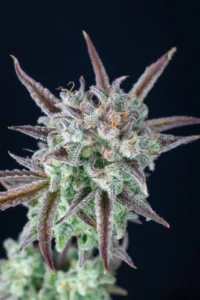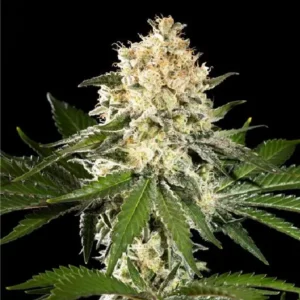


Blue Cheese is an indica-dominant feminized photoperiod strain from Royal Queen Seeds created from Original Cheese × Oregon Blueberry Blend genetics. It combines the savory, musky character of Cheese with sweeter blueberry-derived notes, producing dense flowers with candy, cheese, and fruity flavors.
Blue Cheese is classified as 60% Indica and 40% Sativa, with THC levels around 19% and medium CBD. Current breeder materials place flowering at approximately 55–65 days, or roughly eight to nine weeks, with indoor yields around 500–550 g/m².
Recommended Strains

Blue Cheese

|
THC | 19% - 20% (Medium) |

|
Lineage | Original Cheese x Oregon Blueberry Blend |

|
Type | Feminized |

|
Height | 5.58 ft | 1.7 m |

|
Yield | High |

|
Yield Indoor | 1.64 - 1.8 oz/ft² | 500 - 550 g/m² |

|
Yield Outdoor | 17.64 - 19.4 oz/plant | 500 - 550 g/plant |

|
Flowering Time | 8 - 9 weeks |

|
Phenotype | 60% Indica / 40% Sativa |

|
Effects | Focused, Relaxed |

|
Flavors | Candy, Cheese, Fruity |
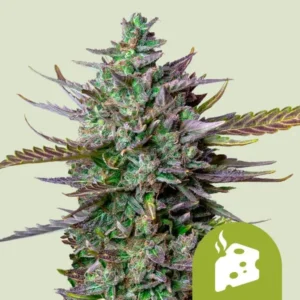
Blue Cheese Auto
|
|
THC | 16% - 17% (Medium) |
|
|
Lineage | Blueberry x Cheese x Ruderalis |
|
|
Type | Autoflowering |
|
|
Height | 1.97 ft | 0.6 m |
|
|
Yield | Low |
|
|
Yield Indoor | 1.07 - 1.23 oz/ft² | 325 - 375 g/m² |
|
|
Yield Outdoor | 2.12 - 3.88 oz/plant | 60 - 110 g/plant |
|
|
Life Cycle | 10 - 11 weeks |
|
|
Phenotype | 40% Indica / 35% Sativa / 25% Ruderalis |
|
|
Effects | Focused, Uplifted |
|
|
Flavors | Cheese, Earthy, Fruity, Pepper |
Indoors, plants generally remain within approximately 80–160 cm depending on vegetative time and growing conditions. Outdoors, they can reach around 140–200 cm and produce approximately 500–550 g per plant, with harvest usually falling in late September.
You can find Blue Cheese seeds and other genetics from Royal Queen Seeds at Growlantis.
Blue Cheese Grow Info
| Trait | Blue Cheese |
|---|---|
| Genetics | Original Cheese × Oregon Blueberry Blend |
| Seed type | Feminized photoperiod |
| Indica / Sativa | 60% Indica / 40% Sativa |
| THC | Around 19% |
| CBD | Medium |
| Flowering time | Approximately 55–65 days |
| Indoor height | Approximately 80–160 cm |
| Indoor yield | 500–550 g/m² |
| Outdoor height | 140–200 cm |
| Outdoor yield | 500–550 g/plant |
| Outdoor harvest | Late September |
| Climate | Suitable for short summers |
| Flavor | Candy, cheese, fruity |
| Reported effects | Clear-headed and physically relaxing |
The exact dimensions and flowering time can vary somewhat with phenotype and growing conditions, which is why ranges are more useful than one fixed number.
What Is the Blue Cheese Strain?
Blue Cheese is a Cheese-family hybrid that combines Original Cheese with Oregon Blueberry Blend.
The original cross was subsequently worked back toward Cheese to stabilize the genetics and intensify the combination of sweet fruit and savory Cheese characteristics.
The resulting cultivar retains the recognizable pungent Cheese identity while introducing candy-like and fruity notes from the Blueberry side of the breeding background.
Blue Cheese remains relatively manageable indoors but can develop into a substantially larger plant outdoors. Its approximately eight-to-nine-week flowering period and late-September outdoor finish also make it suitable for growers who do not want an unusually long photoperiod cycle.
The Blue Cheese covered in this guide is a feminized photoperiod cultivar and should not be confused with Blue Cheese Auto.
Blue Cheese Genetics
The official genetic background is Original Cheese × Oregon Blueberry Blend.
Original Cheese provides much of the cultivar’s unmistakable savory and musky character. The Oregon Blueberry side contributes the sweeter fruit notes that distinguish Blue Cheese from more traditional Cheese strains.
After the original cross, the line was worked further with Cheese to stabilize its characteristics and strengthen the desired flavor and growth traits.
The result is a 60% Indica and 40% Sativa hybrid.
This exact genetic background is more useful than simplifying the lineage to “Blueberry × UK Cheese,” because it identifies the commercial seed line covered by this guide and helps prevent specifications from other Blue Cheese versions being mixed into the article.
Is Blue Cheese Indica or Sativa?
Blue Cheese is an indica-dominant hybrid containing approximately 60% Indica and 40% Sativa genetics.
This classification gives the cultivar a noticeable Indica majority without making it an overwhelmingly one-sided plant.
Its breeder-reported effects combine clear-headed mental characteristics with stronger physical relaxation, reflecting the contribution from both sides of the hybrid.
From a cultivation perspective, Blue Cheese can develop relatively bushy growth indoors while still gaining enough size to reach approximately 140–200 cm outdoors.
The correct 60/40 classification should be used instead of the 70/30 and 80/20 ratios that are sometimes associated with generic Blue Cheese descriptions.
Blue Cheese Plant Height
Blue Cheese plant height varies substantially according to growing environment and vegetative duration.
Current breeder information places indoor plants at approximately 80–160 cm, although individual phenotypes and training methods can move the final dimensions within that broad range.
Outdoor plants generally reach approximately 140–200 cm when given sufficient sunlight and root space.
Indoor growers have much greater control over final size because Blue Cheese is photoperiod dependent. Switching to flowering earlier creates a smaller final plant, while extending vegetation allows a larger root system and canopy to develop.
For this reason, one universal height such as 1.7 meters does not accurately describe every Blue Cheese grow.
Growing Blue Cheese Indoors
Blue Cheese performs well indoors because growers can control both plant size and environmental conditions throughout the cycle.
An 18/6 light schedule is a common option during vegetative growth. Once the canopy reaches an appropriate size for the available space, switching to 12 hours of light and 12 hours of uninterrupted darkness initiates flowering.
There is no fixed number of vegetative weeks that every Blue Cheese plant needs. Growers should base the timing of the switch on canopy size, available height, root development, and plant number rather than an arbitrary calendar.
The cultivar also performs well in both soil and hydroponic systems. Sea of Green can be particularly effective because several relatively manageable plants can form an evenly exposed canopy.
Good airflow becomes increasingly important later in flowering as dense buds develop and the characteristic Cheese aroma intensifies.
Growing Blue Cheese Outdoors
Blue Cheese can also perform well outdoors and is particularly useful in regions with relatively short summers.
Plants can reach approximately 140–200 cm outdoors and produce around 500–550 g per plant under favorable conditions.
Choose a location with strong direct sunlight and enough space for lateral branch development. A well-draining root zone is important, particularly where late-summer or early-autumn rainfall can increase moisture around mature plants.
The relatively early outdoor finish is one of the cultivar’s useful characteristics. Blue Cheese is generally ready around late September in the Northern Hemisphere rather than requiring an extended autumn flowering season.
As harvest approaches, monitor rainfall and airflow around mature flowers carefully because dense buds can retain moisture when conditions remain humid.
Blue Cheese Flowering Time
Blue Cheese generally flowers for approximately 55–65 days, which works out to roughly eight to nine weeks indoors.
Current breeder materials contain slightly different specifications within this range, so treating 55–65 days as a practical planning window is more accurate than claiming that every Blue Cheese plant finishes on one exact day.
The flowering period starts after indoor plants have been switched to 12/12. It does not include germination or vegetative growth.
Because Blue Cheese is photoperiod dependent, total seed-to-harvest time changes according to how long the grower keeps the plant in vegetation.
For additional information on development after the photoperiod change, see the Growlantis guide to the cannabis flowering stage week by week.

What to Expect During Blue Cheese Flowering
Blue Cheese develops increasingly dense and resinous flowers as bloom progresses.
The characteristic sweet Cheese aroma can become noticeable relatively early in flowering and intensifies substantially toward maturity. Indoor growers should therefore account for odor control where discretion is important.
Flower production becomes progressively heavier toward the end of the approximately 55–65 day cycle. Branch support may become useful where individual flowering sites begin pulling stems downward.
Blue Cheese also has a relatively high leaf-to-flower ratio compared with some cultivars. Selective pruning can make airflow and final trimming easier, but excessive defoliation is unnecessary.
Maintain an open enough canopy for light and air to reach the productive branches while avoiding aggressive structural changes once mature flowers have developed.
Blue Cheese Yield
Blue Cheese produces approximately 500–550 g/m² indoors under favorable conditions.
Outdoor plants are also listed at around 500–550 g per plant.
These figures represent genetic potential rather than guaranteed harvest weights.
Indoor production depends on light, usable canopy area, vegetative duration, root space, training, plant density, irrigation, nutrition, environmental stability, and phenotype.
Outdoor production depends on many of the same variables plus direct sunlight, growing season, climate, planting time, and weather.
The breeder ranges are therefore useful for planning and comparison, but growers should not expect every individual Blue Cheese plant to produce the same amount.
Blue Cheese Outdoor Harvest Time
Blue Cheese generally reaches outdoor maturity in late September in the Northern Hemisphere.
This relatively early finish makes the strain useful in locations where autumn weather begins deteriorating before longer-flowering cultivars can complete their cycle.
The breeder calendar should still be treated as a reference rather than an automatic harvest appointment.
Latitude, phenotype, seasonal temperatures, planting date, and weather can all shift the precise finishing date.
As late September approaches, begin evaluating actual flower and trichome maturity while also monitoring upcoming rainfall and humidity.
Harvest decisions are more reliable when plant maturity and environmental conditions are considered together rather than relying solely on a calendar date.
Germinating Blue Cheese Seeds
Blue Cheese does not require a unique strain-specific germination method.
Seeds need appropriate warmth, consistent moisture, sufficient oxygen, and careful handling while the first root develops.
A suitable propagation medium or a controlled moist paper-towel method can both work. The material surrounding the seed should remain moist without becoming waterlogged.
Once the root emerges, transfer the seed carefully into the chosen medium and avoid damaging the delicate root tip.
Young seedlings have limited root systems and therefore require considerably less water than mature plants.
For more detailed guidance, see how long cannabis seeds take to germinate.
Blue Cheese Vegetative Growth
During vegetation, Blue Cheese establishes the roots, stems, and branches required to support flowering.
Indoor growers can maintain a longer photoperiod such as 18/6 until the plant reaches the desired canopy size.
There is no genetic requirement for vegetation to last exactly four weeks or for flowering to begin during a predetermined calendar week.
This is the best stage for most structural training because branches remain flexible and plants have time to continue vigorous development before reproductive growth begins.
The cultivar’s relatively leafy structure can benefit from early canopy organization, particularly when several plants share the same grow space.
Use vegetative duration to control the eventual size instead of relying on aggressive height correction after flowering has already begun.

Training Blue Cheese
Blue Cheese responds well to several common canopy-management techniques.
Low-stress training can spread dominant branches outward, increasing light exposure to additional flowering sites while keeping the canopy more even.
Topping during healthy vegetative growth can also create several productive branches instead of concentrating development around one central stem.
The breeder specifically identifies Sea of Green as a suitable method. This approach can take advantage of Blue Cheese’s manageable indoor structure by using several plants to form a uniform productive canopy.
Selective removal of poorly positioned lower growth can also improve air movement and simplify the final structure.
Training should primarily improve light distribution and airflow rather than attempting to force the plant into an unnecessarily complicated shape.
Feeding Blue Cheese
Blue Cheese does not have one universal strain-specific NPK formula.
During vegetative growth, use an appropriate balanced nutrient program that supports root, stem, and foliage development according to the chosen growing medium.
As flowering becomes established, transition toward a suitable bloom-oriented program for the nutrient system being used.
That does not mean continually increasing phosphorus and potassium will automatically produce denser flowers or a larger harvest.
Nutrient concentration should reflect the substrate, water quality, root volume, plant size, and actual response.
Monitor leaf color, tips, development rate, and overall plant health rather than treating one fixed feeding ratio as a requirement of Blue Cheese genetics.
Watering Blue Cheese
Blue Cheese should be watered according to root-zone conditions rather than a fixed calendar.
Seedlings initially use relatively little water because their roots occupy only a small part of the container. Established plants naturally consume much more as root volume and canopy size increase.
Growing medium, container size, temperature, humidity, and light intensity all affect how quickly moisture is used.
Allow enough air to return to the root zone between irrigations instead of keeping the medium permanently saturated.
Outdoor plants may require substantially more water during warm and sunny periods, but drainage remains important regardless of plant size.
Adjust irrigation to actual demand instead of increasing water automatically according to the week of cultivation.
Airflow Around Blue Cheese Buds
Blue Cheese develops dense flowers and a relatively leafy canopy, making airflow particularly important during flowering.
Gentle circulation should move air through, above, and below the branches while ventilation removes excess humidity from the growing environment.
One room-level humidity reading does not necessarily represent conditions inside dense foliage or between mature flowers.
Selective pruning and sensible branch spacing during vegetation can therefore make later environmental management easier.
Outdoor growers should pay particular attention to persistent rain or high humidity as the late-September harvest approaches.
When to Harvest Blue Cheese
Indoor Blue Cheese plants generally approach maturity after approximately 55–65 days of flowering.
Use this range to determine when close inspection should begin rather than cutting automatically on one particular day.
Evaluate overall flower development and trichome maturity as the expected harvest window approaches.
Outdoor plants generally finish in late September, although local conditions can move the exact date slightly.
Avoid using pistil color alone as the harvest signal. Pistils, trichomes, overall flower maturity, breeder timing, and plant condition provide more useful information when evaluated together.
Harvesting according to actual maturity is more reliable than following a rigid week-by-week schedule.
Blue Cheese THC
Blue Cheese has moderate potency by modern standards, with current breeder specifications placing THC at approximately 19%.
The current Growlantis listing displays the strain at approximately 19–20%, which closely matches the breeder reference.
THC values should still be treated as an indication of genetic potential rather than a guarantee that every harvested plant will produce exactly the same laboratory result.
Phenotype, lighting, plant health, environmental conditions, harvest maturity, drying, curing, and testing methodology can all influence the final measured cannabinoid concentration.
CBD is classified as medium in the breeder’s current specifications.
Blue Cheese Effects
Blue Cheese is described as combining mental clarity with stronger physical relaxation.
Its 60% Indica and 40% Sativa genetic profile helps explain why the effect is not presented as either purely sedating or strongly stimulating.
Individual experience can still differ depending on dose, tolerance, phenotype, cannabinoid profile, and finished flower quality.
These characteristics should therefore be understood as general breeder-reported effects rather than guaranteed outcomes for every consumer.
Blue Cheese should not be presented as treating stress, anxiety, pain, insomnia, appetite loss, or other medical conditions simply because those experiences appear in anecdotal reports.
Blue Cheese Flavor and Aroma
Blue Cheese combines candy, cheese, and fruity characteristics.
The Oregon Blueberry side contributes much of the sweet fruit profile, while Original Cheese provides the distinctive musky and savory background that gives the cultivar its name.
As flowering progresses, the Cheese aroma becomes increasingly pronounced.
Individual phenotypes can emphasize slightly different proportions of fruit, sweetness, earthiness, and pungent Cheese character.
Growing conditions, maturity, drying, and curing can also alter the final expression.
For this reason, the breeder’s verified sensory profile is more useful than assigning one universal dominant terpene ranking without analytical data for the exact plants being grown.
Blue Cheese vs Blue Cheese Auto
Blue Cheese and Blue Cheese Auto are related names but different cultivation types.
The Blue Cheese covered in this guide is a feminized photoperiod strain. Indoor growers control when flowering begins by switching the light schedule to 12/12.
Blue Cheese Auto contains autoflowering genetics and begins flowering according to age rather than requiring a photoperiod trigger.
The automatic version also has different height, yield, cannabinoid, and lifecycle specifications.
Growers should therefore confirm the exact seed type before using cultivation timings. An autoflower lifecycle should not be applied to the photoperiod Blue Cheese described in this guide.
Common Problems When Growing Blue Cheese
Using the Wrong Indica/Sativa Ratio
The Blue Cheese version covered here is 60% Indica and 40% Sativa. Descriptions listing the cultivar as 70/30 or 80/20 should not replace the specification associated with the actual seeds sold through Growlantis. Using one consistent ratio also prevents contradictory information between the product and cultivation pages.
Using an 8–10 Week Flowering Range
Current breeder information places Blue Cheese around 55–65 days, roughly eight to nine weeks. Extending the standard range to ten weeks unnecessarily broadens the specification. Use the breeder window as the main reference while allowing actual phenotype and flower maturity to determine the precise harvest date.
Following a Fixed Vegetative Calendar
Blue Cheese is photoperiod dependent, so the grower determines the length of vegetation. A table that automatically assigns Weeks 3–6 to veg does not apply universally. Base the switch to flowering on actual canopy size, root development, plant number, and available vertical space instead of plant age alone.
Overcrowding a Leafy Canopy
Blue Cheese can develop a relatively high leaf-to-flower ratio and dense buds. Allowing the canopy to become excessively crowded restricts light and airflow later in bloom. Early training and selective pruning should create useful space around productive branches without removing healthy foliage unnecessarily.
Treating Yield as Guaranteed
Blue Cheese is listed around 500–550 g/m² indoors and 500–550 g per plant outdoors, but these values represent potential under favorable conditions. Light, canopy size, root space, training, environment, climate, nutrition, irrigation, plant health, and phenotype all influence actual harvest weight.

FAQs About Blue Cheese Strain
How long does Blue Cheese take to flower?
Blue Cheese typically requires approximately 55–65 days of flowering, or roughly eight to nine weeks after an indoor plant is switched to 12/12. Because it is photoperiod dependent, this figure does not include germination or vegetation. Individual phenotypes and growing conditions can cause slight differences in final maturity.
Is Blue Cheese indica or sativa?
Blue Cheese is an indica-dominant hybrid containing approximately 60% Indica and 40% Sativa genetics. Its lineage combines Original Cheese with Oregon Blueberry Blend. This balance produces relatively manageable growth and breeder-reported effects that combine clear-headed characteristics with stronger physical relaxation rather than an exclusively heavy Indica experience.
How much does Blue Cheese yield?
Blue Cheese is listed at approximately 500–550 g/m² indoors and 500–550 g per plant outdoors under favorable conditions. These figures represent genetic potential, not guaranteed harvest weights. Lighting, sunlight, root space, vegetative duration, training, nutrition, irrigation, environmental stability, and phenotype all influence final production.
How tall does a Blue Cheese plant grow?
Blue Cheese generally reaches approximately 80–160 cm indoors depending on vegetative duration and growing conditions. Outdoors, plants can reach around 140–200 cm. Indoor growers can control final size substantially by changing when plants are switched to flowering and by using training techniques such as topping, LST, or Sea of Green.
When is Blue Cheese ready to harvest outdoors?
Blue Cheese generally reaches outdoor maturity in late September in the Northern Hemisphere. The exact finishing date can vary with latitude, phenotype, planting time, and seasonal weather. Growers should use the late-September breeder window as a reference while evaluating actual flower development and trichome maturity before harvesting.
What is the THC level of Blue Cheese?
Current breeder information places Blue Cheese at around 19% THC, while Growlantis currently lists approximately 19–20%. Actual cannabinoid concentration can vary between plants because phenotype, lighting, environment, harvest timing, drying, curing, and laboratory methodology all influence the final measured result.