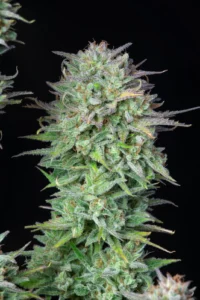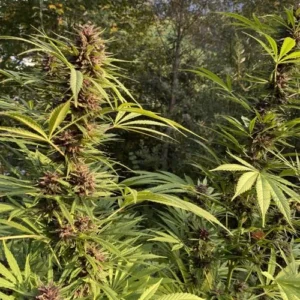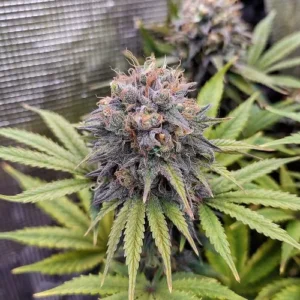


Mazar is a classic indica-dominant photoperiod strain from Dutch Passion created from a selected Afghani plant and Skunk #1. Known for compact growth, thick branches, dense resinous flowers and an old-school hash aroma, it remains one of the breeder’s long-running Afghani Kush cultivars.
If you like hardy, trichome-heavy genetics that cope with a tougher climate, there is a solid autoflower to try. Our Trans Siberian Auto blends White Russian with Auto #1 for a frosty, resinous plant with a relaxing effect and a sweet, earthy profile, built to perform well in cooler grows.
Recommended Strains
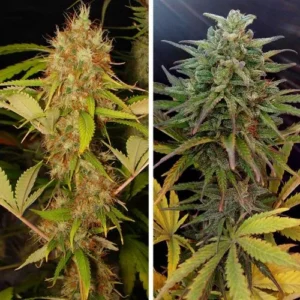
Mazar

|
THC | 15% - 20% (Medium) |

|
Lineage | Skunk #1 X Afghani |

|
Type | Feminized |

|
Height | 4.92 ft | 1.5 m |

|
Yield | Medium |

|
Yield Indoor | 1.31 - 1.47 oz/ft² | 400 - 450 g/m² |

|
Yield Outdoor | 17.64 oz/plant | 500 g/plant |

|
Flowering Time | 8 - 9 weeks |

|
Phenotype | 70% Indica / 30% Sativa |

|
Effects | Relaxed, Focused, Calming |

|
Flavors | Earthy, Floral, Spicy, Herbal |

Auto Mazar
|
|
THC | 15% - 20% (Medium) |
|
|
Lineage | Mazar X indica Autoflower |
|
|
Type | Autoflowering |
|
|
Height | 2.62 ft | 0.8 m |
|
|
Yield | Low |
|
|
Yield Indoor | 0.66 - 0.98 oz/ft² | 200 - 300 g/m² |
|
|
Yield Outdoor | 7.05 oz/plant | 200 g/plant |
|
|
Life Cycle | 10 - 12 weeks |
|
|
Phenotype | 90% Indica / 10% Sativa |
|
|
Effects | Calming, Relaxed |
|
|
Flavors | Herbal, Earthy, Pine |
Current Mazar seeds generally flower in approximately 8–9 weeks. Dutch Passion rates the strain as an XL yielder, with average indoor production around 400–500 g/m², and describes THC levels around 20% under good growing conditions.
| Mazar Grow Info | Current specification |
|---|---|
| Breeder | Dutch Passion |
| Genetics | Skunk #1 × Afghani |
| Seed type | Photoperiod; feminized and regular versions exist |
| Type | Indica-dominant hybrid |
| Exact Indica / Sativa ratio | Not currently published by breeder |
| THC | Around 20%; higher results possible in optimized grows |
| Flowering time | Approx. 8–9 weeks |
| Yield class | XL |
| Indoor yield | Approx. 400–500 g/m² |
| Plant size | Medium-sized, compact |
| Numerical breeder height | Not currently published |
| Outdoor yield | No current standard g/plant figure |
| Common flavors | Earthy, Hash, Pine, Incense, Citrus |
| Reported effects | Strong, Relaxing, Body-heavy, Contemplative |
Mazar Genetics
Mazar combines Skunk #1 with high-quality Afghani genetics.
Dutch Passion developed the original Mazar during the 1980s and refined the genetic mix in 1997. The Afghan side supplies the compact structure, broad leaves, resin production and dense flowers associated with traditional hash plants, while the smaller Skunk contribution adds vigor, stretch and additional yield potential.
Mazar belongs to the breeder’s Afghani Kush family and remains strongly indica dominant.
Growers interested in other genetics from the same breeder can explore the wider Dutch Passion seed collection.
Is Mazar the Same as Mazar-i-Sharif?
No. Dutch Passion Mazar should not simply be described as another name for a Mazar-i-Sharif landrace.
The commercial Mazar covered in this guide is Skunk #1 × Afghani. Its Afghan genetic heritage is associated with the Mazar-i-Sharif region and the old-school hash-plant tradition, but Dutch Passion has bred and refined Mazar as a distinct commercial cultivar.
Using the names interchangeably can therefore create confusion between the historic Afghan source genetics and the modern photoperiod seed line.
The official product name for this cultivar is simply Mazar.
Is Mazar Indica or Sativa?
Mazar is a strongly indica-dominant hybrid.
Dutch Passion currently describes the strain as carrying only a small proportion of Sativa genetics but does not publish an exact Indica/Sativa percentage on the current product page.
For that reason, a precise 70/30 ratio should not be treated as an official current specification.
The Afghan influence is visible in the plant’s compact early growth, broad dark-green leaves, dense flowers and strong resin production. The Skunk contribution can produce slightly more open phenotypes with additional stretch and branching, particularly after the flowering transition.
How Much THC Does Mazar Have?
Dutch Passion describes Mazar as a high-potency cultivar that commonly reaches around 20% THC under good growing conditions.
The breeder also notes that higher THC results are possible in optimized grows. Growlantis’ existing 15–20% structured range is therefore broadly compatible with the current official positioning.
THC figures represent genetic potential rather than a guaranteed laboratory result from every plant.
Phenotype, lighting, plant health, flower maturity and post-harvest handling can all influence the cannabinoid concentration measured in an individual harvest.
Mazar Flavor and Aroma
Mazar has a strongly old-school Afghani aroma dominated by earth, hash and pine.
Dutch Passion also describes notes of herbs, incense or frankincense, citrus and occasional sweeter floral or fruity characteristics. Squeezing mature flowers can make the fruitier and citrus components more noticeable beneath the heavier hash-like aroma.
This profile is more specific than describing Mazar simply as earthy and floral.
Its pungent aroma becomes particularly strong later in flowering, reflecting the dense resin production for which the cultivar is known.

Mazar Flowering Time
Mazar generally flowers for approximately 8–9 weeks after an indoor grower changes the light schedule to 12/12.
Dutch Passion notes that many plants finish around eight weeks, while some more Skunk-leaning phenotypes can take somewhat longer.
This period should not be counted from germination.
Mazar is photoperiodic, so the grower decides how long vegetation lasts before initiating bloom. Once the light schedule changes, plants can continue stretching for another two to three weeks before most vertical development slows.
For broader information about this transition, see the cannabis flowering stage guide.
Mazar Plant Structure and Height
Dutch Passion currently describes Mazar as a medium-sized, compact indica-dominant plant, but does not publish one universal numerical height.
That makes a fixed 1.5 m specification unnecessarily precise.
During early growth, plants can remain short and stocky with broad Indica leaves. Some phenotypes develop a more open hybrid shape because of the Skunk genetics.
Stretch remains moderate for an indica-dominant plant, with much of the remaining vertical growth occurring during the first two to three weeks after flowering begins.
The branches are thick and sturdy, although particularly heavy flowers can still benefit from support toward the end of bloom.
Growing Mazar Indoors
Dutch Passion rates Mazar as an XL-yielding strain and currently reports average indoor production of approximately 400–500 g/m².
Its compact structure and relatively short internodal spacing can make efficient use of indoor grow space. The breeder also considers Mazar a beginner-friendly and stable cultivar that can perform across different growing methods and media.
Indoor flowering begins when the grower moves the plant to a 12/12 schedule.
There is no fixed vegetative duration. Growers can initiate flowering when plant size and canopy coverage suit the available room.
Because flowers become particularly dense and heavy, good spacing and airflow become increasingly important later in the cycle.
Growing Mazar Outdoors
Mazar can also be cultivated outdoors, particularly in sunny, warm and relatively dry climates.
Dutch Passion highlights its Afghani Kush background as useful in hot, dry conditions, while also noting that it tolerates cooler nights relatively well.
The current breeder page does not publish one standard outdoor grams-per-plant figure, so outdoor yield should be treated as condition-dependent rather than fixed at 500 g per plant.
In more temperate climates, a greenhouse or other shelter can help protect the dense flowers from prolonged wet conditions.
The main outdoor limitation is humidity: compact, heavy buds can retain moisture and become vulnerable to mold or bud rot if air movement is poor.
Mazar Yield
The clearest current numerical specification is approximately 400–500 g/m² indoors.
Dutch Passion classifies Mazar as an XL-yielding cultivar and notes that experienced growers can exceed that indoor range under favorable conditions.
The breeder does not currently provide one standard outdoor grams-per-plant figure on the product page.
For that reason, a general guide should not manufacture an outdoor yield range or treat the older 500 g per plant figure as official.
Outdoor production depends much more heavily on root space, sunlight, season length, climate, plant size and general health.
How to Germinate Mazar Seeds
Mazar does not require a unique strain-specific germination technique.
Seeds need consistent moisture, suitable warmth and access to oxygen without remaining permanently saturated. A damp paper-towel method can be used to observe taproot emergence, while direct germination in an appropriate starting medium can reduce later handling.
Once the taproot appears, transfer the seed carefully and avoid damaging the new root.
Early watering should reflect the limited size of a seedling root system rather than the needs of an established plant.
For more detailed starting guidance, see the cannabis seed germination guide.

Vegetative Growth
Mazar does not have a fixed genetic vegetative duration.
As a photoperiod cultivar, it can remain in vegetative growth until the grower changes the light schedule. This allows plant size to be adapted to canopy goals, plant density and available vertical space.
During this stage, more Indica-dominant phenotypes usually remain compact with broad leaves and short-to-medium internodes.
More open Skunk-leaning plants can show additional branching and slightly greater spacing.
Use vegetation to build a healthy root system and useful branch structure rather than trying to reach a predetermined number of weeks before flowering.
Training Mazar
Dutch Passion provides unusually useful phenotype-specific training guidance for Mazar.
The more compact, Indica-dominant plants are well suited to Sea of Green, where their strong central flowers and short internodal spacing can make efficient use of canopy area.
More open, Skunk-leaning phenotypes can work particularly well with SCROG, allowing their extra branching to spread across a wider area.
Gentle branch positioning and selective pruning can also help reduce canopy congestion.
Later in flowering, monitor heavier branches and provide physical support where necessary.
Training should be used to manage structure rather than presented as a guarantee of a particular yield.
Flowering Development
After the switch to 12/12, Mazar continues stretching for approximately two to three weeks before focusing more heavily on flower development.
The flowers become compact, heavy and increasingly covered with sticky resin. More Indica-dominant phenotypes can produce a large central bloom, while more hybrid-leaning plants may distribute production across additional branches.
The pungent Kush and hash aroma becomes particularly strong from around the middle of flowering onward.
Because flower density increases rapidly, canopy spacing and moisture management become increasingly important.
Most plants finish around eight to nine weeks, although individual phenotypes should be assessed directly as the expected harvest window approaches.
Feeding Mazar
Dutch Passion describes Mazar as a robust cultivar that can tolerate a reasonably strong nutrient supply during both growth and flowering.
That does not mean the strain requires one fixed NPK ratio.
Nutrition should still be adjusted to the growing medium, fertilizer system, water quality, root volume and visible plant response.
There is no need to prescribe a 1-3-3 flowering formula or routine calcium, magnesium and sulfur supplementation simply because the plant is Mazar.
Gradual adjustments based on actual growth provide more useful guidance than a rigid feeding calendar.
Even a nutrient-tolerant cultivar can develop burn or imbalance when fertilizer concentration exceeds what the root system can use.
Watering Mazar
Mazar’s watering requirements change with plant size, root development and growing medium.
A young plant needs much less water than a mature flowering canopy carrying heavy flowers, so avoid using one fixed irrigation interval throughout the grow.
In containers, substrate moisture and pot weight provide useful information about actual demand.
Ensure excess water can drain rather than leaving the root zone permanently saturated.
Outdoor irrigation should respond to soil conditions, recent rainfall, temperature and plant size rather than assumptions based on its Afghan heritage.
Robust genetics do not make Mazar immune to root problems caused by chronic overwatering.
Airflow and Dense Mazar Flowers
Mazar is a robust plant, but its dense, heavy flowers can be vulnerable to persistent humidity.
Dutch Passion specifically warns that compact buds do not respond well to high humidity and recommends sufficient air movement to reduce the risk of mold and bud rot.
This distinction matters: robust genetics should not be interpreted as universal mold resistance.
As flowering progresses, avoid allowing dense branches to form stagnant, humid pockets inside the canopy.
Good air exchange and sensible spacing become especially important late in bloom.
The guide to microbial risk in cannabis growing explains why flower density and trapped moisture can create conditions that differ from the general grow-room environment.
Common Mazar Growing Problems
Excess humidity is one of the more important issues to monitor because Mazar develops compact flowers that can retain moisture during late bloom.
Another common mistake is confusing flowering time with plant age. Eight to nine weeks refers to flowering after the photoperiod transition, not eight to nine weeks after germination.
Old product specifications can also create confusion. Dutch Passion currently publishes approximately 400–500 g/m² indoors, does not provide one numerical height, and does not give a universal outdoor grams-per-plant specification.
Finally, Mazar should not be treated as interchangeable with Mazar-i-Sharif landrace genetics or Auto Mazar.
Mazar vs Auto Mazar
Mazar and Auto Mazar are separate cultivars with different flowering behavior.
The Mazar covered in this guide is a photoperiod strain. Indoor growers control vegetative duration and initiate flowering by changing the light schedule to 12/12.
Auto Mazar is a separate autoflowering product that transitions according to age rather than photoperiod and has its own seed-to-harvest lifecycle, height and yield specifications.
Those Auto Mazar figures should therefore not be transferred into this guide.
The distinction is especially important for growers searching for “Auto Mazar grow” while landing on a page about photoperiod Mazar.
When to Harvest Mazar
Indoor Mazar generally reaches its expected harvest window after approximately 8–9 weeks of flowering.
Some more Skunk-influenced phenotypes can take somewhat longer, so the breeder timeline should remain a planning reference rather than an automatic cutting date.
As the expected window approaches, inspect actual flower development and trichome maturity.
There is no need to require one fixed percentage of amber trichomes or claim that a specific ratio guarantees peak potency or one particular effect.
Drying and curing begin after harvest and should remain separate from the plant’s flowering timeline.

Mazar Effects
Dutch Passion describes Mazar as producing a powerful, long-lasting and strongly relaxing reported effect.
The physical component is generally more prominent than the cerebral one, although the breeder also describes feelings of happiness and a contemplative or meditative quality.
These characteristics fit the strain’s strongly indica-dominant Afghani background.
Mazar commonly reaches around 20% THC in good conditions, but potency alone cannot determine exactly how every individual will respond.
Dose, tolerance and the complete chemical composition of an individual harvest can all influence subjective effects.
Mazar FAQs
How long does Mazar take to flower?
Dutch Passion Mazar generally flowers for about 8–9 weeks after the indoor light schedule is changed to 12/12. The breeder notes that most plants finish around eight weeks, while some more Skunk-leaning phenotypes can need closer to nine or occasionally ten weeks. This is flowering time only, not the full seed-to-harvest timeline.
How much THC does Mazar have?
Dutch Passion describes Mazar as a very-high-THC cultivar that commonly reaches around 20% THC under good conditions, with higher results possible in optimized grows. Growlantis currently lists 15–20%, which is broadly compatible with the breeder’s current positioning. Exact laboratory results can still vary with phenotype, cultivation, maturity and post-harvest handling.
Is Mazar Indica or Sativa?
Mazar is an indica-dominant hybrid created from a selected Afghan plant and Skunk #1. Dutch Passion does not currently publish an exact Indica/Sativa percentage on the product page, so the existing 70/30 figure should not be treated as an official universal ratio. The breeder instead describes it as strongly Indica dominant with a small Sativa contribution.
How much does Mazar yield?
Dutch Passion currently reports average indoor yields of around 400–500 g/m² and gives Mazar an XL yield rating. The breeder does not publish one standard outdoor grams-per-plant figure on the current product page, so Growlantis should avoid presenting 500 g per plant as an official universal outdoor specification.
How tall does Mazar grow?
Dutch Passion currently describes Mazar as a medium-sized, indica-dominant plant with a compact structure, but does not publish one numerical height on its product page. Growlantis’ current 1.5 m figure should therefore not be presented as an official breeder specification. Final size also depends on vegetative duration, phenotype, training and growing environment.
Is Mazar an autoflower?
No. The Mazar covered in this guide is a photoperiod cultivar available in feminized and regular form. Indoor growers initiate flowering by changing the light schedule. Auto Mazar is a separate autoflowering product with its own genetics, lifecycle, height and yield specifications, so Auto Mazar grow data should not be transferred into this guide.