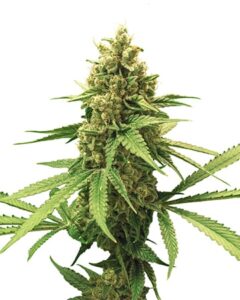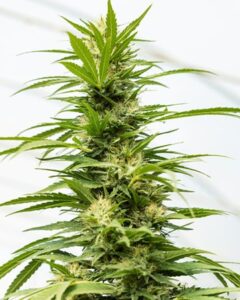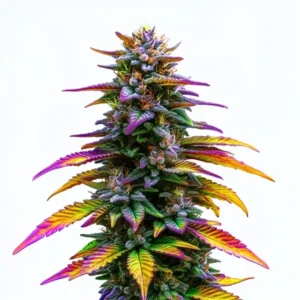


The best outdoor strain for Northeast conditions is Frisian Dew for most growers because it was bred for cool, wet outdoor climates and typically finishes around early October. Hollands Hope is another strong photoperiod option, while Early Skunk Auto is better where the frost-free season is especially short. Local first-frost timing should ultimately determine your choice.
Choosing the right cultivar makes a real difference to how a grow turns out. If you are weighing up options, our guides to unique mint strain crosses and what makes a strain exotic break down what to expect from each, so you can match a strain to your space, your climate and your taste.
Recommended Strains
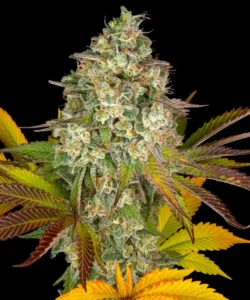
Cookies Kush Auto

|
THC | 24% - 25% (High) |

|
Lineage | Cookies Kush x BF Super Auto #1 |

|
Type | Autoflowering |

|
Height | 3.61 ft | 1.1 m |

|
Yield Outdoor | 5.29 - 7.76 oz/plant | 150 - 220 g/plant |

|
Life Cycle | 9 - 11 weeks |

|
Phenotype | 70% Indica / 30% Sativa |

|
Effects | Focused, Energetic, Euphoric, Happy, Relaxed |

|
Flavors | Spicy, Woody, Earthy, Sweet, Lime |
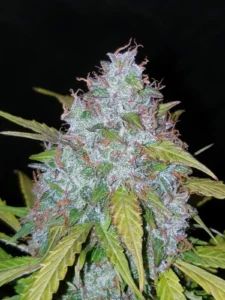
Californian Snow Auto
|
|
THC | 23% - 24% (High) |
|
|
Lineage | Cali Sativa x Ruderalis |
|
|
Type | Autoflowering |
|
|
Height | 3.94 ft | 1.2 m |

|
Yield | High |

|
Yield Indoor | 1.31 - 1.8 oz/ft² | 400 - 550 g/m² |
|
|
Life Cycle | 9 - 10 weeks |
|
|
Phenotype | 30% Indica / 70% Sativa |
|
|
Effects | Relaxed, Happy, Uplifted |
|
|
Flavors | Apple, Candy, Sweet |
Best Outdoor Cannabis Strains for the Northeast
Outdoor cannabis in the northeastern United States faces a combination of challenges that can make strain selection more important than it is in long, dry growing regions.
The biggest issue is often timing.
Across the Northeast, the average first fall frost can arrive anywhere from mid-September in colder, elevated areas of northern New England and New York to much later in milder coastal areas. More than half of the major climate stations tracked by the Northeast Regional Climate Center have historically averaged their first fall frost sometime in October.
At the same time, mature flowers may encounter rain, dew and prolonged humidity near harvest.
The best Northeast outdoor strains therefore tend to share three practical characteristics:
- an early or controllable harvest window;
- documented performance in cool or wet outdoor climates;
- some breeder-reported resistance to mold or bud rot.
No cannabis strain is mold-proof, and breeder descriptions of resistance are not equivalent to controlled independent trials. They are still useful when combined with flowering and harvest information rather than accepted as guarantees.
Quick Comparison
| Strain | Type | Outdoor timing | Why it fits the Northeast |
|---|---|---|---|
| Frisian Dew | Feminized photoperiod | Around early October | Specifically bred for cool, wet northern outdoor conditions |
| Hollands Hope | Feminized/regular photoperiod | Late September–early October | Strong breeder-reported mold resistance and early finishing |
| Early Skunk Auto | Autoflower | Around 10–11 weeks from seed depending on phenotype and conditions | Can finish without waiting for autumn photoperiod flowering |
| Durban Dew | Feminized photoperiod | September–October depending on latitude | Outdoor-focused genetics with relatively good weather resistance |
1. Frisian Dew — Best Overall Outdoor Strain for the Northeast
Frisian Dew is my strongest overall choice for Northeast outdoor growing.
Dutch Passion bred the cultivar specifically through outdoor selection in the Netherlands, where cool summers, cloudy weather, rain and autumn humidity create many of the same pressures that make northeastern U.S. cultivation difficult.
The breeder currently lists an outdoor harvest around early October, describes its mold resistance as excellent and specifically recommends it for Northern Europe and North America.
That combination matters more than generic claims about a strain being “hardy.”
A cultivar that finishes around early October has a realistic chance of reaching maturity before conditions deteriorate in many parts of New York, Pennsylvania, Massachusetts, Connecticut and neighboring states. In colder parts of Maine, Vermont, New Hampshire or northern New York, however, even early October can be late.
Frisian Dew is also capable of becoming a large outdoor plant, so it makes more sense where there is enough space and a full outdoor season.
Growlantis already carries Frisian Dew, making the strain name itself the natural internal product link here.
Best for: growers wanting a proven photoperiod outdoor cultivar for a cool and relatively humid climate.
2. Hollands Hope — Best for Cool, Wet Conditions
Hollands Hope is another particularly logical Northeast choice because its breeding history centers on difficult northern outdoor conditions rather than indoor production.
Dutch Passion states that it was developed in the Netherlands for cool temperatures, persistent rain and unpredictable late-season weather. The breeder lists an outdoor harvest around late September to early October and rates its mold and fungal resistance highly.
That makes it particularly interesting where October weather is unreliable.
Its claimed mold resistance should still be interpreted correctly. It does not mean the flowers cannot develop Botrytis or other fungal problems. Any dense flower exposed repeatedly to rain, dew and poor airflow can encounter disease pressure.
The advantage is comparative: the breeder has deliberately selected Hollands Hope for precisely the environmental conditions that concern Northeast growers.
Best for: cooler locations where wet autumn weather is a bigger concern than maximizing the length of the growing season.
3. Early Skunk Auto — Best Autoflower for a Short Northeast Season
In colder parts of the Northeast, the best strategy may be avoiding autumn entirely.
That is where Early Skunk Auto becomes particularly interesting.
Unlike photoperiod cannabis, an autoflower does not need shortening days to trigger flowering. This allows the grower to schedule its life cycle so that flowers can mature during summer rather than waiting for September or October.
Sensi Seeds describes Early Skunk Automatic as suitable for cool or cold climates and short summers, with breeder-reported resistance to mold and pests.
Growlantis currently lists Early Skunk Auto with an approximately 10–11 week life cycle and an 8–9 week flowering period.
That creates a fundamentally different strategy from Frisian Dew or Hollands Hope.
Instead of asking whether a September-flowering plant will finish before the first frost, an autoflower can potentially be timed to complete most of its flowering during the warmer part of summer.
The tradeoff is plant size and yield potential. Autoflowers usually have less time to build a large vegetative structure than full-season photoperiod plants.
Best for: northern New England, higher elevations or anyone prioritizing an earlier harvest over maximum plant size.
4. Durban Dew — Best for a Longer Northeast Season
Durban Dew is an interesting option for growers in the more forgiving parts of the Northeast.
It combines Durban Poison with Frisian Dew and was developed by Dutch Passion as an outdoor-oriented cultivar. The breeder describes it as relatively weather-resistant, with outdoor maturity around September or October depending on latitude.
Its flowers are also described as somewhat more open than some very dense outdoor cultivars, which can be useful when humidity is high.
But I would rank it below Frisian Dew for the Northeast.
Dutch Passion itself advises checking Durban Dew carefully for bud rot and mold toward the end of flowering because prolonged bad weather can still cause localized problems.
Its real advantage is vigor and outdoor production potential rather than being the earliest possible choice.
Growlantis carries Durban Dew, so that strain name can naturally link directly to its product page.
Best for: southern New England, Pennsylvania, New Jersey, coastal New York or other locations where the season usually extends comfortably into October.

Why Frisian Dew Beats Northern Lights for This Search
Northern Lights is a famous cultivar, but fame is not enough reason to call it the best outdoor strain for the Northeast.
The existing version of this article states that Northern Lights has a short flowering time, natural mold resistance and reliable performance in northeastern climates. Those are precisely the characteristics that should be verified before using them as selection criteria.
With Frisian Dew, there is a much clearer breeding rationale: Dutch Passion specifically selected it outdoors in northern European conditions and currently identifies cool, wet climates, early finishing and mold resistance as defining traits.
That makes the recommendation easier to defend.
The same applies to Hollands Hope and Early Skunk: their breeders explicitly position them for northern or difficult outdoor climates.
For this particular query, I would therefore prioritize documented climatic fit over popularity.
Why Critical Mass Is Not My First Choice
Critical Mass can produce large flowers and high yields, but those same characteristics do not automatically make it ideal for a damp Northeast autumn.
Dense flowers can be particularly problematic when prolonged moisture penetrates the canopy.
The existing article calls Critical Mass highly mold resistant, resistant to pests and able to tolerate rain while producing very large dense flowers. Those claims need much stronger cultivar-specific evidence than the page currently provides.
If your primary constraints are humidity and early frost, I would choose genetics specifically selected for those constraints instead of choosing primarily for advertised yield.
Autoflower or Photoperiod for the Northeast?
Neither category is universally better.
A photoperiod such as Frisian Dew or Hollands Hope has several months to develop outdoors and can therefore produce a much larger plant under favorable conditions.
The weakness is that flowering is triggered by changing day length. Much of the critical flowering period consequently occurs during late summer and autumn, precisely when rain, cool nights and frost risk increase.
An autoflower begins flowering according to age rather than autumn day length.
That allows a Northeast grower to potentially schedule flowering for the warmer and drier part of the season.
For a relatively mild location with an average first frost well into October, I would favor a proven early-finishing photoperiod.
For an exposed site or northern location where frost can arrive in September, an appropriate autoflower can substantially reduce seasonal risk.
Know Your Local First-Frost Date Before Choosing
“Northeast” is too large a region to provide one planting or harvest calendar.
Cornell’s Northeast Regional Climate Center reports that average first frost historically ranges from mid-September to late November across the region.
Even within a single state the difference can be substantial.
Cornell Cooperative Extension, for example, gives approximately October 1 as the average first fall frost around Ithaca, New York, while noting that cooler areas can experience it earlier.
University of Maine Extension gives an even earlier example from Belgrade, Maine, where frost risk begins around September 17 based on historical weather data.
That difference completely changes the strain recommendation.
If your first frost commonly arrives in mid-September, a cultivar advertised for an early-October harvest carries much more risk than it does somewhere with an average frost in late October.
Check historical frost data for your ZIP code rather than relying on “Northeast” alone.
Mold Resistance Helps, but It Does Not Prevent Bud Rot
“Mold resistant” should always be read as relative resistance, not immunity.
Genetics can influence canopy structure, flower density and susceptibility, but environment remains critical.
Repeated rainfall, persistently wet flowers and stagnant air can overwhelm even a cultivar marketed for humid climates.
This is also why flowering time and mold resistance should be considered together.
A cultivar with excellent claimed resistance that remains outdoors deep into cold, rainy autumn conditions may ultimately face more disease pressure than a moderately resistant autoflower harvested several weeks earlier.
The best genetic strategy is therefore the one that minimizes exposure to the worst local conditions.
Which One Should You Choose?
For most Northeast locations with a reasonably reliable growing season into early October, Frisian Dew would be my first choice.
Choose Hollands Hope when cool, wet autumn conditions are the dominant concern.
Choose Early Skunk Auto when your local season is short enough that waiting for a photoperiod cultivar to mature in autumn feels risky.
Choose Durban Dew when you have a somewhat longer season and want a vigorous photoperiod plant while retaining genetics developed for outdoor performance.
Do not select solely by THC percentage, indica/sativa ratio or advertised yield. None of those tells you whether the plant will actually finish before your local weather becomes hostile.

FAQs
What is the best outdoor strain for Northeast growing?
Frisian Dew is one of the strongest overall choices because Dutch Passion bred it for cool, wet northern outdoor conditions and lists an outdoor harvest around early October with excellent mold resistance. In areas with earlier frost, an autoflower such as Early Skunk Auto may be a safer seasonal choice.
What is the best autoflower for the Northeast?
Early Skunk Auto is a particularly relevant option because Sensi Seeds specifically positions it for outdoor cultivation, short summers and cool climates, with breeder-reported resistance to mold. Growlantis lists its complete life cycle at approximately 10–11 weeks, although actual timing can vary with genetics and conditions.
Are mold-resistant strains necessary in the Northeast?
They are useful but not sufficient. Humid weather, autumn rain and prolonged leaf or flower wetness can increase fungal pressure, so cultivar resistance can reduce risk without eliminating it. Harvest timing, airflow, rainfall exposure and the individual growing site remain important even with strains marketed as mold resistant.
Are autoflowers better than photoperiod strains outdoors in the Northeast?
Autoflowers can be advantageous in short-season locations because they can finish without waiting for autumn day-length changes. Photoperiod plants usually have greater size and yield potential but may remain outdoors into wetter, colder weather. The better option therefore depends mainly on your local frost date and growing-season length.
When should outdoor cannabis be harvested in the Northeast?
There is no universal Northeast harvest date. Average first frost ranges widely across the region, from roughly mid-September in some northern and elevated locations to much later in coastal areas. Choose genetics whose expected maturity leaves a reasonable margin before your local historical frost and persistent autumn rain.
Is Northern Lights good for outdoor growing in the Northeast?
It can be grown outdoors, but I would not rank the strain name alone above cultivars specifically bred for cool, wet outdoor climates. Frisian Dew, Hollands Hope and Early Skunk have clearer breeder documentation linking their selection or recommended use to short, cool or damp northern growing conditions.