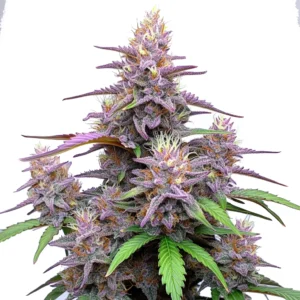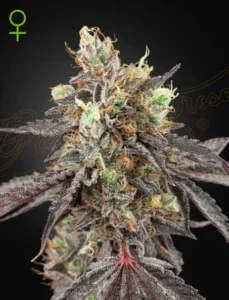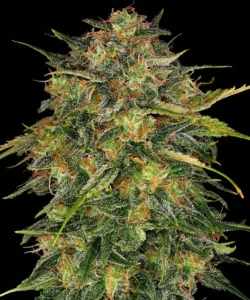


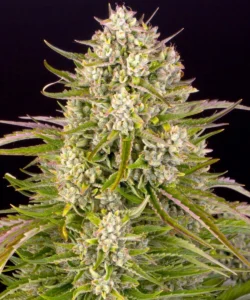
Wedding Cake is an indica-dominant feminized photoperiod strain known for dense resinous flowers, dessert-like aromas, high THC potential, and relatively manageable indoor growth. Several commercial seed lines are sold under the Wedding Cake name, so exact genetics and cultivation specifications can vary slightly between versions.
If you love sweet, tangy, cake-like flavours, there is a fast way to grow them. Our Wedding Cake Auto brings that rich, vanilla-and-earth profile and a relaxing, full-bodied effect to a compact autoflower, producing dense, frosty buds that reward a careful grow and a patient cure.
Recommended Strains
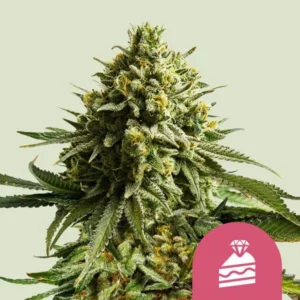
Wedding Cake

|
THC | 19% - 20% (Medium) |

|
Lineage | Girl Scout Cookies x Cherry Pie |

|
Type | Feminized |

|
Height | 3.94 ft | 1.2 m |

|
Yield | High |

|
Yield Indoor | 1.47 - 1.64 oz/ft² | 450 - 500 g/m² |

|
Yield Outdoor | 19.4 - 21.16 oz/plant | 550 - 600 g/plant |

|
Flowering Time | 8 - 10 weeks |

|
Phenotype | 80% Indica / 20% Sativa |

|
Effects | Giggly, Relaxed |

|
Flavors | Cookie, Earthy, Fruity |
Wedding Cake Auto
|
|
THC | 26% - 27% (High) |
|
|
Lineage | Wedding Cake x BF Super Auto #1 |
|
|
Type | Autoflowering |
|
|
Height | 3.61 ft | 1.1 m |
|
|
Yield Outdoor | 6.35 - 8.82 oz/plant | 180 - 250 g/plant |
|
|
Life Cycle | 9 - 11 weeks |
|
|
Phenotype | 65% Indica / 35% Sativa |
|
|
Effects | Calming, Euphoric, Relaxed |
|
|
Flavors | Fruity, Berry |
If you love sweet, tangy, cake-like flavours, this dessert classic deserves a spot in your tent. Nirvana’s Wedding Cake delivers that rich, vanilla-and-earth profile with a relaxing, full-bodied effect, producing dense, frosty, colourful buds that reward a careful, flavour-focused grow from start to finish.
The Wedding Cake lines currently available through Growlantis are generally classified as 80% Indica and 20% Sativa. Their flowering periods fall between approximately 55 and 65 days, indoor heights range from about 70 to 120 cm, and breeder-listed THC levels range from around 20% to 27%.
For that reason, this guide focuses on the characteristics shared by Wedding Cake while using ranges whenever the available seed lines differ.
Wedding Cake Grow Info
| Trait | Wedding Cake |
|---|---|
| Seed type | Feminized photoperiod |
| Indica / Sativa | Around 80% Indica / 20% Sativa |
| THC | Approximately 20–27% depending on seed line |
| Indoor flowering | Approximately 55–65 days |
| Indoor height | Around 70–120 cm |
| Indoor yield | Approximately 450–700 g/m² |
| Outdoor height | Around 120–200 cm |
| Outdoor yield | Approximately 550–1,500 g/plant |
| Outdoor harvest | Late September to early October |
| Flavor profile | Sweet, cookie, vanilla, earthy, fruity |
| Reported effects | Relaxing, uplifting, euphoric |
These figures combine the specifications of the Wedding Cake seed lines currently available through Growlantis. Always check the exact product specifications before using the upper or lower end of a range as a target.
Are All Wedding Cake Strains the Same?
Not exactly. Wedding Cake is a widely used strain name, and commercial seed lines can differ in their precise genetic composition.
The versions currently available through Growlantis share Girl Scout Cookies and Cherry Pie ancestry, while one line also includes OG Kush influence. This means they have a closely related genetic foundation without being completely identical selections.
The differences are large enough to affect plant height, THC, yield, outdoor size, and finishing time. For example, one Wedding Cake line may remain relatively compact outdoors while another can approach two meters under favorable conditions.
Growers should therefore use the specifications for the exact seeds they purchased whenever precise figures matter.
Wedding Cake Genetics
The commercial Wedding Cake genetics available through Growlantis are based primarily on Girl Scout Cookies and Cherry Pie, with some lines also including OG Kush in the breeding background.
This shared Cookies and Cherry Pie foundation helps explain the dessert-oriented flavor profile commonly associated with Wedding Cake. Sweet cookie, fruity, earthy, vanilla, and cake-like notes appear across the available descriptions, although the exact balance can change between seed lines and phenotypes.
The available versions are all strongly indica dominant, with an approximately 80% Indica and 20% Sativa classification.
Because the precise lineage is not identical across every Wedding Cake seed line, it is better to describe the common genetic foundation than to present one exact parental formula as universal.
Is Wedding Cake Indica or Sativa?
Wedding Cake is generally an indica-dominant hybrid, with the commercial versions currently available through Growlantis classified at approximately 80% Indica and 20% Sativa.
That strong indica influence is reflected in relatively manageable indoor dimensions and dense flower development. However, the cultivar should not automatically be treated as an extremely short plant, especially outdoors, where some seed lines can develop considerably more height and branch mass.
The reported effects also combine physical relaxation with more uplifting or euphoric characteristics rather than producing an exclusively sedating experience.
Genetic percentages are best treated as a broad description of the breeding direction rather than a guarantee that every Wedding Cake phenotype will grow or feel exactly the same.
Wedding Cake Plant Height
Wedding Cake generally remains manageable indoors, with current commercial lines listed at approximately 70–120 cm.
The exact final height depends on seed line, vegetative duration, training, root volume, lighting, and phenotype. A plant switched to flowering relatively early may remain near the bottom of the range, while one given a longer vegetative period can develop a wider and taller canopy.
Outdoor plants vary more significantly. Current Wedding Cake lines are listed between approximately 120 and 200 cm outdoors.
This range is important when planning outdoor spacing. A garden designed around a compact 120–150 cm plant may not provide enough room for a more vigorous Wedding Cake phenotype capable of approaching two meters.

Growing Wedding Cake Indoors
Wedding Cake is well suited to indoor cultivation because its photoperiod lifecycle allows growers to control how large the plant becomes before flowering begins.
An 18/6 light schedule is a common option during vegetative growth. Once the canopy has reached an appropriate size for the available space, switching to 12 hours of light and 12 hours of uninterrupted darkness initiates flowering.
There is no fixed vegetative duration that every Wedding Cake plant needs. Small indoor spaces can use a shorter vegetative period, while larger rooms can support additional branch and root development before the switch.
The cultivar’s dense flower structure makes good canopy organization increasingly important as flowering progresses. Branches should receive adequate light without becoming so crowded that air movement around mature flowers is restricted.
Growing Wedding Cake Outdoors
Wedding Cake can also perform well outdoors when given strong sunlight, adequate root space, and a sufficiently long growing season.
The commercial lines currently available through Growlantis range from approximately 120 to 200 cm outdoors, showing how much plant size can change between different Wedding Cake selections.
Outdoor harvest generally falls between late September and early October in the Northern Hemisphere.
That relatively compact harvest window still matters in climates where autumn rainfall or lower temperatures arrive quickly. Growers using a later-finishing Wedding Cake line should pay particular attention to weather conditions as October approaches.
Choose a site with good drainage and enough lateral spacing for air to move between mature branches. Dense flowers and a crowded canopy can retain moisture even when the surrounding outdoor environment appears relatively dry.
Wedding Cake Flowering Time
Wedding Cake typically requires approximately 55–65 days of indoor flowering, equivalent to roughly eight to nine weeks after the switch to 12/12.
Some commercial lines tend to finish closer to 55–60 days, while others can continue toward 65 days.
This flowering period does not include germination or vegetative growth. Because Wedding Cake is photoperiod dependent, growers decide how long plants remain in vegetation before initiating bloom.
That means there is no universal Wedding Cake seed-to-harvest time. Two plants can spend different amounts of time in vegetation and still require a similar flowering period after the light cycle changes.
For a broader explanation of plant development once flowering begins, see the Growlantis guide to the cannabis flowering stage week by week.
Wedding Cake Yield
Wedding Cake yield varies substantially between commercial seed lines.
The versions currently available through Growlantis are listed at approximately 450–700 g/m² indoors and around 550–1,500 g per plant outdoors under favorable conditions.
The wide outdoor range shows why it would be misleading to assign one universal Wedding Cake yield.
Production depends on the exact genetics as well as canopy size, lighting, vegetative duration, root volume, training, climate, irrigation, nutrition, plant health, and phenotype.
Breeder figures should therefore be used as a reference for genetic potential rather than as a prediction of exactly how much one plant will produce.
A healthy, well-developed Wedding Cake canopy can be highly productive, but no specific training technique or feeding schedule guarantees that a plant will reach the top of the published range.
Germinating Wedding Cake Seeds
Wedding Cake does not require a unique strain-specific germination method.
Stable warmth, moisture, oxygen, and careful handling are more important than the cultivar name at this stage. Seeds can be started in an appropriate propagation medium or using a controlled method such as a moist paper towel.
Keep the germination environment moist without leaving seeds permanently saturated. Once the first root appears, transfer the seed carefully and avoid damaging the exposed root tip.
Young seedlings initially have very limited root systems, so they do not require the same volume of water as established vegetative plants.
For a more detailed explanation of germination timing and methods, see how long cannabis seeds take to germinate.

Wedding Cake Vegetative Growth
During vegetative growth, Wedding Cake establishes the roots and branches that will later support its dense flowers.
Indoor growers can maintain a longer photoperiod such as 18/6 until the canopy reaches the desired size. There is no breeder-defined requirement to keep Wedding Cake in vegetation for exactly four, six, or eight weeks.
The correct duration depends on available height, container size, plant number, canopy coverage, and the individual growth rate of the seed line being cultivated.
This is also the best stage for most structural training. Branches remain flexible, and the plant has time to recover before flowering becomes the primary focus.
Wedding Cake’s generally compact growth means training can remain relatively simple. The goal should be an evenly exposed canopy rather than unnecessary stress.
Training Wedding Cake
Low-stress training works well when Wedding Cake develops one or two branches that begin dominating the canopy. Gently repositioning those stems outward can expose more flowering sites while keeping the final height under control.
Topping can also be used during healthy vegetative growth to encourage several main branches instead of one dominant central stem.
A ScrOG system may be useful in larger indoor setups where growers want to distribute branches across a flat canopy, although it is not necessary for every Wedding Cake grow.
Regardless of the technique used, training should improve light exposure and airflow rather than simply create the maximum possible number of branches.
Major structural work is best completed before advanced flowering, when stems are still flexible and flowers have not yet added substantial weight.
Flowering Wedding Cake
Once the indoor light schedule changes to 12/12, Wedding Cake begins its flowering transition.
During the first part of bloom, some continued vertical growth is normal while new flowering sites establish themselves. Growers should continue monitoring canopy height and light distribution rather than assuming the plant stops growing immediately after the switch.
As flowering progresses, Wedding Cake develops increasingly dense and resinous buds. Sweet, earthy, fruity, cookie, vanilla, or cake-like aromas may become more noticeable depending on the seed line and phenotype.
The breeder-specific 55–65 day flowering range should guide cultivation planning, while the actual maturity of the plant determines the final harvest date.
Feeding Wedding Cake
There is no single Wedding Cake nutrient formula that applies to every commercial seed line, growing medium, and cultivation system.
Nutrition should be based on the substrate, water quality, nutrient formulation, root volume, plant size, growth stage, and actual condition of the plant.
During vegetative growth, plants require sufficient nutrition to support root, leaf, and branch development. Once flowering becomes established, a suitable bloom-oriented program can be used according to the cultivation system.
Increasing phosphorus and potassium beyond what the plant can use does not automatically produce larger flowers or higher THC.
Avoid treating fixed NPK ratios as Wedding Cake-specific requirements unless they come directly from the nutrient system being used.
Watering Wedding Cake
Wedding Cake should be watered according to root-zone conditions rather than a rigid calendar.
A young plant with a small root system uses much less water than a mature specimen carrying a developed canopy. Container size, growing medium, temperature, humidity, lighting, and root development all influence irrigation demand.
Allow enough air to return to the root zone between waterings instead of maintaining constantly saturated conditions.
As plants become larger, water consumption normally increases. Adjust irrigation progressively according to actual plant demand rather than changing volume simply because the grow has reached a particular week.
Outdoor Wedding Cake plants can consume substantially more water during hot, sunny conditions, especially when they develop toward the larger end of the available height range.
Airflow Around Wedding Cake Buds
Wedding Cake is known for dense flower production, making canopy airflow particularly important during the later stages of flowering.
Air should circulate gently above, below, and through the branches. One powerful fan aimed continuously at mature flowers is not a substitute for good overall circulation.
Ventilation also matters because fans move air within the growing space but do not remove excess humidity from it.
An overcrowded canopy can create localized humid areas between flowers even when the room-level humidity appears acceptable.
Good branch spacing established during vegetation makes environmental management easier later in bloom.
When to Harvest Wedding Cake
Wedding Cake normally approaches indoor maturity after approximately 55–65 days of flowering.
Use that range as a planning reference rather than an automatic harvest deadline. Individual seed lines and phenotypes can finish at slightly different speeds.
Evaluate overall flower development and trichome maturity as the expected harvest window approaches.
Outdoor harvest generally falls between late September and early October. The precise timing depends on seed line, latitude, planting date, phenotype, and seasonal weather.
Avoid relying exclusively on pistil color or a predetermined calendar day. Harvest decisions are more reliable when the breeder timeline is combined with direct observation of mature flowers.
Wedding Cake THC
Wedding Cake THC varies significantly between commercial seed lines.
The versions currently available through Growlantis are listed at approximately 20–27% THC.
That range is much more useful than presenting one percentage as universal for every Wedding Cake seed.
Breeder THC specifications should still be treated as reference values rather than guaranteed laboratory results. Phenotype, lighting, plant health, environmental conditions, harvest timing, drying, curing, and testing methods can all affect measured cannabinoid concentration.
Growers comparing Wedding Cake seeds should therefore check the specific product information if potency is an important selection criterion.
Wedding Cake Effects
Wedding Cake is generally described as combining physical relaxation with uplifting, euphoric, happy, or laughter-inducing characteristics.
The precise balance can differ between seed lines and individual plants. Dose, tolerance, phenotype, cannabinoid profile, and finished flower quality can also influence the experience.
The strong Indica classification should therefore not be interpreted as meaning Wedding Cake always produces an exclusively heavy or sedating effect.
These descriptions are best understood as general characteristics of the cultivar rather than guaranteed effects for every consumer.
Wedding Cake should also not be presented as treating anxiety, pain, insomnia, depression, or other medical conditions simply because individual users report those experiences.
Wedding Cake Flavor and Aroma
Wedding Cake has a dessert-oriented profile, but the exact expression varies between commercial versions.
Common descriptions across the available seed lines include cookie, vanilla, cake, earthy, fruity, sweet, and skunky characteristics.
The shared Girl Scout Cookies and Cherry Pie ancestry helps explain the combination of sweet baked-goods notes and fruitier undertones, while some lines introduce additional earthy or skunky depth.
Phenotype, growing conditions, harvest maturity, drying, and curing can all influence how strongly individual flavors are expressed.
For that reason, it is better to describe Wedding Cake using a broad verified sensory profile than to present one exact terpene hierarchy as universal.
Wedding Cake vs Wedding Cake Auto
The Wedding Cake covered in this guide refers to feminized photoperiod versions.
Indoor photoperiod plants remain in vegetative growth until the grower changes the light schedule to 12/12. This allows substantial control over final plant size and total cultivation time.
Wedding Cake Auto strains contain autoflowering genetics and begin flowering according to age instead of day length.
The automatic versions can have different genetics, THC levels, heights, yields, and complete lifecycle times.
Always check whether the seed package is photoperiod or autoflowering before applying a Wedding Cake cultivation schedule, particularly when comparing flowering time or total grow duration.

Common Problems When Growing Wedding Cake
Using Specifications From the Wrong Seed Line
Wedding Cake is sold in several commercial versions, so exact THC, flowering time, height, genetics, and yield are not completely universal. Use the specifications for the seeds being grown whenever precise numbers matter instead of assuming that every Wedding Cake grow report describes the same selection.
Following a Fixed Seed-to-Harvest Calendar
Wedding Cake is photoperiod dependent. The 55–65 day range describes flowering after the switch to 12/12, not the complete lifecycle. Growers determine the length of the vegetative stage, so two plants can have different total grow times while still requiring a similar flowering period.
Allowing Dense Flowers to Become Overcrowded
Wedding Cake can produce dense, resinous buds. A tightly packed canopy reduces airflow around mature flowers and can create localized humidity. Training and branch spacing should therefore create enough room for light and air rather than simply maximizing the number of flowering sites in a limited area.
Treating Published Yield as Guaranteed
Current commercial specifications range widely, especially outdoors. Breeder figures represent potential under favorable conditions, not guaranteed harvest weights. Light, root space, plant size, training, climate, irrigation, nutrition, environment, plant health, and phenotype can all substantially change the final Wedding Cake yield.
Using a Universal Nutrient Formula
There is no exact Wedding Cake NPK ratio that applies to every substrate and nutrient system. Feeding should reflect the growing medium, fertilizer formulation, water quality, plant size, and actual response. Increasing nutrient concentration simply because Wedding Cake is considered a productive strain can create stress instead of improving the harvest.
FAQs About Wedding Cake Strain
Are all Wedding Cake seeds the same?
Not exactly. Wedding Cake is sold in more than one commercial seed line, and the genetics and specifications can differ slightly between versions. The lines currently available through Growlantis are all indica-dominant photoperiod cultivars, but flowering time, THC, height, yield, and outdoor harvest timing are not identical.
What is the Wedding Cake flowering time?
Wedding Cake typically flowers in about 55–65 days indoors after the switch to 12/12. Some commercial lines finish closer to the lower end of that range, while others may take slightly longer. Because it is photoperiod dependent, total seed-to-harvest time also depends on how long the grower keeps plants in vegetation.
Is Wedding Cake indica or sativa?
Wedding Cake is generally classified as an indica-dominant hybrid, with the commercial lines currently available through Growlantis listed around 80% Indica and 20% Sativa. That strong indica influence is reflected in dense flower production and relatively manageable indoor size, although individual plants can still vary in structure and final effect.
How much does Wedding Cake yield?
Wedding Cake yield varies by seed line and growing conditions. Current commercial specifications range from roughly 450–700 g/m² indoors and about 550–1,500 g per plant outdoors under favorable conditions. These figures describe potential rather than guaranteed harvests, because light, root space, training, climate, nutrition, and phenotype all influence final production.
How much THC does Wedding Cake have?
Wedding Cake THC can vary significantly between commercial seed lines. Current versions sold through Growlantis are listed at roughly 20–27% THC. Those figures should be treated as breeder reference values rather than guaranteed laboratory results, because phenotype, growing conditions, harvest timing, drying, curing, and testing methods can all affect measured potency.
How tall does Wedding Cake grow?
Wedding Cake can remain relatively compact indoors, with current commercial lines generally listed around 70–120 cm. Outdoors, the range is broader at roughly 120–200 cm depending on the seed line. Vegetative duration, root volume, training, light, climate, and phenotype can all move an individual plant toward either end of those ranges.