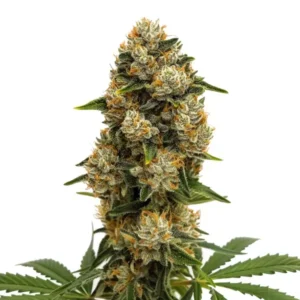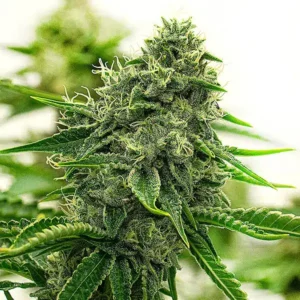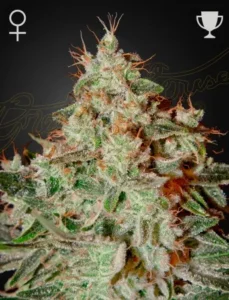


Jack Herer Auto, also commonly called Auto Jack Herer, is the autoflowering form of the classic Jack Herer genetic family. Current commercial seed lines are not identical, so their THC levels, genetic ratios and yield specifications differ, but they share a compact automatic lifecycle of around nine weeks from germination to harvest.
Current Jack Herer Auto lines generally reach about 70–110 cm. Published indoor yields range from approximately 400–700 g/m², while outdoor production ranges from around 60–150 g per plant depending on the seed line.
Recommended Strains
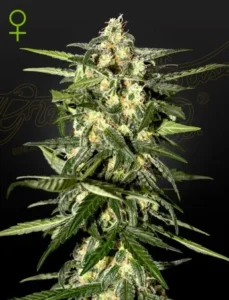
Auto Jack Herer

|
THC | 17% - 18% (Medium) |

|
Lineage | Jack Herer x Ruderalis |

|
Type | Autoflowering |

|
Height | 2.79 ft | 0.85 m |

|
Yield Outdoor | 7.05 oz/plant | 200 g/plant |

|
Life Cycle | 10 - 11 weeks |

|
Phenotype | 50% Indica / 50% Sativa |

|
Effects | Happy, Euphoric, Relaxed |

|
Flavors | Fruity, Skunk, Pine, Spicy |

Jack Herer Seeds
|
|
THC | 19% - 21% (Medium) |
|
|
Lineage | Skunk x Haze x Northern Lights |
|
|
Type | Feminized |
|
|
Height | 5.74 ft | 1.75 m |

|
Yield | High |

|
Yield Indoor | 1.31 - 1.8 oz/ft² | 400 - 550 g/m² |
|
|
Flowering Time | 10 - 12 weeks |
|
|
Phenotype | 50% Indica / 50% Sativa |
|
|
Effects | Focused, Energetic, Creative |
|
|
Flavors | Pine, Woody, Earthy |
| Jack Herer Auto Grow Info | Current seed-line data |
|---|---|
| Seed type | Feminized autoflower |
| Genetics | Jack Herer-derived autoflowering genetics; exact line varies |
| Genetic classification | Sativa dominant; published ratios vary |
| THC | Approx. 18.8–21% |
| Total lifecycle | About 9 weeks |
| Height | Approx. 70–110 cm |
| Indoor yield | 400–700 g/m² depending on line |
| Outdoor yield | 60–150 g/plant depending on line |
| Flowering trigger | Automatic; 12/12 not required |
| Common flavors | Earthy, Spicy, Sweet, Citrus/Pine |
Jack Herer Auto Genetics
Jack Herer Auto describes autoflowering seed lines derived from the classic Jack Herer genetic family, but the current commercial versions are not genetically identical.
One line is published as Jack Herer crossed with Ruderalis and includes a specific Sativa, Indica and Ruderalis ratio. Another commercial version is a Jack Herer-derived autoflowering breeding line with a different Sativa/Indica classification.
Because of those differences, one exact pedigree should not be assigned to every Jack Herer Auto sold under the name.
Growers should match exact product specifications to the seed line they purchased rather than assuming that all Jack Herer Auto genetics share the same THC, yield or genetic percentages.
Is Jack Herer Auto Indica or Sativa?
Jack Herer Auto is generally sativa dominant, but current seed lines publish different genetic classifications.
One current version is listed as 65% Sativa and 35% Indica. Another is listed as 50% Sativa, 30% Indica and 20% Ruderalis.
That difference is why describing every Jack Herer Auto as a 50/50 hybrid is inaccurate.
The available lines nevertheless share several Jack Herer characteristics, including relatively open branching, aromatic flowers and breeder-reported cerebral or energetic effects alongside some physical relaxation.
How Much THC Does Jack Herer Auto Have?
Current Jack Herer Auto seed lines publish THC specifications from approximately 18.8% to 21%.
One current version reaches up to 21% THC, while another official breeder page lists 18.8%. Older Growlantis content uses ranges such as 17–18% or 21–22%, which should be aligned with the current products.
These figures describe breeder-listed potency rather than guaranteed laboratory results from every plant.
Phenotype, cultivation conditions, harvest maturity and post-harvest handling can all influence the cannabinoid concentration measured in an individual harvest.
Jack Herer Auto Flavor and Aroma
Current Jack Herer Auto lines share an old-school aromatic profile centered around spice and earthy characteristics.
Depending on the seed line, documented flavors include sweet, earthy, peppery, spicy and citrus notes, while another version emphasizes wood, pine, incense-like aromas and Skunk sweetness.
The exact sensory profile therefore varies with genetics.
A general Jack Herer Auto guide should focus on this shared earthy, spicy and citrus-or-pine character instead of presenting one fixed terpene hierarchy as universal across every seed line.
How Long Does Jack Herer Auto Take to Grow?
Current Jack Herer Auto lines generally complete their full lifecycle in about nine weeks from germination to harvest.
This is one of the most consistent specifications across the current commercial versions.
One line publishes nine weeks as its total seed-to-harvest lifecycle. Another separately identifies approximately seven weeks of flowering within a nine-week total crop time.
This distinction matters because nine weeks should not be interpreted as nine weeks of flowering after a separate grower-controlled vegetative stage.
Jack Herer Auto develops continuously from seedling growth through pre-flower, flowering and maturity according to age.

Jack Herer Auto Flowering Time
Flowering data needs to be interpreted differently from the total lifecycle.
One current Jack Herer Auto line specifically publishes about seven weeks of flowering, while the complete crop takes approximately nine weeks.
Another current line primarily publishes a nine-week total seed-to-harvest lifecycle rather than separating flowering as an additional period.
For a general grow guide, the most reliable planning reference is therefore:
approximately nine weeks from germination to harvest.
Do not add seven to nine flowering weeks on top of several weeks of vegetation, because that would substantially overstate the lifecycle of these autoflowers.
Does Jack Herer Auto Need a 12/12 Light Cycle?
No. Jack Herer Auto does not require a 12/12 light-cycle change to initiate flowering.
Autoflowering genetics cause the plant to transition according to age and development rather than photoperiod.
A current documented Jack Herer Auto grow uses an 18/6 schedule throughout the entire nine-week lifecycle. Another current seed line can flower under photoperiods ranging from 12 to 18 hours of light per day.
This means 12/12 can technically be used with some lines, but it is not required as a flowering trigger.
Jack Herer Auto Height and Plant Structure
Current Jack Herer Auto lines stay relatively compact, with published heights ranging approximately 70–110 cm.
One version is listed at 70–110 cm, while another remains around 80–100 cm.
Despite the Sativa influence, this compact height makes Jack Herer Auto considerably easier to manage than many photoperiod Sativa-dominant plants.
Current descriptions also show useful side branching, allowing flowering sites to develop along more than just the central stem.
Root space, lighting, early plant health and phenotype can still affect final size, so these breeder ranges should be treated as planning references rather than exact targets.
Growing Jack Herer Auto Indoors
Indoor yield differs substantially between the current seed lines.
One publishes approximately 400–500 g/m², while another lists potential production of up to 700 g/m².
Because those figures belong to different commercial versions, 700 g/m² should not be presented as the expected output of every Jack Herer Auto plant.
Indoors, the relatively compact 70–110 cm structure makes these autos suitable for grow spaces where a full-size photoperiod Jack Herer would be less practical.
The short nine-week lifecycle also means that avoiding major early setbacks is important, as the plant cannot simply remain in vegetative growth for additional weeks to recover.
Growing Jack Herer Auto Outdoors
Outdoor growing was one of this page’s strongest historical search intents.
Current Jack Herer Auto lines publish approximately 60–150 g per plant outdoors, depending on the seed product. One version gives 60–150 g, while another lists around 80–100 g per plant.
Their automatic flowering behavior means outdoor plants do not need shortening autumn days to trigger bloom. Instead, the complete grow can generally fit into an approximately nine-week period.
This makes timing the grow around favorable weather more important than waiting for one fixed autumn harvest date.
Adequate sunlight, root space and stable early growth remain important because final production depends heavily on environmental conditions.
Jack Herer Auto Yield
Current Jack Herer Auto lines produce approximately 400–700 g/m² indoors and 60–150 g per plant outdoors.
The broad indoor range comes from genuine differences between commercial seed lines rather than one plant having an equally realistic chance of producing either extreme.
Growers should therefore check their exact product before setting expectations.
Yield figures also describe breeder-listed production potential, not guaranteed harvest weights.
Light intensity, root volume, plant density, early health, environment and phenotype can all influence final results during the relatively short nine-week lifecycle.

How to Germinate Jack Herer Auto Seeds
Jack Herer Auto does not require a unique strain-specific germination method.
Seeds need consistent moisture, suitable warmth and access to oxygen without remaining permanently saturated. A damp paper-towel method can be used to observe taproot emergence, while direct germination in a suitable growing medium can reduce handling.
Once the taproot appears, transfer the seed carefully and avoid damaging the new root.
Because the total lifecycle is short, avoiding unnecessary stress during establishment is particularly useful.
For broader starting guidance, see the cannabis seed germination guide.
Early Growth and Automatic Pre-Flower
Jack Herer Auto should not be treated as a photoperiod plant with a grower-controlled vegetative stage.
Early growth focuses on roots, leaves and branch development before the plant begins transitioning naturally toward pre-flower.
A documented current Jack Herer Auto grow shows several weeks of early vegetative development followed by pre-flower around the middle of the nine-week lifecycle.
That progression is useful as an example, but it should not be turned into a mandatory biological calendar for every seed line.
The goal during early growth is consistent development. Severe overwatering, excessive nutrients or root damage can reduce final plant size because an autoflower cannot simply extend vegetation to compensate.
Jack Herer Auto 9-Week Grow Example
A documented Jack Herer Auto grow provides a useful example of how one seed line can progress through its nine-week lifecycle.
The breeder diary begins with germination in week one, followed by early vegetative development through approximately weeks two to four. Pre-flower becomes established around week five, flowering develops during weeks six through eight, and the documented plants reach harvest around week nine.
The grow remains under an 18/6 light schedule throughout.
This timeline is best used as an example rather than a rigid rule. Different seed lines, phenotypes and environments can shift individual developmental milestones even when total lifecycle specifications remain similar.
Training Jack Herer Auto
Jack Herer Auto’s compact size and lateral branching make gentle canopy management possible, but heavy stress is not required.
Low-stress branch positioning can help spread growth where several branches overlap or compete for light.
Some current Jack Herer Auto genetics are also specifically suited to Sea of Green layouts, where compact plants can be arranged efficiently across the available canopy.
High-stress techniques should be approached more cautiously because a nine-week autoflower has limited time to recover from significant setbacks.
Training should therefore focus on improving structure and light distribution rather than attempting to force a particular yield.
Feeding Jack Herer Auto
Jack Herer Auto does not require one universal strain-specific nutrient formula.
Nutrition should be adapted to the growing medium, fertilizer system, water quality, root volume, plant size and visible response.
There is no need to prescribe a high-nitrogen vegetative formula followed automatically by large phosphorus and potassium increases during flowering.
Likewise, routine calcium and magnesium supplementation should only be used when the growing system or actual plant symptoms justify it.
With a short autoflower lifecycle, conservative adjustments are generally more useful than correcting severe overfeeding after it has already slowed plant development.
Watering Jack Herer Auto
Water demand changes significantly during Jack Herer Auto’s approximately nine-week lifecycle.
Young plants with limited root systems need much less water than mature plants carrying multiple flowering branches.
For that reason, avoid using one fixed watering quantity or frequency throughout the grow.
In containers, substrate moisture and pot weight can provide useful information about actual demand. Avoid keeping the root zone permanently saturated, particularly during the early stages.
The autoflower watering guide explains how irrigation requirements change as roots, canopy size and flowering development increase.
Airflow and Flower Development
Jack Herer Auto can produce substantial flowering material on a relatively compact plant, so airflow becomes increasingly relevant later in the lifecycle.
The objective should be even circulation above, through and below the canopy rather than directing excessive wind at individual branches.
Dense or overlapping plant material can maintain a more humid microclimate than a general room sensor suggests.
Maintain sensible spacing, remove dead plant material and avoid persistent moisture within flowers.
The guide to microbial risk in cannabis growing explains why flower density, moisture and poor circulation can increase microbial pressure regardless of strain reputation.
Common Jack Herer Auto Growing Problems
One common mistake is confusing autoflowering with photoperiod cultivation and assuming that a 12/12 switch is necessary. Jack Herer Auto flowers automatically and does not require that trigger.
Another problem is using outdated specifications. Current seed lines finish in about nine weeks, not a universal 10–12 weeks.
Overwatering and excessive nutrient concentration can also reduce early development during a lifecycle with limited recovery time.
Finally, avoid treating every Jack Herer Auto as genetically identical or universally resistant to mold and pests. The current commercial seed lines differ, and environmental conditions remain important regardless of genetic reputation.
Jack Herer Auto vs Photoperiod Jack Herer
Jack Herer Auto and photoperiod Jack Herer should not share the same cultivation timeline.
Jack Herer Auto flowers according to age and generally completes its entire lifecycle in approximately nine weeks. Current plants remain relatively compact at around 70–110 cm.
Photoperiod Jack Herer remains in vegetative growth until the grower changes the light schedule, so its complete seed-to-harvest timeline can be considerably longer. Its height and yield specifications also belong to a different product category.
This distinction is especially important when searching for “Jack Herer flowering time,” because flowering data from the photoperiod version should not be transferred directly to the Auto.
When to Harvest Jack Herer Auto
The strongest current planning reference for Jack Herer Auto is approximately nine weeks from seed to harvest.
One current seed line breaks this down into roughly seven weeks of flowering within that total period.
Use breeder timing together with direct observation of flower maturity rather than cutting automatically on one calendar day.
Trichome development can provide additional information as the plant reaches its expected finishing window, but there is no need to require one universal amber-trichome percentage for every phenotype.
Drying and curing begin after harvest and should not be counted as extra weeks within the nine-week plant lifecycle.
Jack Herer Auto Effects
Reported effects vary somewhat between current Jack Herer Auto lines.
One current version is commonly described as happy, energetic and creative, while another breeder emphasizes a combination of cerebral stimulation and physical relaxation.
This variation matches the differences in genetic ratios between the available seed lines.
Jack Herer Auto is generally associated with an uplifting or alert character, but those descriptions remain subjective rather than guaranteed outcomes.
THC also differs between versions, currently ranging from approximately 18.8% to 21%, so dose, tolerance and the chemistry of an individual harvest can all influence the final experience.

Jack Herer Auto FAQs
How long does Jack Herer Auto take from seed to harvest?
Current Jack Herer Auto seed lines complete their full lifecycle in about nine weeks from germination to harvest. One line separately lists around seven weeks of flowering within that nine-week total. Because these are autoflowers, nine weeks should not be interpreted as a flowering period added after a separate grower-controlled vegetative stage.
Does Jack Herer Auto need a 12/12 light cycle?
No. Jack Herer Auto flowers according to age and development and does not require a 12/12 light-cycle switch. Current breeder guidance supports flowering under longer daily light schedules, while one line can flower under any photoperiod between 12 and 18 hours. A 12/12 change is therefore optional, not a trigger.
How much THC does Jack Herer Auto have?
Current Jack Herer Auto lines differ in potency. One is listed at up to 21% THC, while another current breeder page publishes 18.8% THC. A general guide should therefore use roughly 18.8–21% rather than one universal figure. Actual measured potency can also vary with phenotype, cultivation and post-harvest handling.
How much does Jack Herer Auto yield?
Current Jack Herer Auto lines publish approximately 400–700 g/m² indoors and 60–150 g per plant outdoors, depending on the seed line. The highest indoor figure belongs to a different commercial version from the one listing 400–500 g/m², so growers should check their exact product rather than treating 700 g/m² as universal.
How tall does Jack Herer Auto grow?
Current Jack Herer Auto seed lines remain relatively compact, with published heights spanning roughly 70–110 cm. One breeder lists 70–110 cm, while another gives approximately 80–100 cm. Root space, light, early plant health and phenotype can still influence final size within or around those breeder ranges.
Is Jack Herer Auto Indica or Sativa?
Jack Herer Auto is generally sativa dominant, but the current seed lines do not publish the same genetic ratio. One lists 65% Sativa and 35% Indica, while another lists 50% Sativa, 30% Indica and 20% Ruderalis. That difference is why one universal Indica/Sativa percentage should not be used across all versions.