

Cannabicyclol (CBL) is a rare cannabis cannabinoid formed mainly when cannabichromene (CBC) undergoes chemical transformation, including exposure to light. CBL is not known to produce a THC-like high, but human effects remain largely unknown. New studies from 2025 and 2026 identified serotonin-receptor activity and biological effects in mice, although no clinical benefits have been demonstrated in people.
What Is Cannabicyclol?
Cannabicyclol, usually abbreviated CBL, is one of the many minor phytocannabinoids identified in cannabis.
Recommended Strains
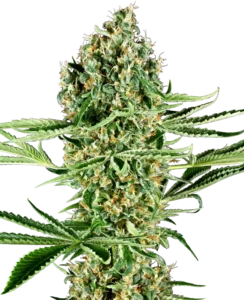
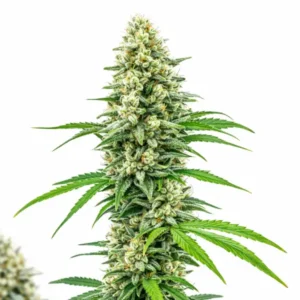
Critical Runtz

|
THC | 22% - 24% (High) |

|
Lineage | Critical x Runtz |

|
Type | Feminized |

|
Height | 5.74 ft | 1.75 m |

|
Yield | High |

|
Yield Indoor | 1.31 - 1.8 oz/ft² | 400 - 550 g/m² |

|
Flowering Time | 8 - 9 weeks |

|
Phenotype | 70% Indica / 30% Sativa |

|
Effects | Euphoric, Energetic, Relaxed |

|
Flavors | Sweet, Citrus, Berry, Tropical |
Cookies & Cream
|
|
THC | 17% - 22% (Medium) |
|
|
Lineage | Girl Scout Cookies x Starfighter |
|
|
Type | Feminized |
|
|
Height | 4.92 ft | 1.5 m |
|
|
Yield | High |
|
|
Yield Indoor | 1.31 - 1.64 oz/ft² | 400 - 500 g/m² |
|
|
Flowering Time | 8 - 10 weeks |
|
|
Phenotype | 50% Indica / 50% Sativa |
|
|
Effects | Creative, Energetic, Uplifted |
|
|
Flavors | Fruity, Sweet, Woody |
Chemically, it has the molecular formula C21H30O2, the same molecular formula as several other cannabinoids, but a different molecular structure. It occurs at much lower concentrations than major cannabinoids such as THC or CBD and has historically received very little pharmacological research.
CBL is particularly interesting because it is not generally considered a major direct product of the plant’s primary cannabinoid biosynthetic pathway.
Instead, much of it appears to form from another cannabinoid: cannabichromene (CBC).
That relationship is essential to understanding CBL.
How Is CBL Formed?
CBL can form when CBC undergoes a structural transformation involving cyclization.
Early cannabinoid chemistry demonstrated that exposure to light can convert CBC into CBL through a photochemical reaction. More specifically, the process involves an intramolecular photocycloaddition that changes CBC’s ring structure.
The acidic precursor follows a related pathway:
CBCA → CBLA → CBL
where CBCA is cannabichromenic acid and CBLA is cannabicyclolic acid.
Because these transformations can occur following irradiation and during storage, researchers have historically described CBL-type cannabinoids partly as degradation or transformation products rather than compounds produced directly through a dedicated CBL synthase pathway.
This is why CBL is closely connected with cannabichromene (CBC).
Does Older Cannabis Contain More CBL?
Potentially, but it is not a universal rule.
Because CBC and CBCA can transform into CBL-type compounds after exposure to light, older cannabis that has experienced suitable environmental conditions may contain proportionally more CBL than freshly harvested material.
Historical experiments demonstrated the photochemical conversion of CBC to CBL and CBCA to CBLA.
However, cannabinoid degradation does not follow one simple pathway. Light, temperature, oxygen, storage duration, starting cannabinoid composition and other conditions can all affect how a cannabis sample changes.
CBL should therefore not be treated as a universal “age marker” in the same way that people sometimes oversimplify the relationship between THC and CBN.
If you are interested in cannabinoid changes during storage more broadly, cannabis degradation over time involves several simultaneous chemical processes.
Is Cannabicyclol Psychoactive?
CBL is not currently known to produce THC-like intoxication, but describing it simply as “non-psychoactive” is more certain than the human evidence allows.
THC produces many of its characteristic intoxicating effects through activation of CB1 cannabinoid receptors in the central nervous system.
A 2025 laboratory study found that CBL showed little affinity for CB1 and only weak interaction with CB2 under the conditions tested. Instead, researchers identified a much stronger interaction with the serotonin 5-HT1A receptor.
The first in vivo CBL study, published in 2026, similarly found no apparent CB1-mediated cannabinoid-like activity in mice.
However, CBL was not biologically inactive. At sufficiently high experimental doses it produced hypothermia and reduced locomotor activity.
So the more accurate conclusion is:
CBL does not currently appear to behave like THC, but its neurological effects in humans have not been established.
How Does CBL Work in the Body?
We do not yet have a complete answer.
Until recently, there was remarkably little experimental pharmacology on CBL. That changed with two studies published in 2025 and 2026.
CBL and the 5-HT1A Serotonin Receptor
A 2025 study published in the Journal of Natural Products examined CBL interaction with several receptors.
Researchers found relatively weak interaction with CB1 and CB2 cannabinoid receptors but considerably stronger activity at the 5-HT1A serotonin receptor.
In cell-based experiments, CBL acted as a positive allosteric modulator of serotonin signaling at 5-HT1A.
A positive allosteric modulator does not simply replace serotonin at its normal binding site. Instead, it binds elsewhere on the receptor and can alter how the receptor responds to serotonin.
That is pharmacologically interesting because 5-HT1A participates in multiple neurological processes.
But this was principally in vitro receptor research.
It does not demonstrate that consuming CBL improves mood, treats anxiety, reduces depression or produces any other clinical effect in humans.
What Did the First Animal Study of CBL Find?
The evidence took another step forward in February 2026.
Researchers published what they described as the first investigation of CBL’s pharmacological effects in vivo.
CBL was administered to mice across several experimental models. At high doses, researchers observed several effects:
- reduced paw edema in an experimentally induced inflammation model;
- reduced levels of the inflammatory marker IL-6;
- reduced cold allodynia in a model of neuropathic pain;
- hypothermia at certain doses;
- reduced locomotor activity at higher doses.
The research suggested that some CBL activity may involve the adenosine A2A receptor rather than the classical cannabinoid receptors CB1 and CB2.
This is genuinely interesting new evidence.
It is also preclinical evidence in mice.
The doses were high, and some apparent pain-related effects occurred alongside other physiological changes such as reduced body temperature. The researchers specifically noted that these effects could complicate interpretation of the analgesia results.
The study therefore provides a reason to investigate CBL further, not evidence that CBL should be used for inflammation or pain in people.
Does CBL Have Anti-Inflammatory Benefits?
There is now preliminary animal evidence of anti-inflammatory activity, but no demonstrated anti-inflammatory benefit in humans.
In the 2026 mouse study, CBL at 100 mg/kg reduced experimentally induced paw swelling and prevented the increase of IL-6 under the study conditions.
That is substantially stronger evidence than the vague speculation that existed previously because it represents an actual in vivo experiment.
But several steps remain before making a medical claim:
mouse model → additional preclinical replication → safety research → human dosing → clinical trials
Those steps have not been completed.
It would therefore be inaccurate to say that CBL “reduces inflammation” as a therapeutic statement for humans.
Can CBL Relieve Pain?
We do not know whether CBL relieves pain in humans.
The same 2026 study found that a high CBL dose reduced cold allodynia in a mouse model of neuropathic pain. However, CBL also affected body temperature at relevant doses, which makes interpretation more complicated.
This is a useful experimental signal, but it is nowhere close to establishing CBL as an analgesic.
There are currently no established:
- therapeutic CBL doses;
- CBL pain medications;
- human CBL clinical trials demonstrating analgesia;
- safety profiles for repeated therapeutic use.
Calling CBL a natural pain reliever would therefore be premature.
Does CBL Help Anxiety or Depression?
There is no evidence that CBL treats anxiety or depression.
The 5-HT1A finding from 2025 might initially sound relevant because this serotonin receptor participates in neurological pathways investigated in psychiatric pharmacology.
But receptor interaction alone does not predict clinical outcomes.
Importantly, the 2026 mouse study specifically tested CBL in behavioral models related to anxiety- and depression-like activity. The researchers did not find anxiolytic- or antidepressant-like activity without simultaneous changes in locomotor behavior.
So claims that CBL may improve mood, reduce anxiety or provide mental-health benefits would currently be speculative.
CBL vs. THC, CBD, CBC and CBN
CBL differs substantially from the better-known cannabinoids.
| Cannabinoid | Main relationship | THC-like intoxication | Research level |
|---|---|---|---|
| THC | Major cannabinoid; strong CB1 activity | Yes | Extensive human research |
| CBD | Major non-intoxicating cannabinoid | No typical THC-like high | Substantial preclinical and human research |
| CBC | Minor cannabinoid and chemical precursor to CBL | Not known for THC-like intoxication | Limited but much broader than CBL |
| CBN | Mainly associated with cannabinoid degradation/oxidation pathways | Much weaker than THC | Limited human research |
| CBL | Formed primarily from CBC/CBCA transformation | No known THC-like high | Very early; mainly cell and animal research |
The relationship between CBC and CBL is especially important.
CBC is not simply another cannabinoid that happens to coexist with CBL: it is a chemical precursor from which CBL can form.
Is There an Entourage Effect Between CBL and THC or CBD?
There is currently no direct evidence demonstrating a meaningful entourage effect involving CBL.
The existing article claims that CBL complements THC and CBD and can create a more balanced or rounded cannabis experience. There is no adequate experimental basis for those statements.
Research showing that CBL interacts with 5-HT1A or adenosine A2A receptors does not prove that it improves, modifies or balances the subjective effects of THC.
Likewise, there is no clinical evidence showing that combining CBL with CBD produces superior therapeutic outcomes.
Until combination studies exist, claims about CBL’s entourage effect remain hypothetical.
Are There CBL-Rich Cannabis Strains?
There are currently no well-established commercial cannabis strains that can reliably be described as CBL-rich based solely on their strain name.
CBL concentration depends partly on the amount of its CBC/CBCA precursors and on chemical transformations occurring after the plant produces those compounds.
That makes the current article’s recommendation of strains such as Auto Jack Herer, Cookies Gelato or Super OG Kush unsupported.
A strain name does not guarantee a particular minor-cannabinoid concentration, and individual batches can vary substantially.
The only reliable way to establish that a cannabis sample contains meaningful CBL is appropriate laboratory analysis.
Can Growers Increase CBL Levels?
In principle, researchers can deliberately convert CBC into CBL under controlled chemical or photochemical conditions.
That does not mean cannabis growers should intentionally expose plants or harvested flower to light in an attempt to manufacture CBL.
Light exposure also promotes degradation of other cannabis constituents and can reduce product quality during storage.
Likewise, there is no evidence that changing soil nutrition, watering schedules or ordinary grow-light cycles selectively produces clinically meaningful concentrations of CBL.
The current article’s suggestion that growers adjust cultivation conditions to optimize CBL therefore goes beyond the evidence.
Is CBL Available as a Consumer Cannabinoid?
CBL remains far less common commercially than CBD, CBG, CBN or CBC.
Its scarcity reflects both its relatively low natural abundance and the extremely early stage of research surrounding its effects.
The publication of new synthetic methods has made purified CBL more accessible for laboratory research. The 2025 receptor study, for example, investigated methods for converting CBC into CBL and characterizing the resulting compound.
That development may accelerate research.
It does not mean CBL products have established benefits, doses or long-term safety in humans.
The Bottom Line on Cannabicyclol
CBL has gone from an almost entirely unexplored cannabinoid to an interesting early research target.
Its chemistry is comparatively well understood: it can form from CBC through photochemical or acidic transformation.
Its pharmacology is only beginning to emerge.
A 2025 study identified CBL as a positive allosteric modulator of 5-HT1A signaling in cell experiments, and a 2026 mouse study found effects involving inflammation, cold allodynia, body temperature and adenosine A2A signaling.
Those findings are promising research leads, not demonstrated health benefits.
Until human studies exist, claims about CBL treating pain, inflammation, anxiety or other medical conditions remain unproven.

FAQs
What is cannabicyclol?
Cannabicyclol, or CBL, is a rare minor phytocannabinoid associated with cannabis. It forms largely through transformation of cannabichromene (CBC), including photochemical reactions caused by light exposure. CBL has historically been poorly studied, although new research published in 2025 and 2026 has begun identifying possible biological targets and effects.
Does CBL get you high?
CBL is not currently known to produce the THC-like high associated with strong CB1 receptor activation. Laboratory research found little affinity for CB1, and a 2026 mouse study found no apparent CB1-mediated cannabinoid-like activity. However, human psychoactive effects have not been adequately studied, so calling CBL completely inactive would be premature.
What are the potential benefits of CBL?
No CBL health benefits have been demonstrated in humans. A 2026 mouse study found preliminary anti-inflammatory and pain-related effects at high experimental doses, while 2025 cell research identified activity at the serotonin 5-HT1A receptor. These results justify further investigation but do not establish CBL as a treatment.
How is CBL different from CBC?
CBC is a minor cannabinoid produced through established cannabis biosynthetic pathways, while CBL can form when CBC undergoes structural transformation following light exposure or certain chemical conditions. CBC therefore acts as an important precursor to CBL. CBC also has a substantially larger pharmacological research base than CBL.
Is CBL anti-inflammatory?
A 2026 animal study provides preliminary evidence: high-dose CBL reduced paw edema and IL-6 levels in an experimentally induced mouse inflammation model. That is preclinical evidence rather than proof of an anti-inflammatory benefit in humans. No clinical trial has established CBL as an anti-inflammatory treatment.
Are there cannabis strains high in CBL?
There are no reliably established “CBL strains” based simply on cultivar names. CBL levels can depend on precursor cannabinoids such as CBC and on chemical changes occurring after production. Laboratory cannabinoid analysis is therefore more reliable than labels such as indica, sativa or strain name when determining whether a sample contains CBL.