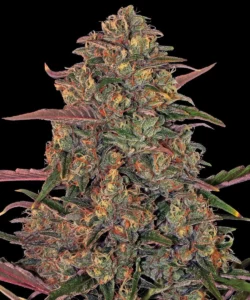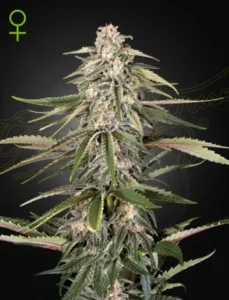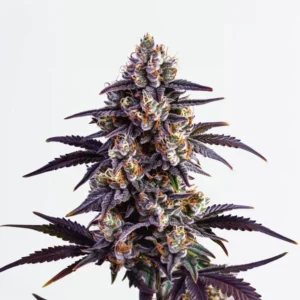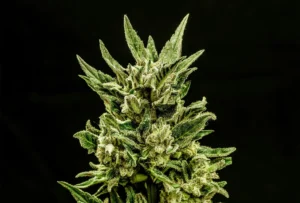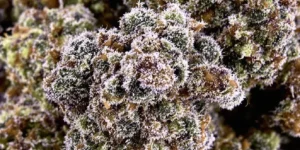
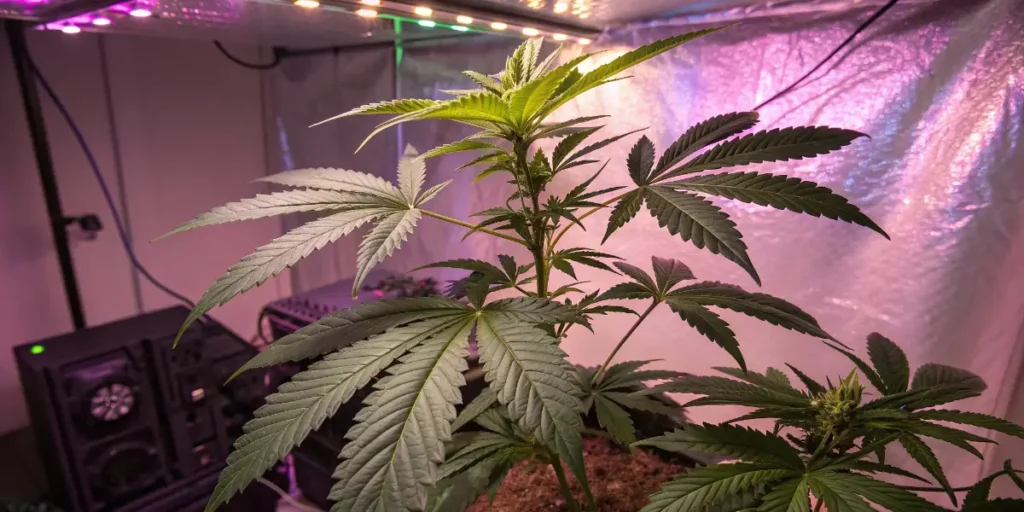

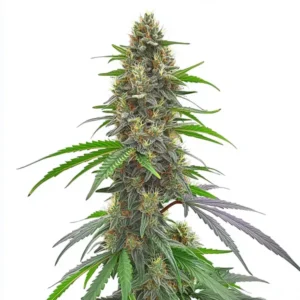
Jealousy is a high-potency feminized photoperiod strain from Barney’s Farm created from Sherbert Bx1 × Gelato 41 genetics. The cultivar combines an even 50% Indica and 50% Sativa genetic profile with vigorous branching, substantial yield potential, high THC levels, and a complex flavor profile built around citrus, fruity vanilla, pepper, and apricot.
Current breeder specifications place Jealousy at approximately 28% THC. Indoors, plants generally reach 120–150 cm and can produce up to 700 g/m² under favorable conditions. Outdoors, mature plants can reach approximately 220 cm and produce up to 2,000 g per plant where sunlight, root space, climate, and plant health allow full development.
Recommended Strains
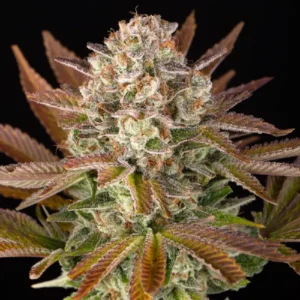
Jealousy

|
THC | 28% - 29% (High) |

|
Lineage | Sherbert Bx1 x Gelato 41 |

|
Type | Feminized |

|
Height | 5.91 ft | 1.8 m |

|
Yield | High |

|
Yield Indoor | 1.97 - 2.29 oz/ft² | 600 - 700 g/m² |

|
Flowering Time | 8 - 10 weeks |

|
Phenotype | 50% Indica / 50% Sativa |

|
Effects | Giggly, Relaxed, Happy |

|
Flavors | Citrus, Vanilla, Pepper, Apricot |
Permanent Marker
|
|
THC | 32% - 34% (High) |
|
|
Lineage | (Biscotti x Jealousy) x (Sherb Bx) |
|
|
Type | Feminized |
|
|
Height | 4.92 ft | 1.5 m |
|
|
Yield | High |
|
|
Yield Indoor | 1.64 - 1.8 oz/ft² | 500 - 550 g/m² |

|
Yield Outdoor | 24.69 - 29.98 oz/plant | 700 - 850 g/plant |
|
|
Flowering Time | 8 - 10 weeks |
|
|
Phenotype | 50% Indica / 50% Sativa |

|
Medical | Arthritis, Insomnia, Pain |
|
|
Effects | Happy, Hungry, Relaxed |
|
|
Flavors | Fruity, Sweet |
The flowering stage lasts approximately 65–70 days indoors, while outdoor plants generally finish during the second to third week of October in the Northern Hemisphere.
You can find Jealousy seeds and other genetics from Barney’s Farm at Growlantis.
Jealousy Strain Grow Info
| Trait | Jealousy |
|---|---|
| Genetics | Sherbert Bx1 × Gelato 41 |
| Seed type | Feminized photoperiod |
| Indica / Sativa | 50% Indica / 50% Sativa |
| THC | Approximately 28% |
| Flowering time | 65–70 days |
| Indoor height | 120–150 cm |
| Indoor yield | Up to 700 g/m² |
| Outdoor height | Up to 220 cm |
| Outdoor yield | Up to 2,000 g/plant |
| Outdoor harvest | 2nd–3rd week of October |
| Taste | Citrus, fruity vanilla, pepper, apricot |
| Aroma | Earthy, fuel, fruity citrus, pine |
| Reported effects | Giggly, relaxing, happy, talkative |
These figures describe the Barney’s Farm Jealousy seed line currently sold through Growlantis. Actual height, yield, cannabinoid concentration, and finishing speed can still vary according to phenotype, vegetative duration, root volume, lighting, climate, training, and overall plant health.
What Is the Jealousy Strain?
Jealousy is a balanced modern hybrid created from Sherbert Bx1 and Gelato 41. Its 50/50 genetic ratio gives the cultivar characteristics associated with both Indica and Sativa growth and effect profiles rather than pushing it strongly toward one side.
From a cultivation perspective, Jealousy is characterized by vigorous growth and strong branching. This structure makes it suitable for growers who want to organize a wider productive canopy through topping, Low-Stress Training, or other branch-management techniques during vegetation.
The plant is photoperiod dependent, so indoor growers decide when flowering begins by changing the light schedule. Total seed-to-harvest time therefore depends on vegetative duration in addition to the official 65–70 day flowering period.
Jealousy Genetics
The official Jealousy genetic background is Sherbert Bx1 × Gelato 41.
Both sides of the cross contribute to the cultivar’s modern dessert-family profile, while the finished line combines sweet fruit and vanilla characteristics with pepper, citrus, earth, fuel, and pine.
The resulting cultivar is classified as approximately 50% Indica and 50% Sativa. This balanced ratio is the most consistent current breeder specification and should be used instead of describing Jealousy as strongly Indica dominant.
The specific lineage also matters when comparing grow information. Other varieties carrying Jealousy genetics, including Permanent Marker or Sour Jealousy Auto, should not automatically inherit this plant’s flowering time, height, yield, or cultivation schedule.
Is Jealousy Indica or Sativa?
Jealousy is a balanced hybrid containing approximately 50% Indica and 50% Sativa genetics.
That equal split is reflected in both its growth structure and its breeder-reported effects. The plant develops vigorous branches that can be shaped into a productive canopy, while the finished experience combines a mentally social and upbeat character with progressively stronger physical relaxation.
Barney’s Farm describes the primary reported effects as giggly, happy, talkative, and relaxing.
Individual responses can still vary according to dose, tolerance, phenotype, cannabinoid concentration, and finished flower quality, so the 50/50 genetic ratio should not be treated as a guarantee of one identical experience.
Jealousy THC
Jealousy reaches approximately 28% THC according to the current breeder specification.
This places it firmly within the high-potency category, although the published percentage should be treated as genetic potential rather than a guaranteed laboratory result from every harvested plant.
Phenotype, light intensity, environmental stability, plant health, harvest maturity, drying, curing, and laboratory methodology can all influence measured cannabinoid concentration.
Using approximately 28% keeps the grow guide aligned with the breeder’s current technical data rather than extending the figure to 29% without equivalent current breeder support.
Jealousy Flowering Time
Jealousy flowers for approximately 65–70 days indoors, equivalent to roughly nine to ten weeks after flowering has been initiated.
This range covers the flowering stage only. It does not include germination or vegetative growth.
Because Jealousy is photoperiod dependent, indoor growers control the beginning of bloom by changing from a vegetative light schedule such as 18/6 to 12 hours of light and 12 hours of uninterrupted darkness.
The plant can therefore remain in vegetation for different lengths of time according to canopy size, root development, plant number, available height, and the training strategy being used.
Jealousy Plant Height
Jealousy develops into a medium-to-large photoperiod plant.
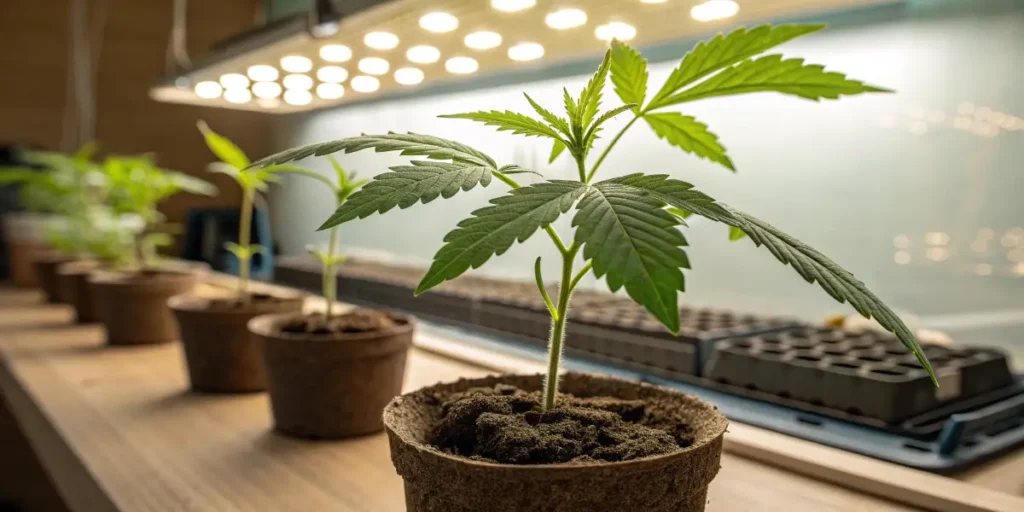
Indoor specimens generally reach approximately 120–150 cm, while outdoor plants can grow to around 220 cm when they receive sufficient root space, sunlight, and seasonal development.
These separate ranges are more useful than assigning the cultivar a single universal height.
Indoor growers can influence final dimensions significantly through vegetative duration. Switching smaller plants to 12/12 limits final size, while extending vegetation allows the vigorous branching structure to occupy a larger canopy before flowering begins.
Training can further redistribute that growth horizontally where vertical clearance is limited.
Growing Jealousy Indoors
Jealousy performs particularly well indoors when its vigorous branching is organized into an efficient canopy before flowering begins.
During vegetative growth, growers can maintain an 18/6 photoperiod while allowing the root system and major branches to establish. The switch to 12/12 should occur when the canopy has reached an appropriate size for the available grow area rather than after a predetermined number of weeks.
Current breeder specifications place indoor height at approximately 120–150 cm and production potential at up to 700 g/m².
Making effective use of that yield potential depends more on light distribution, healthy roots, canopy coverage, and stable flowering conditions than on following one rigid cultivation calendar.
Growing Jealousy Outdoors
Jealousy has very high outdoor production potential where the growing season remains suitable into October.
Plants can reach approximately 220 cm and the breeder lists yields of up to 2,000 g per plant under favorable conditions. Reaching that upper figure requires a large, healthy specimen with substantial root volume, strong sunlight, appropriate irrigation, and enough seasonal time to develop its full structure.
Choose an outdoor location with good direct sunlight, drainage, and enough horizontal space for the branches to expand without excessive crowding.
Because the strain finishes during the second to third week of October, growers should also consider autumn rain and humidity when selecting an outdoor location.
Jealousy Yield
Yield was historically one of the strongest search intents for this page, and Jealousy has considerable production potential.
Current breeder specifications place indoor yield at up to 700 g/m², while outdoor plants can produce up to 2,000 g each under particularly favorable conditions.
These numbers should be treated as potential rather than guaranteed harvest weights.
Indoor production depends on lighting, usable canopy area, vegetative duration, plant density, root space, training, irrigation, nutrition, and environmental stability. Outdoor yield additionally depends on sunlight, soil volume, plant size, climate, planting date, and seasonal weather.
Jealousy Outdoor Harvest Time
Jealousy generally reaches outdoor maturity during the second to third week of October in the Northern Hemisphere.
This current breeder window is later than older descriptions that place harvest in late September or the beginning of October.
Latitude, phenotype, temperatures, sunlight, and seasonal weather can still move the exact finishing date slightly. The breeder window should therefore be used for planning while actual flower and trichome maturity determine the final harvest day.
As mid-October approaches, outdoor growers should also monitor prolonged rain and humidity around the dense flowers.
Germinating Jealousy Seeds
Jealousy does not require a unique strain-specific germination technique.
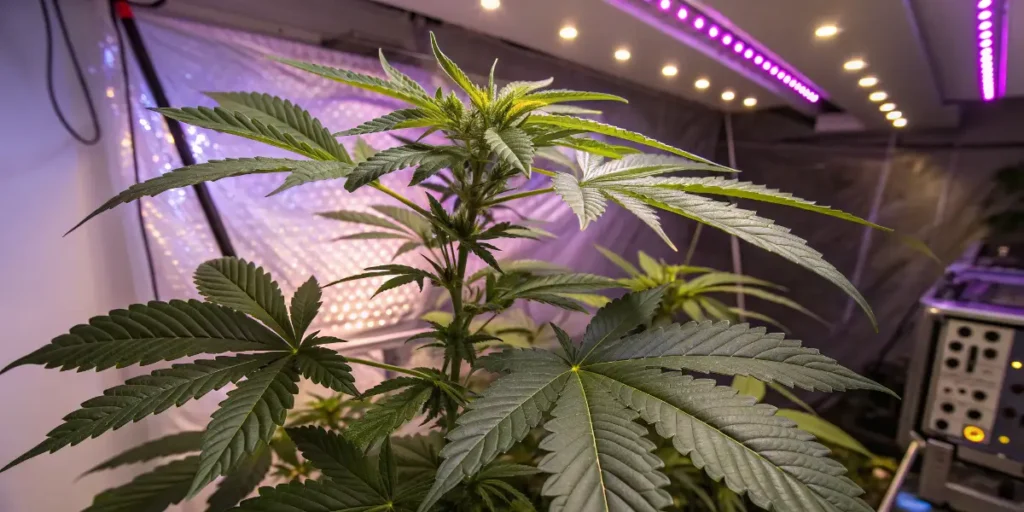
Seeds need stable warmth, consistent moisture, oxygen, and careful handling while the first root emerges. A controlled moist paper-towel method or another suitable propagation technique can work when conditions remain stable.
Once the taproot appears, transfer the seed carefully into the chosen growing medium without damaging the exposed root.
Young seedlings initially use much less water and nutrition than established plants, so the objective should be steady root development rather than forcing rapid growth through excessive irrigation or fertilizer.
For broader guidance, see how long cannabis seeds take to germinate.
Jealousy Vegetative Growth
Jealousy develops vigorous branches during vegetation, making this stage particularly important for building the structure that will later support its flowers.
Indoor growers can maintain an 18/6 photoperiod until the plant reaches the desired canopy size. There is no universal three-, four-, or six-week vegetative requirement because the grower determines when flowering begins.
Allowing additional vegetative time creates a larger root system and more substantial branch development, but it also increases the amount of space the plant will require after the switch to 12/12.
This is therefore the most useful stage for topping, Low-Stress Training, pruning, and general canopy organization.
Training Jealousy
Jealousy’s strong natural branching makes it particularly suitable for canopy training.
Topping during healthy vegetative growth can reduce dominance of the main stem and encourage several productive branches. Low-Stress Training can then spread those branches outward so more of the canopy receives direct light.
A Screen of Green can also work well where growers want to organize a larger indoor canopy while keeping branch height relatively even.
Training should have a clear structural purpose rather than becoming a sequence of techniques applied automatically. Once flowering is established, aggressive manipulation becomes less useful and the priority should gradually shift toward branch support, light exposure, and airflow.
Jealousy Flowering Development
Once the light schedule changes to 12/12, Jealousy begins its approximately 65–70 day flowering period.
The early part of bloom can include continued branch extension while flowering sites become increasingly visible. Growers can make final gentle canopy adjustments during this transition before the flowers become too developed for major repositioning.
As flowering progresses, Jealousy produces increasingly dense, resinous buds while its citrus, vanilla, fruit, pepper, earthy, fuel, and pine characteristics become more pronounced.
Late flowering should focus on stable conditions, appropriate irrigation, branch support where necessary, and enough airflow through the canopy to prevent stagnant moisture.
Flowering Days 1–21
During roughly the first three weeks after the switch to 12/12, Jealousy moves from vegetative development into established flower production.
The plant can continue stretching during this transition, so growers should monitor branch position and available vertical space while the final canopy structure takes shape.
This period is a practical time to complete gentle training and remove obviously unproductive growth where necessary.
The objective should be an open, evenly exposed canopy that can support the heavier flowers that develop later, rather than continuing aggressive pruning once reproductive growth has become the plant’s priority.
Flowering Days 22–49
During the middle of the flowering period, flower mass and resin production increase substantially.
Jealousy’s strong branching begins carrying progressively more weight, making even light distribution and airflow increasingly important. The cultivar’s aromatic profile also becomes considerably more noticeable during this stage.
Major structural training should now be largely complete.
Growers should focus instead on maintaining healthy roots, appropriate irrigation, stable environmental conditions, and a nutrient program suited to the growing medium rather than repeatedly changing the canopy during active bud development.
Flowering Days 50–70
The final portion of flowering is focused on maturation.
Flowers continue gaining density and resin as Jealousy approaches the official 65–70 day breeder window. This range should identify when close maturity checks become especially important rather than acting as an automatic harvest command.
Individual plants can finish slightly differently according to phenotype and growing conditions.
As the expected window approaches, evaluate actual flower and trichome development and combine those observations with the breeder timeframe before deciding on the final harvest date.
Feeding Jealousy
Jealousy does not require one universal strain-specific NPK ratio.
During vegetative growth, use a nutrient program appropriate to the chosen medium that supports healthy root, stem, leaf, and branch development. As flowering becomes established, transition toward the bloom-oriented program associated with the fertilizer system being used.
High yield potential does not mean that aggressively increasing phosphorus or potassium will automatically increase flower production.
Nutrient concentration should reflect substrate, water quality, root volume, plant size, and actual response. Monitor leaf color, leaf tips, growth rate, and general plant condition instead of treating one fixed feeding schedule as a genetic requirement.
Watering Jealousy
Jealousy should be watered according to actual root-zone conditions rather than a rigid daily schedule.
Young plants initially consume relatively little water because their roots occupy only a limited part of the growing medium. As the canopy and root system expand, water demand naturally increases.
Container volume, substrate, temperature, humidity, light intensity, and airflow all influence irrigation frequency.
Allow enough oxygen to return to the root zone between waterings rather than maintaining permanently saturated conditions. Large outdoor Jealousy plants can develop substantial water demand during warm periods because of their size and extensive foliage.
Airflow Around Jealousy Flowers
Jealousy can carry dense flowers across a large, branched canopy, making airflow increasingly important during the second half of bloom.
Indoor circulation should move air through, above, and below the canopy while ventilation removes accumulated heat and moisture. Training earlier in the cycle can make this considerably easier by avoiding tightly packed branches.
Outdoor plants benefit from natural airflow but can still experience moisture problems after prolonged rain or heavy autumn humidity, particularly close to the October harvest window.
When to Harvest Jealousy Indoors
Indoor Jealousy plants generally approach maturity after approximately 65–70 days of flowering.
Use the breeder range as a reference for when detailed maturity checks should become a priority rather than harvesting automatically because a certain number of days have passed.
Phenotype, lighting, plant health, and environmental conditions can create small differences in finishing speed.
Combining the current official flowering range with direct observation of the individual plant is therefore more reliable than relying on a generic eight-week or ten-week calendar.
Jealousy Effects
Barney’s Farm describes Jealousy as producing giggly, happy, talkative, and relaxing effects.
The 50/50 genetic profile is reflected in this combination of social or mentally uplifting characteristics with a progressively more physically relaxed component.
Individual experiences can still vary according to dose, tolerance, phenotype, cannabinoid composition, and finished flower quality.
These descriptions should therefore be treated as breeder-reported characteristics rather than guaranteed outcomes. Jealousy should not be presented as treating anxiety, pain, inflammation, stress, insomnia, or other medical conditions solely on the basis of its strain profile.
Jealousy Flavor and Aroma
Jealousy combines citrus, fruity vanilla, pepper, and apricot flavors with an aroma that includes earth, fuel, fruity citrus, and pine.
This layered profile reflects the Sherbert Bx1 × Gelato 41 background and gives the finished flowers a mixture of sweetness, fruit, spice, and more pungent characteristics.
Individual plants can emphasize different parts of the profile, while environment, harvest maturity, drying, and curing also influence the final sensory expression.
Because the current breeder specification does not provide a quantitative terpene ranking, these verified taste and aroma descriptors are more useful than assigning universal dominant terpene percentages.
Jealousy vs Sour Jealousy Auto
Jealousy and Sour Jealousy Auto are separate cultivars and should not use the same cultivation specifications.
The Jealousy covered in this guide is a feminized photoperiod strain created from Sherbert Bx1 × Gelato 41. It requires a change to 12/12 indoors and flowers for approximately 65–70 days.
Sour Jealousy Auto is an autoflowering cultivar with different genetics and a fixed seed-to-harvest lifecycle. Its flowering begins according to age rather than a photoperiod change.
Growers should always confirm which version they have before applying flowering, height, yield, or light-cycle information.
Jealousy Strain Review
From a cultivation perspective, Jealousy combines vigorous branching, high production potential, balanced genetics, and a relatively manageable nine-to-ten-week flowering period.
Indoor plants typically remain around 120–150 cm while offering up to 700 g/m² of breeder-listed production potential. Outdoors, plants can reach around 220 cm and produce exceptionally large harvests under favorable conditions.
Its main cultivation advantage is the amount of productive branching available for canopy training.
Rather than relying on complicated nutrient or environmental recipes, growers can focus on healthy roots, controlled vegetative size, sensible training, strong light distribution, and stable conditions throughout the 65–70 day bloom.
Common Problems When Growing Jealousy
Using an Inaccurate Flowering Range
Jealousy’s current official flowering specification is approximately 65–70 days. Describing the cultivar simply as eight to ten weeks unnecessarily widens the range and can make an eight-week harvest appear normal. Use the breeder’s current day specification as the primary reference while allowing actual plant maturity to determine the final harvest date.
Underestimating Outdoor Yield Potential
Older grow content may place Jealousy outdoor yield at around 20 ounces per plant, but the current breeder specification lists potential of up to 2,000 g per plant. That maximum requires an exceptionally developed plant under favorable conditions, but the older 20-ounce figure significantly understates the seed line’s published potential.
Harvesting Outdoors Too Early
Current breeder data places the Jealousy outdoor harvest during the second to third week of October in the Northern Hemisphere. Planning for late September or very early October can be premature. Growers should use the October window for seasonal planning while confirming actual maturity and monitoring autumn weather before harvesting.
Using One Universal Plant Height
Jealousy does not have one useful universal height. Current specifications place indoor plants around 120–150 cm and outdoor plants up to approximately 220 cm. Vegetative duration, roots, training, lighting, climate, and phenotype influence final size, so indoor and outdoor dimensions should always be treated separately.
Treating Jealousy as a Fixed Feeding Recipe
There is no official Jealousy nutrient schedule requiring predetermined phosphorus, potassium, or flushing routines. Nutrition should reflect the growing medium, fertilizer system, water quality, root development, plant size, and visible response. High yield potential does not make increasingly concentrated fertilizer automatically beneficial.
FAQs About Jealousy
What is the Jealousy strain flowering time?
Jealousy flowers for approximately 65–70 days indoors, or roughly nine to ten weeks after the switch to 12/12. This period covers flowering only and does not include germination or vegetation. Because Jealousy is photoperiod dependent, growers determine how long the vegetative stage lasts before initiating bloom.
Is Jealousy indica or sativa?
Jealousy is a balanced hybrid containing approximately 50% Indica and 50% Sativa genetics. Its Sherbert Bx1 × Gelato 41 lineage combines vigorous branching with both mentally social and physically relaxing reported characteristics. Barney’s Farm describes the main effects as giggly, happy, talkative, and relaxing.
How much does Jealousy yield?
Jealousy can produce up to approximately 700 g/m² indoors and up to 2,000 g per outdoor plant under favorable conditions. These are breeder-listed potential figures rather than guaranteed harvests. Lighting, sunlight, root space, vegetative duration, plant size, training, irrigation, climate, nutrition, and phenotype all influence final production.
How tall does Jealousy grow?
Jealousy generally reaches approximately 120–150 cm indoors and can grow to around 220 cm outdoors. Indoor growers can influence final height significantly through vegetative duration and canopy training. Root volume, lighting, environment, seasonal development, and phenotype also contribute to the final dimensions of individual plants.
When is Jealousy harvested outdoors?
Jealousy generally reaches outdoor maturity during the second to third week of October in the Northern Hemisphere. Latitude, phenotype, temperature, sunlight, and seasonal weather can shift the precise finishing date slightly. Growers should use the breeder window for planning while confirming actual flower and trichome maturity before harvesting.
What is the THC level of Jealousy?
Jealousy reaches approximately 28% THC according to the current Barney’s Farm specification. This figure represents genetic potential rather than a guaranteed result from every plant. Phenotype, lighting, growing environment, plant health, harvest maturity, drying, curing, and laboratory methodology can all influence the cannabinoid concentration measured in finished flowers.