

Cannabis seed banks and breeders can use molecular markers to identify DNA differences associated with sex, chemotype, genetic identity or specific breeding traits. These markers can support early selection and quality control, but they do not automatically predict exact THC, yield or performance. In practice, sophisticated marker-assisted breeding is still less widespread in cannabis than marketing language sometimes suggests.
Cannabis genetics can feel abstract until you see how the techniques fit together. If this was useful, our related explainers on molecular Marker Assisted Breeding in Cannabis and how to Interpret Cannabis DNA Test Results go deeper into how modern labs read a plant’s DNA, confirm true lineage and turn that data into smarter, more reliable breeding and buying decisions.
Recommended Strains

Blue Haze X Gelato 41 Auto

|
THC | 21% - 22% (Medium) |

|
Lineage | Blue Haze x Gelato 41 Auto |

|
Type | Autoflowering |

|
Height | 3.94 ft | 1.2 m |

|
Yield Outdoor | 3.53 oz/plant | 100 g/plant |

|
Life Cycle | 10 - 11 weeks |

|
Phenotype | 60% Indica / 40% Sativa |

|
Effects | Giggly, Creative, Relaxed |

|
Flavors | Lime, Cheese |
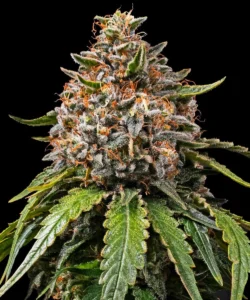
White Widow XXL Seeds
|
|
THC | 26% - 27% (High) |
|
|
Lineage | Brazilian x South Indian |
|
|
Type | Feminized |
|
|
Height | 5.74 ft | 1.75 m |
|
|
Yield Outdoor | 70.55 oz/plant | 2000 g/plant |
|
|
Flowering Time | 8 - 9 weeks |
|
|
Phenotype | 75% Indica / 25% Sativa |
|
|
Effects | Creative, Uplifted, Energetic, Talkative, Euphoric |
|
|
Flavors | Sweet, Pungent, Fruity, Spicy, Pine |
What Are Molecular Markers in Cannabis?
A molecular marker is an identifiable DNA variation that researchers or breeders can use as a genetic reference point.
Rather than waiting for a cannabis plant to express a visible characteristic, DNA can sometimes be tested earlier to determine whether it carries a particular genetic variant.
Common marker types used in cannabis research include:
- SNPs, or single-nucleotide polymorphisms;
- SSRs, also called microsatellites;
- SCAR markers;
- sex-linked PCR markers;
- larger panels derived from genome sequencing.
These markers can be useful for identifying relationships between plants, distinguishing genetic groups, tracking inheritance and, when properly validated, selecting plants carrying DNA variants associated with useful traits.
Importantly, a molecular marker is not necessarily the gene causing the trait.
Sometimes a marker lies within a relevant gene. In other cases, it is simply located sufficiently close to the causal genetic region that the two tend to be inherited together.
That distinction becomes important when evaluating claims about marker-assisted breeding.
How Do Cannabis Breeders Actually Use Molecular Markers?
The practical workflow is usually more complicated than simply “testing DNA and choosing the best plant.”
A breeder first needs a population in which plants differ for the characteristic of interest. The plants are phenotyped—for example, by recording flowering time, disease response or cannabinoid chemistry and their DNA is analyzed.
Researchers can then test whether particular genetic variants consistently associate with the phenotype.
Once an association has been validated, that marker may become useful for screening future seedlings.
This approach is known as marker-assisted selection, or MAS.
The major advantage is timing. A breeder may be able to identify promising plants before waiting months for them to flower or express the characteristic naturally.
The limitation is equally important: markers only become useful selection tools when the relationship between marker and trait is sufficiently reliable in the breeding population being used.
1. Molecular Markers Can Identify Male and Female Cannabis Early
Early sex identification is one of the clearest examples of molecular markers having practical value in cannabis.
Cannabis sativa commonly uses an XX/XY sex-determination system. Female plants generally carry XX chromosomes, while males carry X and Y chromosomes.
Because young plants cannot always be reliably sexed visually, DNA markers associated with the Y chromosome can identify male genotypes before flowering.
Recent research has improved these methods considerably.
A 2025 study developed a PCR assay based on the sex-linked CsPDS5 gene and tested more than 500 samples from 14 hemp cultivars and several crosses. The assay achieved 100% accuracy within that experimental population.
Another recent study tested a multiplex PCR system using two Y-specific markers plus an autosomal control and achieved a 99.5% true-positive rate across approximately 200 plants from 12 hemp cultivars.
For breeders, that can save substantial time and cultivation space.
It does not mean every commercial cannabis seed company performs DNA sex testing on every seed it sells.
2. Markers Can Help Predict Cannabis Chemotype
Molecular markers can also provide information about cannabinoid biosynthesis.
One particularly useful distinction is chemotype: whether plants are primarily THC-dominant, CBD-dominant or intermediate.
Genes involved in THCA and CBDA synthase production contain genetic variation that can be used to help classify plants before they have accumulated mature cannabinoid profiles.
A study published online in 2025 and in Biochemical Genetics in 2026 validated several molecular markers against HPLC-measured cannabinoid profiles in Indian cannabis germplasm. Specific markers showed associations with THC- and CBD-related synthase regions and helped distinguish THC-dominant, CBD-dominant and intermediate plants.
That can be extremely valuable for breeding or hemp compliance.
But chemotype prediction should not be confused with predicting an exact laboratory potency result.
A DNA marker may indicate that a plant has genetic machinery associated with THC-dominant cannabinoid production. It cannot automatically tell you that the finished flower will contain exactly 18%, 25% or 30% THC.
Environment, development and other genetic factors still matter.
3. Molecular Markers Can Distinguish Cannabis Cultivars
Another major application is genetic fingerprinting.
Researchers can compare multiple variable locations across the cannabis genome to estimate how closely related two samples are.
SSR and SNP marker panels have been developed specifically for this purpose.
A recent study began with genome sequencing of 32 cannabis cultivars and developed a reduced 20-SNP genotyping panel. The panel successfully differentiated the tested cultivars with high reproducibility, although the authors also emphasized limitations associated with within-cultivar diversity and sampling.
Earlier research has similarly demonstrated that microsatellite markers can discriminate genetic groups and characterize cannabis germplasm.
This is one of the foundations behind claims about genetically verified cannabis seeds.
However, authentication only works properly when there is a trustworthy reference genotype to compare against.
A laboratory cannot scientifically prove that an unknown plant is “Original Famous Strain X” merely because its DNA looks plausible.
Why Strain Names Make Genetic Authentication Difficult
Commercial cannabis strain names are not always genetically consistent.
A well-known study examining more than 14,000 SNPs found only a moderate relationship between reported sativa/indica ancestry and actual genetic structure and concluded that marijuana strain names often fail to represent meaningful genetic identity.
This has important implications for seed banks.
A molecular test can determine whether two samples are genetically similar or whether a production batch matches a validated reference population.
But DNA cannot magically create a reliable reference where one never existed.
Authentication therefore works best when breeders maintain:
- documented parent plants;
- reference DNA profiles;
- controlled breeding records;
- representative sampling from the cultivar;
- consistent genotyping methods.
Without those reference standards, marketing claims about “DNA-verified genetics” should be treated cautiously.
4. Molecular Markers Can Support Marker-Assisted Breeding
Marker-assisted selection becomes particularly valuable when researchers discover DNA variants consistently associated with agriculturally important traits.
Modern cannabis genomics is beginning to identify these associations.
A 2025 population-genomics study analyzed 228 plants from 35 Iranian cannabis populations using genotyping-by-sequencing. Researchers identified more than 23,000 high-quality SNPs and found genetic loci associated with traits including flowering time, plant morphology, sex and cannabinoid chemotype.
That does not mean breeders can immediately use every discovered SNP commercially.
Association is only the beginning.
A marker must usually be validated in relevant populations before breeders can depend on it because genetic relationships can differ among germplasm.
Once sufficiently validated, however, markers can potentially let breeders screen seedlings for useful genetic combinations before committing space and months of cultivation to every candidate.
That is the real value of MAS.
5. Markers Can Assist Disease-Resistance Breeding
Disease resistance is another promising application.
Instead of exposing thousands of plants to a disease and waiting to observe symptoms every generation, breeders may eventually be able to test seedlings for genetic variants linked with resistance.
For example, a 2025 study mapped a new locus associated with resistance to powdery mildew in cannabis. Researchers analyzed resistant and susceptible breeding populations and used tens of thousands of SNPs to localize the resistance-associated region.
Research like this creates potential targets for future marker-assisted selection.
But a marker associated with resistance in one population should not automatically be assumed to guarantee resistance in every cultivar.
Disease resistance can also be influenced by several genes and environmental conditions.
So statements such as “molecular markers guarantee disease-resistant seeds” would be an oversimplification.
6. Molecular Markers Can Help Manage Breeding Collections
A breeding program also needs to know what genetic diversity it actually possesses.
Markers can help answer questions such as:
- Are two breeding lines essentially duplicates?
- How closely related are potential parents?
- Is genetic diversity declining after repeated selection?
- Does a new sample match the expected germplasm group?
- Has accidental cross-pollination or sample mixing occurred?
A study evaluating SSR markers across 104 plants from 11 hemp varieties identified 20 highly informative loci suitable for varietal characterization and germplasm assessment. The authors highlighted applications including genetic discrimination, authentication, sex determination and germplasm management.
This type of genetic information can improve breeding decisions even when the markers are not directly linked to yield, cannabinoids or another commercial trait.

Molecular Markers vs. Next-Generation Sequencing
These terms are related but not interchangeable.
Next-generation sequencing (NGS) is a technology used to read very large amounts of DNA.
Molecular markers are specific variable locations within DNA that can subsequently be measured.
Researchers can therefore use NGS for cannabis strains to discover thousands or millions of variants, then select a smaller group of informative SNP markers for routine testing.
That creates an important efficiency advantage.
Whole-genome sequencing may be useful during marker discovery, but a breeder does not necessarily need to sequence the complete genome of every seedling.
Once useful markers are known, targeted PCR or SNP assays can be much faster and cheaper.
Do Molecular Markers Guarantee Higher THC or Yield?
No.
This is one of the most important limitations of the technology.
A molecular marker can help predict a trait only if a reliable genotype–phenotype relationship has been demonstrated.
Even then, many commercially important cannabis characteristics are quantitative traits.
Yield, flowering time, cannabinoid concentration, terpene profiles, plant height and disease resistance can involve multiple genes plus environmental influences.
A marker associated with high yield does not mean every plant carrying it will produce a specific number of grams.
Similarly, genetic markers associated with cannabinoid biosynthesis cannot guarantee the exact THC percentage of mature flower.
The current article’s claims that markers allow strains such as Bruce Banner to “consistently deliver” expected THC levels or that White Widow XXL can be genetically guaranteed for yield and resilience are therefore too strong.
Do All Cannabis Seed Banks Use Molecular Markers?
No.
This is where the term seed bank creates some confusion.
A commercial cannabis seed retailer, a breeding company, a genomic laboratory and a scientific germplasm repository are different operations.
Some advanced breeders and research programs use DNA testing directly or contract specialist laboratories. Others still rely primarily on conventional breeding: selecting parents, making crosses, growing progeny and repeatedly evaluating phenotype.
A 2021 molecular-marker study explicitly noted that although genomics has expanded rapidly in cannabis, the practical use of markers in commercial marker-assisted breeding remained relatively rare. More recent work still describes marker-assisted commercial variety development as an emerging rather than universal practice.
So a seed company’s website selling modern cannabis genetics is not evidence that the company uses MAS.
Does Growlantis Use Molecular Markers?
There is no basis in the current article for making that claim.
Growlantis publicly presents a catalog of cannabis seeds sourced from multiple established breeders. Its marketplace currently lists brands including Blimburn, Royal Queen Seeds, Barney’s Farm, Dutch Passion, Fast Buds, Green House Seeds, Kannabia and Sensi Seeds.
That does not establish that Growlantis itself:
- maintains a molecular breeding laboratory;
- genotypes every product;
- operates marker-assisted breeding programs;
- genetically authenticates every seed packet.
Unless Growlantis has documentation proving those activities, the article should not claim that it performs them.
Likewise, a product sold on Growlantis should not be described as molecular-marker bred unless the actual breeder provides evidence for that specific breeding program.
Molecular Markers vs. Traditional Cannabis Breeding
Molecular tools do not replace conventional breeding.
They complement it.
Traditional cannabis crossbreeding still requires selecting parents, making controlled crosses, growing progeny and evaluating whether desirable traits are actually expressed.
Marker-assisted breeding adds another information layer.
Instead of selecting only from what breeders can observe, researchers can also use DNA evidence.
The strongest breeding programs therefore combine:
genotype + phenotype + pedigree + environmental testing
rather than treating DNA markers as a shortcut that makes field evaluation unnecessary.
The Limits of Molecular Markers in Cannabis
Molecular genetics is powerful, but the technology has clear limitations.
A marker may fail outside the population in which it was discovered. Cultivars may contain substantial within-strain genetic variation. Traits can involve dozens or hundreds of genes. Environmental conditions can strongly change phenotype.
Reference databases are another challenge.
A DNA test becomes far more useful when it can compare a sample against well-characterized reference material. Cannabis prohibition and decades of informal breeding mean that many commercial strain names lack the type of standardized genetic reference systems common in mature crop-breeding industries.
For those reasons, molecular markers are best viewed as decision-support tools, not genetic guarantees.
The Future of Molecular Markers in Cannabis Breeding
Cannabis genomics is advancing rapidly.
Better reference genomes, larger germplasm collections, genome-wide association studies and cheaper sequencing are making it easier to identify markers connected with commercially useful traits.
Recent research has already produced new markers or candidate loci related to sex, chemotype, flowering time, morphology and powdery mildew resistance.
The next challenge is validation.
For marker-assisted selection to become routinely useful across commercial cannabis breeding, candidate markers need to work reliably across the specific genetic populations in which breeders intend to use them.
That process is slower and less glamorous than simply saying a strain is “DNA optimized,” but it is what turns genomic research into practical breeding technology.

FAQs
What are molecular markers in cannabis?
Molecular markers are identifiable DNA variants used to distinguish plants or track genetic regions. Common cannabis markers include SNPs, microsatellites and PCR-based markers. Depending on the marker, they can help researchers study genetic identity, sex, cannabinoid chemotype, ancestry or traits relevant to breeding.
How do cannabis breeders use molecular markers?
Breeders can genotype seedlings and select individuals carrying markers associated with desired characteristics rather than relying only on visible phenotype. Potential applications include early sex identification, chemotype prediction and marker-assisted selection. However, the marker-trait association must first be validated in relevant breeding populations before it becomes a reliable selection tool.
Can DNA testing tell whether a cannabis plant is male or female?
Yes, validated sex-linked DNA markers can identify XX and XY genotypes before cannabis plants flower. Recent PCR-based assays have achieved very high accuracy within the populations tested. This can allow breeders to remove unwanted male plants much earlier than would be possible through visual identification alone.
Can molecular markers predict THC percentage?
They can help predict broad cannabinoid chemotype, such as whether genetics favor THC- or CBD-dominant production, but they cannot reliably predict an exact finished THC percentage. Cannabinoid concentration is influenced by multiple genetic and environmental variables in addition to cannabinoid synthase genes.
Can molecular markers verify cannabis strains?
Markers can compare a sample with validated genetic reference material and determine relatedness or distinguish tested cultivars. However, commercial strain names are not always genetically consistent. Genetic verification is therefore strongest when a breeder maintains documented reference material rather than relying solely on a strain name printed on packaging.
Do all cannabis seed banks use marker-assisted breeding?
No. Molecular genetics is increasingly important in cannabis research and advanced breeding, but commercial marker-assisted breeding is not universal. Many breeders still rely heavily on conventional crossing and phenotype selection, while specialist laboratories or research programs perform much of the sophisticated genotyping work described in scientific literature.