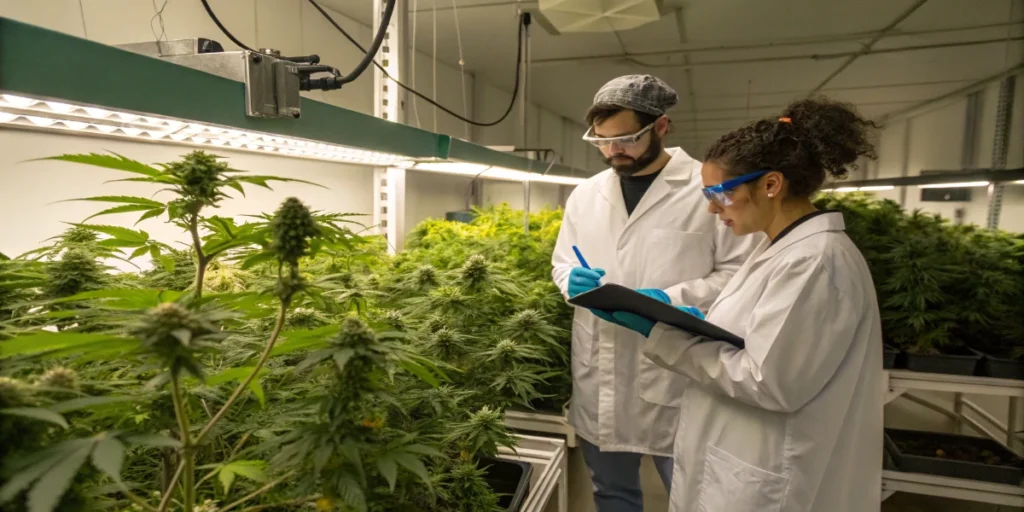

NGS for cannabis strains uses high-throughput DNA sequencing to analyze genetic variation across Cannabis sativa. It can help researchers and breeders study cultivar relationships, identify genetic markers, investigate cannabinoid-related genes and support breeding or traceability. However, NGS doesn’t automatically predict exact THC levels, yield, disease resistance or ideal growing conditions for an individual plant.
What is NGS for cannabis strains?
NGS stands for Next-Generation Sequencing.
Recommended Strains
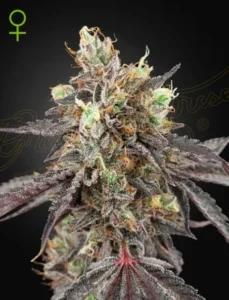
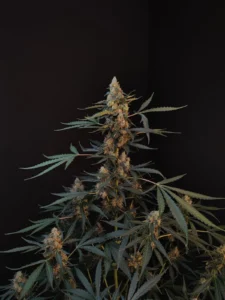
Gelato 41 X Gelato 41 Auto

|
THC | 20% - 21% (Medium) |

|
Lineage | Gelato 41 x Gelato 41 Auto |

|
Type | Autoflowering |

|
Height | 3.77 ft | 1.15 m |

|
Yield Outdoor | 2.82 oz/plant | 80 g/plant |

|
Life Cycle | 9 - 10 weeks |

|
Phenotype | 70% Indica / 30% Sativa |

|
Effects | Euphoric, Relaxed |

|
Flavors | Citrus, Diesel, Grape |
Northern Lights Auto
|
|
THC | 21% - 22% (Medium) |
|
|
Lineage | Northern Lights x Ruderalis |
|
|
Type | Autoflowering |
|
|
Height | 3.28 ft | 1 m |

|
Yield | High |

|
Yield Indoor | 1.64 - 1.97 oz/ft² | 500 - 600 g/m² |
|
|
Life Cycle | 9 weeks |
|
|
Phenotype | 70% Indica / 30% Sativa |
|
|
Effects | Sedative, Powerful, Relaxed |
|
|
Flavors | Fruity, Spicy, Pepper |
It refers to a group of technologies that can read large amounts of DNA in parallel, letting researchers analyze many genetic regions or entire genomes much more efficiently than older sequencing approaches.
In cannabis research, NGS can be used to examine genetic differences between plants, cultivars or populations.
Depending on the study, researchers may analyze:
- Whole genomes
- Selected genes
- Specific genetic markers
- Single nucleotide polymorphisms, or SNPs
- Cannabinoid synthase genes
- Population-level genetic diversity
NGS provides genetic information, not a direct measurement of how a plant will perform in every growing environment. That distinction matters, since the original Growlantis article gave NGS too much predictive power.
How does NGS work in cannabis?
The basic NGS workflow begins with DNA obtained from cannabis plant material.
The DNA is prepared for sequencing and processed by a sequencing platform capable of reading millions of DNA fragments. Bioinformatics software then compares and analyzes those sequences.
A simplified workflow looks like this:
- Cannabis tissue is sampled.
- DNA is extracted.
- The DNA is prepared for sequencing.
- Sequencing produces large numbers of DNA reads.
- Bioinformatics tools align and analyze the sequences.
- Genetic variants are identified.
- Researchers interpret those variants in relation to cultivars, populations or traits.
The sequencing itself is only one part of the process. The quality of the reference genome, samples, statistical analysis and biological interpretation all shape what conclusions can reasonably be drawn from the data.
What can NGS tell us about cannabis strains?
NGS has several important applications in cannabis genetics.
Genetic differences between cultivars
One of the clearest uses of NGS is identifying genetic variation between cannabis plants.
Researchers can examine SNPs and other genetic markers to determine how closely related different samples are. This can help with:
- Cultivar differentiation
- Genetic fingerprinting
- Population studies
- Breeding records
- Germplasm conservation
- Genetic traceability
A 2025 study used whole-genome sequencing of 32 Cannabis sativa cultivars to develop a reduced SNP panel capable of differentiating among cultivars. The study also flagged limitations, including variation within cultivars and the importance of appropriate sampling.
That’s why genetic identification shouldn’t be reduced to simply matching a commercial strain name.
Can NGS identify a cannabis strain?
NGS can help distinguish cannabis cultivars genetically, but it can’t always assign a commercial strain name with absolute certainty.
Cannabis naming is complicated. Plants sold under the same strain name may not always be genetically identical, particularly when genetics have been reproduced by different breeders over time. Conversely, genetically similar plants may sometimes be marketed under different names.
That means NGS is most useful when researchers have:
- Reliable reference samples
- Documented genetic lines
- Sufficient numbers of samples
- Validated genetic markers
Genetic fingerprinting can help verify identity and relationships, but the accuracy of the conclusion depends heavily on the quality of the reference database.
NGS and cannabis cannabinoid genetics
Another important application involves the genes responsible for cannabinoid biosynthesis.
Cannabis contains genes associated with enzymes including:
- THCA synthase
- CBDA synthase
- CBCA synthase
These enzymes play important roles in determining cannabinoid chemotype. Researchers have used NGS to study variation in these genes and their related pseudogenes.
A 2024 study developed an NGS panel targeting cannabinoid synthase genes and found genetic patterns capable of distinguishing hemp from marijuana samples with high accuracy in the tested dataset.
This shows that NGS can reveal useful relationships between genotype and cannabinoid chemotype. But that doesn’t mean DNA sequencing alone tells you the exact THC percentage of a harvested cannabis flower.
Can NGS predict THC levels?
Not precisely.
NGS can identify genes and variants associated with cannabinoid production, but the exact cannabinoid concentration produced by a plant depends on more than its DNA sequence. Factors include:
- Genetics
- Plant development
- Environmental conditions
- Cultivation practices
- Harvest timing
- Analytical testing method
NGS can provide information about genetic potential and chemotype-related markers, but it doesn’t replace laboratory chemical analysis when the goal is to determine the actual THC or CBD concentration of harvested material.
If a product is advertised as containing 25% THC, for example, that percentage should come from chemical analysis rather than DNA sequencing.
How NGS helps cannabis breeding
NGS has substantial potential in cannabis breeding because it lets breeders and researchers examine genetic variation much more precisely.
Traditional cannabis breeding relies heavily on phenotype selection. A breeder observes plants and selects individuals based on characteristics such as:
- Flowering behavior
- Plant structure
- Cannabinoid profile
- Aroma
- Yield
- Resistance to environmental stress
Genomic information can complement those observations. If researchers identify validated markers associated with useful traits, breeders may eventually use those markers to make more informed selections.
This approach is known broadly as marker-assisted selection or, in more advanced applications, genomic selection.
For an introduction to conventional breeding methods, Growlantis also has a guide explaining how to crossbreed cannabis.
NGS does not replace phenotype selection
This is one of the most important limitations to understand.
DNA sequence doesn’t tell breeders everything they need to know about a plant. Many cannabis characteristics are shaped by multiple genes and by interactions between genetics and environment, known as genotype-by-environment interaction.
A plant with promising genetics may perform differently depending on:
- Temperature
- Light
- Nutrition
- Water availability
- Pathogen exposure
- Growing medium
- Environmental stress
For this reason, breeders still need to grow and evaluate plants. NGS provides additional information that can support breeding decisions, but it doesn’t eliminate phenotype testing.
Can NGS identify disease resistance?
Potentially, but only when reliable genetic associations have been demonstrated.
NGS can help researchers discover genes or markers associated with disease resistance. That doesn’t mean sequencing any cannabis strain instantly tells a grower whether it will resist every pathogen. A resistance-associated genetic marker first needs to be identified through research and validated across appropriate populations.
The original Growlantis content states that NGS can confirm disease-resistant traits in individual commercial strains such as Royal Runtz. That claim should be removed unless there is specific published genetic evidence supporting it.
NGS is a research tool for discovering and analyzing such associations, not a universal disease-resistance certificate.
Can NGS tell growers the best nutrients or growing conditions?
No, not directly.
Genetic information may eventually help researchers understand why certain cultivars respond differently to environmental conditions. But an NGS report doesn’t simply produce instructions such as “use this fertilizer,” “use this pruning technique,” or “give this strain this exact amount of light.” Those recommendations require actual phenotype and cultivation data.
Environmental trials remain necessary to determine how plants perform under specific conditions. For everyday cannabis growers, direct observation and validated cultivation information remain more useful than raw sequencing data.
NGS vs cannabis DNA testing
NGS and cannabis DNA testing are related terms, but they’re not identical.
Cannabis DNA testing describes the broader process of analyzing cannabis genetic material. NGS is one technology that can be used to do that.
Other genetic tests may use:
- PCR
- SNP assays
- Microsatellite markers
- KASP markers
- Other targeted genotyping methods
A simple DNA test might analyze only a handful of genetic markers, while NGS can analyze many thousands or millions of DNA sequences in parallel.
The appropriate technology depends on the question being investigated. For example, researchers trying to identify a known genetic marker may not need whole-genome sequencing.
NGS vs whole-genome sequencing
Another important distinction: NGS doesn’t automatically mean whole-genome sequencing.
Whole-genome sequencing, or WGS, is one possible application of NGS technology. NGS can also be used for targeted sequencing, where a panel examines selected genes or genomic regions rather than sequencing the entire cannabis genome.
For example, researchers studying cannabinoid synthase genes may sequence only those regions. Targeted approaches can reduce cost and simplify analysis when the research question is already well defined.
Whole-genome sequencing provides much broader information but also produces considerably larger datasets that require more bioinformatics analysis.
NGS and cannabis genetic diversity
Cannabis sativa contains substantial genetic diversity from domestication, geographical adaptation and extensive hybridization. Modern cannabis breeding has further mixed genetic populations.
NGS lets researchers examine that diversity at a much higher resolution than visual classification alone. Recent research has used genomic data to study:
- Population structure
- Hemp versus drug-type cannabis
- Relationships among cultivars
- Cannabinoid synthase variation
- Genetic diversity
- Breeding history
These applications matter a lot for preserving cannabis genetic resources. Growlantis also covers genetic preservation from another angle in its guide to the cannabis pollen bank.
Is NGS useful for home cannabis growers?
For most home growers, NGS currently has limited direct practical value.
Sequencing requires laboratory equipment, bioinformatics and specialist interpretation. Most growers are unlikely to sequence individual plants simply to decide how much fertilizer or light to provide.
The main benefits are indirect. Genomic research can eventually contribute to:
- Better characterized cultivars
- Improved genetic traceability
- More informed breeding
- More reliable genetic markers
- Conservation of cannabis diversity
NGS is currently more relevant to researchers, professional breeders, genetics companies and regulated cannabis programs than to everyday cultivation.
Limitations of NGS for cannabis strains
NGS is powerful, but genomic data shouldn’t be treated as a crystal ball.
Researchers still don’t fully understand the genetic architecture of many cannabis traits, so there’s a lot of incomplete genotype-to-trait knowledge to work around. Genetics alone can’t predict how every plant will perform under every growing condition, since environmental influence plays such a large role. Plants carrying the same commercial name may still contain genetic differences, and identification depends on having a reliable reference database of genetic material to compare against.
There’s also a practical side: sequencing generates large datasets that require careful bioinformatics analysis, and any genetic association has to be validated through testing before it can reliably guide breeding decisions.
These limitations are why responsible cannabis genomics research combines DNA sequencing with phenotype measurements and chemical testing.
The future of NGS in cannabis genetics
NGS is likely to become increasingly important as cannabis genomic databases improve.
One major opportunity is combining sequencing with detailed phenotype information. Instead of simply cataloguing genetic variants, researchers can investigate which variants are consistently associated with traits across large plant populations.
Potential applications include:
- Marker-assisted breeding
- Cultivar authentication
- Genetic resource conservation
- Cannabinoid research
- Hemp classification
- Population genetics
- Plant variety protection
Newer approaches also combine genomics with transcriptomics, metabolomics and other biological datasets. These tools may eventually give breeders much more powerful genetic-selection systems.
However, the quality of those systems will depend on good datasets and validated biological relationships, not on sequencing technology alone.
NGS for cannabis strains: takeaway
Next-Generation Sequencing has significantly expanded what researchers can learn about cannabis genetics.
NGS can identify genetic variation, examine relationships between cultivars, study cannabinoid synthase genes and support the development of breeding and identification tools.
What it can’t do is automatically tell a grower exactly how much THC a plant will produce, which fertilizer it needs, or whether a particular commercial strain resists disease.
The strongest use of NGS is as part of a broader system combining genomics, phenotype data, chemical analysis and controlled breeding.
FAQs about NGS for cannabis strains
What is NGS for cannabis strains?
NGS, or Next-Generation Sequencing, is a high-throughput method for reading large amounts of cannabis DNA. Researchers use it to detect genetic variants, compare cultivars, study population structure and investigate genes associated with traits such as cannabinoid production. It provides genetic data, but interpretation still requires validated research and bioinformatics.
Can NGS identify a cannabis strain?
NGS can help distinguish cannabis cultivars by comparing genetic variants, but strain identification is not always absolute. Commercial strain names may include genetically diverse plants, and results depend on the reference samples and markers used. Recent studies show that sequencing-derived SNP panels can discriminate cultivars, while also revealing important limitations.
Can NGS predict THC levels?
NGS can identify variation in cannabinoid synthase genes associated with cannabis chemotype, but it cannot guarantee the exact THC percentage a plant will produce. Cannabinoid expression depends on genetics plus environmental and developmental factors. Laboratory chemical testing remains necessary when the goal is to measure the actual THC concentration of harvested material.
How does NGS help cannabis breeding?
NGS can support cannabis breeding by revealing genetic variation, identifying markers linked to traits and helping breeders understand relationships between parent lines. This can make selection more informed and support marker-assisted or genomic breeding strategies. However, promising genetic markers still need phenotypic validation before they can reliably guide breeding decisions.
Is NGS useful for home cannabis growers?
NGS is currently more useful to researchers, breeding programs and commercial genetics operations than to most home growers. Sequencing requires laboratory work, bioinformatics and careful interpretation. Growers may benefit indirectly through better characterized cultivars, but an NGS report does not replace observing plant performance under the actual cultivation environment.
Is NGS the same as cannabis DNA testing?
NGS is one technology used for cannabis DNA analysis, but not every cannabis DNA test uses NGS. Some tests examine a small set of genetic markers using PCR or SNP assays, while NGS can sequence many targets or large genomic regions simultaneously. The appropriate method depends on the research or identification question.