
The best cannabis pollen bank is one that provides transparent genetic provenance, clear viability information, responsible storage practices, accurate strain documentation and policies that comply with your location. There’s no single universally “best” pollen bank, so breeders should compare evidence of genetic quality and preservation standards rather than relying on marketing claims alone.
Preserving genetics does not stop at collecting and freezing pollen. Seeds need just as much care if you want them to stay viable for future grows, so it is worth reading our companion guide to storing cannabis seeds, which covers the temperature, humidity and container choices that protect germination rates for years rather than just months.
Recommended Strains
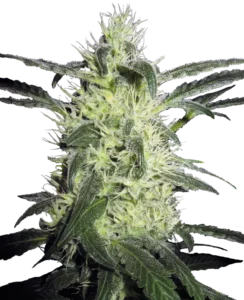
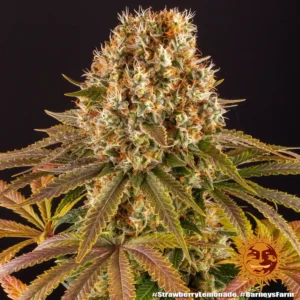
Silver Haze Seeds

|
THC | 20% - 24% (High) |

|
Lineage | Haze x Northern Lights 5 |

|
Type | Feminized |

|
Height | 5.74 ft | 1.75 m |

|
Yield | High |

|
Yield Indoor | 1.31 - 1.8 oz/ft² | 400 - 550 g/m² |

|
Flowering Time | 9 - 12 weeks |

|
Phenotype | 20% Indica / 80% Sativa |

|
Effects | Euphoric, Focused, Happy, Uplifted |

|
Flavors | Citrus, Sweet, Woody |
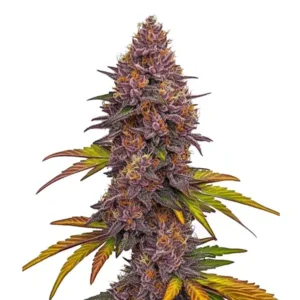
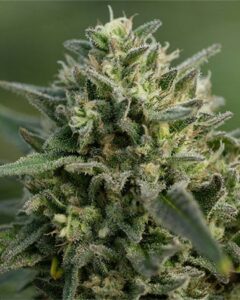
Grizzly Purple Auto
|
|
THC | 9% - 13% (Low) |
|
|
Lineage | Critical Auto x Purple Afghani x Ruderalis |
|
|
Type | Autoflowering |
|
|
Height | 4.92 ft | 1.5 m |
|
|
Yield | Medium |
|
|
Yield Indoor | 1.15 - 1.31 oz/ft² | 350 - 400 g/m² |

|
Yield Outdoor | 21.16 - 24.69 oz/plant | 600 - 700 g/plant |
|
|
Life Cycle | 8 - 10 weeks |
|
|
Phenotype | 80% Indica / 20% Sativa |

|
Medical | Depression, Insomnia, Muscle Spasms |
|
|
Effects | Happy, Relaxed, Talkative |
|
|
Flavors | Citrus, Fruity, Lemon |
What is a cannabis pollen bank?
A cannabis pollen bank is a collection, repository or commercial service that preserves pollen from cannabis plants for future genetic conservation and breeding projects.
Cannabis pollen contains the male genetic contribution required for conventional plant breeding. Preserving pollen can help maintain access to genetic material even when the original donor plant is no longer available.
Pollen banking isn’t unique to cannabis. Plant breeders and researchers have long used pollen preservation as a way to conserve genetic resources and get around geographical or seasonal limitations between parent plants.
Research specifically involving Cannabis sativa has also examined methods for maintaining pollen viability during long-term preservation.
A pollen bank shouldn’t be confused with a cannabis seed bank. Seed banks primarily preserve or sell seeds, while pollen banks focus specifically on pollen.
What makes the best cannabis pollen bank?
There’s no official organization that awards the title of “best cannabis pollen bank,” so the phrase shouldn’t be treated as a regulated quality designation.
Instead, a reliable pollen bank should be evaluated using several measurable factors.
| Factor | What to look for |
|---|---|
| Genetic provenance | Clearly documented strain or parent genetics |
| Identification | Accurate labeling of each pollen sample |
| Viability | Information about pollen quality or viability testing |
| Preservation | Evidence of appropriate storage procedures |
| Traceability | Source, breeder or lineage information |
| Catalog quality | Useful genetics rather than quantity alone |
| Transparency | Clear product descriptions and policies |
| Legal compliance | Shipping and availability policies appropriate to your location |
A large catalog doesn’t automatically make a pollen bank better. If a provider lists hundreds of strains but gives no information about where the genetics came from, how the pollen was preserved or whether viability has been assessed, the size of the collection has limited value.
Best cannabis pollen bank USA: is there one?
There’s no independently verified ranking that identifies one company as the best cannabis pollen bank in the USA.
That matters because many pages describing a business as “the best” are written by the business itself or by affiliates.
A more useful approach is to compare providers according to genetics, documentation, pollen viability, preservation standards, reputation and policies.
Availability also changes quickly. A pollen bank with a strong catalog today may have very different genetics available several months later.
For that reason, this guide doesn’t award an unsupported number-one ranking. Instead, the best cannabis pollen bank for a particular breeder is the provider that can demonstrate reliable genetic material relevant to that breeder’s goals.
Cannabis pollen bank vs cannabis seed bank
Pollen banks and seed banks both preserve cannabis genetics, but they do so using different biological material.
A cannabis seed contains genetic material from both parent plants. Cannabis pollen represents the genetic contribution of the pollen-producing parent. That makes the two resources useful for different purposes.
Seed banks are generally much more common in the consumer cannabis market. Growlantis, for example, currently specializes in cannabis seeds from multiple breeders rather than operating as a dedicated commercial pollen bank.
For breeders interested in working with male and female genetics, regular cannabis seeds can also provide access to genetic diversity. Growlantis explains this broader breeding process in its guide on how to crossbreed cannabis.
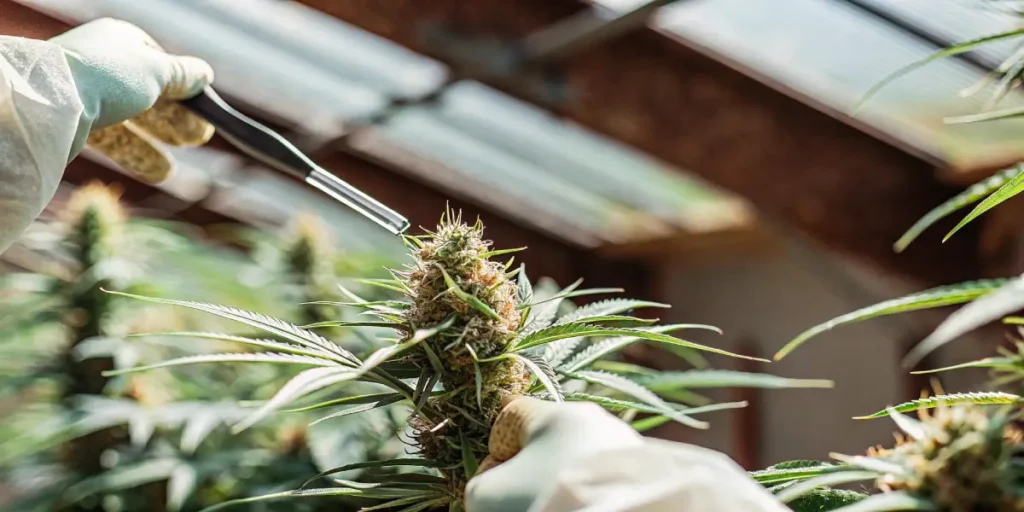
Why genetic provenance matters
One of the most important things to check when evaluating a pollen bank is where the pollen actually came from.
A familiar strain name isn’t enough. Cannabis cultivars can vary significantly between breeders and individual phenotypes, so two products sold under the same strain name may not represent identical genetics.
Useful documentation can include the breeder, parent line, phenotype or selection information and any known characteristics associated with the source material. The more clearly a provider documents its genetics, the easier it becomes to judge whether the material is appropriate for preservation or research.
This matters even more with historically influential breeding lines. Regular varieties such as Skunk #1 Regular, for example, illustrate why documented lineage can be more useful than a generic strain label when evaluating breeding genetics.
Why pollen viability matters
Cannabis pollen is biological material, and its viability can decline over time.
A pollen sample can have an impressive genetic name while being practically useless if too little viable pollen remains. That means pollen quality can’t be judged only by:
- Strain popularity
- Packaging
- THC claims associated with the parent strain
- Price
- Catalog size
Viability and preservation matter just as much as genetic identity.
Peer-reviewed research published in Plants examined long-term preservation of Cannabis sativa pollen and found that cannabis pollen can retain viability under controlled cryopreservation conditions.
That research reinforces an important point: storage conditions directly affect how useful stored pollen actually is. A reputable pollen bank should be able to explain how its material is preserved and, ideally, how viability is evaluated.
Does THC percentage matter when choosing cannabis pollen?
Not as much as many marketing pages imply.
A pollen donor being associated with a high-THC cultivar doesn’t guarantee that every offspring will reproduce the same cannabinoid concentration. Cannabis traits are inherited through combinations of genetic factors, and offspring can express considerable variation.
So selecting pollen purely because a parent strain is advertised as containing a particular THC percentage oversimplifies cannabis genetics. Breeders and researchers generally need to consider the broader genetic background rather than reducing a plant to one potency figure.
The same principle applies to characteristics such as aroma, flowering behavior, plant structure and cannabinoid profile.
How important is strain documentation?
Very important.
A quality pollen bank should provide enough information for someone to understand what genetic material is being preserved or offered. At minimum, descriptions should clearly identify the cultivar or genetic line. Better documentation can add context about parentage, breeder origin and notable characteristics.
Be skeptical when pollen is described almost entirely with promotional phrases such as “elite genetics,” “premium pollen,” “highest THC” or “world’s best genetics” without any supporting information. Those are marketing claims, not evidence of genetic quality.
How is cannabis pollen preserved?
Preserving pollen is scientifically challenging because viability changes according to environmental conditions and storage methods.
Research into Cannabis sativa has looked at cryopreservation specifically because maintaining viable pollen can help preserve valuable germplasm for future breeding and research.
The goal of any pollen bank isn’t simply to store genetic material but to preserve it in a condition where it stays useful.
Consumers evaluating a commercial pollen bank don’t necessarily need detailed laboratory protocols. They should, however, expect the provider to explain its preservation practices clearly enough to show that pollen quality is being taken seriously.
Why cannabis pollen banks matter for genetic preservation
Cannabis genetics change continually as breeders produce new hybrids and older varieties become less common.
Pollen preservation can help maintain genetic diversity, since pollen from a particular plant can potentially remain available after that plant itself is gone. This concept is well established in plant genetic conservation.
Scientific pollen banks have been used with numerous plant species to preserve genetic resources and support future hybridization programs. Cannabis pollen conservation applies the same underlying principle to Cannabis sativa.
That makes pollen banks potentially valuable not only for commercial breeding but also for research and long-term genetic preservation.
Can regular cannabis seeds be an alternative?
For some breeding goals, regular seeds can be an alternative way of accessing male cannabis genetics.
Unlike feminized seeds, regular cannabis seeds can produce both male and female plants. That’s what makes regular seeds particularly relevant to traditional breeding and genetic-preservation projects.
Growlantis currently offers regular genetics, including varieties such as Skunk #1 Regular and Orange Bud Regular, alongside feminized and autoflowering seeds.
That’s different from selling stored cannabis pollen, and the distinction should stay clear.
Red flags when comparing cannabis pollen banks
Not every business using the words “pollen bank” offers the same level of transparency.
Be cautious when a provider makes strong genetic claims without documenting their source, guarantees specific traits in future offspring, gives no information about pollen preservation or viability, or leans heavily on phrases such as “best pollen bank” without explaining why.
Another warning sign is confusing seeds with pollen. A company selling cannabis seeds isn’t automatically a cannabis pollen bank. These are different products and should be described accurately.
So, who is the best cannabis pollen bank?
There’s no credible universal answer.
The best cannabis pollen bank depends on what genetics are required and whether the provider can demonstrate their provenance, identity, viability and responsible preservation.
For someone comparing cannabis pollen banks in the USA, the useful questions aren’t “Who has the largest catalog?” or “Who claims to be number one?” The better questions are whether the genetics can be traced, whether the pollen is viable, whether preservation standards are transparent and whether the provider’s policies fit your location.
Those criteria give you much more useful evidence of quality than marketing language alone.
FAQs about cannabis pollen banks
What is a cannabis pollen bank?
A cannabis pollen bank is a collection or service that preserves pollen from cannabis plants for genetic conservation and breeding purposes. Its value depends on accurate strain identification, pollen viability, documentation and storage quality. Unlike a seed bank, it focuses on pollen rather than packaged cannabis seeds.
What makes a cannabis pollen bank the best?
The best cannabis pollen bank should provide clear genetic provenance, trustworthy strain documentation, information about pollen viability, responsible preservation methods and transparent policies. A large catalog alone is not enough. Quality depends more on traceability, handling and credibility than on the number of strains listed for sale.
Is there a best cannabis pollen bank in the USA?
There is no independently regulated ranking that identifies one pollen bank as the best in the United States. Availability also changes quickly. Compare providers using genetic traceability, viability information, storage standards, reputation and legal shipping policies rather than trusting a website that simply describes itself as the best.
How is a pollen bank different from a cannabis seed bank?
A cannabis seed bank primarily stores or sells seeds, while a pollen bank preserves pollen that represents the male genetic contribution used in breeding. Both can support genetic preservation, but they are not interchangeable. Growers looking for breeding material should confirm whether a business actually offers pollen rather than assuming every seed bank does.
How long can cannabis pollen remain viable?
Cannabis pollen viability depends heavily on storage conditions and cannot be guaranteed by a simple universal timeframe. Peer-reviewed research has shown that properly cryopreserved Cannabis sativa pollen can retain viability for months, but ordinary commercial storage conditions vary. Reputable pollen banks should explain how viability is assessed and preserved.
Does Growlantis sell cannabis pollen?
Growlantis currently presents its catalog around cannabis seeds rather than a dedicated pollen marketplace. For that reason, this guide should not describe Growlantis as a pollen bank or claim that it sells cannabis pollen unless that service is added and verified. The distinction is important for accuracy and user trust.