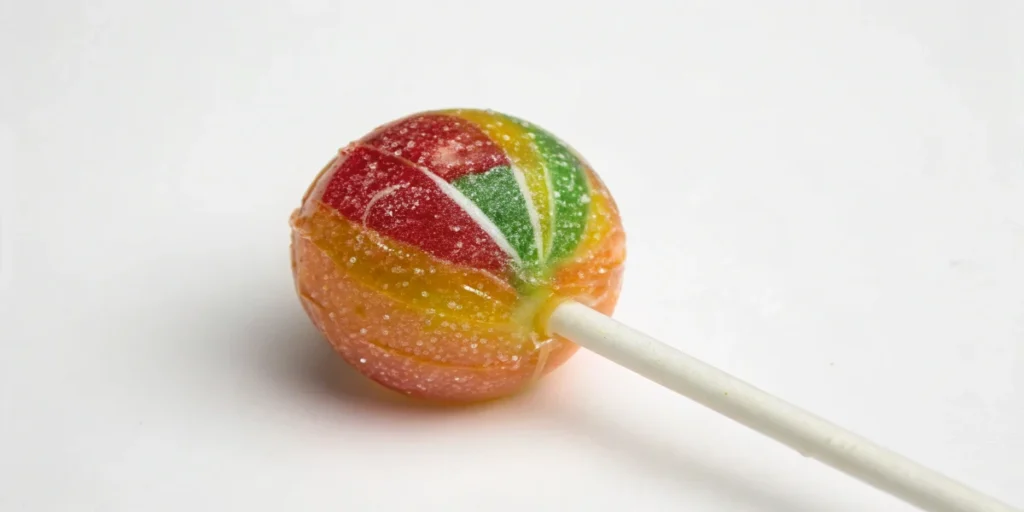

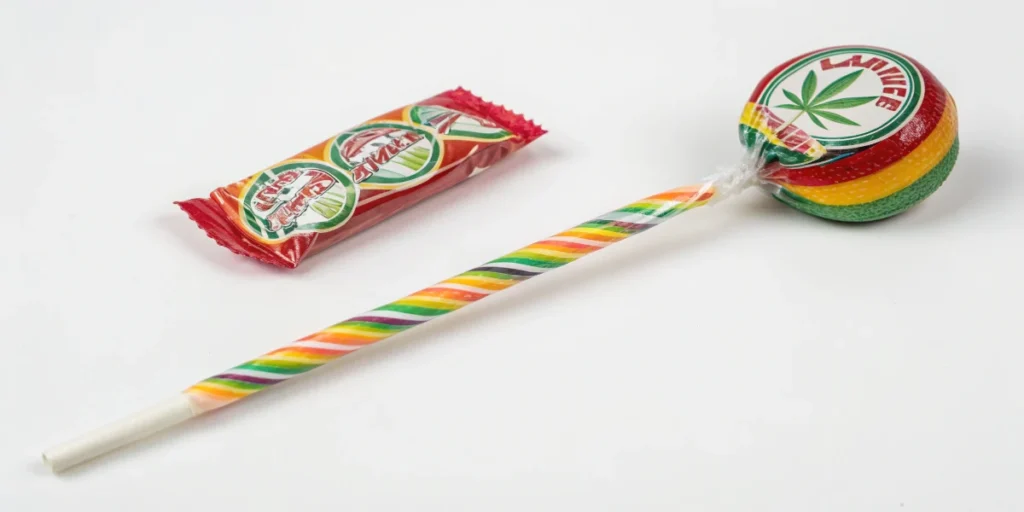
A THC lollipop is a cannabis-infused hard candy containing tetrahydrocannabinol. Because the candy dissolves gradually, some THC may be absorbed through tissues in the mouth while the remainder is swallowed and processed like a traditional edible. Effects can therefore vary in onset and duration. Always use the labeled THC amount rather than judging potency by lollipop size.
What Is a THC Lollipop?
A THC lollipop is a hard candy infused with tetrahydrocannabinol, the principal intoxicating cannabinoid in cannabis.
Recommended Strains
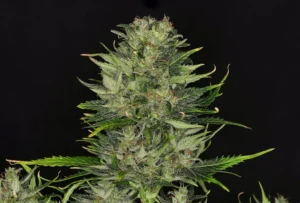
Dosidos Auto

|
THC | 19% - 20% (Medium) |

|
Lineage | Girl Scout Cookies x OG Kush x Ruderalis |

|
Type | Autoflowering |

|
Height | 4.43 ft | 1.35 m |

|
Yield | High |

|
Yield Indoor | 1.97 oz/ft² | 600 g/m² |

|
Yield Outdoor | 7.05 - 10.58 oz/plant | 200 - 300 g/plant |

|
Life Cycle | 7 - 9 weeks |

|
Phenotype | 60% Indica / 40% Sativa |

|
Effects | Relaxed |

|
Flavors | Citrus, Earthy |
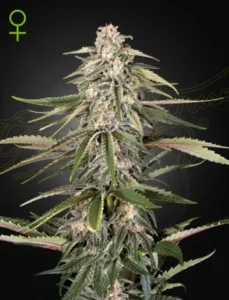
Green O Matic
|
|
THC | 15% - 17% (Medium) |
|
|
Lineage | Ruderalis x Moroccan x White Dwarf x Low Rider |
|
|
Type | Autoflowering |
|
|
Height | 3.28 ft | 1 m |
|
|
Yield Outdoor | 1.76 oz/plant | 50 g/plant |
|
|
Life Cycle | 7 - 8 weeks |
|
|
Phenotype | 80% Indica / 20% Sativa |
|
|
Effects | Calming, Hungry, Creative, Relaxed |
|
|
Flavors | Citrus, Sweet, Spicy, Fruity, Hashish |
You may also see them called:
- Weed lollipops
- Cannabis lollipops
- THC suckers
- Marijuana lollipops
- Cannabis hard candy
They belong broadly to the cannabis edible category, although their method of consumption creates an important difference from gummies or brownies.
A gummy is normally chewed and swallowed relatively quickly.
A lollipop remains in the mouth while it dissolves.
That means a THC lollipop can potentially involve both oral-mucosal exposure and gastrointestinal absorption, depending on its formulation and how it is consumed.
THC Lollipops at a Glance
| Question | Answer |
|---|---|
| What is it? | Hard candy containing THC |
| Does it get you high? | Yes, if it contains enough active THC |
| Typical onset | Variable; oral absorption may start sooner, swallowed THC is slower |
| Full edible effects | Can take several hours |
| Duration | Often several hours |
| Is every lollipop equally strong? | No |
| What determines strength? | Labeled milligrams of THC |
| Is it the same as a gummy? | Similar cannabinoids, different consumption format |
The most important number on a THC lollipop is milligrams of THC per unit, not its size, color, flavor or strain name.
How Do THC Lollipops Work?
THC lollipops can potentially follow two absorption pathways.
Absorption Through the Mouth
While the candy dissolves, cannabinoids may remain in contact with tissues inside the mouth.
Products specifically designed for buccal or sublingual absorption can begin producing effects more quickly than cannabis that must pass completely through the digestive system.
Health Canada reports that cannabis products dissolved under the tongue can begin producing effects within approximately 15 to 40 minutes.
However, a normal lollipop should not automatically be assumed to behave exactly like a pharmaceutical sublingual product.
Formulation matters.
Swallowed THC
Saliva and dissolved candy are also swallowed.
That portion of the THC follows the gastrointestinal route used by conventional edibles.
Cannabis that is eaten or swallowed can generally take approximately 30 minutes to 2 hours before noticeable effects begin, with the strongest effects potentially developing later.
This mixed absorption is why giving every THC lollipop one exact onset time is misleading.
How Long Does a THC Lollipop Take to Kick In?
There is no universal answer.
Some effects may potentially appear sooner when a product is formulated for oral absorption and remains in contact with the mouth.
The swallowed portion can take substantially longer.
For conventional ingested cannabis, Health Canada reports:
30 minutes to 2 hours before effects may begin.
2 to 4 hours before the strongest effects may occur.
For cannabis dissolved under the tongue, onset may occur sooner.
A THC lollipop can fall somewhere between these patterns depending on the product.
Factors that influence timing include:
- THC amount
- Product formulation
- How quickly the candy is consumed
- Individual metabolism
- Food
- Previous cannabis use
- Other medications or substances
Therefore, feeling nothing after 20 or 30 minutes does not necessarily mean the lollipop is inactive.
How Long Do THC Lollipops Last?
The effects can last for several hours.
When a significant proportion of the THC is swallowed, the duration may resemble other cannabis edibles.
Health Canada indicates that ingested cannabis effects can commonly persist for approximately 4 to 8 hours, while some effects may last longer.
Products absorbed through the mouth may have a somewhat different timing profile.
The exact duration depends on the individual and product, including:
- Total THC
- Tolerance
- Metabolism
- Other cannabinoids
- Food consumption
- Medications
- Alcohol or other drugs
A lollipop should therefore not be viewed as a short-duration product simply because it is slowly dissolved rather than eaten in one bite.
How Strong Is a THC Lollipop?
There is no standard potency.
One THC lollipop might contain a relatively small amount of THC while another could contain much more.
The only useful comparison is the labeled milligrams of THC.
Do not estimate potency from:
- Lollipop size
- Flavor
- Color
- Cannabis strain printed on the package
- How strongly it tastes of cannabis
A physically large candy may contain little THC.
A small candy may contain considerably more.
Where regulated products are available, labels should clearly distinguish between THC in an individual unit and total THC in the entire package.
What Does “10 mg THC” on a Lollipop Mean?
If a label states that one lollipop contains 10 mg THC, it is referring to the amount of THC associated with that individual unit.
That is different from a package containing multiple lollipops with 10 mg spread across the whole package.
Always distinguish:
THC per lollipop
from
THC per package.
Regulatory limits also differ by jurisdiction.
For example, Canada’s regulated edible cannabis market limits edible cannabis to 10 mg of total THC per immediate container.
Products sold elsewhere may follow completely different rules.
Is 10 mg THC a Lot?
The experience produced by 10 mg varies substantially between individuals.
For someone with little or no edible cannabis experience, 10 mg may produce substantial intoxication.
Health Canada’s lower-risk guidance recommends that new or occasional consumers look for edible products containing 2.5 mg THC or less and allow enough time for the full effects to develop.
Higher THC exposure increases the likelihood of impairment and unwanted effects.
This is why “strongest THC lollipop” is not necessarily a useful quality metric.
More THC does not automatically mean a better product or experience.
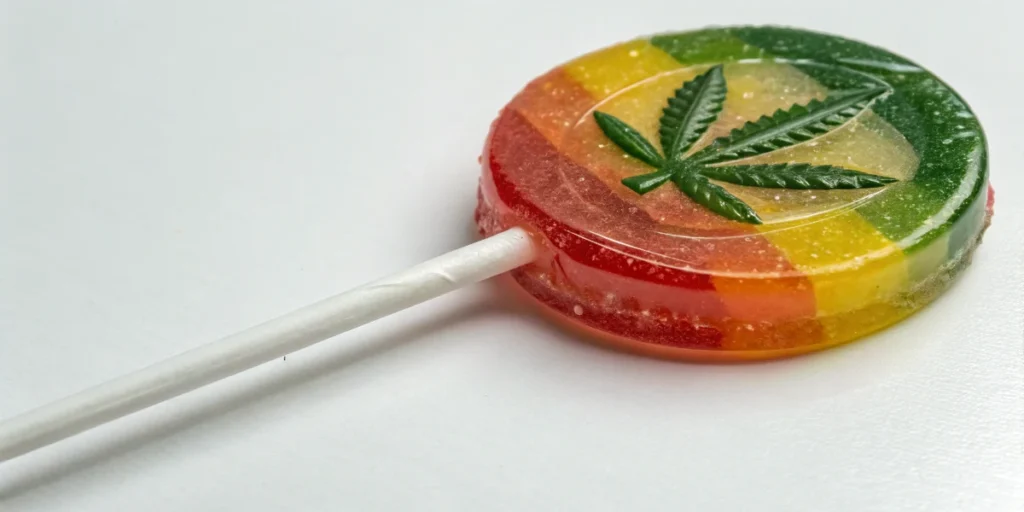
THC Lollipop vs Gummy
Both can deliver THC orally, but they are consumed differently.
THC Gummy
A gummy is normally:
- Chewed
- Swallowed relatively quickly
- Absorbed primarily through the digestive system
THC Lollipop
A lollipop:
- Dissolves gradually
- Remains in the mouth longer
- May permit some oral-mucosal absorption
- Still results in a portion of THC being swallowed
The distinction does not mean a lollipop automatically acts instantly.
It means the absorption pattern can be somewhat different from an edible that is swallowed immediately.
The total THC amount remains one of the most important predictors of potential intoxication.
Are THC Lollipops Faster Than Gummies?
Potentially, but not reliably enough to assign one universal number.
A lollipop remains in contact with oral tissues longer than a typical gummy, so appropriately formulated cannabinoids may begin being absorbed before everything reaches the stomach.
However, much of the dissolved product may still be swallowed.
Therefore, claims such as:
“THC lollipops always work in 15 minutes” or “lollipops always work faster than gummies” are too absolute.
The safer assumption is that effects can continue developing for hours after consumption.
THC Lollipop vs CBD Lollipop
The major difference is intoxication.
THC Lollipops
Delta-9 THC can produce psychoactive effects such as:
- Euphoria
- Changes in perception
- Impaired coordination
- Changes in attention
- Relaxation
CBD Lollipops
CBD is not intoxicating in the same way as THC.
However, that does not mean every health claim attached to CBD candy is established.
The current Growlantis article describes CBD lollipops as providing anxiety relief and therapeutic benefits. Those claims should not be presented as guaranteed effects without condition-specific evidence.
Always check the actual cannabinoid amounts on the label rather than assuming all “cannabis lollipops” work similarly.
What Is a THCA Lollipop?
THCA and THC are not the same compound.
THCA is the acidic precursor to THC.
Heat converts THCA into intoxicating THC through a process called decarboxylation.
THCA itself does not produce the same psychoactive effects as delta-9 THC.
This means a product marketed specifically as a “THCA lollipop” should not simply be described as normal THC that will become psychoactive when swallowed.
Research indicates that THCA does not automatically convert into THC inside the human body.
Whether a commercial product is actually intoxicating depends on its final cannabinoid composition, processing and labeling.
Does Sativa or Indica Matter in a THC Lollipop?
Probably much less than the marketing suggests.
Cannabis candies are sometimes labeled:
- Sativa
- Indica
- Hybrid
and marketed respectively as energizing, sedating or balanced.
Scientific evidence does not support treating those labels as reliable predictors of an edible’s effects.
Modern cannabis strain names and indica/sativa classifications do not consistently correspond with genetic or chemical profiles.
For a THC lollipop, more useful information includes:
- THC per unit
- CBD per unit
- Other labeled cannabinoids
- Product formulation
- Testing information
rather than assuming a “sativa lollipop” must feel energizing.
Can THC Lollipop Potency Be Uneven?
It can be, particularly in poorly manufactured or unregulated products.
Cannabinoids must be distributed consistently throughout the product if each lollipop is expected to contain a predictable amount.
The CDC notes that cannabis edible potency can sometimes be difficult to determine and may be inaccurately labeled.
A regulated, quality-controlled product therefore provides more useful information than an unlabeled candy with an estimated potency.
Homemade products present an additional problem because knowing how much cannabis extract went into a batch does not necessarily prove how much THC ended up in every individual candy.
What Are the Side Effects of THC Lollipops?
THC can cause unwanted effects, particularly as the amount increases.
Possible effects include:
- Anxiety
- Panic
- Paranoia
- Dizziness
- Increased heart rate
- Confusion
- Impaired coordination
- Nausea
- Vomiting
- Excessive sedation
The CDC warns that delayed edible effects can contribute to accidental overconsumption because someone may take more cannabis before the original amount has fully taken effect.
A THC lollipop can create the same problem if someone assumes that finishing the candy means its effects have already peaked.
Why THC Lollipops Need Careful Storage
Lollipops create an obvious accidental-ingestion risk because they look like ordinary candy.
Children may not recognize the difference.
Both the CDC and FDA have warned about THC edibles being mistaken for conventional candy and other food products.
Store THC lollipops:
- In their original packaging
- Clearly labeled
- Locked or otherwise secured
- Away from ordinary candy
- Out of sight and reach of children
- Inaccessible to pets
Never transfer a THC lollipop into an ordinary candy wrapper.
If a child accidentally consumes a THC product, contact the appropriate poison-control or medical service.
Can You Drive After a THC Lollipop?
No one should drive while impaired by THC.
Edible cannabis can produce delayed and long-lasting impairment, making it particularly difficult to estimate when someone is safe to drive based only on elapsed time.
Health Canada specifically states that there is no universal amount of cannabis that can be consumed before driving safely and no universal waiting period after consumption.
If you have consumed an intoxicating THC product, do not drive or operate dangerous machinery while impaired.
How to Choose a THC Lollipop
Focus on useful product information rather than strain-style marketing.
Look for:
Clear THC labeling
The amount per individual lollipop should be easy to understand.
CBD information
If CBD is present, its amount should also be stated.
Ingredient and allergen information
Hard candies can contain sugars, flavorings, dyes or other ingredients.
Quality-controlled testing
Regulated testing is preferable to unverifiable potency claims.
Secure packaging
Cannabis candy should not be easily confused with ordinary sweets.
Claims such as “strongest,” “premium sativa” or “therapeutic lollipop” tell you considerably less than a clear cannabinoid label.
THC Lollipop: Key Takeaway
A THC lollipop is a cannabis-infused hard candy containing intoxicating THC.
Its most distinctive feature is the way it dissolves slowly in the mouth.
Some THC may potentially be absorbed through oral tissues, while another portion is swallowed and behaves like a conventional edible.
That means onset can vary.
Do not assume effects have peaked simply because the lollipop is finished.
For swallowed cannabis, noticeable effects can take up to two hours to begin and several hours to reach full intensity.
When comparing THC lollipops, prioritize milligrams of THC, reliable labeling and product quality rather than size, strain names or flavor.
And because THC lollipops look like conventional candy, secure storage away from children and pets is essential.
FAQs About THC Lollipops
What is a THC lollipop?
A THC lollipop is a hard candy infused with tetrahydrocannabinol, the main intoxicating cannabinoid in cannabis. As the lollipop dissolves, some cannabinoids may be exposed to tissues in the mouth while the remainder is swallowed. Its potency should be determined from labeled milligrams of THC rather than candy size.
How long does a THC lollipop take to kick in?
Timing varies. Cannabis absorbed through oral tissues may begin acting sooner, while swallowed THC can take approximately 30 minutes to two hours before noticeable effects begin. The strongest effects can develop later. Product formulation, THC amount, metabolism, food and previous cannabis exposure can all influence the onset.
How long does a THC lollipop last?
THC lollipop effects can last for several hours, particularly when much of the cannabinoid is swallowed and processed like a conventional edible. Health Canada reports that ingested cannabis commonly produces effects for roughly four to eight hours, although individual duration varies according to THC amount, metabolism, tolerance and other factors.
Are THC lollipops stronger than gummies?
Not inherently. A THC lollipop is only stronger than a gummy if it delivers more THC or affects that particular user more intensely. Physical format does not determine potency. Compare labeled milligrams of THC per serving and remember that a lollipop’s gradual dissolution may create a different onset pattern from a gummy.
Does a THCA lollipop get you high?
THCA itself does not produce the same intoxicating effects as delta-9 THC and does not automatically convert into THC after being swallowed. Heat can decarboxylate THCA into THC during processing. Whether a commercial “THCA lollipop” is intoxicating therefore depends on its actual final cannabinoid composition rather than the product name alone.
How should THC lollipops be stored?
Keep THC lollipops in clearly labeled, preferably original child-resistant packaging and separate from ordinary sweets. Store them securely out of sight and reach of children and pets. Because cannabis lollipops can closely resemble normal candy, transferring them into unmarked wrappers or household candy containers creates an unnecessary accidental-ingestion risk.