

Activated carbon smoking filters are tips containing porous carbon that can adsorb some chemicals from smoke as it passes through. Laboratory studies on tobacco show reductions in certain gas-phase compounds, but filters do not remove all toxicants or make smoking safe. Cannabis-specific evidence is limited, so claims about cleaner smoke, better flavor, or lower health risk need caution.
What are activated carbon smoking filters?
Activated carbon smoking filters are small filters that place porous activated carbon in the path between burning material and the smoker. They’re commonly designed as cylindrical tips for rolled products, although activated-carbon filtration can also be incorporated into larger smoking devices.
Recommended Strains
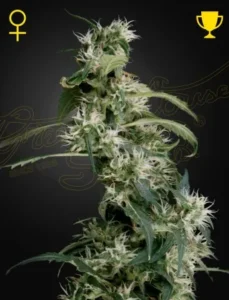
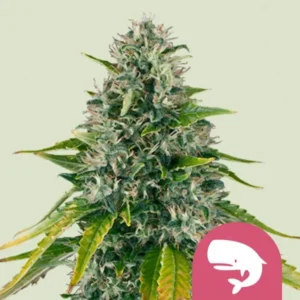
Arjan's Ultra Haze #2

|
THC | 22% - 23% (Medium) |

|
Lineage | Neville's Haze x Mango Haze x Laos |

|
Type | Feminized |

|
Height | 6.56 ft | 2 m |

|
Yield Outdoor | 38.8 oz/plant | 1100 g/plant |

|
Flowering Time | 12 - 13 weeks |

|
Phenotype | 20% Indica / 80% Sativa |

|
Effects | Uplifted, Powerful, Talkative, Sedative |

|
Flavors | Fruity, Woody, Spicy |
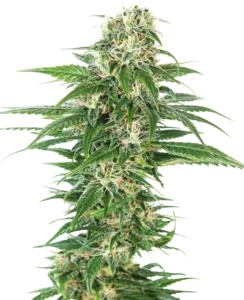
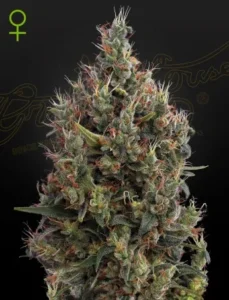
Early Skunk Auto
|
|
THC | 11% - 14% (Low) |
|
|
Lineage | Early Skunk x Ruderalis |
|
|
Type | Autoflowering |
|
|
Height | 4.92 ft | 1.5 m |

|
Yield | Low |

|
Yield Indoor | 0.33 - 0.66 oz/ft² | 100 - 200 g/m² |
|
|
Life Cycle | 10 - 11 weeks |
|
|
Phenotype | 70% Indica / 30% Sativa |
|
|
Effects | Focused, Energetic, Happy |
|
|
Flavors | Floral, Skunk |
The carbon has a very large internal surface area created by microscopic pores. As smoke travels through those pores, some gaseous and semi-volatile compounds can adhere to the carbon surface through adsorption. This is different from mechanically trapping every particle in the smoke.
That distinction matters. An activated carbon filter isn’t a miniature air purifier that removes everything undesirable before the smoke reaches your lungs.
How do activated carbon filters work?
Activated carbon works mainly through adsorption, meaning molecules in the passing smoke attach to the extensive internal surface of the carbon. Which compounds get captured depends on their physical and chemical properties, the type and quantity of carbon, contact time, smoke flow, filter construction, and how saturated the carbon has already become.
Laboratory tobacco-smoke research has shown that activated carbon can substantially reduce a range of volatile organic compounds. One CDC-associated study found that effectiveness depended both on how much charcoal was present and how intensely smoke was drawn through the filter; under heavier smoking conditions, saturation and breakthrough reduced performance.
This means statements such as “activated carbon removes toxins” need qualification. It removes some compounds more efficiently than others.
Do activated carbon smoking filters actually work?
Yes, in the limited sense that activated carbon can reduce the delivery of certain compounds in smoke.
Experiments with charcoal-containing cigarette filters have demonstrated significant reductions in numerous gas-phase chemicals. One study found reductions in gas-phase free radicals, while another found major decreases in several harmful carbonyl compounds as charcoal loading increased.
However, those studies also show the limits of filtration. Activated carbon was considerably less effective against particulate-phase radicals, and studies of semi-volatile compounds found that heavier particulate-associated PAHs such as benzo[a]pyrene weren’t significantly removed.
So the accurate answer is:
Activated carbon filters work selectively, not comprehensively.
What does the research say about cannabis smoke?
There’s much less direct evidence for cannabis than for tobacco.
One cannabis study compared smoke from a glass pipe, an unfiltered water pipe, and a water pipe equipped with both activated carbon and cotton filtration. Researchers measured several pesticide residues transferred from deliberately contaminated cannabis. The filtered water pipe produced much lower pesticide recovery in the collected smoke than either unfiltered device.
But this study does not prove that the activated carbon alone caused the reduction. The device used both cotton and carbon filters, and the researchers found substantial pesticide material in the cotton while recovery from the carbon itself was below the reported calibration level. They specifically noted that the effect involved the filtration system as a whole.
That makes the study relevant, but it shouldn’t be rewritten as “activated carbon removes 90% of pesticides from cannabis smoke.”
What can activated carbon remove from smoke?
The strongest evidence from tobacco-smoke experiments concerns volatile and gas-phase compounds.
Activated carbon filtration has reduced substances such as benzene, 1,3-butadiene, acrolein, other volatile organic compounds, several carbonyls, and gas-phase free radicals under controlled experimental conditions. The degree of reduction differs substantially depending on carbon loading, filter design, compound, and smoking intensity.
This selectivity matters because smoke is an extremely complex aerosol. It contains both gases and suspended particulate matter, and activated carbon doesn’t interact equally with everything present.
A more accurate description than “filters toxins” is therefore “reduces the delivery of certain smoke constituents.”
What do activated carbon filters not remove?
Activated carbon doesn’t remove all particulate matter, carbon monoxide, carcinogens, or combustion products.
Research has found much smaller or absent reductions for some particulate-phase compounds compared with volatile gas-phase constituents. Heavy PAHs and particulate radicals are examples where charcoal filtration has shown limited performance.
This is the most important correction to the current page. The original repeatedly describes the resulting smoke as “cleaner” in a way that can easily be read as clean or safe.
Filtered smoke is still combustion smoke.

Do activated carbon filters make cannabis smoking safer?
There isn’t enough evidence to say that activated carbon filters make cannabis smoking safe or that using them reduces someone’s long-term risk of respiratory disease.
The CDC states that smoked cannabis can damage lung tissue regardless of how it’s smoked and that cannabis smoke contains many of the same toxins, irritants, and carcinogens found in tobacco smoke.
Laboratory measurements showing that a filter reduces a particular chemical are useful, but they aren’t the same as clinical evidence showing fewer cases of bronchitis, cardiovascular disease, cancer, or other health outcomes among cannabis smokers using those filters.
For someone who’s going to smoke anyway, activated carbon filtration may reduce exposure to some smoke constituents. It should be framed as limited filtration rather than health protection.
Activated carbon filter vs. regular joint tip
A cardboard or paper joint tip and an activated carbon filter do different jobs.
A conventional crutch or tip mainly gives the end of a joint structure, improves airflow, keeps loose flower out of the mouth, and provides something to hold as the joint burns down. It isn’t designed as an adsorbent chemical filter.
An activated carbon tip deliberately routes smoke through porous carbon so that certain compounds can adsorb onto its surface. That added filtration can also change draw resistance and potentially influence the sensory experience.
In practice, the distinction is between a simple structural tip and an actual filtration medium, not between two equivalent kinds of filter.
Activated carbon vs. standard cigarette filters
Standard cellulose acetate cigarette filters primarily trap some particulate material mechanically. Activated carbon can be incorporated alongside conventional filter material specifically to increase adsorption of volatile compounds.
Tobacco experiments show why the distinction matters. Charcoal-containing filters can substantially reduce certain gas-phase compounds even when changes in tar or nicotine delivery are comparatively modest.
However, those cigarette results can’t be copied directly into cannabis marketing claims. Cannabis joints differ in combustion conditions, smoke composition, rolling materials, filter dimensions, and smoking behavior.
The mechanisms are relevant; the exact percentages aren’t automatically transferable.
Do activated carbon filters reduce THC?
There isn’t enough independent cannabis-specific evidence to give a universal percentage for how much THC an activated carbon joint filter removes.
Because cannabinoids travel within a complex smoke aerosol, some cannabinoid loss through filtration is physically plausible. But filter composition, surface area, smoke temperature, flow, resin accumulation, and product design all vary.
Tobacco studies show a useful general principle: activated carbon doesn’t capture every active or unwanted compound equally. Even nicotine delivery was affected much less than certain gas-phase radicals and carbonyls in experimental filters.
I’d avoid both extremes here: don’t claim that carbon filters remove significant amounts of THC without evidence, but also don’t promise that 100% of THC passes through unchanged.
Do carbon filters remove terpenes or change flavor?
They may change the sensory profile, but there isn’t enough independent cannabis research to say precisely which terpenes are removed, or by how much, across commercial filters.
Activated carbon selectively adsorbs volatile molecules, and many aroma compounds are themselves volatile. It’s too simplistic to claim, as the current page does, that the filter removes impurities while preserving the “true essence” of every strain.
Some users may perceive filtered smoke as less harsh or different in flavor, but those subjective impressions should stay separate from analytical claims about terpene retention.
Whether someone prefers the taste with or without an activated carbon filter is ultimately a sensory preference.
Why can activated carbon filters feel smoother?
A smoother sensation doesn’t necessarily mean substantially less harmful smoke.
If a filter reduces certain volatile irritants, changes smoke temperature, catches condensate, or alters airflow, the inhalation may feel different. Tobacco experiments have found reductions in volatile irritants and corresponding decreases in some experimental measures of cytotoxicity.
But perceived smoothness is a poor measure of toxicant exposure. Smoke can feel less irritating while still containing particulate matter and harmful combustion products.
The current article repeatedly treats smoother smoke as evidence of a healthier session. I’d separate those two concepts entirely.
Does more activated carbon mean better filtration?
Within experimental systems, increasing the quantity of activated carbon has often improved filtration of certain compounds.
For example, controlled cigarette studies found larger reductions in gas-phase radicals and carbonyls as charcoal loading increased.
That doesn’t mean the largest filter is automatically best for a joint. More filtration material can influence airflow and the smoking experience, while the effectiveness of the design depends on how smoke actually travels through the carbon.
Contact time also matters. One VOC study found that more intense smoke flow could saturate filters and cause breakthrough, particularly when less charcoal was present.
Can an activated carbon filter get saturated?
Yes. Activated carbon has a finite adsorption capacity.
Once accessible adsorption sites become occupied, the filter becomes less capable of capturing additional compounds. How quickly that happens depends on the amount and type of carbon, smoke composition, moisture, airflow, temperature, and total volume passing through it.
Experimental tobacco research has directly observed charcoal saturation and chemical breakthrough under more intense smoking conditions.
For commercial joint filters, there’s no scientifically established universal rule such as “one filter lasts exactly X joints.” Follow the manufacturer’s intended use rather than repeatedly reusing a disposable filter.
Do activated carbon filters reduce cannabis smell?
They shouldn’t be relied on to eliminate cannabis odor.
Some aromatic compounds in mainstream smoke may interact with activated carbon, but much of the odor generated while smoking comes from smoke released directly from the burning end of a joint or bowl. That sidestream smoke never passes through the mouthpiece filter.
The same limitation applies to secondhand exposure. The CDC states that secondhand cannabis smoke contains toxic and cancer-causing chemicals as well as THC. A filter between the joint and smoker doesn’t capture the smoke entering the room directly from combustion.
Can you use activated carbon filters in pipes and bongs?
Activated carbon filtration isn’t limited conceptually to joints. Some smoking systems use separate carbon chambers or adapters through which smoke passes before reaching the mouthpiece.
A purpose-designed system is preferable to improvising loose activated carbon inside equipment, because the device needs to prevent carbon particles from being drawn toward the user while maintaining predictable airflow.
With a bong or bubbler, water filtration and activated carbon filtration are different processes. Passing smoke through water shouldn’t be assumed to provide the same chemical adsorption as forcing it through activated carbon.
Neither method removes the fundamental risks of combustion.
Are activated carbon filters better for people with respiratory problems?
The current article suggests that these filters can make smoking more viable for people with pre-existing respiratory conditions. I’d remove that claim entirely.
Someone with asthma, chronic bronchitis, COPD, or another respiratory condition shouldn’t interpret an activated carbon filter as medical protection from smoke. The CDC states that cannabis smoking is associated with cough, mucus production, and bronchitis symptoms and can damage lung tissue.
Reducing selected smoke constituents isn’t equivalent to making smoke appropriate for compromised lungs.
Are activated carbon filters healthier than no filter?
“Potentially lower exposure to some compounds” is more defensible than “healthier.”
The available laboratory evidence shows real reductions in certain volatile toxicants under controlled conditions. At the same time, activated carbon doesn’t eliminate numerous particulate and combustion-related constituents, and there’s insufficient cannabis-specific evidence connecting these filters with better long-term health outcomes.
So if the comparison is an identical combustible product with or without a properly designed carbon filter, the filter may reduce some exposures.
It doesn’t convert smoking into a low-risk consumption method.
Are activated carbon smoking filters worth using?
For someone who already chooses to smoke cannabis, an activated carbon filter is a reasonable optional filtration component if the goal is to reduce exposure to some compounds that activated carbon can adsorb.
Its advantages should stay modestly stated: selective filtration, potentially different draw characteristics, and a subjective reduction in harshness for some users. Its limitations are equally important: it can’t remove all toxicants, can’t stop sidestream smoke, may affect some desired compounds, and hasn’t been shown to eliminate the health risks of cannabis smoke.
That’s a much stronger basis for choosing one than claims about “detoxifying” smoke or making smoking healthy.
Activated carbon smoking filters: bottom line
Activated carbon smoking filters do work, but only selectively.
The porous carbon can adsorb certain gas-phase and volatile compounds before mainstream smoke reaches the user. Controlled tobacco-smoke research has demonstrated reductions in VOCs, carbonyls, and gas-phase free radicals, although effectiveness varies with filter design, carbon quantity, compound, and smoking intensity.
They’re much less effective against various particulate-phase constituents, and direct evidence from cannabis remains limited. A cannabis study found substantially lower pesticide recovery with a filtered water-pipe system, but that system combined activated carbon and cotton filtration and therefore doesn’t establish the performance of a typical carbon joint filter by itself.
Use activated carbon filters as filters, not as a claim that cannabis smoke has become safe.

FAQs about activated carbon smoking filters
What do activated carbon smoking filters do?
Activated carbon filters pass smoke through highly porous carbon that can adsorb certain gaseous and volatile compounds. Laboratory tobacco studies have shown reductions in several VOCs, carbonyls, and gas-phase free radicals. They’re less effective against some particulate-phase substances and don’t remove every harmful component of smoke.
Do activated carbon filters make smoking safer?
They can reduce exposure to selected smoke constituents, but there’s insufficient evidence to say that they make cannabis smoking safe or substantially reduce long-term disease risk. Cannabis smoke still contains toxins, irritants, and carcinogens and can damage lung tissue regardless of the smoking method.
Do activated carbon filters filter out THC?
There isn’t enough independent research on typical cannabis joint filters to give a reliable percentage. Activated carbon selectively adsorbs chemicals, so some compounds may be retained while others pass through more readily. Avoid claims that carbon filters either remove large amounts of THC or allow all cannabinoids through unchanged without product-specific evidence.
Do activated carbon filters remove terpenes?
Possibly some, but there’s insufficient independent evidence to quantify terpene loss across commercial cannabis filters. Because activated carbon adsorbs certain volatile molecules and terpenes are volatile aroma compounds, complete terpene preservation shouldn’t be assumed. The effect depends on the carbon, filter design, smoke conditions, and individual compounds.
Are activated carbon filters better than cardboard tips?
They perform different functions. A cardboard tip primarily adds structure, maintains airflow, and stops loose flower entering the mouth. An activated carbon filter additionally provides an adsorbent medium capable of trapping some smoke constituents. That extra filtration doesn’t mean it removes everything harmful or makes combustion safe.
How often should you change an activated carbon smoking filter?
There’s no universal scientifically established number of uses. Activated carbon eventually becomes saturated, and experimental research shows its performance can decline when adsorption capacity is exceeded. Disposable filters should generally be used according to their manufacturer’s instructions rather than repeatedly reused after becoming dirty, blocked, wet, or difficult to draw through.