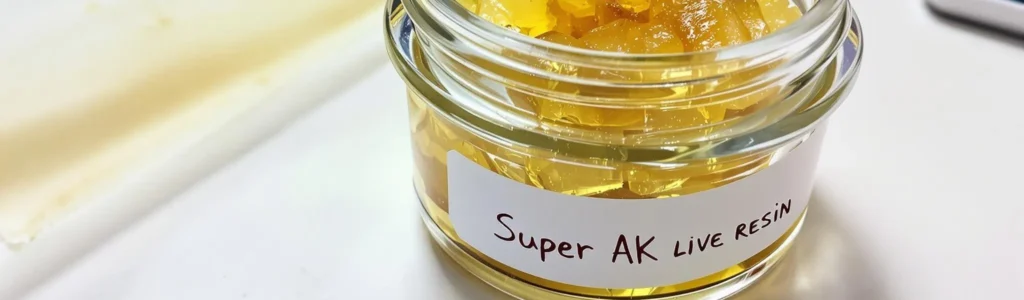

Decarbing live resin means heating THCA-rich resin so part of its THCA converts into psychoactive delta-9 THC before oral use. First check the product’s cannabinoid analysis, because some concentrates are already largely decarboxylated. For THCA-rich live resin, controlled low heat around 220–240°F (105–115°C) is a practical approach, but exact time varies with the product, quantity, container, and oven.
Does Live Resin Need to Be Decarbed?
Live resin is not automatically either decarbed or non-decarbed. What matters is the actual cannabinoid composition of the product in front of you. If its laboratory analysis shows that most of the cannabinoid content is still listed as THCA, then additional decarboxylation is relevant when the goal is an orally active THC edible. If the product already contains predominantly delta-9 THC with little remaining THCA, repeatedly heating it may be unnecessary.
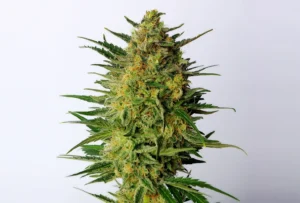
Recommended Strains
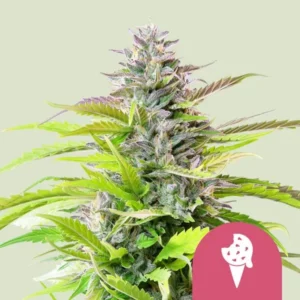
Cookies Gelato

|
THC | 28% - 29% (High) |

|
Lineage | Girl Scout Cookie X Gelato 33 |

|
Type | Feminized |

|
Height | 5.41 ft | 1.65 m |

|
Yield | High |

|
Yield Indoor | 1.8 - 1.97 oz/ft² | 550 - 600 g/m² |

|
Yield Outdoor | 21.16 - 22.93 oz/plant | 600 - 650 g/plant |

|
Flowering Time | 8 - 9 weeks |

|
Phenotype | 50% Indica / 50% Sativa |

|
Effects | Balanced, Calming, Relaxed |

|
Flavors | Citrus, Earthy, Fruity, Mint |
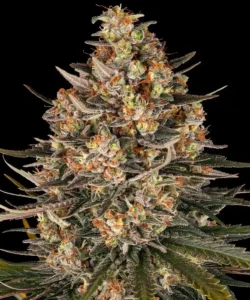
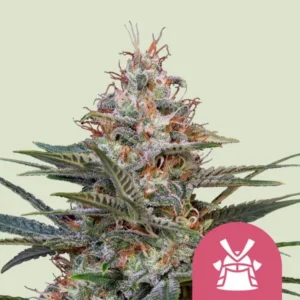
Lemon Drizzle
|
|
THC | 24% - 25% (High) |
|
|
Lineage | Super Lemon Haze x OG Kush Strain |
|
|
Type | Feminized |
|
|
Height | 5.74 ft | 1.75 m |
|
|
Yield Outdoor | 52.91 oz/plant | 1500 g/plant |
|
|
Flowering Time | 8 - 9 weeks |
|
|
Phenotype | 15% Indica / 85% Sativa |
|
|
Effects | Energetic, Uplifted, Focused, Euphoric |
|
|
Flavors | Sweet, Sour, Citrus, Pine, Earthy |
This is a better starting point than assuming every jar of live resin needs the same treatment. Live resin belongs to the broader family of cannabis concentrates, and different products can undergo different amounts of heating during extraction and post-processing. The label or certificate of analysis therefore tells you more than the product name alone.
What Does Decarbing Live Resin Actually Do?
Cannabis plants primarily produce acidic cannabinoids such as THCA. Heating removes a carboxyl group from THCA and converts it into neutral delta-9 THC, the cannabinoid responsible for most of cannabis’s characteristic intoxicating effects.
The reaction is temperature- and time-dependent rather than an instantaneous activation. Controlled laboratory research found that THCA decarboxylation proceeded substantially faster as temperature increased from 80°C to 95°C and then 110°C, following first-order or pseudo-first-order kinetics.
That is why both excessive heat and insufficient heating can be undesirable. The objective is not simply to make the concentrate as hot as possible, but to provide enough controlled thermal exposure for useful conversion without adding unnecessary degradation.
Check the Label Before You Decarb
Before heating live resin, look at the cannabinoid panel if one is available. A product dominated by THCA is a much stronger candidate for decarboxylation than one whose analysis already shows mostly delta-9 THC.
This simple check also helps prevent a common mistake: treating cartridges, activated oils, sauces, and raw THCA-rich live resin as though they are chemically identical because they all use the words live resin somewhere on the package.
The distinction matters especially for edibles. Heating during inhalation can decarboxylate THCA very rapidly; simulated dabbing experiments have demonstrated essentially complete THCA decarboxylation during high-temperature vaporization. Oral consumption does not provide that same heating event, which is why THCA-rich material is normally decarboxylated beforehand when delta-9 THC is the intended active cannabinoid.
What Temperature Should You Use to Decarb Live Resin?
For a practical home approach, a low oven temperature around 220–240°F (105–115°C) is reasonable for THCA-rich live resin. This range sits close to temperatures at which controlled cannabinoid studies have directly measured substantial THCA decarboxylation, while avoiding unnecessarily aggressive heating.
I would not present 220°F, 230°F, or 240°F as a scientifically perfect temperature. Household ovens cycle above and below their set point, the actual temperature inside the concentrate can lag behind the air temperature, and larger quantities warm differently from thin films.
The goal of the article should therefore be controlled low heat, not an artificial claim that one exact temperature works for every concentrate.
How Long Does Live Resin Take to Decarb?
There is no universal answer such as exactly 25 minutes.
For a small amount of live resin in the low-temperature range above, roughly 20–40 minutes can be used as a practical observation window, but it should be treated as a guideline rather than proof that conversion is complete. Temperature, amount of resin, starting cannabinoid composition, container geometry, and oven accuracy all affect the result.
Research on THCA demonstrates why fixed rules are misleading: increasing temperature substantially increases the decarboxylation reaction rate. A concentrate heated at the lower end of the range can therefore require more time than the same material exposed to a higher controlled temperature.
If exact conversion matters, only analytical testing can confirm the final cannabinoid composition.
How to Decarb Live Resin for Edibles
Place the THCA-rich live resin in a small heat-resistant glass container rather than spreading it across a large exposed surface. Using a small container makes the sticky concentrate easier to recover afterward and limits unnecessary surface exposure.
Preheat the oven to approximately 220–240°F (105–115°C) and, if possible, verify the real oven temperature with a separate thermometer. Household ovens can cycle considerably around their displayed setting, so knowing the approximate actual temperature is more useful than obsessing over whether the dial says 225°F or 230°F.
Heat the resin while observing it periodically. As decarboxylation progresses, gas release can produce visible bubbles. The activity will often become less vigorous over time, but do not treat the disappearance of bubbles as laboratory confirmation that every molecule of THCA has converted. Bubbling is a practical visual cue, not a quantitative cannabinoid test.
Once the heating period is complete, remove the container and allow it to cool before incorporating the concentrate into the recipe. Avoid repeated reheating when it is not necessary, particularly if preserving some of the volatile aroma is important.
Does Bubbling Mean Live Resin Is Decarbing?
Bubbling can accompany decarboxylation because carbon dioxide is released when acidic cannabinoids lose their carboxyl group. That makes visible gas formation a useful practical clue that chemical changes are occurring.
However, the current version goes too far by stating that once bubbling stops, the live resin is fully activated. Several processes can contribute to bubbles in a heated concentrate, including volatilization of other components, and visual observation cannot measure remaining THCA.
Use bubbling to monitor the process, not as a substitute for analytical testing.
Should You Decarb Live Resin Until It Stops Bubbling Completely?
Not necessarily.
Trying to force every final bubble out can encourage additional heating after most of the useful conversion has already occurred. Continued thermal exposure may alter cannabinoids and remove more volatile aroma compounds without providing a meaningful practical benefit.
This is especially relevant to live resin because one of the reasons fresh or frozen cannabis material is used in concentrate production is to retain more of the volatile chemistry that can disappear during conventional post-harvest processing. Research comparing cannabis processing methods has shown that heat exposure can substantially reduce total terpene content and that even relatively mild processing conditions can cause volatile losses.
Therefore, heat until absolutely no bubbles remain is too simplistic a rule.
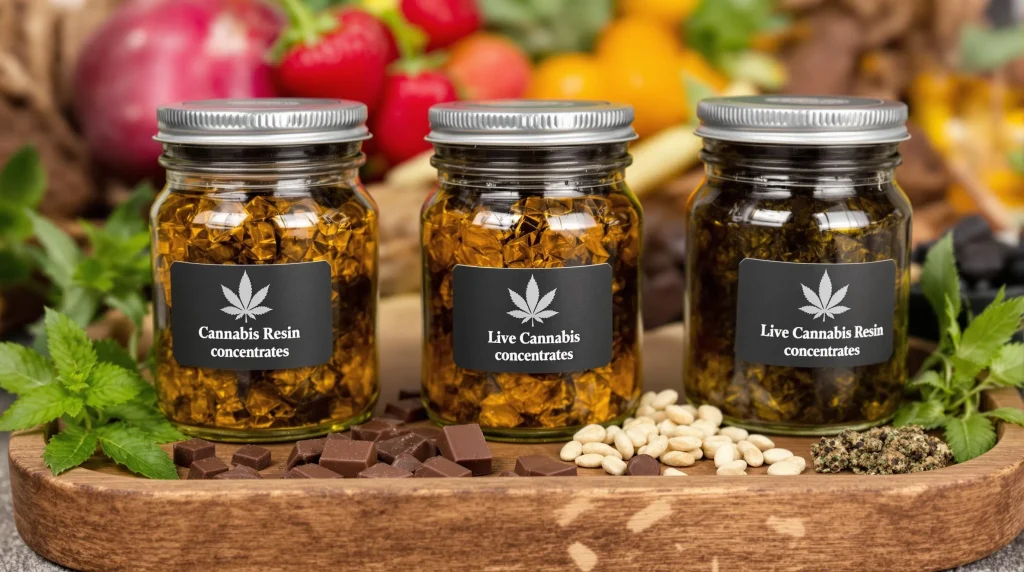
Does Decarbing Live Resin Destroy Terpenes?
Heating can cause terpene loss, but destroy is too absolute.
Terpenes and other aroma compounds differ greatly in volatility and thermal stability. Some will be lost more readily than others as temperature and exposure time increase. Research on cannabis post-harvest processing has demonstrated significantly lower terpene retention with warmer drying treatments compared with colder processing methods.
This creates an unavoidable trade-off when decarbing THCA-rich live resin for edibles: the heat needed for cannabinoid conversion can also change the aromatic profile.
The existing article repeatedly promises that low-temperature decarbing will preserve the resin’s terpene profile and maximize flavor. I would soften that significantly. Controlled heating can reduce unnecessary loss, but it cannot guarantee that the original live-resin aroma remains unchanged.
Why Live Resin Is Different From Dried-Flower Extracts
Live resin is generally associated with extraction from freshly harvested material that has been frozen rather than conventionally dried and cured. The purpose is to retain more of the volatile compounds present around harvest.
Research on fresh cannabis processing supports the underlying principle: cold-chain approaches can preserve monoterpenoids that are otherwise readily lost during drying and curing.
That does not mean every live resin contains more of every terpene than every other concentrate, nor does it mean those compounds survive subsequent heating unchanged. It simply explains why aroma preservation is particularly relevant when discussing decarboxylation of live resin.
Do You Need Butter or Oil to Activate THC?
No. This is an important correction to the existing article.
THCA becomes THC through decarboxylation caused by heat. THC does not need to bind to fat in order to become activated. The current copy conflates decarboxylation with later recipe formulation when it says THC must be activated so it can bind effectively with fats.
Butter, coconut oil, and other fats can be useful ingredients when distributing a cannabis concentrate through a recipe, but adding fat is a separate step from converting THCA into THC.
The distinction is the same when making hash butter: decarboxylation changes cannabinoid chemistry, while the butter serves as the food ingredient that carries those cannabinoids through the recipe.
How to Mix Decarbed Live Resin Into Edibles
Once the live resin has been decarboxylated, the main practical objective is even distribution. A highly concentrated extract poorly mixed through a batch can create portions with very different THC amounts.
Blend the cooled or slightly warm concentrate thoroughly into the fat or other compatible component used throughout the recipe, then distribute that ingredient evenly through the full mixture. The point is not that butter chemically activates THC; it simply makes it easier to incorporate a small amount of sticky concentrate consistently into foods that already contain fat.
This becomes especially important with concentrated cannabis products because small differences in quantity can produce substantial differences in THC per serving.
Does Live Resin Make Better Edibles?
Not automatically.
Live resin is attractive largely because of its volatile and aromatic profile, but some of that advantage can be reduced when the product is deliberately heated during decarboxylation and then heated again during cooking. A strongly flavored live resin may still influence the finished food, but it should not be promised to produce far superior flavor in every edible.
The current article also describes live resin as inherently more potent and economical than other concentrates. Potency depends on the actual cannabinoid analysis, not on the words live resin. Another concentrate may contain more THC than a particular live-resin sample.
If flavor preservation is the main goal, use the lowest additional heat compatible with the recipe after decarboxylation and avoid prolonged reheating.
Can You Decarb Live Resin in the Container It Came In?
Only if the container is explicitly rated for the temperature being used.
Dispensary jars, silicone containers, plastic packaging, lids, liners, and labels are not automatically suitable for oven heating. Moving the concentrate to a small clean heat-resistant glass container avoids making assumptions about packaging materials.
Parchment can be useful for handling sticky concentrates, but a glass vessel tends to make it easier to contain bubbling resin and recover the material afterward without spreading it across a large surface.
Can You Decarb Live Resin in a Microwave?
I would not recommend a microwave for controlled decarboxylation.
Microwave heating can create uneven temperature distribution, making it difficult to know how much thermal exposure different parts of a small concentrate sample received. For a process whose chemistry depends strongly on both temperature and time, a controlled oven or purpose-designed heating device is more predictable.
That does not make an ordinary oven laboratory-precise, but it gives the user much more practical control over the process.
Can You Decarb Live Resin Twice?
Technically you can heat it again, but that does not mean you should.
If the resin has already been substantially converted from THCA to delta-9 THC, further decarboxylation offers diminishing benefit while increasing total thermal exposure. This is why checking the cannabinoid panel before heating is so useful.
Repeated exposure to heat, light, and oxygen can alter cannabinoid and terpene composition over time, so unnecessary reheating should not be treated as harmless.
How Potent Will Decarbed Live Resin Be?
The product’s laboratory analysis is the best starting point.
THCA does not convert to an identical mass of THC because carbon dioxide is lost during the reaction. For recipe calculations, the potential THC from THCA is therefore lower than the starting THCA weight. Real-world conversion and handling losses introduce additional uncertainty, so a theoretical calculation should not be presented as laboratory-certified edible potency.
This becomes particularly important with homemade edibles. Even when the starting concentrate has a COA, uneven mixing and portion sizes can change how much THC ends up in an individual serving.
For that reason, use conservative estimates and clearly distinguish estimated potency from tested potency.
How to Store Decarbed Live Resin
If you are not using the concentrate immediately, protect it from excessive heat, light, oxygen, and repeated temperature cycling. A small sealed glass container in a cool, dark environment is a sensible general approach.
For longer storage, cooler conditions can help slow chemical change, but cold storage adds a practical issue: condensation can form if a chilled container is opened immediately. Allowing the sealed container to approach room temperature before opening reduces that risk. More detail on this applies across cannabis concentrates storage.
Storage slows change; it does not permanently freeze the chemical profile in place.
Common Mistakes When Decarbing Live Resin
The most common mistake is assuming that every live resin starts with the same cannabinoid composition. A THCA-dominant resin and an already activated THC-rich oil do not need identical treatment.
Another mistake is using an exact timer as proof of completion. Twenty-five minutes can be appropriate in one setup and insufficient or excessive in another because temperature, concentrate mass, vessel shape, and oven behavior differ. Laboratory research clearly shows that THCA decarboxylation rate changes substantially with temperature.
The third mistake is chasing zero bubbles at all costs. Bubbling can help you observe progress, but extended heating sacrifices additional volatile compounds and still does not analytically prove complete conversion.
Finally, do not assume that decarbing a live resin preserves every original strain-specific effect. Heating changes its chemistry, and the edible route itself produces a substantially different experience from inhalation.
Decarbing Live Resin: Bottom Line
The right way to approach decarbing live resin starts with the cannabinoid label, not the oven.
If the product is predominantly THCA and you intend to use it in an edible where active delta-9 THC is desired, controlled low-temperature heating is appropriate. A practical range around 220–240°F (105–115°C) can be used, with roughly 20–40 minutes as an observation window rather than an absolute recipe.
Watch the resin during heating, but remember that bubbling slowing down is only a visual cue. It does not prove complete decarboxylation. Scientific measurements show that THCA conversion depends continuously on temperature and time, so no one visual signal or timer can substitute for a cannabinoid analysis.
The most important balance is simple: provide enough controlled heat for useful THCA conversion while avoiding more thermal exposure than the recipe actually needs.
FAQs About Decarbing Live Resin
Does live resin need to be decarbed for edibles?
THCA-rich live resin generally needs decarboxylation if the goal is an edible containing active delta-9 THC. However, not every product starts in the same state. Check the cannabinoid panel first. If the concentrate already contains predominantly delta-9 THC and little THCA, additional decarboxylation may be unnecessary.
What temperature should I use to decarb live resin?
A practical low-temperature range is around 220–240°F, or approximately 105–115°C. There is no single scientifically perfect oven setting because THCA conversion depends on both temperature and time, and household ovens fluctuate. Controlled studies show substantially faster decarboxylation as temperature increases.
How long should live resin be decarbed?
Roughly 20–40 minutes can serve as a practical observation range for small quantities at low oven temperatures, but it is not a universal endpoint. Concentrate quantity, starting cannabinoid profile, oven accuracy, vessel shape, and actual temperature all influence conversion, so avoid treating one timer setting as proof of completion.
Is live resin fully decarbed when it stops bubbling?
Not necessarily. Decarboxylation releases carbon dioxide, so bubbling can indicate that conversion is taking place, but other volatile components can also contribute. A reduction in bubbling is a useful practical cue rather than analytical proof that all THCA has converted into THC.
Does decarbing live resin ruin the terpenes?
Heating can reduce or alter volatile terpene content, but the degree of loss depends on temperature, time, and the individual compounds present. Cannabis processing research shows that warmer treatments can reduce terpene retention. Using controlled rather than excessive heat can limit unnecessary loss, but cannot guarantee complete preservation.
Can I use decarbed live resin directly in edibles?
Yes, once a THCA-rich concentrate has been appropriately decarboxylated, it can be incorporated into a compatible recipe. Mixing it thoroughly is important because concentrated cannabinoids need to be distributed evenly across the batch if portions are expected to have reasonably consistent potency.