
Light deps use sunlight plus artificial darkness to control when cannabis flowers, while indoor cultivation uses artificial lighting and a highly controlled environment. Light dep usually reduces lighting demand and gives growers more seasonal control than standard outdoor growing. Indoor offers greater consistency and year-round environmental control, but generally requires much more energy and infrastructure.
Light Dep vs Indoor at a Glance
The simplest way to understand the difference is that light deprivation sits somewhere between traditional outdoor cultivation and fully controlled indoor production.
Recommended Strains
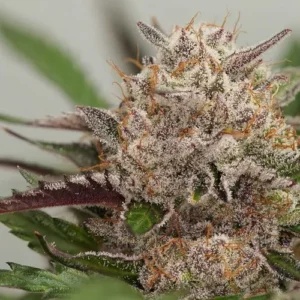
Mimosa Punch Auto

|
THC | 15% - 20% (Medium) |

|
Lineage | Mimosa (Clementine X Purple Punch) X Auto Purple Punch |

|
Type | Autoflowering |

|
Height | 2.62 ft | 0.8 m |

|
Yield | Medium |

|
Yield Indoor | 1.31 - 1.47 oz/ft² | 400 - 450 g/m² |

|
Yield Outdoor | 3.53 - 5.29 oz/plant | 100 - 150 g/plant |

|
Life Cycle | 10 - 12 weeks |

|
Phenotype | 50% Indica / 50% Sativa |

|
Effects | Relaxed, Euphoric, Sedative |

|
Flavors | Fuel, Sweet, Fruity, Earthy |
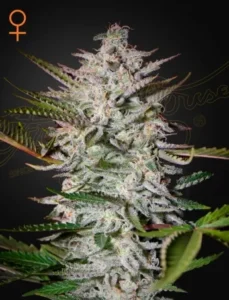
Holy Punch
|
|
THC | 20% - 21% (Medium) |
|
|
Lineage | The Church x Grape |
|
|
Type | Feminized |
|
|
Height | 5.09 ft | 1.55 m |
|
|
Yield Outdoor | 35.27 oz/plant | 1000 g/plant |
|
|
Flowering Time | 8 - 9 weeks |
|
|
Phenotype | 40% Indica / 60% Sativa |
|
|
Effects | Energetic, Talkative, Uplifted |
|
|
Flavors | Diesel, Grape, Woody |
| Factor | Light Dep | Indoor |
|---|---|---|
| Main light source | Sunlight | Artificial grow lights |
| Flowering control | Blackout system manipulates day length | Grow lights control day length |
| Climate control | Partial to advanced, depending on structure | High |
| Weather dependence | Moderate | Very low |
| Energy demand | Usually lower | Usually much higher |
| Seasonal dependence | Yes, although harvest timing can be manipulated | Minimal |
| Harvest scheduling | Multiple/earlier seasonal harvests possible | Year-round cycles possible |
| Consistency | More variable | Usually easier to standardize |
| Setup | Hoop house to advanced greenhouse | Enclosed controlled grow rooms |
| Best advantage | Sunlight + flowering control | Maximum environmental control |
Neither method automatically produces better cannabis.
Genetics, light intensity, climate, root environment, nutrition, airflow, harvest timing, drying and curing can matter as much as whether the flower is labeled dep or indoor.
What Is Light Dep Weed?
Light dep is short for light deprivation.
Cannabis cultivators use an opaque cover or blackout curtain to shorten the plant’s perceived day length and create a longer uninterrupted dark period.
Photoperiod cannabis naturally begins reproductive development as seasonal day length changes. Light deprivation allows growers to manipulate that signal instead of waiting for the natural outdoor flowering season.
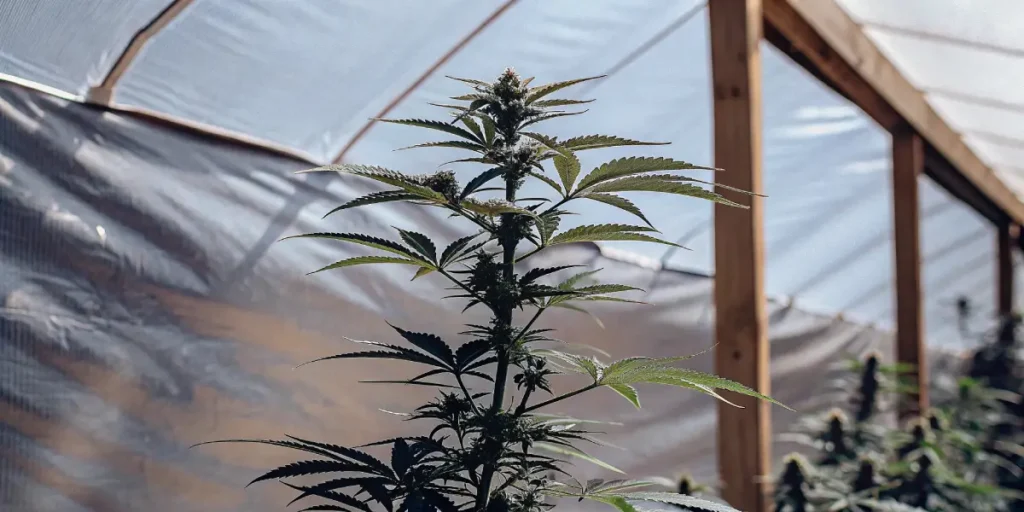
The technique is commonly used in hoop houses and greenhouses.
A simple setup may involve a manually pulled blackout tarp. More sophisticated commercial greenhouses use automated curtains together with ventilation, humidity control, irrigation and sometimes supplemental lighting.
Light dep therefore describes photoperiod manipulation, not one standardized type of facility.
A low-tech outdoor hoop house and a climate-controlled commercial greenhouse can both technically produce light-deprivation cannabis while having very different costs and environmental control.
What Is Indoor Weed?
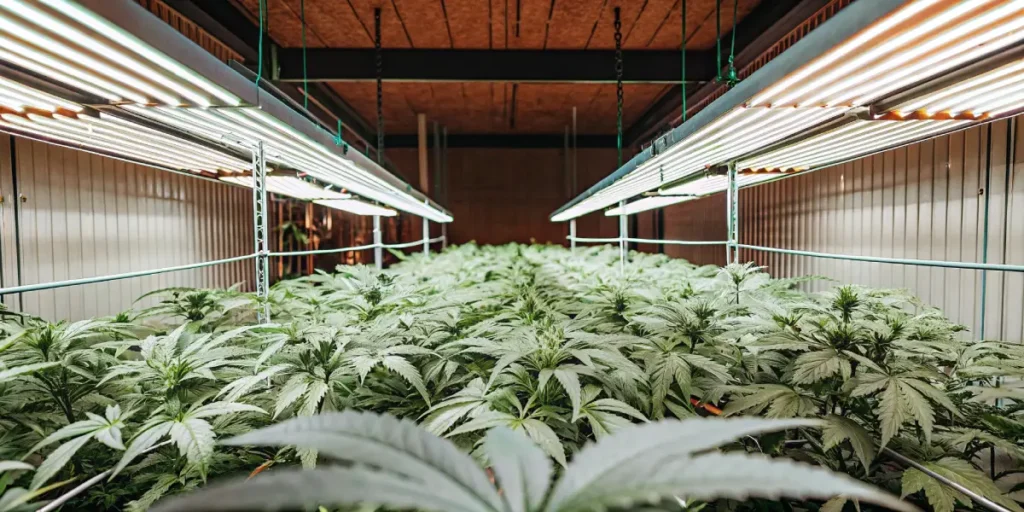
Indoor cannabis is cultivated inside an enclosed environment where sunlight is generally replaced by artificial lighting.
Growers can directly control variables such as photoperiod, light intensity, temperature, humidity, airflow and, in some commercial facilities, supplemental CO₂.
The major advantage is independence from season and weather.
An indoor grower does not need to wait for summer sunlight or shortening autumn days. Flowering can be initiated by changing the artificial photoperiod whenever the production schedule requires it.
That makes indoor cultivation particularly suitable for standardized, repeated production cycles.
The disadvantage is that creating an artificial growing environment requires considerable infrastructure and energy.
Does Light Dep Grow Faster Than Indoor?
Not inherently.
This is an important correction to the common comparison.
Light deprivation can make a sun-grown photoperiod crop flower earlier than it naturally would outdoors.
For example, instead of waiting until late summer for shortening days to trigger flowering, the grower can impose an appropriate dark period earlier in the season.
That can make earlier harvests and multiple seasonal crop cycles possible.
Indoor growers, however, already have complete photoperiod control.
They can initiate flowering by changing the lighting schedule without waiting for any seasonal signal.
So light dep is not inherently faster than indoor cultivation.
Its scheduling advantage is primarily light dep vs traditional outdoor, not light dep vs indoor.
Light Dep vs Indoor Quality
There is no scientific basis for saying that all indoor cannabis is higher quality than all light-dep cannabis.
Indoor cultivation provides a major advantage in repeatability.
Temperature, humidity, light intensity, airflow and irrigation can be standardized more easily when outside weather has little influence on the crop.
That can contribute to visually uniform flowers and more consistent production between harvests.
Light dep has a different advantage: most or all photosynthetically useful light comes from the sun.
Natural sunlight provides an extremely broad spectrum and can reach high intensities without the electricity consumption associated with indoor fixtures.
Research confirms that cultivation environment can change cannabis chemistry.
One study compared genetically identical cannabis grown under natural sunlight in living soil with samples grown indoors under artificial lighting. Researchers found significant differences in cannabinoid and terpene profiles, including greater terpene diversity and more sesquiterpenes in the outdoor samples.
However, this study does not prove that light dep always has more terpenes than indoor cannabis.
It compared two specific cultivars under two different production systems, with differences not only in lighting but also growing medium and environment.
The defensible conclusion is that cultivation environment influences cannabis chemistry, not that one cultivation label guarantees better flavor or potency.
Is Indoor Weed More Potent Than Light Dep?
Not necessarily.
Indoor cultivation gives growers excellent control over light intensity and environmental conditions, which can help a cultivar approach its production potential.
But “indoor” is not itself a potency trait.
Cannabinoid concentration depends heavily on genetics and can also respond to light, temperature, nutrition, maturity and other growing conditions.
Scientific experiments demonstrate that changing artificial light spectra and photoperiod can alter cannabinoid production in controlled cannabis cultivation.
Natural-light environments can also produce highly cannabinoid-rich flower.
You therefore cannot accurately predict THC percentage from the terms indoor or light dep alone.
A laboratory cannabinoid result tells you considerably more than the production label.
Does Light Dep Have Better Terpenes?
Sometimes growers and consumers report strong aroma from sun-grown cannabis, but “deps have better terpenes” is too absolute.
The outdoor-versus-indoor study described above did find more terpene diversity and greater relative quantities of several sesquiterpenes in the naturally grown samples.
That provides evidence that light environment and cultivation conditions can materially affect terpene expression.
But it does not isolate light deprivation specifically.
A light-dep crop may be grown in soil under almost entirely natural sunlight, or inside a technologically advanced greenhouse using supplemental LEDs, fertigation and environmental controls.
Indoor production also varies enormously.
The better conclusion is that sunlight, artificial light spectrum and the broader cultivation environment can change terpene profiles, while genetics remain fundamental.
Light Dep vs Indoor Cost
Light dep usually has the advantage in electricity demand because sunlight supplies much of the photosynthetic energy.
Indoor cultivation must create that light artificially.
It must then frequently remove the heat produced by lights and equipment through HVAC, while controlling humidity and maintaining air movement.
A major U.S. life-cycle analysis estimated indoor cannabis emissions of approximately 2,283–5,184 kg CO₂ equivalent per kilogram of dried flower, with electricity, natural gas, environmental controls, lighting and supplemental CO₂ driving much of the footprint.
A broader 2025 analysis of controlled-environment agriculture likewise found greenhouses generally require substantially less energy per unit of crop than fully enclosed plant factories, although greenhouse energy consumption varies enormously depending on heating, cooling and supplemental-light requirements.
This makes light dep is cheaper a reasonable general tendency, but not a universal financial rule.
An automated greenhouse can require expensive structures, blackout curtains, motors, ventilation, cooling, dehumidification and labor.
Local climate and facility design determine the actual economics.
Light Dep vs Indoor Energy Use
This is one area where indoor’s disadvantage is particularly well documented.
Artificial lighting is a large electrical load, and that lighting also creates heat that must often be removed.
Cannabis is especially demanding among controlled-environment crops because growers typically use relatively high light intensities, substantial airflow and environmental conditioning during flowering.
A 2025 life-cycle analysis estimated that moving more U.S. cannabis production away from energy-intensive indoor facilities toward outdoor cultivation could reduce industry emissions substantially, with scenarios reaching reductions of up to 76%.
Light dep will generally sit somewhere between outdoor and fully indoor cultivation.
But its exact position depends on the greenhouse.
A passive hoop house using sunlight and blackout covers is very different from a sealed greenhouse with heating, cooling, supplemental LEDs and CO₂ enrichment.
Which Gives Better Yield: Light Dep or Indoor?
There is no useful universal answer in grams per plant or grams per square meter.
Indoor production has the advantage of predictability.
Because weather and seasonal sunlight are largely removed from the equation, growers can plan repeated crop cycles and maintain similar environmental targets throughout the year.
Light dep can produce substantial yields while using sunlight, but production remains more dependent on latitude, cloud cover, temperature and greenhouse design.
Annual yield also matters more than a single harvest.
A light-deprivation grow can force earlier flowering and potentially schedule several crops during a favorable season.
Indoor facilities can schedule crop cycles throughout the year.
A 2026 study of high-THC cannabis production in a New York greenhouse also illustrates why simple indoor-versus-greenhouse yield comparisons are difficult: production economics and output depend heavily on cultivar, flowering strategy, environmental conditions and facility costs.
So claims such as deps yield more or indoor always yields more are not meaningful without defining the facility, cultivar, area and time period.
Which Method Gives More Consistent Cannabis?
Indoor generally has the advantage.
Environmental variation can be reduced considerably inside a well-controlled facility.
Growers can standardize light schedules, irrigation, air temperature, humidity and other production variables across successive cycles.
Light dep is still influenced by solar radiation and external weather unless the greenhouse has extensive environmental-control equipment.
A cloudy week can reduce available sunlight. A heat wave can increase greenhouse cooling demands. High outdoor humidity can make dehumidification more difficult.
That does not necessarily make the flower worse.
It simply means that achieving the same conditions every day is harder.
For growers using advanced greenhouses, environmental sensors for cannabis cultivation become especially useful because greenhouse and canopy microclimates can differ substantially.
Is Light Dep the Same as Mixed-Light Cannabis?
Not exactly.
Light deprivation means deliberately reducing daylight to manipulate photoperiod.
Mixed light means using both sunlight and artificial lighting in the same cultivation environment.
A greenhouse can use either technique, both techniques, or neither.
For example, a greenhouse might use blackout curtains in summer to initiate flowering early while also adding supplemental LED light on cloudy days.
That facility would be both light dep and mixed light.
A simple hoop house using only sunlight plus a blackout tarp is light dep but not mixed light.
Growlantis has a separate guide to mixed-light cannabis cultivation for the broader hybrid-lighting concept.
Light Dep vs Indoor: Which Is Better?
For maximum year-round control and production consistency, indoor has the advantage.
For reducing reliance on artificial lighting while retaining control over flowering time, light deprivation has the advantage.
Indoor makes the most sense when climate independence, repeatability and precise environmental management justify the much larger energy and infrastructure requirements.
Light dep makes more sense where the local climate and sunlight are suitable enough to exploit natural solar energy but the grower wants more control over flowering and harvest scheduling than conventional outdoor cultivation provides.
From a consumer perspective, neither label guarantees better flower.
A well-managed light-dep greenhouse can produce excellent cannabis, while a poorly managed indoor room can produce mediocre cannabis and vice versa.
FAQs
What is the difference between light dep and indoor weed?
Light-deprivation cannabis mainly uses natural sunlight while blackout curtains or tarps manipulate day length to trigger flowering. Indoor cannabis typically relies on artificial grow lights inside a controlled room. Indoor provides greater climate independence, while light dep uses less artificial lighting and retains more dependence on outdoor weather and seasonal sunlight.
Is light dep weed as good as indoor weed?
It can be. There is no cultivation label that guarantees flower quality. Indoor growing makes environmental consistency easier, while light dep can combine natural sunlight with controlled flowering. Genetics, plant health, harvest timing, drying and curing all influence finished quality, so well-grown light dep can compete with well-grown indoor flower.
Is indoor weed stronger than light dep?
Not inherently. THC and other cannabinoids are strongly influenced by genetics and also respond to cultivation conditions. Indoor growers can precisely control lighting and climate, but natural-light cultivation can also produce potent cannabis. The most reliable way to compare potency is laboratory cannabinoid testing rather than the terms indoor or light dep.
Is light dep cheaper than indoor growing?
Light dep generally requires less electricity for lighting because it uses sunlight, while indoor production requires artificial lighting plus substantial environmental control. However, advanced light-deprivation greenhouses can still have significant construction, automation, heating, cooling and labor costs. The actual difference therefore depends on facility design and local climate.
Can light dep produce multiple harvests per year?
Yes. Manipulating photoperiod allows growers to initiate flowering before natural outdoor day length would normally trigger it, making earlier or multiple seasonal harvests possible in suitable climates. Indoor cultivation offers even greater scheduling independence because artificial lighting allows crop cycles to be programmed throughout the year.
Is light dep better for the environment than indoor weed?
Usually it has a major advantage in lighting energy because sunlight replaces much of the artificial illumination required indoors. Indoor cannabis has a well-documented high energy and carbon footprint. However, heavily heated, cooled or artificially illuminated greenhouses can also consume substantial energy, so facility design and electricity source matter.