
Yes, magic mushrooms can go bad and lose potency over time. Fresh mushrooms spoil much faster than fully dried ones, while dried Psilocybe cubensis can retain alkaloids longer when kept dry, dark and protected from environmental exposure. Visible mold, dampness, slimy texture or a clearly off odor are stronger spoilage warnings than normal blue bruising or brittleness alone.
Do Magic Mushrooms Expire?
Magic mushrooms do not have one universal expiration date.
Recommended Strains
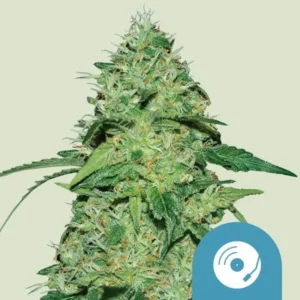
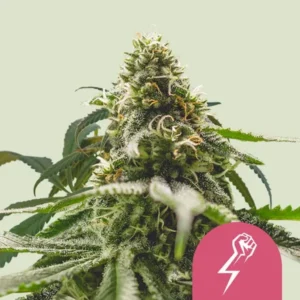
Joanne's CBD

|
CBD | 15% – 16% (Medium) |

|
Lineage | Session x Juanita la Lagrimosa |

|
Type | CBD Feminized |

|
Height | 5.25 ft | 1.6 m |

|
Yield | High |

|
Yield Indoor | 1.64 - 1.8 oz/ft² | 500 - 550 g/m² |

|
Yield Outdoor | 14.99 - 16.76 oz/plant | 425 - 475 g/plant |

|
Flowering Time | 7 - 8 weeks |

|
Phenotype | 25% Indica / 75% Sativa |

|
Effects | Focused, Uplifted |

|
Flavors | Candy, Fruity, Pepper |
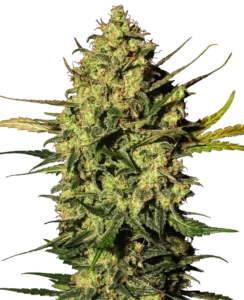
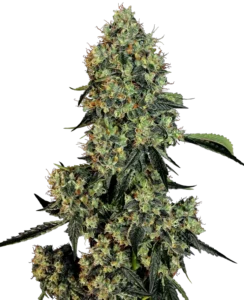
Master Kush Automatic

|
THC | 12% - 13% (Low) |
|
|
Lineage | Hindu Kush x Ruderalis |
|
|
Type | Autoflowering |
|
|
Height | 4.92 ft | 1.5 m |
|
|
Yield | Low |
|
|
Yield Indoor | 0.39 - 0.66 oz/ft² | 120 - 200 g/m² |
|
|
Life Cycle | 10 - 11 weeks |
|
|
Phenotype | 80% Indica / 20% Sativa |
|
|
Effects | Sedative, Tingly, Relaxed |
|
|
Flavors | Citrus, Earthy, Lemon |
Two different processes can happen as they age:
Potency degradation: psilocybin, psilocin and related compounds can gradually change or decline.
Physical spoilage: moisture and microbial contamination can make mushroom material unsuitable for consumption.
Those are not the same problem.
A batch can lose some chemical potency without visibly spoiling.
Likewise, mushrooms showing obvious mold or other contamination should be discarded regardless of how potent they might still be.
Whether mushrooms are fresh or dried also makes a major difference.
Fresh mushrooms contain much more water and behave like other highly perishable fungi.
Properly dried material has substantially less available moisture and can remain stable for much longer, although its chemistry still changes with time.
Magic Mushroom Shelf Life at a Glance
| Type | What to Expect |
|---|---|
| Fresh mushrooms | Highly perishable |
| Fully dried mushrooms | Considerably more stable than fresh |
| Dried mushroom powder | Potency can still decline during storage |
| Damp dried mushrooms | Greater spoilage concern |
| Moldy mushrooms | Discard |
| Blue-bruised mushrooms | Blue color alone is not proof of spoilage |
There is not enough scientific evidence to support a universal statement such as:
“All dried magic mushrooms last exactly two years.”
Species, initial alkaloid concentration, processing, moisture, light exposure and storage conditions can all influence the result.
Do Dried Magic Mushrooms Lose Potency?
Yes.
Psilocybin-containing mushrooms can lose tryptamine alkaloids during storage.
One of the most relevant studies examined the stability of psilocybin, psilocin and related tryptamines in Psilocybe cubensis under different processing and storage conditions.
Researchers found that the compounds were not indefinitely stable.
In dried mushroom powder, concentrations changed progressively during storage over a period extending to 15 months.
Light exposure increased degradation.
The broader takeaway is therefore:
Dried does not mean chemically permanent.
Drying can make mushroom biomass more stable than fresh material, but alkaloid concentrations can still decline with time.
How Long Do Dried Magic Mushrooms Last?
There is no scientifically established shelf-life number that applies to every dried magic mushroom.
Commercial articles often give estimates such as six months, one year or several years, but those figures should not be treated as universal guarantees.
Peer-reviewed research provides a more cautious conclusion.
Dried Psilocybe cubensis stored under favorable conditions retained tryptamines better than several other conditions tested, but measurable degradation still occurred over long-term storage.
That means age matters, but storage history matters too.
A precisely dated sample exposed repeatedly to moisture and light may be in worse condition than an older sample that remained dry and protected.
Visual inspection also cannot tell you exactly how much psilocybin remains.
Laboratory chemical analysis would be required to determine actual potency.
Fresh vs Dried Magic Mushrooms
Fresh and dried mushrooms should not be treated as equivalent products.
Fresh Magic Mushrooms
Fresh mushrooms contain high levels of water.
That makes them more vulnerable to ordinary fungal and bacterial spoilage.
Warning signs can include:
- Slimy texture
- Unusual softness
- Visible unwanted growth
- Persistent dampness
- Strongly abnormal or rotten odor
Fresh mushroom material therefore has a much shorter practical shelf life than thoroughly dried material.
Dried Magic Mushrooms
Drying removes much of the water needed for microbial growth.
Properly dried mushrooms can therefore remain physically stable far longer than fresh mushrooms.
However, the active compounds can still degrade.
Heat, light, oxygen, processing and storage duration can all influence chemical stability.
The important distinction is:
Drying slows some forms of deterioration. It does not stop time.
How Can You Tell If Magic Mushrooms Have Gone Bad?
There is no single visual test that proves a mushroom is safe.
However, several changes should be treated cautiously.
Visible Mold or Unfamiliar Fuzzy Growth
If stored mushrooms develop obvious new fuzzy growth or visible mold, the safest option is to discard them.
Do not simply remove one visibly contaminated section and assume the remainder is unaffected.
Mold can extend beyond what is visible on the surface.
Damp or Slimy Texture
Unexpected moisture is a more concerning sign than dryness.
Previously dried mushrooms that have become damp, wet, sticky or slimy may have absorbed moisture or experienced unsuitable storage conditions.
Clearly Abnormal Odor
A strongly sour, rotten or otherwise abnormal smell can indicate spoilage.
Do not deliberately inhale closely from visibly moldy material in an attempt to identify it.
Major Unexpected Physical Changes
Substantial texture changes combined with moisture, odor or visible contamination deserve caution.
Color alone requires more interpretation because Psilocybe mushrooms naturally undergo blue discoloration when bruised.
Is Blue Color on Magic Mushrooms Mold?
Not necessarily.
Many psilocybin-producing mushrooms turn blue after they are bruised, cut or otherwise damaged.
Scientific research has linked this characteristic blueing reaction to enzymatic processes involving psilocybin and oxidation of psilocin-related compounds.
So:
Blue bruising ≠ automatic mold.
However, blue color also does not prove that a mushroom is safe or correctly identified.
Mold may appear in different colors and textures, and mushroom identification itself can be dangerous when based only on appearance.
If contamination is uncertain, appearance should not be used as a reason to consume questionable material.
Is Brittleness a Sign That Dried Shrooms Have Expired?
No.
This is one of the problems with the previous version of this article.
Properly dried mushroom material can naturally become brittle.
Brittleness alone therefore does not demonstrate:
- Mold
- Bacterial spoilage
- Complete potency loss
- An expired product
Unexpected softness or dampness in material that was previously dry may actually raise more concern than ordinary dryness.
At the same time, texture cannot reveal chemical potency.
A very dry mushroom can still have undergone alkaloid degradation during storage.
Can You Tell Potency by Looking at Old Mushrooms?
No.
Appearance cannot tell you how much psilocybin remains.
A mushroom could look relatively unchanged while its alkaloid composition has changed during storage.
Conversely, some physical changes such as ordinary blue bruising do not directly indicate total potency loss.
Potency also varies significantly between individual mushrooms even before storage begins.
This variability makes statements such as:
“Old mushrooms are always half as strong.”
scientifically unsupported.
Accurate potency requires chemical analysis rather than visual inspection, smell or a simple age calculation.
Does Light Affect Magic Mushroom Potency?
Light is one factor associated with tryptamine degradation.
Research examining dried Psilocybe cubensis biomass found greater degradation when mushroom powder was exposed to light than when it was stored in darkness.
That supports a simple principle:
Unnecessary light exposure is unfavorable for long-term chemical stability.
This does not mean darkness stops degradation completely.
The same research found that compounds still changed over longer storage periods even under the better-performing conditions.
Does Heat Affect Psilocybin?
Temperature can influence the stability of mushroom tryptamines, but the relationship is more complicated than “colder is always better.”
Processing experiments show that sufficiently high heat can cause changes in tryptamine concentrations.
At ordinary storage temperatures, time and exposure conditions also matter.
This is why the original article’s recommendation to treat freezing as automatically superior should be removed.
The most relevant P. cubensis stability research actually produced a counterintuitive finding when fresh mushroom material was frozen.
Should You Freeze Magic Mushrooms?
Freezing should not be presented as a universally superior storage method.
In the Psilocybe cubensis stability study, fresh mushrooms subjected to frozen storage showed considerable tryptamine degradation.
Dried material kept in darkness at room temperature performed better under the conditions studied.
That result does not prove that every frozen mushroom will behave identically.
It does demonstrate that:
“Colder = better preservation” is not a reliable universal rule for psilocybin mushrooms.
Moisture and temperature cycling can also complicate storage.
The previous Growlantis recommendation to freeze dried mushrooms simply to extend potency should therefore be removed unless stronger product-specific evidence is available.
Does Vacuum Sealing Stop Magic Mushrooms From Expiring?
No.
Reducing environmental exposure may be useful for protecting dried material, but vacuum sealing should not be described as making psilocybin permanently stable.
Time and chemistry still matter.
The previous version calls vacuum sealing an “excellent method” for ensuring mushrooms remain effective and ready for future use.
That overstates the evidence.
A more defensible general principle is simply to protect dried mushroom material from:
- Moisture
- Excessive heat
- Direct light
- Unnecessary environmental exposure
No household storage method can guarantee a specific future potency.
What About Mushroom Powder?
Powdered mushroom material deserves particular caution when estimating potency or shelf life.
The best-known P. cubensis long-term stability experiment used dried mushroom powder as its standardized storage model.
Researchers observed continuing changes in tryptamine concentrations over time.
Those results are useful but should not automatically be converted into an exact shelf-life calculation for intact mushrooms.
Whole mushrooms, powder and formulated products do not necessarily behave identically.
This is another reason articles should avoid claims such as:
“Magic mushrooms always remain potent for X years.”
The scientific evidence does not support that level of precision.
Potency Loss Is Not the Same as Spoilage
This distinction is worth repeating.
Potency Loss
This refers to chemical changes involving compounds such as psilocybin and psilocin.
You generally cannot confirm potency loss visually.
Spoilage
This refers to physical or microbial deterioration.
Signs can include mold, unusual odor, dampness or sliminess.
A product may lose potency without becoming visibly moldy.
A contaminated product may also remain psychoactive.
Therefore:
“It still works” is not a food-safety test.
Safety should be evaluated separately from psychoactive potency.
Can Old Magic Mushrooms Make You Sick?
Old age by itself is not the only concern.
Contamination, incorrect mushroom identification and the pharmacological effects of psilocybin can all create risks.
The USDA notes generally that molds on foods can cause allergic reactions, respiratory problems and, in some circumstances, expose people to mycotoxins.
Psilocybin itself can also cause adverse effects including nausea, panic, confusion and changes in perception.
If mushrooms show obvious contamination, they should not be consumed simply because they may still contain psilocybin.
Severe symptoms following mushroom ingestion warrant appropriate medical or poison-control assistance.
Common Myths About Magic Mushroom Expiration
“Blue Mushrooms Are Moldy”
False.
Blue bruising is a known reaction in psilocybin-producing mushrooms.
“Brittle Mushrooms Have Gone Bad”
Not necessarily.
Thoroughly dried mushrooms may naturally be brittle.
“A Mushroom That Looks Fine Has Full Potency”
False.
Chemical degradation cannot be measured visually.
“Freezing Always Preserves Psilocybin Better”
Not supported as a universal rule.
Research on fresh P. cubensis has actually shown substantial losses under frozen conditions.
“Vacuum Sealing Stops Potency Loss”
False.
Reducing exposure does not make tryptamine compounds permanently stable.
Do Magic Mushrooms Expire? Key Takeaway
Yes, magic mushrooms can deteriorate with age, but expiration involves two separate issues: physical spoilage and chemical potency loss.
Fresh mushrooms are much more perishable because they contain substantial moisture.
Dried mushrooms are more stable, but their psilocybin, psilocin and related compounds can still change during storage.
Visible mold, unexpected dampness, sliminess and clearly abnormal odors are stronger spoilage warnings than brittleness or normal blue bruising.
There is also no reliable universal shelf-life number.
Research shows that storage conditions affect tryptamine stability, but even favorable conditions do not preserve potency indefinitely.
When assessing old mushrooms, do not use appearance as a potency test or psychoactive effects as a safety test.
FAQs About Magic Mushroom Expiration
Do magic mushrooms expire?
Yes. Magic mushrooms can undergo both chemical degradation and physical spoilage over time. Fresh mushrooms are particularly perishable, while fully dried material is more stable but can still lose tryptamine alkaloids during storage. There is no universal expiration date that applies to every species, batch or storage condition.
How long do dried magic mushrooms last?
There is no scientifically established shelf life that applies to all dried magic mushrooms. Research on Psilocybe cubensis shows that tryptamine levels can continue declining over many months, even under relatively favorable conditions. Storage history, processing, moisture exposure and initial potency all influence how a particular batch changes with age.
Do shrooms lose potency over time?
Yes. Psilocybin, psilocin and related tryptamines are not indefinitely stable in mushroom biomass. A long-term Psilocybe cubensis study measured progressive changes during storage, with light exposure contributing to greater degradation. The amount lost cannot be reliably determined from age, appearance or texture alone; actual potency requires laboratory chemical analysis.
How can you tell if shrooms have gone bad?
Visible mold, new fuzzy growth, unexpected dampness, slimy texture or a strongly abnormal odor are reasons for concern. Dryness or brittleness alone is not proof that dried mushrooms have spoiled, and blue bruising can occur naturally in Psilocybe mushrooms. When contamination is uncertain, visual inspection cannot guarantee that material is safe.
Does blue bruising mean magic mushrooms are moldy?
No. Psilocybin-producing mushrooms commonly develop blue coloration after bruising or injury because of enzymatic and oxidative chemical reactions involving psilocybin-derived compounds. Blueing alone therefore does not indicate mold. However, color is not enough to establish mushroom identity or safety, and unfamiliar fuzzy growth or other contamination should be treated separately.
Should magic mushrooms be frozen?
Freezing is not automatically the best preservation method. Research on Psilocybe cubensis found substantial tryptamine degradation in fresh mushroom material subjected to frozen storage, while dried biomass stored in darkness at room temperature performed better under the tested conditions. The result shows that colder storage should not automatically be assumed to preserve potency better.