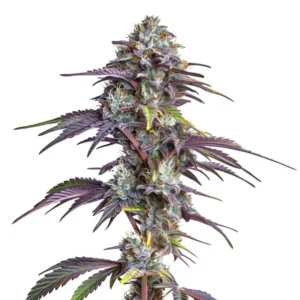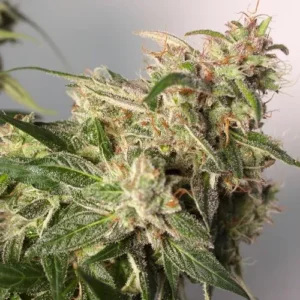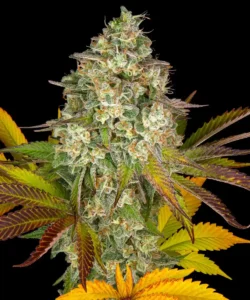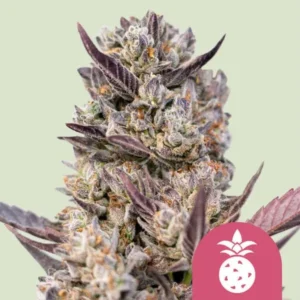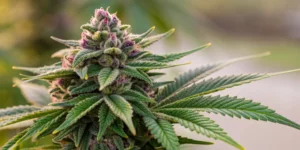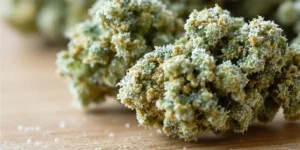
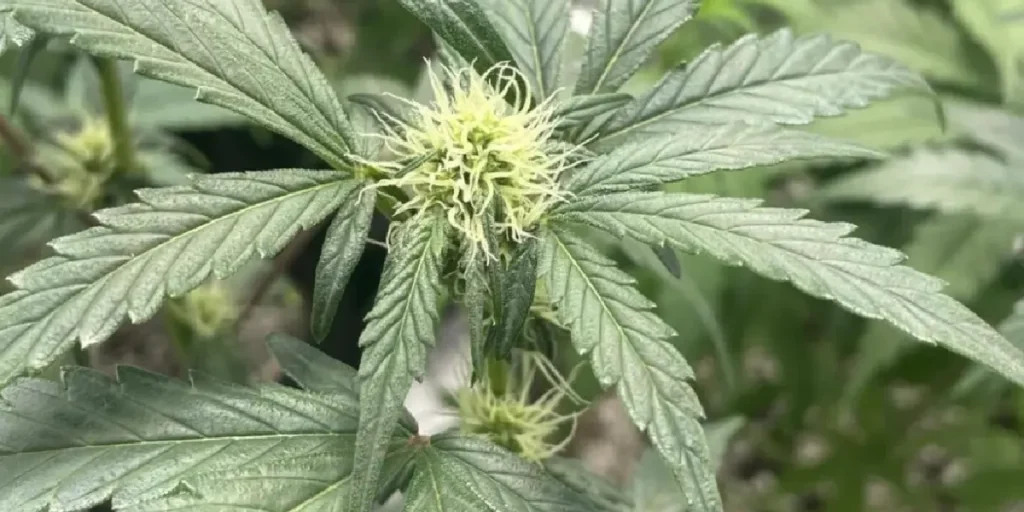

Blackberry Auto is an indica-dominant autoflower from Fast Buds known for its dark purple flowers, sweet berry aroma and compact, bushy structure. The current seed line is classified as 75% Indica and 25% Sativa, reaches up to 23% THC and completes its full lifecycle in approximately 9–10 weeks from seed.
Current Blackberry Auto seeds grow approximately 70–120 cm tall and produce around 450–600 g/m² indoors or 50–250 g per plant outdoors under suitable conditions.
Recommended Strains
Blackberry Auto

|
THC | 22% - 23% (Medium) |

|
Lineage | Blueberry X Dark Hashplant x Ruderalis |

|
Type | Autoflowering |

|
Height | 3.94 ft | 1.2 m |

|
Yield | High |

|
Yield Indoor | 1.47 - 1.97 oz/ft² | 450 - 600 g/m² |

|
Life Cycle | 9 - 10 weeks |

|
Phenotype | 75% Indica / 25% Sativa |

|
Effects | Relaxed, Happy, Sleepy |

|
Flavors | Berry, Sweet, Earthy |
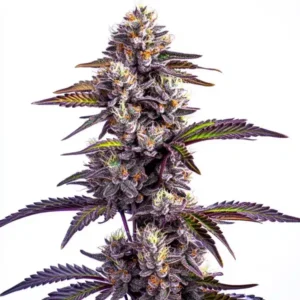
Blackberry Moonrocks Auto
|
|
THC | 26% - 33% (High) |
|
|
Lineage | Blue Moonrock x male Blackberry Kush x Ruderalis |
|
|
Type | Autoflowering |
|
|
Height | 3.94 ft | 1.2 m |
|
|
Yield | High |
|
|
Yield Indoor | 1.8 oz/ft² | 550 g/m² |

|
Yield Outdoor | 4.23 - 7.05 oz/plant | 120 - 200 g/plant |
|
|
Life Cycle | 8 - 10 weeks |
|
|
Phenotype | 80% Indica / 20% Sativa |

|
Medical | Arthritis, Depression, Fatigue |
|
|
Effects | Focused, Happy, Relaxed |
|
|
Flavors | Berry, Blueberry |
| Blackberry Auto Grow Info | Current specification |
|---|---|
| Breeder | Fast Buds |
| Genetics | Original Blueberry Auto, reverse Blackberry phenotype isolation line F3 |
| Seed type | F3 Feminized Autoflower, locked-in phenotype |
| Indica / Sativa | 75% Indica / 25% Sativa |
| THC | Up to 23% |
| CBD | <1% |
| Lifecycle | 9–10 weeks from seed |
| Height | 70–120 cm |
| Indoor yield | 450–600 g/m² |
| Outdoor yield | 50–250 g/plant |
| Size | XL Autoflower |
| Environment | Indoor / Outdoor / Greenhouse / Mixlight |
| Flavor | Berry, earthy, sweet |
Blackberry Auto Genetics
Fast Buds currently identifies Blackberry Auto as an F3 feminized autoflower developed through an Original Blueberry Auto line with a reverse Blackberry phenotype isolation.
This current breeder specification should replace older descriptions that identify the strain simply as Blackberry Kush × Ruderalis or Blueberry × Dark Hashplant × Ruderalis. Those older genetics create unnecessary confusion with separate cultivars such as Blackberry Kush Auto.
The current line is also described as a locked-in F3 phenotype, reflecting the breeder’s effort to preserve the dark coloration, berry-forward profile and autoflowering growth pattern associated with Blackberry Auto.
Growers interested in other automatic genetics from the breeder can explore the broader Fast Buds seed collection.
Is Blackberry Auto Indica or Sativa?
Blackberry Auto is 75% Indica and 25% Sativa, making it clearly indica dominant.
Its structure reflects that classification. The plant develops dense, bushy growth, relatively tight internodes and a pronounced central cola, while still reaching up to 120 cm under suitable conditions.
Fast Buds classifies the plant as an XL autoflower despite its Indica dominance, so growers should not assume it will remain extremely short simply because it has compact internodal spacing.
The genetic ratio describes the seed line itself rather than guaranteeing one identical phenotype or subjective experience from every plant.
How Much THC Does Blackberry Auto Have?
Fast Buds currently lists Blackberry Auto at up to 23% THC.
This should replace the older 15–20% figure found in previous versions of the grow guide. The current Growlantis product range of 22–23% is close, but “up to 23%” aligns more precisely with the breeder’s structured technical specification.
As with any published THC value, the number represents genetic potential rather than a guarantee that every harvested flower will test at exactly 23%. Plant health, light, phenotype, harvest maturity and post-harvest handling can all influence measured cannabinoid levels.
Blackberry Auto Flavor and Aroma
Blackberry Auto has a strong berry-centered sensory profile. Fast Buds currently lists berry, earthy and sweet as its main flavor characteristics and also describes pronounced forest-fruit and Kush-like notes.
The aroma becomes particularly noticeable as the plant develops its dark, resinous flowers. Earthy undertones provide contrast to the sweeter berry character without turning the profile into a citrus-heavy cultivar.
Older descriptions sometimes assign a fixed myrcene, caryophyllene and pinene hierarchy to Blackberry Auto. The current technical specification does not provide a quantitative terpene table, so the documented flavor and aroma characteristics are the more reliable general description.
How Long Does Blackberry Auto Take to Grow?
Blackberry Auto completes its full seed-to-harvest lifecycle in approximately 9–10 weeks.
This is not a separate flowering period added after several weeks of vegetation. Autoflowering plants move continuously from seedling growth through pre-flower and flowering according to age and maturity.
Fast Buds’ own cultivation guide places germination in week one, early growth in weeks two to four, pre-flower around week five, stronger flower development through weeks six to nine and ripening around week ten or slightly beyond.
Those phases are useful reference points rather than biological deadlines. Individual plants can move somewhat faster or slower depending on phenotype and conditions.
Does Blackberry Auto Need a 12/12 Light Cycle?
No. Blackberry Auto does not need a change to 12 hours of light and 12 hours of darkness to begin flowering.
Its autoflowering genetics trigger the transition according to maturity. Fast Buds currently recommends approximately 18 hours of light per day for the cultivar, allowing the same general light schedule to be maintained throughout the lifecycle.
This is an important difference from photoperiod cannabis, where the grower deliberately initiates flowering by shortening day length. Blackberry Auto progresses automatically regardless of whether that switch occurs.
Blackberry Auto Height and Plant Structure
Blackberry Auto currently reaches approximately 70–120 cm, or 28–47 inches.
Despite its Indica-dominant genetics and tight internodes, Fast Buds classifies it as an XL autoflower. The plant develops a bushy structure with dense foliage and a substantial central cola.
Final height still depends on root space, light intensity, early plant health and environmental conditions. Severe stress during the first part of the lifecycle can limit development because an autoflower cannot simply remain in vegetation for several additional weeks to recover.
Plan enough vertical and lateral room for the full 120 cm breeder range rather than assuming every plant will remain below one meter.
Growing Blackberry Auto Indoors
Blackberry Auto is currently listed at 450–600 g/m² indoors.
Its 70–120 cm height makes it suitable for controlled indoor environments, while its bushy structure means canopy width and internal spacing can matter as much as vertical clearance.
Fast Buds recommends around 18 hours of light daily. There is no need to reduce the schedule to 12/12 when flowering begins.
The short total lifecycle makes stable early growth especially valuable. Severe overwatering, aggressive feeding or unnecessary high-stress training can reduce final size because the plant continues progressing according to age.
Focus on steady development, enough root space and an open canopy rather than trying to force maximum growth through increasingly aggressive inputs.
Growing Blackberry Auto Outdoors
Outdoor Blackberry Auto is currently listed at approximately 50–250 g per plant.
Because flowering is automatic, outdoor plants do not need to wait for shorter autumn days before entering bloom. This makes it possible to position the cycle within a relatively bright and favorable part of the season.
Final production depends strongly on sunlight, root volume, plant health and weather. A small plant growing under restricted conditions should not be expected to approach the upper 250 g specification simply because that figure appears on the breeder page.
Its compact-to-medium overall height also makes Blackberry Auto suitable for patios, balconies and smaller outdoor spaces where a large photoperiod plant would be impractical.
Blackberry Auto Yield
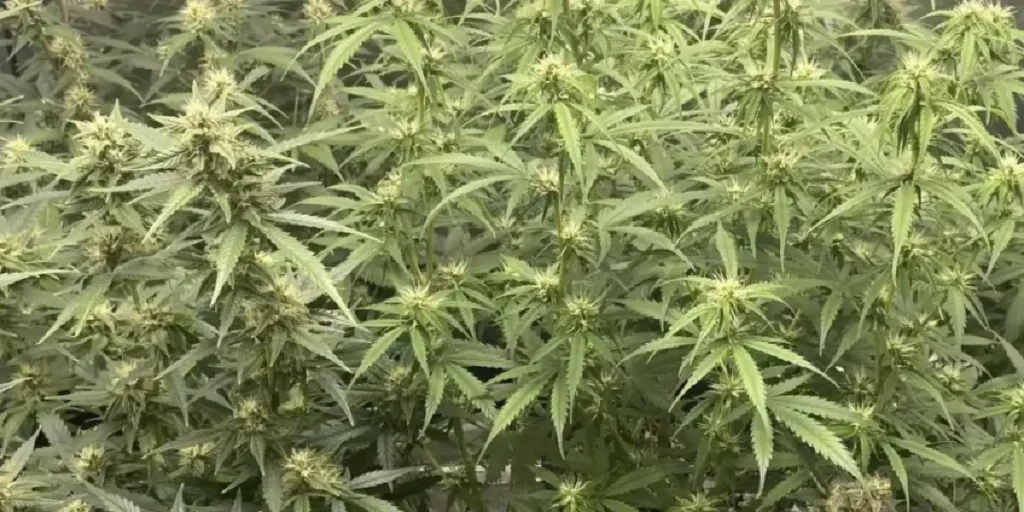
Current breeder specifications list 450–600 g/m² indoors and 50–250 g per plant outdoors.
The indoor figure is expressed by canopy area because plant density can vary. Several smaller autoflowers may occupy the same illuminated area as fewer larger plants while producing different individual plant weights.
Outdoor yield is expressed per plant and spans a much wider range because sunlight, root space and environmental conditions vary considerably.
The upper values should be treated as production potential rather than expected harvests. Healthy early development is particularly important because Blackberry Auto only has around 9–10 weeks to complete its lifecycle.
How to Germinate Blackberry Auto Seeds
Blackberry Auto does not require a unique strain-specific germination method. Seeds need stable warmth, moisture and enough oxygen without remaining continuously saturated.
A damp paper-towel method allows growers to observe the taproot before transferring the seed into a growing medium. Direct germination in a suitable final container can also reduce later root disturbance.
Because Blackberry Auto is an autoflower, unnecessary transplant stress is best minimized once early development begins. Handle newly emerged taproots carefully and avoid flooding a small root zone with more water than it can use.
For more detail, see the cannabis seed germination temperature and humidity guide.
Early Growth and Pre-Flower
Blackberry Auto should not be assigned a rigid two- or three-week vegetative phase.
The plant develops continuously according to age. Early growth focuses on roots, foliage and branch structure before the first pre-flowering signs appear.
Fast Buds’ cultivation guide places early vegetation around weeks two to four and the transition toward pre-flower around week five. This provides useful context without meaning every seed must show identical development on the same day.
The main objective during early growth is avoiding severe setbacks. Chronic overwatering, excessive nutrient concentration, root damage or aggressive pruning can reduce the size of the plant before its automatic flowering transition begins.
Blackberry Auto Grow Tips
Blackberry Auto’s bushy growth responds best to relatively gentle canopy management.
Light low-stress training can reposition branches outward where they overlap heavily, helping light reach more of the plant without forcing a lengthy recovery period. This approach is particularly useful before flowering becomes advanced.
Fast Buds also specifically mentions light defoliation for experienced growers. Selective removal can help where large leaves heavily block internal light or airflow, but it should remain targeted rather than becoming repeated aggressive stripping.
Topping and other high-stress methods should not be treated as standard requirements for Blackberry Auto. With a 9–10 week total lifecycle, avoiding unnecessary recovery time is usually the more conservative approach.
Flower Development
Blackberry Auto generally begins transitioning toward pre-flower around the middle of its lifecycle, although exact timing varies.
As flowering develops, the plant becomes increasingly recognizable for its dark purple coloration and swollen central cola. Flowers become heavily coated with resin while the berry-and-earth aroma becomes more pronounced.
There is no need to modify the photoperiod to initiate this stage. Instead, maintain stable conditions and allow the plant’s autoflowering genetics to control the transition.
During later flowering, avoid unnecessary structural stress and focus on healthy root conditions, sensible watering and enough airflow through the dense canopy.
Feeding Blackberry Auto
Blackberry Auto does not require a universal strain-specific NPK ratio.
Fast Buds specifically advises growers not to overfeed the cultivar. That is more useful than assuming it needs a nitrogen-heavy early formula followed by large amounts of phosphorus and potassium later.
Use a nutrient program appropriate for the growing medium and begin conservatively. Increase concentration only when plant size, root development and visible response justify doing so.
Burned leaf tips, excessively dark foliage, stalled development or progressive discoloration provide better feedback than a fixed Blackberry Auto feeding calendar.
High yield and resin potential do not mean the plant automatically benefits from stronger fertilizer.
Watering Blackberry Auto
Blackberry Auto’s water requirements change rapidly during its short lifecycle.
A seedling with a small root system needs far less water than a mature 70–120 cm flowering plant. For that reason, avoid watering according to an inflexible schedule.
In containers, substrate moisture, pot weight, plant size and environmental conditions provide more useful information. Early overwatering can restrict root-zone oxygen and slow development during a stage when lost time is difficult to recover.
The autoflower watering guide explains how irrigation demand changes as automatic plants move through their lifecycle.
Airflow and Dense Canopy Management
Blackberry Auto develops a bushy structure with tight internodes and a substantial central cola, making internal canopy airflow worth monitoring as flowers gain density.
The objective is gentle circulation above, through and below the plant rather than strong wind directed continuously at one area.
Selective branch positioning or light defoliation can help when foliage creates stagnant internal sections. Avoid removing healthy leaves simply to make the plant look open.
Room-level humidity does not always reflect conditions inside dense flowers, where moisture can remain elevated.
Common Blackberry Auto Growing Problems
Early overwatering is one of the most avoidable problems because a small autoflower root system cannot use the same volume of water as a mature plant.
Overfeeding can also limit development. Fast Buds specifically recommends avoiding excessive nutrients, so high yield expectations should not be interpreted as a reason to push strong fertilizer concentrations.
Dense foliage can create another challenge later in the lifecycle. If internal branches become heavily congested, light penetration and airflow can decrease.
Finally, avoid confusing Blackberry Auto with Blackberry Kush Auto. They are separate commercial entities, and genetics, yield, THC and lifecycle figures from another cultivar should not be transferred into this grow guide.
When to Harvest Blackberry Auto
The breeder’s current 9–10 week seed-to-harvest range provides the main timing reference.
Fast Buds’ cultivation guide also allows for ripening into week ten and beyond in some plants, so the calendar should not be treated as an automatic cutting date.
As the expected window approaches, inspect actual flower development and trichome maturity. Trichomes becoming predominantly cloudy can indicate advanced maturity, but there is no requirement for every Blackberry Auto plant to reach one fixed percentage of amber trichomes.
Use the breeder timeline together with direct observation of the individual plant.
Blackberry Auto Effects
Fast Buds user reports most frequently describe Blackberry Auto as relaxing, with happy and sleepy effects also commonly reported.
Those descriptions fit its 75% Indica classification but remain subjective rather than guaranteed outcomes.
The cultivar reaches up to 23% THC, so it should not be described as a particularly low-potency autoflower. At the same time, cannabinoid percentage alone cannot predict how every person will experience a particular harvest.
Dose, tolerance and the full chemical composition of the flowers can all affect the experience.
Blackberry Auto FAQs
How long does Blackberry Auto take from seed to harvest?
Blackberry Auto completes its full seed-to-harvest lifecycle in approximately 9–10 weeks according to Fast Buds’ current technical specification. Individual plants can run slightly longer, as the breeder’s own cultivation guide includes ripening into week 10 and beyond. This is a complete autoflower cycle, not a separate flowering period after vegetation.
How much THC does Blackberry Auto have?
Fast Buds currently lists Blackberry Auto at up to 23% THC. That figure should replace the 15–20% value still found in the old guide. “Up to” is important because the published number represents genetic potential rather than a guarantee that every harvested flower will test at exactly the same cannabinoid concentration.
Is Blackberry Auto Indica or Sativa?
Blackberry Auto is an indica-dominant autoflower classified as 75% Indica and 25% Sativa. Fast Buds currently describes it as mostly Indica, with a dense, bushy structure and tight internodes. The genetic ratio describes the seed line itself and should not be treated as a guarantee of one identical phenotype or consumer experience.
How much does Blackberry Auto yield?
Current breeder specifications list Blackberry Auto at 450–600 g/m² indoors and 50–250 g per plant outdoors. These figures describe production potential under suitable conditions rather than guaranteed harvests. Light, root space, early plant health, watering, environment and the limited recovery time of an autoflower can all influence final yield.
How tall does Blackberry Auto grow?
Blackberry Auto is currently listed at 70–120 cm, or roughly 28–47 inches. That makes it an XL autoflower despite its indica-dominant structure. Final height can vary with root volume, light, plant health and early stress, so 120 cm should be treated as a published upper reference rather than an expected size for every plant.
Does Blackberry Auto need a 12/12 light cycle?
No. Blackberry Auto flowers according to age and maturity, so it does not require a switch to a 12/12 light cycle. Fast Buds recommends about 18 hours of light per day in its current cultivation guidance. The plant moves through pre-flower and flowering automatically while the grower maintains a consistent autoflower-appropriate schedule.