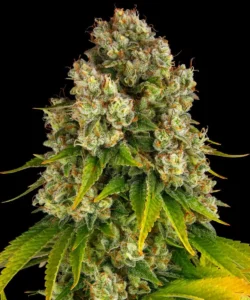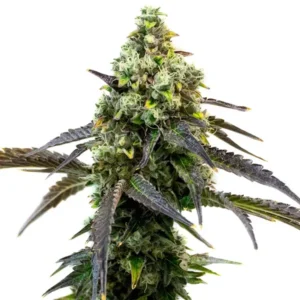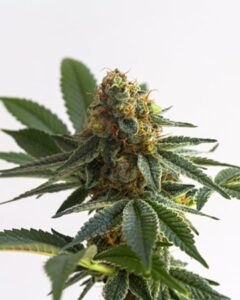


Arjan’s Strawberry Haze is a sativa-dominant feminized photoperiod strain from Green House Seed Co. created by crossing a selected Swiss Sativa with NL5 Haze Mist. Sometimes shortened simply to Strawberry Haze, this cultivar is known for its tall structure, long branches, strawberry-citrus aroma, extended flowering period, and strongly cerebral breeder-reported effects.
Green House Seed Co. classifies Arjan’s Strawberry Haze as 60% Sativa and 40% Indica, with 19.72% THC. Indoors, the breeder recommends height-management techniques such as LST and ScrOG and gives a flowering period of approximately 10–11 weeks. Outdoors, plants can become extremely large when given sufficient root space and are normally ready around the second week of October in the Northern Hemisphere.
Recommended Strains
Arjan's Strawberry Haze

|
THC | 19% - 20% (Medium) |

|
Lineage | Swiss sativa x NL5 Haze Mist. |

|
Type | Feminized |

|
Height | 9.02 ft | 2.75 m |

|
Yield Outdoor | 31.75 oz/plant | 900 g/plant |

|
Flowering Time | 10 - 11 weeks |

|
Phenotype | 40% Indica / 60% Sativa |

|
Effects | Uplifted, Focused, Creative, Talkative |

|
Flavors | Sweet, Berry, Earthy |

Arjan's Ultra Haze #2
|
|
THC | 22% - 23% (Medium) |
|
|
Lineage | Neville's Haze x Mango Haze x Laos |
|
|
Type | Feminized |
|
|
Height | 6.56 ft | 2 m |
|
|
Yield Outdoor | 38.8 oz/plant | 1100 g/plant |
|
|
Flowering Time | 12 - 13 weeks |
|
|
Phenotype | 20% Indica / 80% Sativa |
|
|
Effects | Uplifted, Powerful, Talkative, Sedative |
|
|
Flavors | Fruity, Woody, Spicy |
You can find Arjan’s Strawberry Haze seeds from Green House Seed Co. at Growlantis.
Arjan’s Strawberry Haze Grow Info
| Trait | Arjan’s Strawberry Haze |
|---|---|
| Breeder | Green House Seed Co. |
| Genetics | Swiss Sativa × NL5 Haze Mist |
| Seed type | Feminized photoperiod |
| Sativa / Indica | 60% Sativa / 40% Indica |
| THC | 19.72% |
| CBD | 0.07% |
| CBN | 0.07% |
| Indoor flowering | Approximately 10–11 weeks |
| Indoor yield | Approximately 700–800 g/m² breeder potential |
| Outdoor height | Up to approximately 250–300 cm |
| Outdoor yield | Approximately 950–1,000 g/plant breeder potential |
| Outdoor harvest | Around the second week of October |
| Recommended training | LST and ScrOG |
| Main flavors | Strawberry, citrus, metallic Haze |
| Main reported terpenes | Linalool, Terpinolene, α-Terpineol |
| Reported effects | Uplifting, cerebral, creative, social |
Green House Seed Co.’s current product page contains slightly different yield figures between its technical summary and longer description. For that reason, the ranges above reflect the breeder’s own published figures rather than presenting one number as a guaranteed result.
What Is Arjan’s Strawberry Haze Strain?
Arjan’s Strawberry Haze is a Green House Seed Co. cultivar based on a selected Swiss Sativa crossed with NL5 Haze Mist. The Swiss parent, also associated with the Erdbeer or “strawberry” line, contributes the sweet strawberry and blueberry character, while NL5 Haze Mist introduces metallic, citrus, and old-school Haze characteristics.
The resulting Strawberry Haze strain is strongly sativa leaning but retains a 40% Indica component. Green House describes the physical effect as relatively mild compared with the much stronger cerebral character, which it characterizes as uplifting, creative, and social.
The cultivar should not be confused with every seed containing “Strawberry Haze” in its name. Arjan’s Strawberry Haze is this specific Green House genetic line, and its flowering time, yield, cannabinoid profile, and growth structure should not automatically be applied to other Strawberry Haze crosses.
Arjan’s Strawberry Haze Genetics
The official lineage is Swiss Sativa × NL5 Haze Mist.
The Swiss Sativa used by Green House is noted for its strawberry and blueberry profile, while NL5 Haze Mist contributes a more classic Haze structure and a metallic-citrus aromatic character.
Green House Seed Co. describes the final plant as tall and long branched, which fits its 60% Sativa classification. Outdoors, plants can become particularly large when grown directly in the ground or in substantial containers.
Because Arjan’s Strawberry Haze is a breeder-specific cultivar, its verified Green House lineage should be preferred over generic descriptions that simply call it “Strawberry Haze” without identifying the breeder.
Growers interested in related genetics can explore the complete Green House Seed Co. collection at Growlantis.
Is Strawberry Haze Indica or Sativa?
Arjan’s Strawberry Haze is a sativa-dominant hybrid containing 60% Sativa and 40% Indica genetics.
That sativa influence is visible in its tall growth, long branches, extended flowering period, and strong tendency to expand when given unrestricted outdoor root space. Green House also describes its effects as predominantly cerebral rather than heavily physical.
The 40% Indica component does not make the cultivar compact. Indoor growers should still plan around a plant that can stretch significantly and should use the vegetative period and training techniques to control the final canopy.
The 60/40 figure applies specifically to Arjan’s Strawberry Haze from Green House Seed Co. Other cultivars sold under broader Strawberry Haze names can have different ratios.
Growing Arjan’s Strawberry Haze Indoors
Arjan’s Strawberry Haze can produce substantial indoor yields, but its long branches and sativa-influenced structure mean that vertical and horizontal space need to be managed before flowering becomes advanced.
During vegetative growth, an 18/6 light cycle is a common approach for a feminized photoperiod plant. The grower controls how long this stage lasts, so there is no requirement to keep Arjan’s Strawberry Haze in vegetation for a fixed four, six, or eight weeks.
The decision to initiate flowering should be based on plant size, available height, canopy coverage, branch development, and root space. Switching indoor plants to 12 hours of light and 12 hours of uninterrupted darkness initiates flowering.
Because the breeder specifically describes Arjan’s Strawberry Haze as a tall plant with long branches, waiting until the canopy already occupies most of the available height can make the early-flowering stretch difficult to manage.

Training Arjan’s Strawberry Haze
Green House Seed Co. specifically identifies ScrOG and LST as suitable training methods for Arjan’s Strawberry Haze.
Low-stress training can be used during vegetative growth to redirect taller branches horizontally and distribute growth across a wider area. This helps manage height while exposing more flowering sites to useful light.
A Screen of Green is particularly well suited to the cultivar’s long branches. Instead of allowing several shoots to grow vertically toward the lighting system, growers can guide them across a screen to build a flatter, more evenly illuminated canopy.
Training should be introduced while branches remain flexible. Once developed flowers begin adding weight, aggressive repositioning becomes less practical and increases the risk of damaging branches.
Topping can also be used during healthy vegetative growth, but there is no need to combine every available training technique. The objective is to control a tall sativa structure and improve canopy exposure, not to stress the plant unnecessarily.
Arjan’s Strawberry Haze Flowering Time
Arjan’s Strawberry Haze has a relatively long indoor flowering period of approximately 10–11 weeks.
Green House Seed Co.’s technical summary states around ten weeks, while the breeder’s detailed current description gives 10–11 weeks. For practical planning, growers should therefore expect roughly ten to eleven weeks after flowering begins.
This flowering period does not include germination or vegetative growth. Because Arjan’s Strawberry Haze is photoperiod dependent, its total seed-to-harvest time changes according to how long the grower keeps the plant under vegetative conditions.
During the first part of flowering, significant stretch and branch development can continue. Later, the elongated Haze-style flowers become increasingly resinous while the strawberry, citrus, and metallic aroma becomes more noticeable.
For a more detailed explanation of cannabis development once 12/12 begins, see the Growlantis guide to the flowering stage of cannabis week by week.
Arjan’s Strawberry Haze Yield
Arjan’s Strawberry Haze has substantial yield potential when its size and long flowering period are managed correctly.
Green House Seed Co.’s current technical specifications list indoor production of up to approximately 800 g/m², while its detailed description gives a more conservative figure of around 700 g/m². These figures are best treated as a breeder range rather than as conflicting guarantees.
Outdoors, Green House gives figures ranging from roughly 950 to 1,000 g per plant under favorable conditions.
Actual yield depends on many factors beyond genetics, including usable canopy area, vegetative time, lighting, root volume, climate, irrigation, nutrition, training, plant health, and individual phenotype.
The breeder numbers are therefore useful when comparing genetics, but they should not be interpreted as a prediction that every plant will produce the same amount.
Growing Arjan’s Strawberry Haze Outdoors
Arjan’s Strawberry Haze can become an exceptionally large outdoor plant. Green House Seed Co. states that plants grown in large containers or directly in the ground can reach approximately 250–300 cm.
The breeder identifies equatorial, tropical, subtropical, and temperate environments as suitable, but the long flowering cycle means that outdoor growers also need a season that remains favorable until approximately the second week of October in the Northern Hemisphere.
Give the plant enough lateral room as well as vertical space. A plant approaching three meters can develop a substantial branching structure and should not be positioned according to the spacing requirements of a compact Indica.
Strong direct sunlight and a well-drained root zone help support the vigorous growth associated with this cultivar. Because mature plants can become large and heavily branched, physical support may also become useful where wind or flower weight places stress on individual stems.
As harvest approaches, monitor rainfall, humidity, and airflow around mature flowers rather than relying solely on general weather conditions.
Outdoor Harvest Time
Green House Seed Co. places Arjan’s Strawberry Haze outdoor maturity around the second week of October in the Northern Hemisphere.
This is more accurate than the late-October harvest date previously associated with the guide.
The breeder date should be treated as a seasonal reference rather than a fixed harvest appointment. Latitude, weather, planting time, phenotype, root space, and seasonal temperatures can all influence development.
Growers in locations where prolonged rain, frost, or very high humidity regularly arrive before mid-October should consider whether the local season gives a long-flowering sativa enough time to finish comfortably.
Inspect the actual flowers as the expected harvest period approaches instead of cutting solely because the calendar reaches a particular date.
Germinating Arjan’s Strawberry Haze Seeds
Arjan’s Strawberry Haze does not require a unique germination technique.
Stable warmth, moisture, oxygen, and careful handling are more important than the strain name during germination. The paper towel method is one option, although seeds can also be started in a suitable propagation medium.
Keep the material around the seed moist without leaving it permanently saturated. Once the first root emerges, transfer the seed carefully and avoid damaging the exposed root tip.
Young seedlings have limited root systems, so avoid repeatedly saturating an entire large container before roots have expanded through the medium.
For more detail on timing and common germination methods, see how long cannabis seeds take to germinate.
Vegetative Growth
Vegetative growth is the stage where Arjan’s Strawberry Haze develops the branch and root structure that will later support its long flowering cycle.
Unlike an autoflower, there is no predetermined point at which the cultivar must begin flowering. Indoor growers can control vegetation through the photoperiod and switch to 12/12 once the canopy has reached the appropriate size for the available space.
This flexibility is particularly useful with a tall Haze hybrid. Growers with limited headroom can use a shorter vegetative period, while larger spaces can accommodate more extensive growth before flowering begins.
LST and ScrOG preparation should largely be performed during this period. Branches are easier to reposition before they become woody and before developed flowers increase their weight.
Feeding should be adjusted according to the medium and actual plant response rather than assuming that a tall sativa automatically needs an unusually strong nutrient concentration.
Flowering Arjan’s Strawberry Haze
Once the photoperiod changes to 12/12, Arjan’s Strawberry Haze begins its reproductive transition and can continue stretching during the early part of bloom.
Maintain enough space between the canopy and lighting system to accommodate that growth. If a screen is being used, guide flexible branches across it during the transition rather than waiting until flowers are already well developed.
As flowering progresses, the plant develops elongated, shiny Haze-style flowers with substantial trichome production. The aromatic profile also becomes increasingly pronounced, combining strawberry sweetness with citrus and metallic Haze characteristics.
Environmental management becomes particularly important later in the 10–11 week cycle. A large canopy can create areas where humidity and airflow differ significantly from measurements taken elsewhere in the room.
The goal is stable plant development and an open, well-ventilated canopy rather than forcing the plant through a predetermined series of weekly interventions.
Feeding Arjan’s Strawberry Haze
Green House Seed Co. does not publish a mandatory strain-specific NPK ratio that every Arjan’s Strawberry Haze plant must receive.
During vegetative growth, nutrition should support root, stem, and leaf development. As flowering progresses, use an appropriate bloom formulation for the chosen growing medium and fertilizer system.
That transition does not mean increasingly large amounts of phosphorus and potassium automatically improve flower size or resin production. Nutrient availability needs to match what the roots and plant can actually use.
Monitor leaf color, growth rate, leaf tips, and overall plant condition rather than following a rigid strain-specific feeding calendar.
Likewise, flushing with plain water for an arbitrary two-week period should not be presented as a requirement that automatically improves flavor. End-of-cycle irrigation should reflect the cultivation medium and feeding system being used.
Watering Arjan’s Strawberry Haze
Water according to the condition of the root zone rather than a predetermined number of days.
A seedling uses considerably less water than a mature Arjan’s Strawberry Haze with a large canopy and well-developed root system. Container size, medium, light intensity, temperature, humidity, and plant size all influence how quickly water is consumed.
Allow enough air to return to the root zone between irrigations rather than keeping the growing medium permanently saturated.
Outdoor plants approaching two or three meters can develop substantial water demand during warm, sunny weather, particularly when grown directly in the ground. Even in those conditions, healthy drainage remains essential.
Changes in water demand should be made according to plant development rather than simply increasing irrigation because a particular week of the grow has been reached.
Airflow and Mold Prevention
Large Arjan’s Strawberry Haze plants can develop extensive canopies, so maintaining pathways for air through the branches becomes increasingly important as flowering progresses.
The objective is not to maintain one universal humidity percentage or to direct powerful fans continuously at the flowers. Good environmental management combines ventilation that removes humid air with gentle circulation through and around the canopy.
A room-level humidity reading does not necessarily represent conditions between overlapping leaves or within mature flowers. This is particularly important in a long-flowering plant that can develop a substantial amount of foliage and transpiration.
Training and sensible spacing can help prevent stagnant areas before they become difficult to correct during late bloom.
When to Harvest Arjan’s Strawberry Haze
Indoors, begin paying closer attention to maturity as the plant approaches approximately ten to eleven weeks of flowering.
That breeder range is a planning tool, not an instruction to harvest every plant on the same day.
Evaluate overall flower development and trichome maturity before making the final decision. Individual plants can finish at slightly different rates, and environmental conditions can also alter development.
Outdoors, use the second week of October as Green House Seed Co.’s Northern Hemisphere reference while monitoring local weather and actual plant maturity.
Avoid using one indicator in isolation. Darkened pistils, flower size, aroma, or elapsed time can all provide context, but none should automatically determine harvest on its own.
Arjan’s Strawberry Haze Effects
Green House Seed Co. describes the effect of Arjan’s Strawberry Haze as predominantly cerebral, with only a mild physical component.
The breeder specifically characterizes the experience as uplifting, creative, and social. This profile is consistent with the cultivar’s 60% Sativa classification, although genetic percentages alone cannot predict how every person will respond.
Dose, tolerance, individual physiology, phenotype, cannabinoid composition, and finished flower quality can all influence the experience.
For that reason, effect descriptions should be treated as breeder-reported characteristics rather than guaranteed outcomes, and they should not be converted into claims that the strain treats anxiety, pain, inflammation, ADHD, or other medical conditions.
Strawberry Haze Flavor and Terpenes
Arjan’s Strawberry Haze combines the berry character of its Swiss Sativa parent with the more metallic and citrus-focused profile of NL5 Haze Mist.
Green House Seed Co. describes the flavor as a combination of strawberry and citrus with an old-school metallic Haze quality. The Swiss Sativa contributes strawberry and blueberry notes, while NL5 Haze Mist adds much of the sharper citrus and metallic character.
The breeder currently identifies Linalool, Terpinolene, and α-Terpineol among the most expressed terpenes in this cultivar.
These breeder-specific terpenes should be preferred over generic Strawberry Haze terpene lists that attribute myrcene, limonene, or pinene dominance without analytical data from this particular selection.

Arjan’s Strawberry Haze vs Strawberry Haze Auto
Arjan’s Strawberry Haze from Green House Seed Co. and Strawberry Haze Auto sold by Growlantis are different cultivars and should not be grown according to the same schedule.
Arjan’s Strawberry Haze is a feminized photoperiod strain based on Swiss Sativa × NL5 Haze Mist. It requires a photoperiod change indoors to initiate flowering and then needs approximately 10–11 weeks of bloom.
Strawberry Haze Auto from Kannabia is an autoflowering cultivar based on Strawberry Haze × Ruderalis. It flowers according to age and has a much shorter overall lifecycle.
Growers comparing Strawberry Haze seeds should therefore check both the breeder and seed type rather than assuming similar names indicate identical genetics or cultivation requirements.
Common Problems When Growing Arjan’s Strawberry Haze
Underestimating Plant Size
Arjan’s Strawberry Haze is a tall, long-branched cultivar. Outdoors, Green House reports that plants can reach approximately 250–300 cm when given large containers or unrestricted ground. Indoors, allowing too much uncontrolled vegetative growth before the 12/12 switch can create significant height-management problems during the early flowering stretch.
Using a Fixed 18-Week Grow Calendar
The cultivar has a breeder-defined flowering period, not a breeder-defined eight-week vegetative stage. Indoor growers control when flowering begins, so total cultivation time depends partly on the desired plant size. A fixed seed-to-harvest calendar can therefore be misleading for a photoperiod strain such as Arjan’s Strawberry Haze.
Using Incorrect Terpene Information
Generic Strawberry Haze descriptions often attribute different dominant terpenes to the strain. Green House Seed Co. specifically identifies Linalool, Terpinolene, and α-Terpineol among the most expressed terpenes in Arjan’s Strawberry Haze, so breeder-specific data should take priority when describing this exact cultivar.
Overcrowding the Canopy
The plant’s long branches can create a large canopy when training and vegetative growth are not planned carefully. ScrOG and LST should improve light distribution and create space between productive branches rather than simply packing more growth into the room. An open canopy also makes environmental control easier during the long flowering stage.
Treating Breeder Yield as Guaranteed
Green House publishes substantial indoor and outdoor production figures, but these represent potential under favorable conditions. Actual yield depends on plant size, light, root space, climate, irrigation, environment, training, nutrition, plant health, and phenotype. The breeder numbers should be used for comparison rather than as guaranteed harvest targets.
FAQs About Arjan’s Strawberry Haze
What is the THC percentage of Arjan’s Strawberry Haze?
Green House Seed Co. lists Arjan’s Strawberry Haze at 19.72% THC, with very low CBD and CBN. Growlantis rounds this to 19–20% THC. Actual cannabinoid levels can vary between individual plants and harvests because phenotype, growing conditions, harvest timing, drying, curing, and laboratory testing all influence the final result.
How long does Arjan’s Strawberry Haze take to flower?
Arjan’s Strawberry Haze typically needs about 10–11 weeks of indoor flowering after the switch to a 12/12 light cycle. Green House Seed Co. places outdoor maturity around the second week of October in the Northern Hemisphere. The breeder timeline is a planning reference, so growers should still confirm actual flower maturity before harvesting.
Is Strawberry Haze indica or sativa?
Arjan’s Strawberry Haze is a sativa-dominant photoperiod strain. Green House Seed Co. classifies it as 60% Sativa and 40% Indica. Its tall structure, long branches, extended flowering period, and breeder-reported cerebral effects reflect that sativa influence, while the smaller indica component contributes a mild physical effect rather than heavy sedation.
How much does Arjan’s Strawberry Haze yield?
Green House Seed Co. publishes indoor yield figures of roughly 700–800 g/m² depending on the section of its current product page, with outdoor production around 950–1,000 g per plant under favorable conditions. These are breeder potential figures, not guaranteed harvests, because light, root space, training, climate, nutrition, and plant health strongly affect yield.
Can Arjan’s Strawberry Haze be grown outdoors?
Yes. Green House Seed Co. specifically recommends Arjan’s Strawberry Haze for equatorial, tropical, subtropical, and temperate climates. Outdoors it can become a very large plant, reaching roughly 250–300 cm with enough root space. In the Northern Hemisphere, the breeder places maturity around the second week of October, so a sufficiently long season is important.
Is Strawberry Haze Auto the same as Arjan’s Strawberry Haze?
No. Arjan’s Strawberry Haze from Green House Seed Co. is a feminized photoperiod strain created from Swiss Sativa × NL5 Haze Mist. Strawberry Haze Auto sold by Growlantis is a separate Kannabia autoflower with Strawberry Haze × Ruderalis genetics, a shorter age-driven lifecycle, different height and yield figures, and no need for a 12/12 flowering trigger.