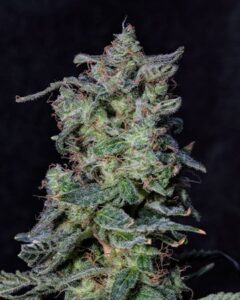


Blue Dream Auto is an autoflowering version of the wider Blue Dream genetic family, but the current seed lines are not genetically identical. Their THC levels, Sativa/Indica classifications, height, yield and even training recommendations differ, so one specification should not be applied universally to every Blue Dream Auto.
Current lines generally complete their full seed-to-harvest cycle in approximately 9–11 weeks, with THC specifications ranging from 16% to 22%. Indoor production ranges from roughly 400–600 g/m², while current plants remain relatively compact at approximately 70–120 cm depending on the seed line.
Recommended Strains
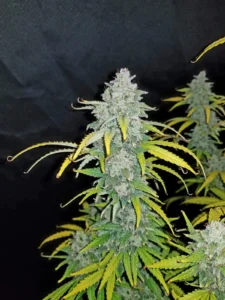
Blue Dream Autoflower

|
THC | 22% - 23% (Medium) |

|
Lineage | Blue Dream x Ruderalis |

|
Type | Autoflowering |

|
Height | 3.94 ft | 1.2 m |

|
Yield | High |

|
Yield Indoor | 1.47 - 1.97 oz/ft² | 450 - 600 g/m² |

|
Life Cycle | 9 - 11 weeks |

|
Phenotype | 25% Indica / 75% Sativa |

|
Effects | Happy, Creative, Relaxed |

|
Flavors | Cherry, Berry, Lemon, Pine |
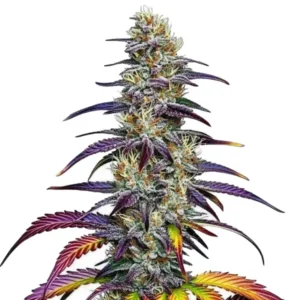
Blue Dream
|
|
THC | 17% - 24% (High) |
|
|
Lineage | Blueberry x Haze |
|
|
Type | Feminized |
|
|
Height | 6.56 ft | 2 m |
|
|
Yield | High |
|
|
Yield Indoor | 1.97 oz/ft² | 600 g/m² |

|
Yield Outdoor | 17.64 - 24.69 oz/plant | 500 - 700 g/plant |
|
|
Flowering Time | 8 - 10 weeks |
|
|
Phenotype | 50% Indica / 50% Sativa |

|
Medical | Fatigue, Muscle Spasms, Stress |
|
|
Effects | Happy, Relaxed, Talkative |
|
|
Flavors | Berry, Blueberry, Mango, Sweet |
| Blue Dream Auto Grow Info | Current seed-line range |
|---|---|
| Seed type | Feminized autoflower |
| Genetics | Blue Dream-based autoflower genetics; exact parentage varies |
| Sativa / Indica | Balanced to 75% Sativa / 25% Indica depending on line |
| THC | 16–22% |
| Total lifecycle | Approx. 9–11 weeks from germination |
| Height | Approx. 70–120 cm depending on line |
| Indoor yield | 400–600 g/m² |
| Outdoor yield | Seed-line specific |
| Flowering trigger | Automatic; no 12/12 switch required |
| Common flavors | Berry, sweet and fruity, with line-specific cherry, lemon, pine or blueberry notes |
Blue Dream Auto Genetics
Blue Dream Auto is not one genetically identical commercial cultivar. Current autoflowering lines use different breeding paths to combine Blue Dream characteristics with automatic flowering.
One current version combines a selected Blue Dream cut with a stabilized autoflowering Blueberry line. Another is described as Blue Dream crossed with autoflower genetics. Both flower according to age, but their cannabinoid levels, genetic classification, height and production specifications differ.
That is why this guide uses seed-line ranges rather than treating every Blue Dream Auto plant as identical.
Growers comparing products should check whether they have the 75% Sativa Blue Dream Auto line or the balanced Blue Dream Auto line before applying an exact specification.
Is Blue Dream Auto Indica or Sativa?
There is no single Indica/Sativa ratio that accurately describes every current Blue Dream Auto seed line.
One current version is classified as 75% Sativa and 25% Indica. Another is currently described in its breeder data as a balanced hybrid, although its narrative description also refers to Sativa-dominant characteristics without publishing an exact numerical ratio.
For a general guide, Blue Dream Auto is therefore best described as ranging from balanced to Sativa dominant depending on the seed line.
Plant structure and subjective effects should also be kept separate from these percentages, as environment and individual phenotype can still influence growth and experience.
How Much THC Does Blue Dream Auto Have?
Current Blue Dream Auto seed lines publish THC specifications from approximately 16% to 22%.
One version is listed at 16–20% THC, while another reaches up to 22%. A claim that every Blue Dream Auto contains 22–23% THC would therefore be inaccurate across the current catalog.
These published figures describe breeder specifications rather than guaranteed laboratory results from every plant. Phenotype, plant health, light, harvest maturity and post-harvest handling can influence the cannabinoid concentration measured in individual flowers.
Blue Dream Auto Flavor and Aroma
Berry and sweet fruit notes are the clearest sensory characteristics shared across current Blue Dream Auto lines.
Depending on the version, additional documented flavors include blueberry, cherry, lemon and pine. One line emphasizes berry, cherry, citrus and pine, while another focuses more strongly on berry, blueberry and sweetness.
These differences reflect the fact that the available seed lines do not use identical parentage.
Specific terpene lists should also remain line-specific. One current version officially identifies pinene, myrcene and linalool as dominant terpenes, but those compounds should not automatically be presented as the universal Blue Dream Auto terpene profile.
Blue Dream Auto Flowering Time and Total Lifecycle
Current Blue Dream Auto seed lines generally complete their entire lifecycle in approximately 9–11 weeks from germination to harvest.
This distinction is important. Nine to eleven weeks should not be interpreted as a flowering period that begins after several additional weeks of vegetation.
One current seed line is listed at approximately 9–11 weeks seed-to-harvest. Another breeder publishes approximately 63–65 days indoors, or roughly nine weeks from seed.
Individual plants may finish slightly earlier or later depending on phenotype and growing conditions, but the correct planning model is one continuous automatic lifecycle rather than a photoperiod-style vegetative stage followed by a separate 8–10 week flowering phase.

Does Blue Dream Auto Need a 12/12 Light Cycle?
No. Blue Dream Auto flowers according to age and maturity, so it does not require a change to 12 hours of light and 12 hours of darkness.
Current breeder guidance supports maintaining an autoflower-appropriate light schedule throughout the cycle. One line is commonly grown under an extended daily light period, while another breeder specifically notes that the plant flowers automatically under schedules such as 18/6.
Reducing the photoperiod is therefore not necessary to initiate flowering.
If a Blue Dream Auto grow guide instructs growers to switch to 12/12 in a particular week, it is applying photoperiod cultivation logic to an autoflower.
Blue Dream Auto Height and Plant Structure
Current Blue Dream Auto lines reach approximately 70–120 cm, depending on the version and growing conditions.
One line is officially listed at 70–110 cm and develops substantial lateral branching despite its manageable overall height. Another can reach around 120 cm under favorable conditions.
This makes Blue Dream Auto practical for indoor cultivation without restricting it to extremely small plants. Healthy modern autoflowers can build a surprisingly large canopy during a short lifecycle.
Root space, lighting, early plant health and stress can all influence final size. Severe setbacks during the first few weeks are particularly relevant because an autoflower cannot simply remain in vegetation for extra recovery time.
Growing Blue Dream Auto Indoors
Current Blue Dream Auto lines publish indoor yields of approximately 400–600 g/m².
One version is listed at 450–600 g/m², while another publishes 400–500 g/m². These figures make the exact seed line important when comparing production potential.
The plants remain compact enough for many grow tents while still developing productive lateral branching. Indoor growers should focus on stable early development, sufficient root space and even light distribution instead of trying to force maximum growth through aggressive training or feeding.
There is no need to change the light schedule when flowers begin appearing. Maintain the chosen autoflower-appropriate schedule and allow the plant’s genetics to control the transition.
Growing Blue Dream Auto Outdoors
Blue Dream Auto can also be grown outdoors without waiting for shortening autumn days to trigger flowering.
Outdoor yield specifications differ considerably between current seed lines. One version publishes approximately 60–250 g per plant, while another breeder gives around 90 g per plant as a beginner outdoor reference rather than a broad production range.
This difference is why one universal outdoor yield should not be assigned to every Blue Dream Auto.
Strong sunlight, suitable root space and healthy early development remain important. Autoflowering behavior can also allow growers in suitable climates to position more than one complete cycle within the warmer part of the season.
Blue Dream Auto Yield
Indoor yield currently ranges from approximately 400–600 g/m², depending on the seed line.
Outdoor specifications are less uniform, so it is better to check the exact product rather than inventing one combined range. The most productive current line lists 60–250 g per plant, while another current breeder provides a lower individual reference for outdoor growers.
These numbers describe production potential rather than guaranteed harvests.
Light, root volume, early plant health, watering, environmental conditions and phenotype can all affect yield. With a short autoflower lifecycle, problems during the first few weeks can influence final production more than they would in a photoperiod plant whose vegetative stage can simply be extended.
How to Germinate Blue Dream Auto Seeds
Blue Dream Auto does not require a unique germination method, but avoiding early stress is particularly useful because its automatic lifecycle begins immediately.
Seeds need stable moisture, suitable warmth and access to oxygen without remaining permanently saturated. A damp paper-towel method can be used to monitor taproot emergence, while direct germination in an appropriate growing medium can reduce later handling.
Once the root appears, handle it carefully and avoid unnecessary damage or transplant stress.
The cannabis seed germination temperature and humidity guide explains moisture management and common starting methods in more detail.
Early Growth and Automatic Pre-Flower
Blue Dream Auto should not be assigned a rigid, grower-controlled vegetative period.
Early growth focuses on establishing roots, leaves and branches before the plant begins showing pre-flower according to its own age and development.
In documented Blue Dream Auto grows, pre-flower can become visible around the middle of the lifecycle, but that timing should be treated as an example rather than a mandatory week number for every seed line.
The priority during early growth is consistency. Chronic overwatering, excessive nutrients, root damage or severe training can reduce plant size before flowering progresses, and the plant cannot simply extend vegetation indefinitely to compensate for lost time.
Training Blue Dream Auto
Training recommendations differ between current Blue Dream Auto seed lines, so there should not be one universal rule.
One current line is specifically suited to early, gentle Low-Stress Training and branch positioning during its first few weeks. Another breeder cautions against training autoflowers aggressively and instead recommends supporting heavy branches as the plant matures.
Because of that difference, the conservative general approach is to keep training gentle and early. Branch positioning can improve canopy spacing where necessary, but topping and other high-stress techniques should not be presented as requirements for every Blue Dream Auto.
Always follow the guidance for the exact seed line being grown.
Flower Development
Blue Dream Auto begins flowering automatically as it matures.
During the transition, plants can continue adding height and branch development while the first flower sites become established. Later, flowers gain mass and resin as the plant moves toward the final part of its 9–11 week total cycle.
There is no need to trigger this stage with a photoperiod change.
As flowers become larger, monitor branch support and airflow. Some current lines develop substantial lateral branches capable of carrying relatively heavy flowers, so physical support can become more useful than additional training later in the lifecycle.
Use the total breeder lifecycle together with direct plant maturity rather than assuming every plant must reach the same developmental milestone on the same day.
Feeding Blue Dream Auto
Blue Dream Auto does not require one universal strain-specific nutrient formula.
The available seed lines differ in vigor and feeding guidance, so nutrition should be adapted to the growing medium, fertilizer system, water quality, root volume, plant size and visible response.
Avoid automatically using a nitrogen-heavy early formula followed by aggressively increasing phosphorus and potassium because flowering has begun. Those generic rules do not demonstrate that the exact plant needs more fertilizer.
Start conservatively and adjust when plant development provides evidence that a change is necessary.
Burned tips, unusually dark foliage, stalled growth or progressive discoloration provide more useful feedback than a rigid Blue Dream Auto nutrient calendar.
Watering Blue Dream Auto
Water requirements change quickly during Blue Dream Auto’s short lifecycle.
A newly established seedling uses far less water than a mature 100 cm plant carrying multiple flowering branches. For that reason, avoid watering according to one fixed schedule throughout the grow.
In containers, substrate moisture and pot weight provide useful information about actual demand. Early overwatering can restrict oxygen around developing roots and slow growth at a stage when recovery time is limited.
The autoflower watering guide explains how irrigation demand changes as automatic plants develop.
Airflow and Disease Risk
Disease resistance differs between Blue Dream Auto seed lines.
One current breeder describes its version as strongly resistant to mold, insects and mildew, but that rating should not automatically be transferred to every Blue Dream Auto sold under the name.
Regardless of seed line, good canopy airflow remains useful once flowers become larger. Dense or overlapping foliage can create stagnant humid pockets even when the surrounding grow space appears acceptable.
Aim for gentle movement above, through and below the canopy while removing excess moisture through ventilation.
The cannabis airflow and mold prevention guide explains why flower-level humidity can differ from general room readings.
Common Blue Dream Auto Growing Problems
One of the biggest avoidable problems is treating Blue Dream Auto like a photoperiod cultivar. A 12/12 light switch is unnecessary and does not initiate flowering.
Early overwatering can also slow root development during a lifecycle that cannot simply be extended indefinitely.
Aggressive training is another area where seed-line differences matter. Some Blue Dream Auto genetics respond well to gentle early LST, while other current breeder guidance recommends minimizing training and supporting branches instead.
Finally, avoid assuming every Blue Dream Auto needs the same nutrient strength, pest-control program or environmental setpoints. The current commercial seed lines are genetically different and should be managed according to the actual plant and product guidance.
Blue Dream Auto vs Blue Dream Photoperiod
Blue Dream Auto and photoperiod Blue Dream should not share the same cultivation timeline.
Blue Dream Auto flowers automatically and generally completes its entire seed-to-harvest cycle in approximately 9–11 weeks. Its vegetative development cannot be extended indefinitely.
Photoperiod Blue Dream, by contrast, remains in vegetative growth until the grower changes the light schedule. Its flowering period alone can require roughly eight to ten weeks depending on the seed line.
Photoperiod versions can also become considerably larger and produce different yield figures.
If you are growing the light-cycle-dependent version, use the dedicated Blue Dream strain grow guide rather than applying the autoflower timeline from this article.

When to Harvest Blue Dream Auto
The primary harvest reference is the 9–11 week seed-to-harvest window, adjusted for the exact seed line.
One current version often finishes around nine weeks, while another gives a broader 9–11 week range. Individual plants can run slightly outside those numbers depending on phenotype and cultivation conditions.
As the expected window approaches, inspect actual flower maturity and trichome development rather than cutting solely because a calendar date has arrived.
There is no need to require one universal percentage of amber trichomes. Use the breeder timing together with direct observation of the individual plant.
Blue Dream Auto Effects
Effects differ somewhat between current Blue Dream Auto lines.
One version is described as energetic, creative and uplifting, while another emphasizes focus, relaxation and calm. These differences are consistent with the fact that their genetic classifications and THC specifications are not identical.
A general Blue Dream Auto article should therefore avoid promising one universal experience.
The current seed lines range from approximately 16% to 22% THC, but cannabinoid percentage alone does not determine the full subjective effect. Dose, tolerance and the chemical profile of an individual harvest can all influence the experience.
Blue Dream Auto FAQs
How long does Blue Dream Auto take from seed to harvest?
Current Blue Dream Auto seed lines complete their full cycle in roughly 9–11 weeks from germination to harvest. That figure is the total autoflower lifecycle, not a separate flowering phase added after vegetation. One current line is listed around nine weeks, while another publishes a 9–11 week harvest window.
Does Blue Dream Auto need a 12/12 light cycle?
No. Blue Dream Auto flowers according to age and maturity, so growers do not need to switch to a 12/12 light schedule. Current breeder guidance allows consistent autoflower-appropriate lighting throughout the cycle. Reducing the photoperiod is therefore not required to trigger bloom and should not be presented as a flowering instruction.
How much THC does Blue Dream Auto have?
Current Blue Dream Auto seed lines publish THC specifications from about 16% to 22%, depending on the version. One line is listed at 16–20%, while another reaches up to 22%. These are breeder specifications rather than guarantees that every harvested flower will test at exactly the same cannabinoid concentration.
Is Blue Dream Auto Indica or Sativa?
Blue Dream Auto is not genetically identical across every current seed line. One version is 75% Sativa and 25% Indica, while another is currently described by its breeder as a balanced hybrid even though its narrative copy also calls it Sativa dominant. Avoid applying one universal ratio to every Blue Dream Auto.
How much does Blue Dream Auto yield?
Current Blue Dream Auto lines publish approximately 400–600 g/m² indoors. Outdoor figures are more line-specific: one current version lists 60–250 g per plant, while another breeder gives around 90 g per plant as a beginner outdoor reference. Light, root space, plant health and environment can substantially change final production.
How tall does Blue Dream Auto grow?
Current Blue Dream Auto lines remain relatively compact but are not identical in size. One is listed at 70–110 cm, while another can reach about 120 cm. Final height depends on the seed line, root space, light, early plant health and stress during the short autoflower lifecycle.