

Blueberry OG is an indica-dominant feminized photoperiod strain from Barney’s Farm created by crossing Blueberry with OG Kush. The cultivar combines the fruit-driven character of Blueberry with the richer citrus, pine, musk, and relaxing qualities associated with its OG Kush background.
Current breeder specifications place Blueberry OG at approximately 24% THC, with a genetic profile of 70% Indica and 30% Sativa. Indoors, plants generally reach 100–110 cm and can produce around 550–650 g/m² under favorable conditions. Outdoors, plants reach approximately 120–150 cm and can produce up to 1,000 g per plant.
Recommended Strains
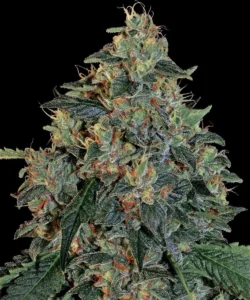
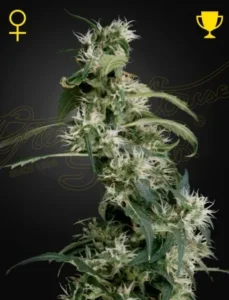
Blueberry Og

|
THC | 24% - 25% (High) |

|
Lineage | BlueBerry x OG Kush |

|
Type | Feminized |

|
Height | 4.43 ft | 1.35 m |

|
Yield Outdoor | 35.27 oz/plant | 1000 g/plant |

|
Flowering Time | 8 - 9 weeks |

|
Phenotype | 70% Indica / 30% Sativa |

|
Effects | Uplifted, Focused, Euphoric, Giggly, Sedative |

|
Flavors | Blueberry, Musk, Citrus, Pine |

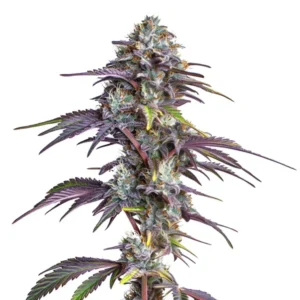
Blue Cheese
|
|
THC | 19% - 20% (Medium) |
|
|
Lineage | Original Cheese x Oregon Blueberry Blend |
|
|
Type | Feminized |
|
|
Height | 5.58 ft | 1.7 m |

|
Yield | High |

|
Yield Indoor | 1.64 - 1.8 oz/ft² | 500 - 550 g/m² |
|
|
Yield Outdoor | 17.64 - 19.4 oz/plant | 500 - 550 g/plant |
|
|
Flowering Time | 8 - 9 weeks |
|
|
Phenotype | 60% Indica / 40% Sativa |
|
|
Effects | Focused, Relaxed |
|
|
Flavors | Candy, Cheese, Fruity |
The flowering stage lasts approximately 55–65 days indoors, while outdoor plants generally reach maturity during the third to fourth week of September in the Northern Hemisphere.
You can find Blueberry OG seeds and other genetics from Barney’s Farm at Growlantis.
Blueberry OG Grow Info
| Trait | Blueberry OG |
|---|---|
| Genetics | Blueberry × OG Kush |
| Seed type | Feminized photoperiod |
| Indica / Sativa | 70% Indica / 30% Sativa |
| THC | Approximately 24% |
| Flowering time | 55–65 days |
| Indoor height | 100–110 cm |
| Indoor yield | 550–650 g/m² |
| Outdoor height | 120–150 cm |
| Outdoor yield | Up to 1,000 g/plant |
| Outdoor harvest | 3rd–4th week of September |
| Taste | Blueberry, musk, citrus, pine |
| Aroma | Lemon, pine, orange |
| Reported effects | Uplifting, euphoric, giggly, relaxing, sedating |
These specifications describe the Blueberry OG seed line currently sold through Growlantis. Actual height, yield, cannabinoid concentration, and finishing speed can still vary according to phenotype, vegetative duration, root volume, lighting, climate, training, and overall growing conditions.
What Is the Blueberry OG Strain?
Blueberry OG is an indica-dominant hybrid that combines Blueberry and OG Kush genetics in a feminized photoperiod seed line. Its genetic background gives the cultivar a distinctive combination of berry sweetness, musk, citrus, pine, and a more complex lemon-and-orange aromatic character.
From a cultivation perspective, Blueberry OG develops into a medium-sized plant with substantial side branching rather than an exceptionally tall structure. Indoors, it remains around 100–110 cm, while outdoor plants generally reach 120–150 cm.
Blueberry OG is photoperiod dependent, which means indoor growers determine when flowering begins by changing the light schedule to 12/12. Total seed-to-harvest time therefore depends on how long the plant remains in vegetative growth before its 55–65 day flowering period begins.
Blueberry OG Genetics
The official Blueberry OG genetics are Blueberry × OG Kush.
The Blueberry side contributes much of the cultivar’s sweet fruit character, while OG Kush adds muskier, citrus, pine, and more pungent qualities. The finished line contains approximately 70% Indica and 30% Sativa genetics.
This genetic ratio gives Blueberry OG a clear Indica dominance without making it an extremely compact or heavily one-sided cultivar. The plant still develops useful lateral branching, while the breeder-reported effects combine uplifting and cerebral characteristics with progressively stronger physical relaxation and sedation.
Growers should use specifications from this exact seed line rather than copying data from Blueberry, OG Kush, or similarly named Blueberry-Kush hybrids.
Is Blueberry OG Indica or Sativa?
Blueberry OG is an indica-dominant hybrid containing approximately 70% Indica and 30% Sativa genetics.
Its physical structure reflects that balance. The plant remains relatively manageable indoors at around 100–110 cm while developing numerous side branches capable of carrying substantial flower weight.
The breeder-reported effect profile also combines characteristics associated with both sides of the hybrid. Uplifting, cerebral, euphoric, and giggly effects can occur alongside stronger body-mind relaxation and sedation.
Individual responses can still vary according to dose, tolerance, phenotype, cannabinoid composition, and finished flower quality.
Blueberry OG THC
Blueberry OG reaches approximately 24% THC according to the current breeder specification.
This places the cultivar within a high-potency range without relying on older retailer figures extending the value to 25% or beyond.
The published percentage represents genetic potential and reference testing rather than a guarantee that every individual plant will produce flowers measuring exactly 24%.
Phenotype, light intensity, environmental stability, plant health, harvest maturity, drying, curing, and laboratory methodology can all influence the cannabinoid concentration measured in finished flowers.
Blueberry OG Flowering Time
Blueberry OG flowers for approximately 55–65 days indoors, equivalent to roughly eight to nine weeks after flowering begins.
This range covers the flowering stage only. It does not include germination or vegetative growth.
Because Blueberry OG is photoperiod dependent, indoor flowering begins after the light schedule is changed to 12 hours of light and 12 hours of uninterrupted darkness. An 18/6 vegetative schedule will not serve as an equivalent flowering trigger.
The breeder range should be used as the primary planning reference, while actual flower and trichome maturity should determine the final harvest date.
Blueberry OG Plant Height
Blueberry OG is a medium-sized cultivar with relatively manageable dimensions in both indoor and outdoor environments.
Indoor plants generally reach approximately 100–110 cm, making the strain practical for many grow tents and controlled spaces. Outdoors, plants usually reach approximately 120–150 cm when given enough sunlight and root development.
Using separate indoor and outdoor ranges is more accurate than assigning Blueberry OG one universal height.
Indoor growers can also influence final size through vegetative duration. A shorter vegetative period limits canopy development, while additional vegetative time allows the plant’s side branches and root system to occupy more of the available space before the switch to 12/12.

Growing Blueberry OG Indoors
Blueberry OG performs well indoors because its moderate height and strong side branching make it relatively easy to organize into a productive canopy.
During vegetative growth, growers can maintain a longer photoperiod such as 18/6 while roots, leaves, and branches develop. Flowering should begin once the canopy reaches a suitable size for the available room by switching the light schedule to 12/12.
There is no fixed four- or six-week vegetative period that every Blueberry OG plant must complete. Plant number, root space, training, canopy coverage, and available vertical clearance should determine when the transition occurs.
Under favorable indoor conditions, the breeder lists production at approximately 550–650 g/m².
Growing Blueberry OG Outdoors
Blueberry OG can also produce substantial outdoor harvests while remaining moderate in overall height.
Plants generally reach approximately 120–150 cm and can produce up to 1,000 g per plant when they receive strong sunlight, sufficient root space, suitable irrigation, and favorable seasonal conditions.
Outdoor growers should choose a location with good direct light and well-draining soil or growing media. Enough spacing around the plant also helps the numerous side branches receive light and air as flowers gain weight.
The strain normally finishes during the third to fourth week of September, giving growers a relatively early outdoor harvest compared with cultivars that remain in bloom deep into October.
Blueberry OG Yield
Blueberry OG combines moderate plant dimensions with strong yield potential.
Current breeder specifications place indoor production at approximately 550–650 g/m² under favorable conditions. Outdoors, individual plants can produce up to 1,000 g each.
These figures describe genetic potential rather than guaranteed harvest weights. Indoor production depends on lighting, usable canopy area, vegetative duration, plant density, root space, training, irrigation, nutrition, and environmental stability.
Outdoor yield additionally depends on sunlight, soil volume, plant size, climate, planting date, and seasonal conditions. A smaller container-grown plant should not be expected to match a fully developed outdoor specimen with substantial root space.
Blueberry OG Outdoor Harvest Time
Blueberry OG generally reaches outdoor maturity during the third to fourth week of September in the Northern Hemisphere.
This relatively early finishing window is useful for growers who want to avoid carrying mature flowers too far into colder and wetter autumn conditions.
The breeder timeframe should still be treated as a planning reference rather than an automatic cutting date. Latitude, phenotype, sunlight, temperature, and seasonal weather can shift maturity slightly.
As late September approaches, evaluate actual flower development and trichome maturity while also monitoring upcoming rain and humidity before deciding on the final harvest day.
Germinating Blueberry OG Seeds
Blueberry OG can be germinated using the same fundamental principles applied to other high-quality feminized photoperiod seeds.
The breeder recommends a warm environment between approximately 21–32°C together with consistent moisture and darkness. A controlled moist paper-towel method can work well when the towels remain damp rather than saturated.
Once the first root emerges, the seed can be transferred carefully into the chosen growing medium with the root oriented downward. Young seedlings initially require relatively little water and nutrition because their root systems occupy only a small area.
As a photoperiod cultivar, Blueberry OG gives growers flexibility to extend vegetative development if a young plant needs additional establishment time.
Blueberry OG Vegetative Growth
Vegetative growth determines how much canopy Blueberry OG develops before its 55–65 day flowering stage begins.
Indoor growers can maintain an 18/6 schedule while the roots and side branches expand. There is no universal requirement for vegetation to last four, five, or six weeks.
The correct timing depends on plant size, root development, available space, plant number, and the training strategy being used.
Because Blueberry OG naturally develops useful side branches, this stage is particularly important for organizing the future flowering canopy. Healthy lateral growth can be spread across the available light before the 12/12 transition instead of allowing one central branch to dominate the entire grow area.
Training Blueberry OG
Blueberry OG’s medium height and side-branching structure make it suitable for moderate canopy training during vegetation.
Low-Stress Training can gradually spread branches outward and increase the amount of canopy exposed directly to light. Topping can also be used on healthy vegetative plants where growers want several dominant branches instead of a single central leader.
A screen or simple branch support system can become useful where a larger canopy is being developed, particularly as flowers later add weight to the side branches.
Training should serve a clear structural purpose. Once flowering becomes established, aggressive manipulation becomes less useful and the priority should gradually shift toward support, light exposure, and airflow.
Blueberry OG Flowering Development
After the indoor light schedule changes to 12/12, Blueberry OG enters its approximately 55–65 day flowering period.
The early transition can include additional branch extension while flowering sites become increasingly visible. Growers can make final gentle canopy adjustments during this stage before the developing flowers become difficult to reposition.
As bloom progresses, the cultivar produces increasingly dense, resinous flowers while its blueberry, musk, citrus, pine, lemon, and orange characteristics become more noticeable.
Late flowering should focus on stable conditions, appropriate irrigation, branch support where required, and enough airflow through the canopy to prevent moisture from remaining trapped around mature flowers.
Flowering Days 1–21
During roughly the first three weeks after the switch to 12/12, Blueberry OG transitions from vegetative development into established flower production.
Branches can continue extending during this period, but the plant should not automatically be expected to double in height. Current breeder specifications still place finished indoor plants around 100–110 cm.
This stage is useful for completing gentle branch positioning and checking that the canopy remains open enough for light and air to reach productive flowering sites.
Once flowers become firmly established, major structural training should gradually stop.
Flowering Days 22–45
During the middle of bloom, flower mass and resin production increase significantly.
The cultivar’s numerous side branches begin carrying progressively heavier buds, while its fruit, citrus, musk, and pine profile becomes increasingly noticeable.
At this stage, healthy root conditions, stable lighting, appropriate irrigation, and airflow matter more than continued aggressive pruning.
Branch support can also become useful where flower weight begins pulling stems away from the canopy structure. Nutrient supply should follow the chosen growing medium and fertilizer system rather than a rigid strain-specific NPK ratio.
Flowering Days 46–65
The final portion of flowering is focused primarily on maturation.
Flowers continue gaining density and resin while Blueberry OG approaches the official 55–65 day finishing window. Growers should use that range to identify when close maturity checks become particularly important rather than harvesting automatically because a specific calendar day has arrived.
Phenotype and environment can create small differences in finishing speed.
The final harvest decision should combine the breeder window with direct observation of the individual plant and its flower development.
Feeding Blueberry OG
Blueberry OG does not require one universal strain-specific NPK formula.
During vegetative growth, use a nutrient program appropriate to the chosen medium that supports healthy roots, leaves, stems, and lateral branch development. As flowering becomes established, adjust nutrition according to the bloom program associated with the fertilizer system being used.
There is no need to treat fixed formulas such as 3-1-2 during vegetation or 1-3-3 during flowering as requirements of Blueberry OG genetics.
Nutrient strength should reflect substrate, water quality, root volume, plant size, and actual plant response.
Watering Blueberry OG
Blueberry OG should be watered according to actual root-zone conditions rather than a rigid daily or weekly timetable.
Young plants consume relatively little water because their root systems initially occupy only a small part of the growing medium. Water demand increases as roots, foliage, and branch mass develop.
Container size, substrate, temperature, humidity, lighting, and airflow all influence irrigation frequency.
Allow sufficient oxygen to return to the root zone between waterings instead of keeping the medium permanently saturated. Large outdoor plants can naturally require much greater volumes during warm and sunny periods.
Airflow Around Blueberry OG Flowers
Blueberry OG develops dense flowers across a branched canopy, so good airflow becomes increasingly useful during the second half of flowering.
Indoor circulation should move air gently through, above, and below the branches while ventilation removes accumulated heat and moisture from the grow space.
Canopy organization performed during vegetation can make this easier by preventing branches from becoming excessively crowded before flowers gain weight.
Outdoor growers should similarly watch periods of prolonged rain or heavy humidity as the late-September harvest window approaches. Good airflow reduces environmental risk, even when a plant otherwise appears healthy and vigorous.
Blueberry OG Effects
Barney’s Farm describes Blueberry OG as producing a combination of uplifting, cerebral, euphoric, and giggly effects together with body-mind relaxation and sedation.
This mixed profile fits the cultivar’s 70% Indica and 30% Sativa genetic composition. The experience can include a more uplifting initial component before stronger physical relaxation becomes noticeable.
Individual responses can still vary according to dose, tolerance, phenotype, cannabinoid composition, and finished flower quality.
These descriptions should therefore be treated as breeder-reported characteristics rather than claims that Blueberry OG treats anxiety, depression, chronic pain, insomnia, or other medical conditions.
Blueberry OG Flavor, Aroma and Terpenes
Blueberry OG combines blueberry, musk, citrus, pine, lemon, and orange characteristics into a layered aromatic profile.
The breeder lists blueberry, musky, citrus, pine, and rich notes in the taste profile, while the aroma is described specifically as lemon, pine, and orange.
Current breeder information does not provide a quantitative terpene analysis that would justify presenting one universal ranking of dominant terpenes for every Blueberry OG plant.
For that reason, the verified flavor and aroma profile is more useful than assigning fixed dominance to compounds such as myrcene, limonene, or pinene without strain-specific analytical data.

Blueberry OG Strain Review
From a cultivation perspective, Blueberry OG combines manageable plant dimensions with strong production potential and a relatively short flowering period.
Indoor plants stay around 100–110 cm while offering approximately 550–650 g/m² of breeder-listed yield potential. Outdoors, plants remain around 120–150 cm but can produce up to 1,000 g when conditions allow full development.
Its strongest planning advantages are its medium-sized branching structure, 55–65 day flowering window, and late-September outdoor finish.
Growers are likely to gain more from sensible canopy management, strong light distribution, healthy roots, and stable late-flowering conditions than from complicated strain-specific feeding recipes.
Common Problems When Growing Blueberry OG
Using Conflicting Flowering Times
Blueberry OG is currently listed at approximately 55–65 days of flowering. Older descriptions ranging from seven to ten weeks create unnecessary uncertainty. Using the breeder’s day range keeps the grow plan consistent while still allowing individual phenotype and environmental conditions to influence the exact final harvest date.
Using 18/6 During Flowering
Blueberry OG is a photoperiod cultivar. An 18/6 schedule is suitable for vegetative growth, but indoor flowering is initiated and maintained by switching to approximately 12 hours of light and 12 hours of uninterrupted darkness. Treating 18/6 and 12/12 as interchangeable flowering schedules is technically incorrect.
Following a Fixed Vegetative Calendar
There is no requirement for Blueberry OG to remain in vegetation for exactly four to six weeks. Indoor growers control the timing of the flowering transition. Canopy size, root development, plant number, training, and available vertical space should determine when the switch to 12/12 occurs.
Using a Single Height Figure
Blueberry OG does not have one useful universal height. Current breeder specifications place indoor plants around 100–110 cm and outdoor plants around 120–150 cm. Root space, vegetative duration, lighting, climate, training, and phenotype can still change the final dimensions of individual plants.
Following Fixed NPK or Flushing Rules
Blueberry OG does not have an official requirement for 3-1-2 vegetative feeding, 1-3-3 bloom nutrients, routine CalMag, or pre-harvest flushing. Nutrition and root-zone management should be adapted to the growing medium, water quality, fertilizer system, plant size, and actual plant response.
FAQs About Blueberry OG
What is the Blueberry OG flowering time?
Blueberry OG flowers for approximately 55–65 days indoors, equivalent to roughly eight to nine weeks after the switch to 12/12. This period covers flowering only and does not include germination or vegetation. Indoor growers control the start of bloom because Blueberry OG is a photoperiod cultivar.
Is Blueberry OG indica or sativa?
Blueberry OG is an indica-dominant hybrid containing approximately 70% Indica and 30% Sativa genetics. Its Blueberry × OG Kush lineage produces a medium-sized branched plant, while breeder-reported effects combine uplifting and cerebral characteristics with progressively stronger body-mind relaxation and sedation.
How much does Blueberry OG yield?
Blueberry OG can produce approximately 550–650 g/m² indoors and up to 1,000 g per outdoor plant under favorable conditions. These figures represent breeder-listed potential rather than guaranteed harvests. Lighting, sunlight, root space, vegetative duration, training, irrigation, nutrition, climate, environment, and phenotype all influence actual production.
How tall does Blueberry OG grow?
Blueberry OG generally reaches approximately 100–110 cm indoors and 120–150 cm outdoors. Indoor growers can influence final size through vegetative duration and training, while outdoor dimensions depend additionally on root space, sunlight, climate, and seasonal development. The separate ranges are more useful than assigning one universal height.
When is Blueberry OG harvested outdoors?
Blueberry OG generally reaches outdoor maturity during the third to fourth week of September in the Northern Hemisphere. Latitude, phenotype, sunlight, temperature, and seasonal weather can move the exact finishing date slightly. Growers should use the breeder window for planning while confirming actual flower and trichome maturity before harvesting.
What is the THC level of Blueberry OG?
Blueberry OG contains approximately 24% THC according to the current Barney’s Farm specification. This number represents genetic potential rather than a guaranteed result from every plant. Phenotype, lighting, environmental conditions, harvest maturity, drying, curing, and laboratory methodology can all influence the cannabinoid concentration measured in finished flowers.