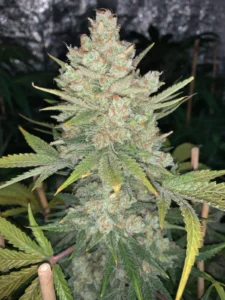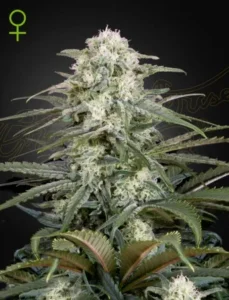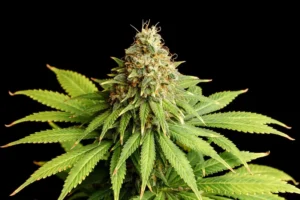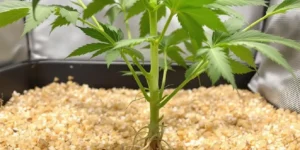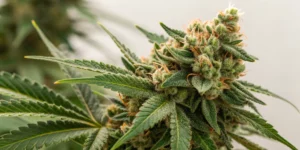


Fat Bastard is a balanced feminized photoperiod hybrid created from Goldmember and Monkey Spunk genetics. The current line is listed at 50% Indica and 50% Sativa, with 30–38% THC, an 8–10 week flowering period and high yield potential in both indoor and outdoor cultivation.
The current Fat Bastard feminized seeds are listed at approximately 1.5 meters in height, with indoor production of 400–600 g/m² and outdoor production of 700–900 g per plant. The breeder describes the strain as beginner-friendly, although its dense flowers and flowering stretch still make canopy management and airflow important.
Recommended Strains
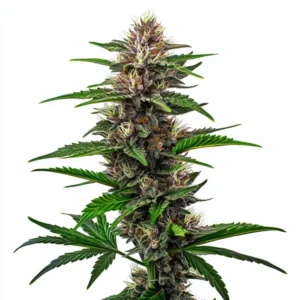
Fat Bastard

|
THC | 30% - 38% (High) |

|
Lineage | Goldmember x Monkey Spunk |

|
Type | Feminized |

|
Height | 4.92 ft | 1.5 m |

|
Yield | High |

|
Yield Indoor | 1.31 - 1.97 oz/ft² | 400 - 600 g/m² |

|
Yield Outdoor | 24.69 - 31.75 oz/plant | 700 - 900 g/plant |

|
Flowering Time | 8 - 10 weeks |

|
Phenotype | 50% Indica / 50% Sativa |

|
Medical | Anxiety, Fatigue, Migraines |

|
Effects | Euphoric, Powerful, Relaxed |

|
Flavors | Fruity, Skunk |
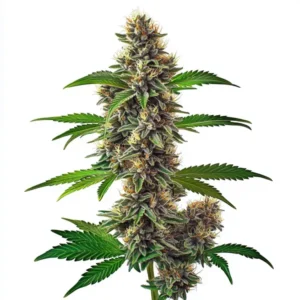
Fat Bastard Auto
|
|
THC | 30% - 38% (High) |
|
|
Lineage | Goldmember x Monkey Spunk x Ruderalis |
|
|
Type | Autoflowering |
|
|
Height | 4.92 ft | 1.5 m |
|
|
Yield | High |
|
|
Yield Indoor | 1.31 - 1.97 oz/ft² | 400 - 600 g/m² |
|
|
Yield Outdoor | 4.41 - 10.58 oz/plant | 125 - 300 g/plant |
|
|
Life Cycle | 8 - 10 weeks |
|
|
Phenotype | 50% Indica / 50% Sativa |
|
|
Medical | Anxiety, Fatigue, Migraines |
|
|
Effects | Euphoric, Powerful, Relaxed |
|
|
Flavors | Fruity, Skunk |
| Fat Bastard Grow Info | Current specification |
|---|---|
| Breeder | Blimburn Seeds |
| Genetics | Goldmember × Monkey Spunk |
| Seed type | Feminized photoperiod |
| Indica / Sativa | 50% Indica / 50% Sativa |
| THC | 30–38% |
| Flowering time | 8–10 weeks |
| Published height | Approx. 1.5 m |
| Indoor yield | 400–600 g/m² |
| Outdoor yield | 700–900 g/plant |
| Outdoor harvest | October |
| Climate | Dry |
| Effects | Euphoric, powerful, relaxed |
| Flavors | Fruity, skunk |
| Verified terpenes | Caryophyllene, Myrcene, Humulene |
Fat Bastard Genetics
Fat Bastard combines Goldmember with Monkey Spunk, producing a feminized photoperiod hybrid with an even 50% Indica / 50% Sativa classification. Unlike a strongly Indica- or Sativa-dominant cultivar, the current line is specifically presented as balanced.
This version comes from Blimburn Seeds, whose broader catalog can be explored through the Blimburn seed collection. Because only one exact photoperiod Fat Bastard line is currently sold here, its breeder specifications can be used directly rather than combining data from several competing versions.
Fat Bastard is photoperiodic, which means indoor growers control when flowering begins by changing the light schedule. Its 8–10 week specification refers to flowering only, not to the complete period from seed to harvest.
Is Fat Bastard Indica or Sativa?
Fat Bastard is a balanced 50% Indica / 50% Sativa hybrid. This ratio is part of the current breeder specification rather than an estimate based on plant appearance.
Its balanced classification does not mean every phenotype will look identical. Some plants may express somewhat stockier growth while others stretch more noticeably after the flowering transition. Environmental conditions, vegetative duration and training can also change the final structure substantially.
The breeder describes the effects as euphoric, powerful and relaxing. Those descriptions are useful for characterizing the line, but individual response can vary with dose, tolerance and the chemistry of the harvested flowers.
How Much THC Does Fat Bastard Have?
Fat Bastard is currently listed at 30–38% THC, placing it among the higher-THC feminized strains in the breeder’s catalog.
The figure should be understood as a published genetic specification rather than a guarantee that every harvested flower will test between exactly 30% and 38%. Phenotype, light intensity, plant health, maturity at harvest and post-harvest handling can all influence the cannabinoid concentration measured in an individual crop.
Because the published range is already unusually high, there is no need to inflate potency claims or associate the strain with medical outcomes. The verified breeder range provides enough information on its own.
Fat Bastard Flavor, Aroma and Terpenes
The main flavor profile combines fruit with a pronounced skunk character. The breeder also describes earthy and pine-like nuances around the denser fruity and pungent aromas of the flowers.
The current structured terpene profile identifies Caryophyllene, Myrcene and Humulene. These compounds can legitimately be mentioned as part of the documented Fat Bastard profile.
That does not mean they should be assigned guaranteed therapeutic effects. In a cultivation guide, their main relevance is their contribution to aroma and the overall chemical profile of the flowers rather than claims about treating anxiety, migraines, inflammation or other conditions.
Fat Bastard Flowering Time
Fat Bastard has an official flowering period of approximately 8–10 weeks.
This timing begins after an indoor plant is transitioned into flowering. Because Fat Bastard is photoperiodic, the grower determines the length of vegetative growth before changing to a flowering schedule such as approximately 12 hours of light and 12 hours of uninterrupted darkness.
Total seed-to-harvest time therefore varies. A plant given three weeks of vegetative development and one maintained substantially longer will not share the same overall cultivation timeline even if both require approximately 8–10 weeks to flower.
Fat Bastard can also stretch during the early flowering transition, so the switch should occur while enough vertical clearance remains. For a broader explanation of what changes after the photoperiod transition, see the cannabis flowering stage guide.

Fat Bastard Height and Plant Structure
The current breeder specification lists Fat Bastard at approximately 1.5 meters, but it does not publish separate current indoor and outdoor height figures.
That measurement should therefore be treated as the published general specification rather than converted into invented environment-specific ranges.
Indoor growers still have substantial control over final size. Vegetative duration, container volume, training and the point at which flowering is initiated can all change how much space a plant occupies.
The strain produces dense, resinous flowers and can show noticeable stretch during the first part of flowering. Planning canopy height before the 12/12 transition is more useful than waiting until the plant is already approaching the available lights.
Growing Fat Bastard Indoors
Fat Bastard is currently listed at 400–600 g/m² indoors. This yield is expressed by area because plant count, vegetative duration and training can vary considerably within one square meter.
The breeder describes the strain as suitable for beginners, but that does not mean it requires no management. Dense flowering growth benefits from an open canopy, and the plant’s early flowering stretch makes vertical planning worthwhile.
Fat Bastard is associated with warm, relatively dry cultivation conditions, although the breeder’s own published temperature recommendations vary slightly between sections. Rather than trying to maintain one supposedly exact strain temperature, focus on environmental stability, adequate air exchange and avoiding prolonged excessive humidity around developing flowers.
Growing Fat Bastard Outdoors
Outdoor Fat Bastard is currently listed at 700–900 g per plant under favorable conditions. The official harvest month is October in the Northern Hemisphere.
The breeder does not currently specify a more precise week, so October is the appropriate planning reference rather than assuming every plant will finish in the middle or at the end of the month.
Choose a site with strong light exposure, sufficient root space and good drainage. The strain is associated with relatively dry conditions, so prolonged wet weather late in flowering deserves particular attention where dense flowers remain exposed to rain or stagnant humidity.
Published outdoor yield represents potential rather than a guaranteed result. Sunlight, root volume, growing-season length, weather, training and plant health all affect the final harvest.
Fat Bastard Yield
Current specifications list Fat Bastard at 400–600 g/m² indoors and 700–900 g per plant outdoors.
These values are more useful than the lower figures found in older sections of the previous guide. Indoor production depends heavily on the amount of productive canopy receiving adequate light, while outdoor yield reflects how large an individual plant can become with more root and growing space.
The upper end of either range should not be treated as an expected harvest from every seed. Yield data is best used as a genetic production reference while actual results are interpreted according to the conditions of the grow.
How to Germinate Fat Bastard Seeds
Blimburn recommends a damp paper-towel germination method for Fat Bastard. The seeds are kept between moist towels in a warm, dark environment until a taproot emerges, then transferred carefully into the growing medium.
The breeder currently publishes a relatively broad germination temperature range of approximately 70–90°F. Whatever method is used, moisture should remain consistent without leaving the seed submerged or depriving it of oxygen.
Once the root appears, handle it as little as possible and transfer the seed carefully. More detailed environmental guidance is available in the cannabis seed germination temperature and humidity guide.
Vegetative Growth
Fat Bastard does not have a fixed vegetative duration because it is a photoperiod plant.
Indoor growers can keep it in vegetative growth until the root system, branching and canopy size suit the available flowering space. A smaller room may justify an earlier transition, while growers with more space can allow additional development.
Use this stage to create an open structure before the flowering stretch begins. Healthy lateral branches can be positioned to distribute the canopy more evenly and prevent one central shoot from occupying excessive vertical space.
The decision to initiate flowering should therefore come from the size and structure of the plant rather than reaching an arbitrary week number.
Training Fat Bastard
Fat Bastard is a suitable candidate for canopy training. The breeder specifically recommends ScrOG, and topping or low-stress branch positioning can also help manage the plant before flowering.
Low-stress training can spread branches horizontally and create more even access to light without requiring a prolonged recovery period. Topping during healthy vegetative growth can reduce apical dominance where the grower wants several main branches instead of one tall central stem.
ScrOG becomes particularly useful where vertical space is limited. The screen can distribute branches across a flatter canopy while controlling the stretch that develops around the transition into flowering.
These techniques can improve space and light distribution, but they should not be presented as a guarantee of a particular final yield.

Flowering Development
During the beginning of flowering, Fat Bastard can continue stretching while flower sites become established. This is why the plant should enter the 12/12 phase with enough space remaining above the canopy.
As the 8–10 week flowering period progresses, flowers become denser and resin development becomes increasingly visible. At this stage, canopy spacing and air circulation become more important because compact flowers can retain moisture internally even when the surrounding room appears adequately ventilated.
Later in flowering, avoid unnecessary high-stress training. The priority shifts toward environmental stability, branch support where needed and monitoring the maturity of the developing flowers.
Use the breeder’s 8–10 week window as a reference rather than assuming every phenotype will finish on the same day.
Documented Fat Bastard Grow Diary
A breeder-hosted indoor Fat Bastard grow diary provides a useful example of how an individual plant can differ from a clean specification sheet. The diary records vegetative entries around grow weeks five and six, flowering entries beginning at grow week seven and harvest at grow week eighteen.
Two plants were recorded at a combined harvest weight of 119.9 g. The grower also reported nitrogen toxicity and lighting problems during the cycle.
That result should not replace the official 400–600 g/m² specification. A grow diary documents one cultivation experience under one set of conditions; it is valuable for understanding real-world variability, not for establishing a guaranteed flowering duration or yield.
Feeding Fat Bastard
Fat Bastard does not require one universal strain-specific nutrient formula.
Nutrition should be adapted to the growing medium, fertilizer system, water quality, root volume, plant size and visible response. A vigorous mature plant may consume considerably more than a young plant, but that does not justify treating Fat Bastard as automatically requiring heavy feeding.
During the transition to flowering, follow the nutrient program designed for the chosen medium rather than assuming that aggressively increasing phosphorus and potassium will necessarily increase bud size, potency or terpene production.
Burned leaf tips, unusually dark foliage, progressive discoloration or stalled growth provide better feedback than following an inflexible strain calendar.
Watering Fat Bastard
Avoid watering Fat Bastard on a fixed schedule.
Water demand changes as the root system and canopy develop. A small vegetative plant may use relatively little water, while a mature outdoor plant can consume substantially more during warm weather.
In containers, substrate moisture and pot weight provide more useful information than simply counting days. Ensure excess water can drain and avoid keeping the root zone permanently saturated.
Outdoor irrigation should respond to soil conditions, recent rainfall, temperature and plant size rather than one universal volume. Neither excessive watering nor deliberately stressing the plant near harvest should be presented as a guaranteed way to improve flower quality.
Airflow and Dense Flowers
Fat Bastard is described by the breeder as hardy and beginner-friendly, but that does not make the plant immune to mold or environmental problems.
Its flowers can become dense, so maintaining air movement around and through the canopy becomes increasingly relevant during flowering. The objective is not maximum fan power but eliminating stagnant pockets where moisture can accumulate around overlapping leaves and flowers.
Room humidity alone does not always represent conditions inside a dense canopy. The airflow and mold prevention guide explains how ventilation and internal circulation perform different roles during flowering.
Common Fat Bastard Growing Problems
One practical challenge is flowering stretch. Growers who allow the plant to occupy all available vertical space during vegetation may struggle to maintain safe clearance once the flowering transition begins.
Dense flowers also make late-stage airflow worth monitoring. Although the genetics are marketed as hardy, no cultivar should be treated as immune to mold when humidity remains high around compact flowers.
Overfeeding and overwatering are other avoidable issues. Neither is a unique weakness of Fat Bastard, but aggressive feeding in pursuit of its high published THC or yield specifications can create nutrient stress rather than improving performance.
Diagnose problems from the actual symptoms and recent cultivation changes instead of assuming the strain always needs more fertilizer or water.
Fat Bastard vs Fat Bastard Auto
Fat Bastard and Fat Bastard Auto share the same core Goldmember × Monkey Spunk background, but they require different cultivation planning.
The Fat Bastard covered in this guide is a feminized photoperiod strain. Its 8–10 week specification refers to the flowering phase after the indoor light schedule is changed.
Fat Bastard Auto adds Ruderalis genetics and begins flowering according to age. Its 8–10 weeks refers to the complete seed-to-harvest lifecycle, not just flowering. Outdoor production is also different, currently listed at 125–300 g per plant.
If you are growing the automatic version, use the dedicated Fat Bastard Auto grow guide instead of applying the photoperiod timeline from this article.
When to Harvest Fat Bastard
Indoors, the breeder’s 8–10 week flowering window provides the primary timing reference. Outdoors, the current published harvest period is simply October.
As the expected window approaches, inspect flower development and trichome maturity directly. Trichomes progressing from clear toward predominantly cloudy indicate increasing maturity, but there is no universal requirement that every Fat Bastard plant reach one exact amber percentage.
Pistils can also darken and retract as flowers mature, but a rule such as “70–90% amber pistils” should not be used as a precise harvest formula.
Combine the expected genetic timeline with direct observation of the individual plant.
Fat Bastard Effects
The current breeder profile describes Fat Bastard as euphoric, powerful and relaxed.
Its balanced 50/50 genetic classification and very high published THC range help explain why the cultivar is presented as combining an initially stronger cerebral character with substantial relaxation.
These descriptions should remain subjective characteristics rather than medical claims. Individual response can vary considerably with dose, tolerance and the chemical composition of a specific harvest.

Fat Bastard FAQs
How long does Fat Bastard take to flower?
Fat Bastard has a breeder-listed flowering time of approximately 8–10 weeks after the indoor flowering light cycle begins. This is not the total seed-to-harvest time because Fat Bastard is photoperiodic. The grower controls the vegetative phase, so total cultivation time depends on when flowering is initiated.
How much does Fat Bastard yield?
Current specifications list Fat Bastard at approximately 400–600 g/m² indoors and 700–900 g per plant outdoors under suitable conditions. These figures describe potential rather than guaranteed harvests. Light, canopy size, root volume, climate, plant health, vegetative duration and cultivation technique can all change the final yield substantially.
How much THC does Fat Bastard have?
Blimburn currently lists Fat Bastard at 30–38% THC, placing it among the breeder’s highest-THC feminized strains. That range is a published specification rather than a guarantee that every harvested flower will test identically. Phenotype, growing conditions, maturity and post-harvest handling can influence the cannabinoid concentration of individual plants.
How tall does Fat Bastard grow?
The current breeder specification lists Fat Bastard at approximately 1.5 meters, but it does not publish separate indoor and outdoor height ranges. Indoor growers can still influence final size through vegetative duration and training. Because flowering stretch can be noticeable, leave enough vertical space before changing the light schedule.
Is Fat Bastard Indica or Sativa?
Fat Bastard is a balanced hybrid listed at 50% Indica and 50% Sativa. Its genetics combine Goldmember with Monkey Spunk. The breeder describes the effects as euphoric, powerful and relaxing, but the 50/50 classification should not be treated as a guarantee that every phenotype or individual experience will be identical.
Is Fat Bastard an autoflower?
No. The Fat Bastard covered in this guide is a feminized photoperiod strain, so indoor flowering is initiated by changing the light schedule. Fat Bastard Auto is a separate autoflowering version that adds Ruderalis genetics and completes its full seed-to-harvest lifecycle in about 8–10 weeks, with different outdoor yield specifications.