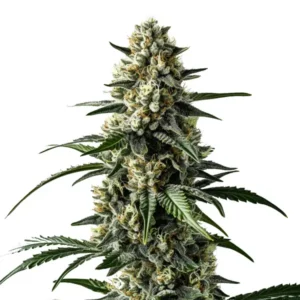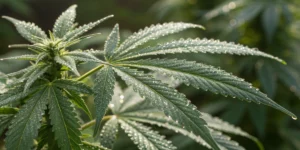


Lemon Orange is a sativa-dominant feminized photoperiod strain from Green House Seed Co. created by crossing Super Lemon Haze with Clementine. The Lemon Orange strain combines vigorous branching, compact resinous flowers, very high THC potential, and a citrus profile that moves from fresh lemon toward sweeter orange and earthy notes.
Green House Seed Co. classifies Lemon Orange as 70% Sativa and 30% Indica and currently lists 29.50% THC. Indoors, the cultivar flowers for approximately nine weeks after the switch to 12/12. Outdoors, the breeder lists an average height of 170–200 cm, harvest around the fourth week of September, and production of up to 800 g per plant under favorable conditions.
Recommended Strains

Lemon Orange

|
THC | 29% - 30% (High) |

|
Lineage | Super Lemon Haze X Clementine |

|
Type | Feminized |

|
Height | 6.07 ft | 1.85 m |

|
Yield Outdoor | 28.22 oz/plant | 800 g/plant |

|
Flowering Time | 8 - 9 weeks |

|
Phenotype | 30% Indica / 70% Sativa |

|
Effects | Uplifted, Focused, Happy, Energetic |

|
Flavors | Sweet, Earthy, Citrus, Sour |
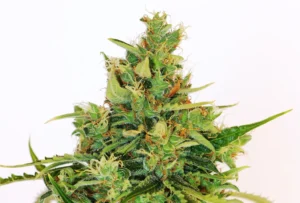
Amnesi K Lemon
|
|
THC | 23% - 24% (High) |
|
|
Lineage | Amnesia x Lemon Skunk x Jack Herer |
|
|
Type | Feminized |
|
|
Height | 4.92 ft | 1.5 m |

|
Yield | High |

|
Yield Indoor | 1.64 - 1.8 oz/ft² | 500 - 550 g/m² |
|
|
Yield Outdoor | 21.16 - 24.69 oz/plant | 600 - 700 g/plant |
|
|
Flowering Time | 9 - 10 weeks |
|
|
Phenotype | 35% Indica / 65% Sativa |
|
|
Effects | Energetic |
|
|
Flavors | Citrus, Sweet, Earthy |
You can find Lemon Orange seeds from Green House Seed Co. at Growlantis.
Lemon Orange Strain Grow Info
| Trait | Lemon Orange |
|---|---|
| Breeder | Green House Seed Co. |
| Genetics | Super Lemon Haze × Clementine |
| Seed type | Feminized photoperiod |
| Sativa / Indica | 70% Sativa / 30% Indica |
| THC | 29.50% |
| CBD | 0.20% |
| CBN | 0.36% |
| Indoor flowering | Approximately 9 weeks |
| Indoor yield | High |
| Outdoor height | Approximately 170–200 cm |
| Outdoor yield | Up to 800 g/plant |
| Outdoor harvest | Fourth week of September |
| Main terpenes | Terpineol, D-Limonene, β-Caryophyllene |
| Flavor | Lemon, orange, sweet, earthy |
| Reported effects | Euphoric, balanced, long-lasting cerebral buzz |
These specifications refer specifically to the Lemon Orange bred by Green House Seed Co..
What Is the Lemon Orange Weed Strain?
Lemon Orange is a modern citrus-focused hybrid created by Green House Seed Co. from Super Lemon Haze and the breeder’s selected Clementine line. Despite some descriptions online treating Lemon Orange as a generic citrus cultivar, the version covered in this guide is the specific Green House Seed Co. feminized photoperiod strain sold by Growlantis.
The plant combines the lemon-heavy character of Super Lemon Haze with the sweeter Clementine side of the cross. Green House describes its own Clementine selection as producing an intense sweet clementine juice aroma without the sharp acidity often associated with citrus strains.
The resulting Lemon Orange weed strain develops a profile that changes across the experience, moving from fresh lemon toward sweeter orange and earthy characteristics. Its vigorous plant structure and strong secondary branches also reflect the high-yielding breeding direction behind the cultivar.
Lemon Orange Genetics
The official Lemon Orange genetics are Super Lemon Haze × Clementine.
Super Lemon Haze is one of Green House Seed Co.’s best-known sativa-dominant cultivars and contributes much of the lemon character, resin production, and vigorous growth found in Lemon Orange.
The Clementine side adds sweeter orange and clementine characteristics. Green House describes this parent as its own selection from the Crockett genetic family, chosen for an intense sweet citrus profile.
The final cultivar is classified as 70% Sativa and 30% Indica. Although those percentages help describe its breeding direction, growers should use actual plant development rather than the Sativa label alone when deciding how much training, vegetative time, or vertical space an individual plant requires.
Is Lemon Orange Sativa or Indica?
Lemon Orange is a sativa-dominant hybrid containing 70% Sativa and 30% Indica genetics according to Green House Seed Co.
The Sativa influence is visible in its vigorous growth and strong secondary branches, which can compete with the central stem and create several productive upper flowering sites when the canopy is managed well.
The smaller Indica component does not make Lemon Orange a compact, fast autoflower. It remains a feminized photoperiod cultivar whose final indoor size depends heavily on vegetative duration, root volume, training, and the point at which flowering is initiated.
The 70/30 classification should therefore be treated as the breeder’s genetic description rather than a guarantee that every seed will produce exactly the same structure or effect.
Lemon Orange Is Not an Autoflower
Lemon Orange from Green House Seed Co. is a feminized photoperiod strain, not an autoflower.
That distinction changes the entire cultivation schedule. Indoor growers control when flowering begins by changing the photoperiod. A common approach is to maintain vegetative plants under a longer light schedule such as 18/6 and initiate flowering by switching to approximately 12 hours of light and 12 hours of uninterrupted darkness.
There is no fixed age at which Lemon Orange automatically starts flowering. Growers can therefore extend or shorten vegetative growth depending on available space and desired plant size.
Autoflower-specific advice, such as keeping the same flowering-trigger-independent light schedule because the plant blooms according to age, should not be applied to this cultivar.
Growing Lemon Orange Indoors
Lemon Orange develops vigorously indoors and produces strong secondary branches that can compete with the main stem for the upper canopy. This structure gives growers several options for distributing flowering sites rather than allowing all vertical growth to concentrate in a single central cola.
The length of vegetative growth should be determined by the available cultivation space. Growers using smaller rooms or tents can initiate flowering earlier, while larger spaces can accommodate a longer vegetative period and a wider canopy.
Because the breeder does not currently publish a specific indoor height range, there is little value in assigning Lemon Orange one artificial indoor height. Training, container size, lighting, vegetative duration, and phenotype can all substantially change the final dimensions.
The most useful approach is to watch the actual plant and switch to flowering while enough vertical and horizontal room remains for continued development.
Training Lemon Orange
Lemon Orange’s strong secondary branches make early canopy management particularly useful when indoor space is limited.
Low-stress training can redirect vigorous branches outward while they are still flexible, helping several productive sites share the available light. Topping during healthy vegetative growth can also reduce dominance of the central stem and encourage the strong lateral branching already present in the cultivar.
A ScrOG setup can work well when the objective is to distribute those branches across a wider horizontal area. The screen should be used to create an open and evenly illuminated canopy rather than to pack the maximum amount of foliage into the room.
Major training is best completed during vegetation or the earliest part of the flowering transition. Once the flowers are developing and branches are becoming heavily loaded, aggressive bending provides less benefit and increases the risk of damage.
Lemon Orange Flowering Time
Green House Seed Co. currently lists approximately nine weeks of indoor flowering for Lemon Orange.
This flowering period begins after the photoperiod has been changed to initiate bloom. It does not include germination or the vegetative period, because the grower determines how long a photoperiod Lemon Orange plant remains in vegetation.
During the first part of bloom, expect continued structural development as the plant transitions from vegetative growth to flower production. As flowering progresses, the buds become increasingly compact and resinous while the characteristic citrus aroma grows stronger.
Green House notes that the plant develops an additional layer of sweetness during approximately the final two weeks of flowering, adding to the lemon, orange, and earthy profile.
Growers who want a broader reference for what happens after the 12/12 switch can use the Growlantis guide to the cannabis flowering stage week by week.
Why Lemon Orange Does Not Have a Fixed Seed-to-Harvest Time
It is useful to distinguish Lemon Orange’s flowering time from its total lifecycle.
The breeder provides an approximately nine-week flowering period, but there is no universal twelve-week or fourteen-week total grow time for this cultivar. One indoor grower may switch a small plant to 12/12 after a relatively short vegetative stage, while another may allow a much larger canopy to develop before initiating flowering.
Both plants can still need approximately nine weeks of bloom.
For that reason, a stage-based cultivation plan is more accurate than assigning germination, vegetation, flowering, and harvest to predetermined calendar weeks.
Germinating Lemon Orange Seeds
Lemon Orange does not require a unique strain-specific germination process. Stable warmth, consistent moisture, adequate oxygen, and careful handling remain the priorities during the earliest stage.
Seeds can be germinated using an appropriate propagation medium or another controlled method such as a moist paper towel. The material surrounding the seed should remain moist without being permanently saturated.
Once the first root emerges, transfer the seed carefully and avoid damaging the exposed root tip. Young seedlings initially have a small root system, so repeated saturation of an entire large container can create unnecessary root-zone stress.
For a more detailed explanation of germination timing and techniques, see how long cannabis seeds take to germinate.
Vegetative Growth
During vegetative growth, Lemon Orange establishes the root system and strong branch structure that will later support flowering.
An indoor light schedule such as 18/6 gives the grower control over the duration of this stage. There is no breeder requirement to keep Lemon Orange in vegetation for exactly four, six, or eight weeks.
Use plant size, root development, canopy coverage, and available vertical space to decide when flowering should begin.
This is also the best stage for most structural training. Lemon Orange naturally develops strong secondary branches, so early positioning can help create a balanced canopy without requiring aggressive changes once flowering has begun.
Nutrition during vegetation should be appropriate to the growing medium and the plant’s actual development rather than based on a rigid Lemon Orange-specific feeding formula.
Flowering Lemon Orange
Switching an indoor Lemon Orange plant to 12/12 initiates the flowering stage. From this point, use the breeder’s approximately nine-week flowering period as the main chronological reference.
The plant continues developing during the early transition while flower sites establish themselves across the main and secondary branches. Later in bloom, the buds become compact, highly resinous, and increasingly aromatic.
Green House describes the flowers as frosty, with substantial calyx development and a strong citrus scent that becomes sweeter toward the final part of flowering.
Avoid making major structural changes once flowers are heavily developed. The priorities during later bloom should shift toward stable environmental conditions, adequate branch support where necessary, appropriate irrigation, and enough airflow through the maturing canopy.
Lemon Orange Indoor Yield
Green House Seed Co. currently describes Lemon Orange’s indoor production simply as high rather than publishing a specific grams-per-square-meter figure on its official product page.
For that reason, this guide does not assign an invented 500, 600, or 800 g/m² figure to the strain.
Actual indoor production depends on usable canopy area, light intensity, vegetative duration, plant number, root volume, training, irrigation, nutrition, environmental control, and phenotype.
The plant’s vigorous secondary branching can contribute to a productive canopy when those branches receive good light, but no training technique or genetic specification guarantees a particular harvest weight.
Using the breeder’s own “high yield” classification is more accurate than creating false precision that Green House does not currently provide.
Growing Lemon Orange Outdoors
Green House Seed Co. lists an average outdoor height of approximately 170–200 cm for Lemon Orange, making it a substantial but manageable outdoor photoperiod plant when sufficient space is available.
Choose a location with strong direct sunlight, suitable drainage, and enough room for the secondary branches to develop without being crowded by neighboring plants.
The breeder places outdoor harvest around the fourth week of September in the Northern Hemisphere. This relatively early finishing window is useful because plants can reach maturity before the later autumn weather required by some longer-flowering Sativa cultivars.
Local latitude, planting time, seasonal temperatures, rainfall, root space, and phenotype can still influence the actual finishing date, so the breeder’s September window should guide inspection rather than replace observation of the plant.
Lemon Orange Outdoor Yield
Green House Seed Co. lists Lemon Orange at up to approximately 800 g per plant outdoors under favorable conditions.
This figure describes genetic potential rather than a guaranteed harvest. An outdoor plant growing in unrestricted soil under strong sunlight has very different production potential from one kept in a smaller container or a partially shaded location.
Final yield depends on sunlight, root volume, climate, irrigation, nutrition, branch development, training, plant health, and phenotype.
The breeder’s average outdoor height of 170–200 cm also provides useful context for the yield figure. Reaching the upper end of production generally requires enough space and environmental stability for the plant to develop a substantial canopy.
Watering Lemon Orange
Lemon Orange should be watered according to root-zone conditions rather than a predetermined calendar.
Seedlings and recently transplanted plants use much less water than mature specimens with large canopies. Irrigation demand increases as roots colonize the growing medium, leaves expand, and light exposure and temperature increase.
Allow enough air to return to the root zone between irrigations rather than maintaining permanently saturated conditions. Good drainage remains important even when mature plants begin consuming substantial volumes of water.
Outdoor Lemon Orange plants may require considerably more frequent irrigation during hot, sunny periods, particularly in containers. Adjust volume and frequency according to the plant and medium instead of assuming one schedule will work throughout the complete grow.
Feeding Lemon Orange
Green House Seed Co. does not publish a mandatory Lemon Orange-specific NPK formula for each week of cultivation.
During vegetation, nutrition should support healthy root, leaf, stem, and branch development. Once flowering is initiated, use a bloom-oriented feeding program appropriate to the growing medium and nutrient system.
That transition does not mean continually increasing phosphorus and potassium will automatically produce larger flowers or higher THC. Nutrient concentration should remain within what the plant and root zone can use effectively.
Monitor actual plant response instead of treating breeder potency or yield potential as evidence that Lemon Orange needs particularly aggressive feeding. Excess nutrients can create stress just as deficiencies can limit healthy development.
Airflow and Canopy Management
Lemon Orange produces compact, resinous flowers and can develop several strong upper branches, making canopy airflow increasingly important as flowering progresses.
Air circulation should move gently through, above, and below the plants without continuously blasting individual flowers. Ventilation should simultaneously remove warm and humid air from the growing environment.
An overcrowded canopy can create localized humid areas even when the general room conditions appear acceptable. Early branch positioning and sensible plant spacing can therefore make environmental management easier later in bloom.
When to Harvest Lemon Orange
Indoors, begin evaluating maturity as Lemon Orange approaches approximately nine weeks of flowering.
The breeder’s timeline should be treated as a reference rather than an automatic instruction to cut every plant on the same day. Phenotype and growing conditions can slightly alter development.
Evaluate overall flower maturity and trichome development before making the final harvest decision. Pistil color, aroma, or elapsed time alone should not be used as the only indicator.
Outdoors, Green House Seed Co. places harvest around the fourth week of September in the Northern Hemisphere. Weather conditions should also be considered as that period approaches, particularly where autumn rainfall or cold temperatures can arrive quickly.
Lemon Orange THC
Green House Seed Co. currently lists Lemon Orange at 29.50% THC, with 0.20% CBD and 0.36% CBN. Growlantis rounds this specification to a 29–30% THC range.
That places Lemon Orange among the higher-THC feminized genetics currently offered by Growlantis.
The breeder percentage should still be understood as a reference specification rather than a guarantee that every harvested flower will test at exactly 29.50%.
Phenotype, light, overall plant health, harvest timing, post-harvest handling, drying, curing, and laboratory methodology can all influence the cannabinoid values measured in an individual sample.
Lemon Orange Strain Effects
Green House Seed Co. describes Lemon Orange as producing a balanced experience despite its 70% Sativa classification.
The breeder associates the citrus side of the profile with a euphoric sensation, followed by a sweeter and earthier cerebral buzz that can remain noticeable for an extended period.
Individual responses can differ substantially depending on dose, tolerance, phenotype, cannabinoid composition, and finished flower quality. Breeder descriptions should therefore be interpreted as general characteristics rather than guaranteed effects for every consumer.
The cultivar should not be presented as treating anxiety, depression, pain, inflammation, fatigue, or other medical conditions solely on the basis of its cannabinoid or terpene profile.
Lemon Orange Flavor and Terpenes
Flavor is one of Lemon Orange’s defining characteristics. Green House Seed Co. describes the profile as moving from fresh lemon on the inhale toward sweeter orange and earthy qualities on the exhale.
The breeder currently identifies Terpineol, D-Limonene, and β-Caryophyllene among the most expressed terpenes in the cultivar.
The Clementine side contributes much of the sweet orange character, while Super Lemon Haze provides the sharper lemon and earthy background.
The citrus aroma becomes increasingly noticeable as flowers mature, with Green House specifically noting an additional increase in sweetness during approximately the final two weeks of flowering.
Lemon Orange vs Orange Lemon Strain
The official Green House Seed Co. cultivar name is Lemon Orange.
Searches sometimes reverse those words and use expressions such as “Orange Lemon strain” or “orange lemons strain.” Those variants can refer to Lemon Orange in informal searches, but growers should not assume every seed sold under a similar reversed name is genetically identical.
When checking cultivation specifications, verify the breeder and lineage rather than relying only on the order of the words.
This guide specifically covers the Green House Seed Co. Lemon Orange bred from Super Lemon Haze × Clementine.
Common Problems When Growing Lemon Orange
Treating Lemon Orange as an Autoflower
Lemon Orange is a feminized photoperiod strain. It does not automatically begin flowering according to age. Indoor growers control the transition by changing the light cycle, so autoflower timelines and autoflower-specific flowering advice should not be applied to this Green House Seed Co. cultivar.
Using a Fixed Seed-to-Harvest Calendar
The breeder specifies approximately nine weeks of flowering, not a fixed total lifecycle. Vegetative duration remains under the grower’s control, so two Lemon Orange plants can take different amounts of total time from seed to harvest while still sharing a similar flowering period after the switch to 12/12.
Letting Secondary Branches Overcrowd the Canopy
Lemon Orange naturally develops strong secondary branches that can compete for the upper canopy. This is useful for production, but it can also create congestion when branches are allowed to overlap excessively. Early training should distribute growth and create light and airflow pathways rather than simply increase the number of tops.
Relying on Incorrect THC Data
Green House Seed Co. currently lists Lemon Orange at 29.50% THC. Older or generic descriptions using substantially lower ranges should not replace breeder-specific information for this cultivar. The breeder figure is still a reference rather than a guarantee that every plant will test at precisely the same concentration.
Treating Outdoor Yield as Guaranteed
The breeder lists up to approximately 800 g per outdoor plant under favorable conditions. Actual results depend on sunlight, root space, climate, irrigation, plant size, nutrition, training, health, and phenotype. A published breeder yield is best used to understand potential rather than predict the exact weight of an individual harvest.
FAQs About Lemon Orange Strain
Is Lemon Orange an autoflower?
No. Lemon Orange from Green House Seed Co. is a feminized photoperiod strain, not an autoflower. Indoor plants normally remain in vegetative growth under a longer light schedule and begin flowering after the grower switches to 12/12. Autoflower-specific schedules should not be applied to this cultivar.
How long does Lemon Orange take to flower?
Green House Seed Co. lists Lemon Orange at approximately nine weeks of indoor flowering. This period begins after a photoperiod plant is switched to flowering conditions and does not include germination or vegetative growth. Outdoors, the breeder places harvest around the fourth week of September in the Northern Hemisphere.
What is the THC level of Lemon Orange?
Green House Seed Co. lists Lemon Orange at 29.50% THC, with 0.20% CBD and 0.36% CBN. Growlantis rounds the THC range to 29–30%. These are breeder reference values rather than guaranteed laboratory results, because phenotype, cultivation, harvest timing, drying, curing, and testing can influence final cannabinoid levels.
Is Lemon Orange indica or sativa?
Lemon Orange is a sativa-dominant hybrid. Green House Seed Co. classifies it as 70% Sativa and 30% Indica. Its vigorous branching and citrus-forward profile fit that breeding direction, while the breeder describes the effects as balanced, combining a euphoric citrus-driven sensation with a longer-lasting earthy head buzz.
How much does Lemon Orange yield outdoors?
Green House Seed Co. lists outdoor Lemon Orange plants at an average height of approximately 170–200 cm and a potential yield of around 800 g per plant under favorable conditions. Actual production can vary considerably with sunlight, root space, climate, irrigation, nutrition, training, plant health, and phenotype.
Are Lemon Orange and Orange Lemon the same strain?
Green House Seed Co. uses Lemon Orange as the official cultivar name. Some searches and informal references reverse the words to Orange Lemon strain, but growers should verify the breeder before assuming two similarly named products are identical. This guide specifically covers Green House Seed Co.’s Super Lemon Haze × Clementine cultivar.