

A foliar spray for cannabis applies a diluted nutrient or treatment directly to leaf surfaces, where some dissolved compounds can enter through the cuticle, stomata and other structures. Foliar feeding can supplement root nutrition or address specific problems quickly, but it is not a universal yield booster, does not replace a healthy root zone and should not be applied routinely without a clear reason.
Strong plants come from getting the fundamentals right, from feeding to environment. If this helped, our related guides on best Bud Booster for Soil and best Mycorrhizae for Cannabis cover more of the essentials, sharing practical, tried-and-tested tips that keep your cannabis healthy, vigorous and productive from seedling through to a heavy, clean harvest.
Recommended Strains
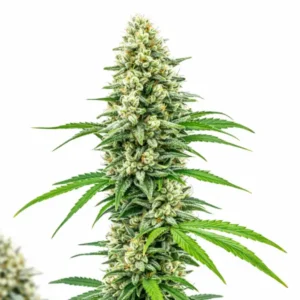
Cookies & Cream

|
THC | 17% - 22% (Medium) |

|
Lineage | Girl Scout Cookies x Starfighter |

|
Type | Feminized |

|
Height | 4.92 ft | 1.5 m |

|
Yield | High |

|
Yield Indoor | 1.31 - 1.64 oz/ft² | 400 - 500 g/m² |

|
Flowering Time | 8 - 10 weeks |

|
Phenotype | 50% Indica / 50% Sativa |

|
Effects | Creative, Energetic, Uplifted |

|
Flavors | Fruity, Sweet, Woody |
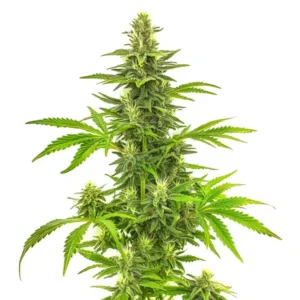
Bruce Banner Fast Blooming
|
|
THC | 19% - 23% (Medium) |
|
|
Lineage | Bruce Banner #3 x Secret Hybrid |
|
|
Type | Fast Flowering |
|
|
Height | 4.92 ft | 1.5 m |
|
|
Yield | High |
|
|
Yield Indoor | 1.31 - 1.64 oz/ft² | 400 - 500 g/m² |

|
Yield Outdoor | 21.16 - 24.69 oz/plant | 600 - 700 g/plant |
|
|
Flowering Time | 8 - 10 weeks |
|
|
Phenotype | 50% Indica / 50% Sativa |

|
Medical | Depression, Insomnia, Muscle Spasms |
|
|
Effects | Happy, Relaxed, Talkative |
|
|
Flavors | Diesel, Earthy, Sweet |
What Is Foliar Spray for Cannabis?
Foliar spraying means applying a liquid directly to the above-ground surfaces of a cannabis plant rather than delivering it through the root zone.
When the liquid contains mineral nutrients, the practice is called foliar feeding or foliar fertilization.
Plant leaves really can absorb dissolved substances. Research across many crop species shows that water and mineral solutes can cross leaf surfaces through several potential pathways, including the cuticle, stomata and other epidermal structures. However, the process is complex and varies with the compound, leaf surface, formulation and environment.
That makes foliar feeding a legitimate plant-nutrition technique, but not the simple “spray nutrients on leaves and they absorb everything immediately” mechanism described in many grow guides.
Does Foliar Feeding Work on Cannabis?
The underlying physiology is well established in plants, but cannabis-specific evidence for most popular foliar recipes is limited.
Cannabis research clearly demonstrates that deficiencies in nitrogen, phosphorus, potassium, calcium, magnesium, sulfur and other essential elements can alter plant growth and substantially reduce floral yield. Researchers also emphasize that visual symptoms alone do not always correspond neatly with tissue nutrient concentrations and recommend an integrated approach to diagnosis.
Those studies do not prove that spraying a generic nutrient mixture on cannabis leaves every week will improve healthy plants.
Foliar feeding makes the most sense as a targeted supplement when there is a plausible nutritional reason for using it, rather than as a mandatory component of every cannabis feeding program.
When Should You Use a Foliar Spray?
A nutrient foliar spray is most defensible when you have identified a specific nutritional problem and want to supplement the plant while also correcting the underlying root-zone issue.
It can also be useful when root uptake is temporarily limited by conditions such as an unsuitable root-zone environment. Foliar nutrient responses can occur relatively rapidly because the applied material bypasses initial uptake from the substrate, although actual absorption and subsequent movement within the plant vary considerably among nutrients and conditions.
What it should not become is preventive weekly spraying of healthy cannabis just because foliar feeding is assumed to increase yield.
If the plant is healthy and its root nutrition is already balanced, adding more nutrients to the leaves may provide little benefit while increasing the possibility of residue or phytotoxicity.
Foliar Spray vs Root Feeding
Foliar feeding should generally be viewed as a supplement to root nutrition, not its replacement.
Roots are the plant’s primary long-term pathway for acquiring mineral nutrients. A well-managed substrate or hydroponic solution provides continuous access to the elements needed for growth.
Foliar applications involve comparatively small quantities and their effectiveness depends on whether droplets remain on the leaf, whether the dissolved compound penetrates the surface and whether it can subsequently move to the tissue where it is required. Reviews of foliar nutrition emphasize that all of these stages can vary substantially.
So if cannabis is showing a deficiency, do not merely spray the leaves and ignore the root cause.
Check irrigation, root health, nutrient supply and growing-medium conditions as well.
What Is the Best Foliar Spray for Cannabis?
There is no universal best formulation.
The appropriate spray depends on why you are spraying.
| Situation | Better approach |
|---|---|
| Confirmed or strongly suspected nutrient deficiency | Use a foliar fertilizer containing the relevant nutrient and designed for foliar application |
| Healthy plant with no deficiency | Routine foliar nutrients usually unnecessary |
| Pest problem | Identify the pest first and use only an appropriate, legally permitted treatment |
| Disease symptoms | Diagnose the problem before spraying |
| Unknown leaf discoloration | Diagnose root zone, nutrition and environment before adding products |
This distinction is important because yellow leaves do not automatically mean the plant needs a foliar fertilizer.
Cannabis nutrient research has shown that deficiency symptomology can be complicated and that visual observations should ideally be interpreted alongside growing conditions and, where practical, tissue or solution analysis.
Should You Make Homemade Foliar Spray?
I would not give readers one generic recipe such as water + organic fertilizer + seaweed extract.
That is essentially what the existing article recommends. But the fact that ingredients sound natural does not establish an appropriate foliar concentration.
Leaf uptake depends strongly on the chemistry and concentration of the solution. Surfactants and other additives can substantially change droplet spreading and penetration as well.
Too concentrated a solution can injure foliage.
For that reason, a product specifically formulated for foliar use, applied according to its crop-appropriate directions, is a better default than improvising concentrations from ingredients designed primarily for root feeding.

Do You Need a Surfactant?
Not always.
Surfactants reduce surface tension and can change how a spray wets and spreads across a leaf. That can influence foliar uptake because droplet contact with the leaf surface is one of the factors governing penetration.
But “better wetting” does not mean “always add more surfactant.”
Plant surfaces differ in wax composition, roughness and wettability, while different chemicals behave differently once deposited. Scientific reviews specifically caution that foliar penetration is influenced by interacting properties of the formulation, leaf and environment.
Use an adjuvant only when the foliar product calls for one and follow the appropriate concentration.
How to Apply Foliar Spray to Cannabis
Start with a clean sprayer that has not contained incompatible chemicals.
Prepare only the concentration appropriate for the product and purpose. If you are using a commercial foliar fertilizer, follow its dilution instructions rather than assuming that the same nutrient concentration used in the root zone belongs on leaves.
Apply enough fine spray to wet the target leaf surfaces evenly without creating excessive runoff.
There is little benefit in soaking the entire plant until liquid pours off the foliage. Foliar effectiveness depends on contact and penetration rather than the sheer volume of solution applied.
If using a new product or concentration, testing it on a limited portion of the crop before treating everything can also reveal obvious phytotoxicity before a full application.
Should You Spray the Tops or Bottoms of Cannabis Leaves?
Coverage can matter, but I would not claim that cannabis nutrients must always be sprayed specifically onto the leaf underside because “that is where absorption occurs.”
Foliar solutes can potentially enter through several leaf structures, including cuticular and stomatal pathways, and the relative contribution of those routes depends on the plant and substance. Even after decades of research, the mechanisms are not simple enough to support one universal underside-only rule.
Aim for reasonable coverage of the target foliage rather than flooding one particular surface.
Pest-control sprays are different because coverage requirements depend on where the specific pest lives and what the product label requires.
What Is the Best Time to Foliar Spray Cannabis?
Choose conditions that give the spray time to remain on the leaf without combining the application with severe heat or rapid drying.
Foliar absorption is affected by temperature, relative humidity, solution chemistry, leaf characteristics and the length of time droplets remain in contact with the surface.
That is why cooler, less stressful periods are commonly preferred to the hottest, brightest part of the day.
For indoor plants, avoid spraying immediately before intense lighting if the chosen product warns against it. Outdoors, avoid strong wind or imminent rain that will remove the application.
I would not make “early morning or late afternoon” an absolute rule, as the existing page does. The appropriate timing depends on the formulation and environment.
How Often Should You Foliar Feed Cannabis?
There is no universal schedule.
The current page recommends spraying every 7–10 days for most plants. I would remove that completely.
Frequency should come from the reason for treatment and the instructions for the product being used.
If you are correcting a nutrient issue, reassess the plant and root-zone conditions rather than automatically spraying again because seven days have passed.
Repeated foliar application can increase salts or other residues on leaf surfaces and increases the opportunities for an overly concentrated formulation to cause leaf injury.
Foliar feeding works best as a deliberate intervention, not a calendar ritual.
Can Foliar Spray Burn Cannabis Leaves?
Yes, foliar treatments can cause phytotoxicity when the formulation, concentration or environmental conditions are unsuitable.
Leaf surfaces are protective barriers, and the chemistry of a deposited spray can affect both penetration and plant response. Foliar-fertilization research consistently identifies solution concentration, pH, adjuvants, leaf properties and environmental conditions among the variables influencing effectiveness and injury risk.
If leaves develop spotting, necrotic patches or unusual damage after an application, stop assuming that more spray will solve the problem.
Review what was applied and at what concentration.
Should You Foliar Spray Cannabis During Flowering?
For cannabis grown for consumable flowers, I would become much more conservative once inflorescences are developing.
Avoid routinely coating flowers with nutrient solutions or other products unless there is a clear reason and the treatment is specifically appropriate for that crop and growth stage.
Residues matter particularly for inhalable cannabis. Regulated cannabis markets may test harvested products for pesticide residues; California, for example, maintains specific residual-pesticide action levels for inhalable cannabis and requires batches exceeding those limits to fail testing.
That does not mean every foliar nutrient is a pesticide. It illustrates why spraying harvestable cannabis flowers with arbitrary products is not something to treat casually.
Where pesticides are involved, always follow local law and the product label rather than a cannabis-blog recipe. California cultivation rules, for example, explicitly require licensed growers to comply with applicable pesticide regulations.
Does Foliar Spray Increase Cannabis Yield?
Do not promise that it does.
Cannabis research clearly shows that serious nutrient deficiencies can reduce plant biomass and floral yield. In one controlled study, individual deficiencies reduced floral yield substantially for several nutrients.
Correcting genuine nutritional stress can therefore protect production.
That is not the same as proving that foliar spraying an already well-fed cannabis crop creates additional yield.
The current article repeatedly implies that regular leaf feeding leads to stronger plants and higher production. There is not enough cannabis-specific evidence to make that universal claim.
The objective should be adequate nutrition, not maximum number of sprays.
Does Foliar Spray Prevent Pests and Disease?
Nutrient foliar spray should not be presented as a general pesticide or disease-prevention system.
The current article says nutrient sprays strengthen cannabis defenses and can prevent pests and diseases. That is far too broad.
Healthy plant nutrition is important to normal plant function, but spraying fertilizer does not replace pest identification, sanitation, environmental management or an appropriate integrated pest-management program.
If insects, mites or disease are present, first identify the actual organism or disorder.
A nutrient deficiency and a pest problem may produce superficially similar leaf symptoms but require completely different responses.
Common Foliar Spray Mistakes
One of the biggest mistakes is spraying without diagnosing the problem first. Yellowing, necrosis or leaf distortion can result from nutrition, root stress, environment, disease or pests.
Another is making the solution stronger because the plant looks deficient. Foliar concentrations should not be increased casually.
Routine spraying during flowering is another poor default, particularly when the liquid reaches harvestable flowers.
Finally, do not assume that “organic,” “natural” or homemade ingredients cannot damage foliage. Leaf response is governed by concentration and chemistry, not by marketing terminology.
Foliar Spray for Cannabis: Bottom Line
Foliar feeding is a real plant-nutrition technique: cannabis leaves can potentially absorb dissolved compounds applied to their surfaces because plant leaves permit some transport through the cuticle, stomata and other structures.
But that does not make foliar spray a required part of cannabis cultivation.
Use it when there is a specific, defensible reason, particularly as a temporary supplement to correcting a diagnosed nutritional problem. Keep root-zone nutrition as the foundation, follow formulation-specific directions and become especially cautious about spraying developing flowers.
There is no universal homemade formula, application interval, concentration or yield increase that applies to every cannabis plant.

FAQs About Foliar Spray for Cannabis
What is the best foliar spray for cannabis?
There is no universal best foliar spray. For a diagnosed deficiency, choose a product formulated to deliver the relevant nutrient through foliage and follow its application directions. A healthy plant with balanced root nutrition may not need a nutrient foliar spray at all. Pest or disease problems require separate diagnosis and treatment.
Does foliar feeding work on cannabis?
Cannabis leaves have the same basic leaf-surface barriers and uptake pathways found in other higher plants, so foliar absorption is biologically plausible. However, cannabis-specific evidence validating common homemade recipes and routine spraying schedules remains limited. Foliar feeding is best treated as supplemental rather than a replacement for root nutrition.
When should I foliar spray cannabis?
Apply foliar treatments under conditions compatible with the specific formulation, avoiding severe heat, rapid drying, wind or rain that removes the spray. Temperature, humidity, leaf characteristics and solution chemistry all affect foliar absorption, so there is no single clock time that is best for every product and growing environment.
How often should I foliar spray cannabis?
There is no standard weekly interval. Follow the product’s directions and the reason for treatment. If a spray was applied to correct a suspected deficiency, reassess plant health and the root-zone problem before repeating it rather than automatically spraying every 7–10 days.
Can I foliar spray cannabis during flowering?
Routine spraying of developing cannabis flowers is best avoided unless there is a clear need and the product is appropriate for that crop and stage. Residue considerations become particularly important for consumable flowers, and regulated cannabis markets can impose strict limits on pesticide residues in harvested material.
Can foliar spray fix a nutrient deficiency?
It may help supplement certain nutrients, but the underlying cause still needs to be corrected. Cannabis nutrient deficiencies can substantially reduce growth and yield, yet visual symptoms do not always correspond perfectly with tissue nutrient status. Check root health, nutrient supply and growing conditions instead of relying on foliar spraying alone.