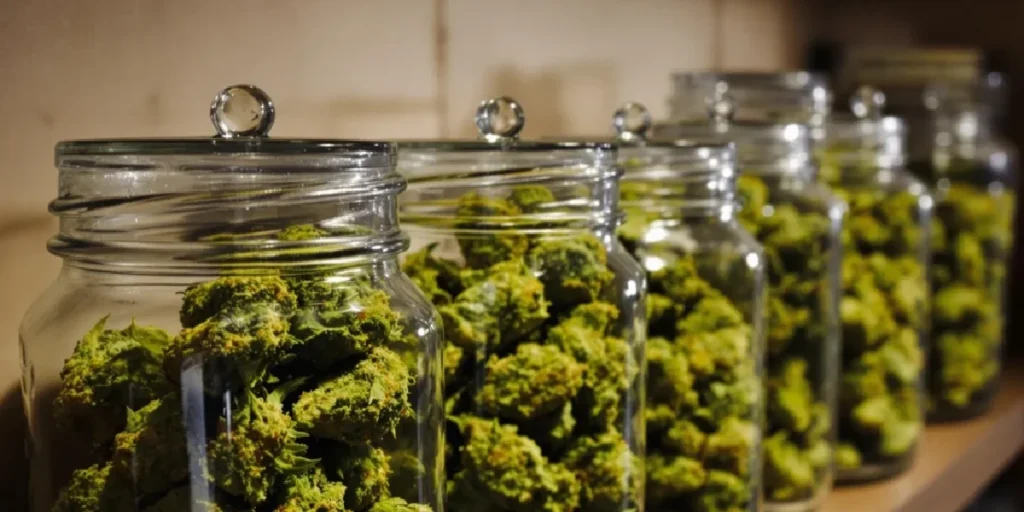

Proper weed storage means keeping dried cannabis in a well-sealed container, protected from light, excessive heat and large moisture changes. An airtight glass jar stored in a cool, dark place is a practical choice for most flower. Moisture also matters: ASTM recommends a water activity of 0.55–0.65 for dried cannabis flower to limit mold risk and excessive dryness.
What Is the Best Way to Store Weed?
For most people storing dried cannabis flower at home, the simplest setup is also one of the most effective: place the flower in a clean, appropriately sized airtight glass container and keep that container somewhere cool and dark.
Recommended Strains
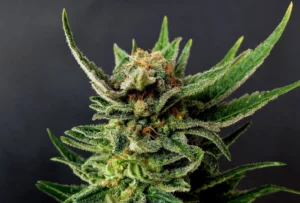
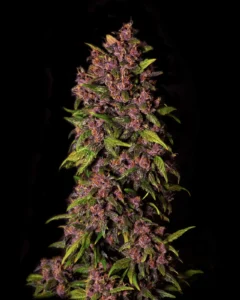
Gypsy Kush

|
THC | 16% - 18% (Medium) |

|
Lineage | Afghan x Ginger Ale x Black Domina |

|
Type | Feminized |

|
Height | 4.43 ft | 1.35 m |

|
Yield | High |

|
Yield Indoor | 1.64 oz/ft² | 500 g/m² |

|
Yield Outdoor | 22.93 oz/plant | 650 g/plant |

|
Flowering Time | 9 - 10 weeks |

|
Phenotype | 50% Indica / 50% Sativa |

|
Effects | Balanced |

|
Flavors | Sweet, Spicy, Floral |
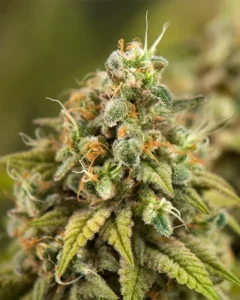
Jamaican Dream Autoflower
|
|
THC | 20% - 21% (Medium) |
|
|
Lineage | Jamaican x Ruderalis |
|
|
Type | Autoflowering |
|
|
Height | 3.94 ft | 1.2 m |
|
|
Yield | Medium |
|
|
Yield Indoor | 1.31 oz/ft² | 400 g/m² |
|
|
Yield Outdoor | 15.87 oz/plant | 450 g/plant |
|
|
Life Cycle | 9 - 11 weeks |
|
|
Phenotype | 20% Indica / 80% Sativa |
|
|
Effects | Creative, Focused, Happy, Relaxed |
|
|
Flavors | Citrus, Floral, Sour, Spicy, Sweet |
This approach helps reduce exposure to several factors that can change cannabis during storage. Light accelerates cannabinoid degradation, warmer temperatures increase the rate of chemical changes, and repeated exposure to outside air can contribute to oxidation and moisture fluctuations. A four-year study comparing cannabis stored under different conditions found substantially greater cannabinoid degradation at room temperature than under refrigerated or frozen conditions, with light adding another unfavorable factor.
For ordinary consumer storage, however, you do not need to turn your refrigerator into a cannabis vault. Stable conditions, limited light exposure and a properly sealed container are usually more practical than repeatedly moving flower between cold storage and room temperature.
Weed Storage at a Glance
| Storage Factor | Better Choice | Avoid |
|---|---|---|
| Container | Airtight glass jar | Open or poorly sealed packaging |
| Light | Dark cupboard or opaque container | Direct sunlight |
| Temperature | Cool and stable | Heat and repeated temperature swings |
| Moisture | Stable, appropriate water activity | Damp or extremely dry conditions |
| Container size | Close to the amount stored | Large jar mostly filled with air |
| Safety | Locked and inaccessible | Within reach of children or pets |
| Long-term handling | Minimal opening | Frequent unnecessary exposure |
The objective is not to create one “perfect” number for every variable. It is to keep the flower’s environment as stable as reasonably possible.
Why Weed Storage Matters
Cannabis continues to change after drying and curing. Cannabinoids, terpenes and other compounds are not indefinitely stable, and the rate at which they change depends partly on the storage environment.
One long-term study followed marijuana and hashish samples for four years under light, darkness, refrigeration and freezing. THC degradation was much more substantial at room temperature, while colder storage slowed the changes. Light also affected the degradation pathway.
This does not mean cannabis suddenly becomes unusable after a few months. It means storage conditions influence how quickly chemical composition changes over longer periods.
Good weed storage is therefore mainly about slowing unnecessary degradation while also preventing the opposite problem: trapping enough moisture to encourage microbial growth.
What Is the Best Container for Weed?
For dried flower, a glass jar with a reliable airtight seal is a strong general-purpose choice.
Glass is non-porous, does not readily absorb cannabis aromas and can be reused repeatedly. A properly sized jar also makes it easier to reduce unnecessary headspace compared with storing a small quantity of flower in a very large container.
Clear glass itself does not protect cannabis from light, so the jar should still be kept in a cupboard, drawer or other dark location. Amber or opaque glass can provide additional light protection, but simply placing clear glass in darkness accomplishes the same basic objective.
The quality of the seal matters more than whether the jar looks like a specialized cannabis product.
Are Mason Jars Good for Weed Storage?
Yes, provided the jar closes properly and is kept away from light.
A clean Mason-style glass jar is inexpensive, widely available and suitable for home storage because it provides a relatively inert surface and can form a good seal.
Try to use a jar that reasonably matches the amount of flower being stored. A tiny quantity of cannabis in an enormous container creates unnecessary headspace, while packing flower so tightly that buds are crushed is also undesirable.
There is usually no need to buy an expensive “cannabis storage system” if a simple sealed glass container already does the job.
Is Plastic Bad for Storing Weed?
Plastic is better treated as a less desirable long-term option, rather than something that instantly ruins cannabis.
Thin plastic bags are particularly poor for extended storage because they provide little physical protection, are easily opened and may not maintain a stable internal environment as well as a rigid sealed container.
A high-quality food-grade plastic container with a good seal can obviously protect cannabis better than leaving it exposed on a table. However, for longer home storage of flower, glass is generally the more straightforward choice because it is non-porous and does not retain odors as easily.
The current article goes too far by treating all plastic as uniformly unsuitable regardless of container quality or storage duration.
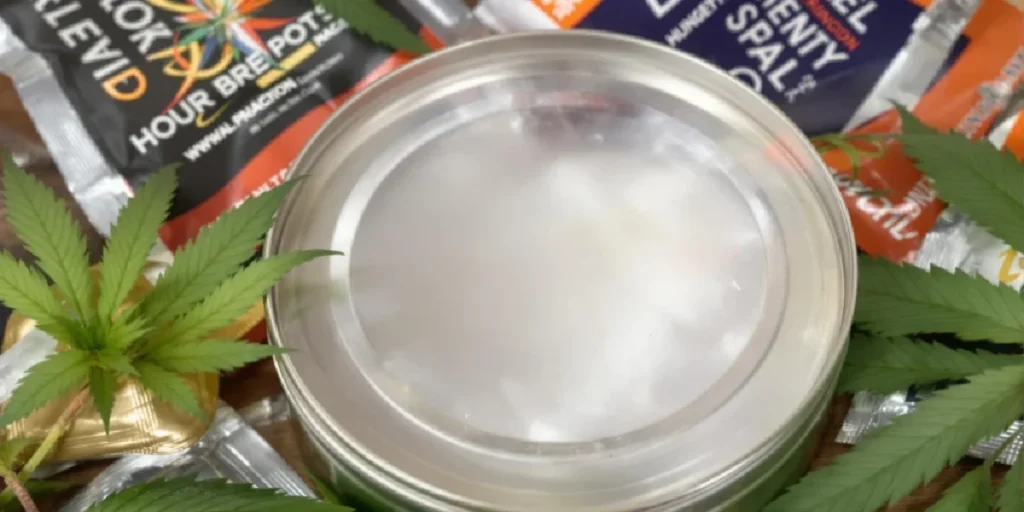
Should Weed Be Stored in the Dark?
Yes. Limiting light exposure is one of the best-supported cannabis storage practices.
Research examining cannabis stability has repeatedly found that light accelerates chemical changes in cannabinoids. An early stability study identified light as an important factor in cannabinoid loss, while later long-term research also found greater degradation under light and room-temperature conditions than in colder, darker storage.
You do not need a special ultraviolet-proof container if the container itself is stored somewhere consistently dark.
A kitchen cupboard, drawer or closed cabinet can work well provided it is not located beside a stove, radiator or another strong heat source.
What Temperature Is Best for Weed Storage?
There is no single consumer storage temperature that must be maintained to the exact degree.
The main practical goal is to avoid excessive heat and large temperature fluctuations.
Scientific studies show that lower storage temperatures can slow changes in cannabinoid composition over long periods. In one four-year experiment, samples kept cold were substantially more stable than samples stored at approximately 22°C. Another postharvest study also found greater phytocannabinoid changes at 25°C than under cooler conditions.
For everyday flower that will be consumed within a reasonable period, a cool, stable and dark indoor location is generally more convenient than refrigeration.
Avoid places such as a hot car, sunny windowsill or cabinet directly above an oven.
What Humidity Should Weed Be Stored At?
This is where cannabis storage advice is often oversimplified.
For dried cannabis flower, water activity is the more meaningful technical measurement. ASTM D8197 specifies an acceptable water-activity range of 0.55 to 0.65 aw for dried cannabis flower intended for human or animal use. The lower boundary helps reduce excessive brittleness, while keeping aw below 0.65 helps control undesirable microbial growth.
Water activity is related to the equilibrium humidity inside a sealed container, which is why humidity-control packs are commonly marketed around similar percentages. But water activity and the ambient relative humidity of your room are not interchangeable measurements.
So rather than saying “your house must always be at 55–62% RH,” the more accurate advice is to keep properly dried cannabis in a sealed container with a stable moisture environment.
Do Humidity Packs Help Store Weed?
They can be useful, particularly when the flower and container are compatible with them.
ASTM D8197 specifically notes that appropriately designed salt-based humidity-control sachets can help bring and maintain dried flower within the recommended 0.55–0.65 aw range inside sealed storage.
That does not mean every jar automatically needs a humidity pack. Properly dried flower stored for a relatively short period in an airtight container may already remain stable.
Humidity packs are best viewed as a tool for moderating moisture changes, not as something that can rescue flower that is wet, moldy or badly processed.
Can Weed Get Moldy in Storage?
Yes. Cannabis stored with excessive available moisture can support microbial growth.
This is one reason the ASTM specification sets the upper end of its recommended water-activity range at 0.65.
If flower develops visible fuzzy growth, unusual patches consistent with mold or a clearly musty odor, do not try to “dry it out and smoke it anyway.” Mold contamination is not simply a freshness problem.
Storage should preserve already properly dried cannabis. It should not be used as a substitute for adequate drying and curing before the flower enters long-term storage.
Can Weed Become Too Dry?
Yes. Very dry cannabis can become brittle, lose desirable aromatic qualities and break apart easily during handling.
ASTM’s 0.55 lower water-activity boundary is intended in part to reduce physical damage associated with excessively dry flower.
That does not mean slightly brittle flower has necessarily spoiled or become unsafe. Dryness is primarily a quality issue unless another problem is present.
Trying to rehydrate cannabis with improvised materials such as fruit peel can introduce uncontrolled moisture and potential contamination. If moisture control is needed, a purpose-designed storage product is more predictable than adding wet food to a cannabis jar.
How Much Air Should Be in a Weed Jar?
Some headspace is inevitable and not inherently problematic, but an oversized container creates more unnecessary air volume around the flower.
For that reason, choose a container that comfortably fits the amount you are storing without crushing the buds.
There is also no benefit to repeatedly opening the jar simply to “let it breathe” once cannabis has already completed drying and curing. Each opening exchanges the internal air with the outside environment and can change temperature and humidity.
Long-term storage and active curing are different stages and should not be confused.
Should You Keep Weed in the Fridge?
Refrigeration can slow chemical degradation under controlled conditions, but it is not automatically the best everyday storage method.
Scientific research has shown improved cannabinoid stability at lower temperatures, including refrigerated conditions. However, consumer refrigerators are opened frequently and can expose containers to temperature changes and potential condensation if cold flower is repeatedly opened before it returns to room temperature.
For cannabis you expect to use normally, a sealed container in a cool, dark cupboard is simpler.
Refrigeration becomes more relevant when preservation over unusually long periods is more important than frequent access.
Can You Freeze Weed?
Freezing can slow cannabinoid changes during long-term controlled storage, but it comes with practical tradeoffs.
A four-year stability study found that freezing at −20°C provided strong cannabinoid preservation compared with room-temperature storage. Yet frozen plant material is less convenient to handle, and repeated removal and opening can create moisture and temperature problems.
Very cold trichomes can also be physically brittle, so unnecessary handling should be minimized.
For ordinary household storage, freezing is generally unnecessary. It is better reserved for situations where very long-term preservation is the actual priority and the material can remain sealed and undisturbed.
How Long Does Weed Stay Fresh?
There is no universal expiration date for cannabis flower.
Quality changes gradually, and the rate depends heavily on storage conditions. Older research concluded that carefully prepared herbal cannabis could remain reasonably stable for roughly one to two years when protected from light at room temperature, while newer multi-year experiments demonstrate that significant cannabinoid degradation still accumulates over longer periods.
For SEO purposes, I would avoid promising that cannabis “stays fresh for exactly one year.”
A better rule is that properly stored cannabis deteriorates more slowly, but no household storage method permanently freezes potency, aroma or texture.
How Can You Tell if Stored Weed Has Gone Bad?
Age alone does not necessarily make flower unusable, so look at its physical condition.
Cannabis that has simply become old may smell weaker, feel drier and contain a different cannabinoid profile than when it was fresh. Those are signs of degradation rather than automatically signs of dangerous spoilage.
Visible mold, obvious moisture problems or a strong musty smell are more concerning. If you suspect microbial contamination, discarding the flower is safer than trying to salvage it.
Loss of aroma or increased brittleness, on the other hand, usually indicates declining quality.
Should Weed Stay in Its Original Packaging?
There are two different considerations here: quality preservation and safe storage.
From a quality perspective, some retail packages have substantial unused headspace or may not be ideal for long-term household storage after opening. A well-sealed glass jar can provide a practical environment for flower.
From a safety perspective, Health Canada recommends keeping cannabis securely stored in its original child-resistant packaging and locked away from children and pets.
If cannabis is moved to another storage container, retain all legally important labeling and ensure the replacement is clearly identified and securely inaccessible to anyone who should not have access.
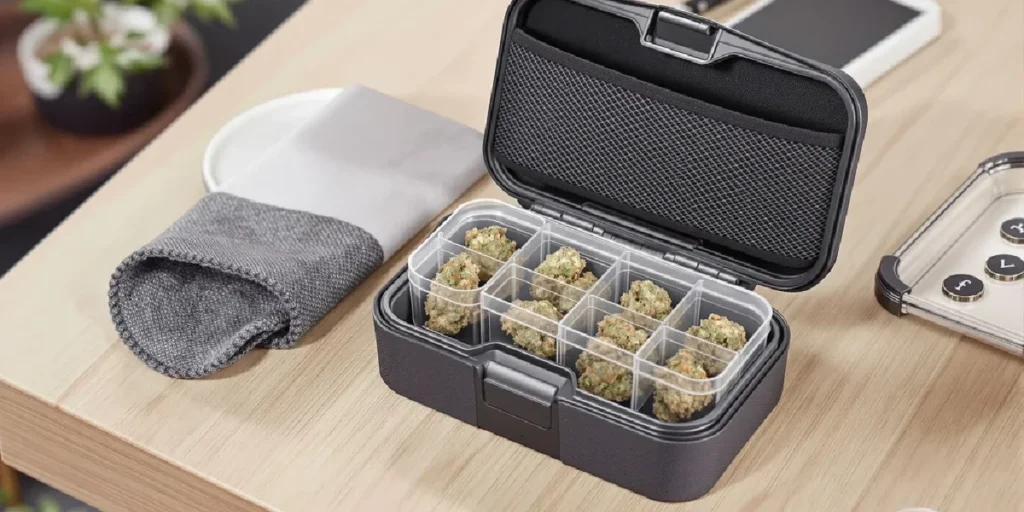
Keep Weed Away From Children and Pets
Storage quality is secondary to storage safety.
Cannabis should be kept locked, out of sight and out of reach of children and pets. Health Canada particularly warns that edible cannabis can be mistaken for ordinary food and recommends storing it separately from normal snacks and drinks.
The same principle applies to flower, concentrates and other cannabis products: a sophisticated humidity-controlled jar is not good storage if a child can easily open it.
Where children are present, a locked cabinet or lockbox should be part of the storage setup.
Common Weed Storage Mistakes
One of the most common mistakes is leaving cannabis somewhere warm and bright, such as beside a window. Another is using a poorly sealed bag for months while expecting it to maintain the same moisture environment as a rigid airtight container.
Repeatedly opening a storage jar, storing damp flower before it is properly dried and using improvised rehydration methods can also create unnecessary problems.
The most reliable system is considerably less complicated: properly dried flower, a clean sealed container, darkness, moderate temperature and stable moisture conditions.
Weed Storage: Key Takeaway
Good weed storage does not require an expensive specialty container. For most dried cannabis flower, an airtight glass jar kept in a cool, dark location provides a simple and effective starting point.
Protect cannabis from unnecessary light, heat, air exchange and moisture swings. For dried flower, ASTM recommends a water activity of 0.55–0.65, rather than a universal household humidity number.
Refrigeration and freezing can slow chemical degradation over very long periods, but they are usually unnecessary for everyday storage and introduce additional handling considerations. Whatever container you use, cannabis should also be clearly identified, securely stored and inaccessible to children and pets.
FAQs About Weed Storage
What is the best way to store weed?
The best general approach is to keep properly dried cannabis in a clean, airtight container in a cool and dark location. Glass jars are a practical option because they seal well and are non-porous. Avoid prolonged light, excessive heat and large moisture fluctuations, and choose a container that reasonably matches the quantity of flower being stored.
What is the best container for weed storage?
An airtight glass jar is one of the simplest choices for dried cannabis flower. Clear glass works when stored in darkness, while amber or opaque containers provide additional light protection. The seal and storage environment matter more than expensive cannabis-specific features, so a basic quality jar can perform well for normal home storage.
What humidity should weed be stored at?
For dried cannabis flower, ASTM specifies a water activity of 0.55–0.65 aw as an acceptable storage range. This corresponds conceptually with the humidity equilibrium inside a sealed container, but water activity should not be confused with the ambient relative humidity of the room. Stable moisture conditions matter more than chasing one household RH number.
How long does weed stay fresh?
There is no exact universal shelf life because cannabis changes gradually and storage conditions strongly affect the rate of degradation. Well-protected flower can remain reasonably stable for extended periods, but cannabinoids and aromatic compounds still change over time. Light and warmer storage accelerate some of these changes, so proper storage slows deterioration rather than stopping it completely.
Should you refrigerate weed?
Refrigeration can slow cannabinoid degradation during long-term controlled storage, but it is usually unnecessary for everyday cannabis. Frequently removing cold containers can cause temperature swings and potentially condensation if opened too soon. For flower used regularly, an airtight container kept in a cool, dark and stable indoor location is generally simpler.
Can you freeze weed for long-term storage?
Yes, controlled freezing can preserve cannabinoids more effectively than room-temperature storage over long periods, according to stability research. However, freezing creates practical issues involving handling, temperature changes and condensation. It is best reserved for genuinely long-term preservation rather than cannabis that will be accessed frequently during normal household use.