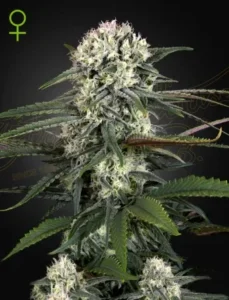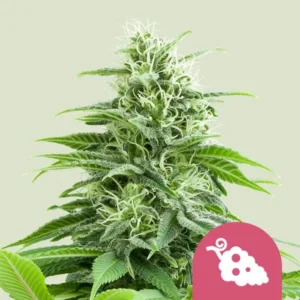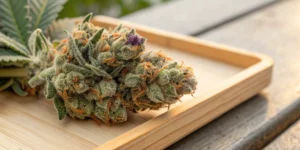


LSD-25 Auto is an indica-dominant autoflower from Fast Buds bred from Original Skunk × Auto Purple Kush from Buddha Seeds. This F5 feminized autoflower is known for its naturally purple flowers, heavy resin production, diesel-driven aroma, and fast lifecycle of approximately 9–10 weeks from seed to harvest.
Fast Buds classifies LSD-25 Auto as 65% Indica and 35% Sativa, with THC levels reaching up to 21%. Plants typically reach 70–120 cm and can produce approximately 400–500 g/m² indoors or 50–250 g per plant outdoors under favorable conditions.
Recommended Strains

LSD 25 Auto

|
THC | 20% - 21% (Medium) |

|
Lineage | LSD x Ruderalis |

|
Type | Autoflowering |

|
Height | 3.28 ft | 1 m |

|
Yield | High |

|
Yield Indoor | 1.31 - 1.64 oz/ft² | 400 - 500 g/m² |

|
Life Cycle | 9 - 10 weeks |

|
Phenotype | 70% Indica / 30% Sativa |

|
Effects | Creative, Powerful |

|
Flavors | Berry, Diesel, Woody, Earthy |
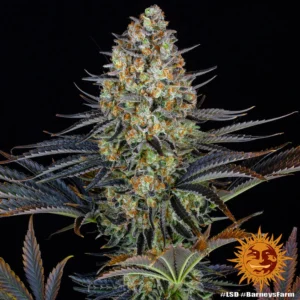
Lsd
|
|
THC | 26% - 27% (High) |
|
|
Lineage | Original Skunk #1 x Afghan Indica |
|
|
Type | Feminized |
|
|
Height | 4.43 ft | 1.35 m |

|
Yield Outdoor | 28.22 oz/plant | 800 g/plant |
|
|
Flowering Time | 8 - 9 weeks |
|
|
Phenotype | 70% Indica / 30% Sativa |
|
|
Effects | Talkative, Euphoric, Uplifted |
|
|
Flavors | Musk, Earthy, Floral, Herbal, Skunk, Pungent |
You can find LSD-25 Auto seeds from Fast Buds at Growlantis.
LSD-25 Auto Quick Grow Profile
| Trait | LSD-25 Auto |
|---|---|
| Breeder | Fast Buds |
| Genetics | Original Skunk × Auto Purple Kush from Buddha Seeds |
| Seed type | F5 feminized autoflower |
| Indica / Sativa | 65% Indica / 35% Sativa |
| THC | Up to 21% |
| CBD | Below 1% |
| Total cycle | Approximately 9–10 weeks |
| Height | 70–120 cm |
| Indoor yield | 400–500 g/m² |
| Outdoor yield | 50–250 g/plant |
| Size | XL |
| Environment | Indoor, outdoor, greenhouse, mixed light |
| Flavors | Berry, diesel, earthy, woody |
| Structure | Compact early growth with strong branching |
These specifications refer specifically to the LSD-25 Auto currently bred by Fast Buds.
LSD-25 Auto Genetics and Origin
LSD-25 Auto combines Original Skunk with Auto Purple Kush genetics from Buddha Seeds. Fast Buds has refined the cultivar into an F5 autoflowering line, giving growers an automatic plant that does not require a change in photoperiod to begin producing flowers.
The breeder classifies the strain as 65% Indica and 35% Sativa. Its early structure reflects that indica dominance through broad fan leaves, relatively short internodal spacing, and compact initial development, although the plant can stretch considerably once flowering begins.
This is also why descriptions that reduce LSD-25 Auto simply to “LSD × Ruderalis” are no longer sufficiently precise for the current Fast Buds version. When discussing LSD-25 strain genetics, cultivation characteristics, or breeder specifications, the Original Skunk × Auto Purple Kush lineage is the more accurate reference.
Despite the slight indica dominance, Fast Buds describes its psychoactive character as strongly cerebral. Genetic percentages should therefore be treated primarily as a description of the breeding line rather than a guarantee of one specific type of effect.
What Does LSD-25 Auto Look Like?
One of the defining characteristics of the LSD-25 autoflower is its coloration. Fast Buds reports flowers that can develop shades ranging from purple and magenta to violet and pink as the plant moves through bloom.
These colors are a natural characteristic of the cultivar. Growers do not need to deliberately expose LSD-25 Auto to excessively cold conditions to force purple pigmentation. Creating unnecessary cold stress in an attempt to intensify color can compromise plant performance without being required for the genetics to express themselves.
The mature flowers develop substantial resin coverage, with trichomes forming densely across the colorful buds. Fast Buds also highlights LSD-25 Auto as particularly interesting for growers interested in resin and extraction production because of this combination of coloration and trichome density.
Growing LSD-25 Auto Indoors
LSD-25 Auto is suitable for indoor cultivation because it combines a short total cycle with a relatively manageable final height. Fast Buds lists plants at approximately 70–120 cm, although individual size depends on root space, lighting, environment, training, and phenotype.
The plant remains relatively compact during its earliest growth before increasing its vertical development as flowering approaches. Indoor growers should therefore leave enough headroom rather than assuming the plant will remain at its early seedling height.
Because LSD-25 Auto flowers according to age, there is no reason to change the lighting schedule to 12/12 to initiate bloom. A longer daily light schedule can be maintained throughout the full lifecycle, with 18/6 being a practical option for growers who want to give the plants a regular dark period.
The previous version of this guide incorrectly instructed growers to switch LSD-25 Auto to 12/12 during week seven. That method applies to photoperiod cultivars, not to an autoflower such as LSD-25 Auto.
LSD-25 Auto Light Schedule
Autoflowering genetics do not depend on seasonal changes in day length to flower. LSD-25 Auto will move from vegetative growth into reproductive development according to age, so the indoor light schedule can remain consistent from seedling establishment through harvest.
An 18/6 schedule is a practical choice and is also consistent with guidance Fast Buds has provided for its autoflowering genetics. Other growers use longer light periods, but additional hours do not automatically improve results if the overall light intensity is already sufficient.
Fixture type also matters. There is no universal distance that every LED, HPS, or other grow light should maintain above LSD-25 Auto. Follow the manufacturer’s recommendations and adjust according to the response of the canopy rather than applying one fixed distance to every lighting system.
As the plant stretches, continue checking the distance between the tallest branches and the fixture. Maintaining suitable exposure across the whole canopy is more useful than concentrating excessive intensity on one central cola.

Training LSD-25 Auto
Fast Buds specifically states that LSD-25 Auto responds well to basic plant training and recommends tying branches down during the early weeks to increase the number of exposed flowering sites.
Low-stress training is particularly appropriate because branches can be repositioned without requiring the extended recovery period associated with more aggressive techniques. Starting while stems are young and flexible allows the canopy to be opened gradually as the plant develops.
This matters more with autoflowers than photoperiod plants because the grower cannot simply extend vegetative growth for several additional weeks after heavy stress. LSD-25 Auto continues progressing toward flowering regardless of whether a training technique has slowed its development.
The purpose of training should therefore be to improve light distribution and plant structure without interrupting rapid growth. Once flowering becomes established and branches begin supporting developed flowers, avoid unnecessary heavy manipulation.
Growing LSD-25 Auto Outdoors
LSD-25 Auto can be grown outdoors without waiting for autumn day length to trigger flowering. Its roughly 9–10 week lifecycle allows growers to schedule plants around the most favorable part of the local growing season.
Fast Buds lists outdoor production at approximately 50–250 g per plant under favorable conditions. This wide range reflects the importance of sunlight, temperature, root volume, irrigation, plant health, and phenotype.
Choose a position that receives strong direct sunlight and has good drainage. Although LSD-25 Auto is relatively fast, poor weather can still affect development, particularly during late flowering when dense flowers are more vulnerable to prolonged moisture.
The short lifecycle can also make more than one outdoor cycle possible in suitable climates, but each crop should still be timed around local temperature and sunlight rather than assuming an autoflower can perform equally well at any point in the year.
For more detailed outdoor planning, see the Growlantis guide to growing autoflowers outdoors.
LSD-25 Auto Grow Time
Fast Buds describes LSD-25 Auto as requiring approximately 9–10 weeks from seed to harvest. This is one of the most important specifications to interpret correctly because it describes the cultivar’s rapid complete lifecycle rather than an additional nine or ten weeks of bloom after a long vegetative phase.
LSD-25 Auto germinates, establishes its early structure, transitions automatically into flowering, develops mature buds, and approaches harvest within this relatively short timeframe. Individual plants can still finish somewhat earlier or later depending on environmental conditions and phenotype.
For this reason, growers should use the breeder’s 9–10 week range for planning but should not harvest automatically because a calendar reaches a particular day. Actual flower maturity remains the final deciding factor.
LSD-25 Auto Week-by-Week Grow Timeline
The existing grow guide included a detailed week-by-week LSD-25 Auto schedule, but the previous version extended the plant to twelve weeks before harvest and then added separate curing weeks. That does not match the current Fast Buds specification.
A more useful LSD-25 Auto grow guide follows the breeder’s approximately 9–10 week seed-to-harvest cycle while recognizing that individual plants can develop at slightly different speeds.
Week 1: Germination and Seedling Establishment
During the first week, the priority is germination and early root establishment. Keep the growing medium consistently moist but well aerated, and avoid repeatedly saturating a large container while the seedling still has a very small root system.
LSD-25 Auto does not require a special strain-specific germination method. Direct sowing or a carefully managed paper-towel method can both work when warmth, moisture, and oxygen remain suitable.
For a complete explanation of the available methods, see how to sprout a cannabis seed.
Week 2: Early Growth
During week two, LSD-25 Auto begins expanding its first sets of true leaves while root development accelerates below the growing medium. The plant remains relatively small, so watering should still reflect its limited root volume.
Stable growth is more important at this point than trying to force rapid development with strong nutrients. If the growing medium already contains fertility, additional feeding may not yet be necessary.
Light intensity can increase as the seedling establishes itself, but changes should be gradual enough to avoid unnecessary stress.
Weeks 3–4: Rapid Vegetative Development
Weeks three and four are an important structural period because LSD-25 Auto begins gaining foliage and branch mass quickly. Fast Buds notes that the cultivar initially develops relatively short internodal spacing and broad fan leaves before stretching more noticeably.
This is the most useful window for gentle low-stress training. Branches can be tied outward to improve canopy exposure while they remain flexible and the plant is still actively developing its framework.
Avoid treating week four as the beginning of a long conventional vegetative stage. An autoflower’s transition is already approaching, so every early setback consumes part of a lifecycle that cannot be extended simply by delaying the flowering light switch.
Weeks 5–6: Transition Into Flowering
Around the middle of the cycle, preflowers and developing bud sites become increasingly apparent as LSD-25 Auto transitions automatically toward bloom. The plant can also begin stretching more strongly during this period.
There is no need to switch the lights to 12/12. Maintain the chosen autoflower schedule while allowing the plant’s age-driven genetics to control the transition.
Training should become progressively gentler once flowers begin developing. Rather than making major structural changes, focus on keeping branches separated enough for light and air to reach the canopy effectively.
Weeks 7–8: Flower Development and Purple Color
During weeks seven and eight, flowers become substantially denser and resin production increases. LSD-25 Auto’s characteristic purple, violet, magenta, or pink pigmentation may become increasingly obvious during this stage.
Fast Buds states that artificial cold treatment is not necessary to produce its purple appearance. Maintain healthy growing conditions rather than deliberately stressing the plant to force coloration.
As flower density increases, airflow becomes more important. Check the interior of the canopy for stagnant areas and persistent moisture, especially after watering or when the lights are off.
Weeks 9–10: Maturity and Harvest Window
Weeks nine and ten represent the main breeder-listed harvest window for LSD-25 Auto. By this stage, mature plants should have developed dense resinous flowers and the strong berry, diesel, earthy, and woody characteristics associated with the strain.
Use the 9–10 week range as a guide rather than an automatic deadline. Inspect the actual flowers and trichome maturity before harvesting because phenotype and environment can slightly alter finishing time.
Some plants may be ready close to the beginning of this period while others benefit from additional time. The plant’s maturity should take priority over an exact calendar date.
LSD-25 Auto Yield
Fast Buds lists indoor LSD-25 Auto yields at approximately 400–500 g/m². Outdoors, individual plants can produce approximately 50–250 g under favorable conditions.
These are breeder potential figures rather than guaranteed results. Indoor production depends on plant number, canopy area, light, root volume, irrigation, nutrition, environment, plant health, and phenotype.
LSD-25 Auto’s combination of a central cola and productive lateral branches helps it use indoor space efficiently. Early low-stress training can expose more of those side branches to direct light, but training itself does not guarantee that a plant will reach the top of the breeder’s yield range.
Outdoor production is especially variable. A plant receiving strong sunlight and sufficient root space can develop very differently from one grown in partial shade or a small container, which explains the broad 50–250 g per plant range.
Watering LSD-25 Auto
Fast Buds describes LSD-25 Auto as a vigorous cultivar capable of using substantial amounts of water once properly established, but that should not be interpreted as a reason to keep the root zone constantly saturated.
Watering demand changes throughout the cycle. A seedling with a small root system requires much less water than a mature plant carrying multiple flowering branches.
Rather than using a rigid schedule, monitor the growing medium, container weight, plant size, temperature, and environmental conditions. Allowing enough air to return to the root zone between irrigations helps support healthy root activity.
As growth accelerates, water use will generally increase. Adjust gradually according to the plant instead of jumping immediately from seedling irrigation to mature-plant volumes.
Feeding LSD-25 Auto
Fast Buds describes LSD-25 Auto as an aggressive, fast-growing cultivar that can feed actively, while also specifically advising growers to moderate nitrogen during flowering.
That does not mean every plant should receive an unusually strong nutrient solution. Root-zone fertility, water quality, substrate, plant size, nutrient formulation, and environmental conditions determine how much fertilizer the plant can actually use.
During early growth, avoid overwhelming a small root system with high nutrient concentrations. As the plant becomes established and enters rapid growth, feeding can be increased according to its response.
Once flowering develops, avoid maintaining unnecessarily high nitrogen levels. Use a balanced flowering program appropriate to the cultivation system and monitor the plant for signs of nutrient excess rather than assuming more fertilizer will automatically increase yield or THC.
Airflow and Humidity During Flowering
LSD-25 Auto produces dense flowers with substantial resin coverage, so airflow deserves increasing attention during the second half of the cycle.
Good circulation should move air gently around, below, and through the canopy rather than directing one powerful fan continuously at the same flowers. Room ventilation is equally important because circulation alone moves moisture without actually removing it from the growing space.
Do not rely on a single humidity reading as proof that conditions inside every flower are safe. Dense buds can create small microclimates where moisture remains elevated compared with the surrounding room.
Plant spacing, canopy management, ventilation, and humidity control should work together as flowering progresses.
When to Harvest LSD-25 Auto
LSD-25 Auto normally approaches harvest approximately 9–10 weeks after germination according to Fast Buds.
The cultivar’s dramatic purple coloration can make the flowers look mature before they have actually completed development, so color alone should not determine harvest timing. Purple buds are a genetic characteristic, not a standalone maturity indicator.
Likewise, do not rely exclusively on darkened pistils. Evaluate overall flower development and trichome maturity while using the breeder’s 9–10 week lifecycle as the main chronological reference.
Once the plant has reached the desired maturity, harvest timing should reflect the actual condition of the flowers rather than an arbitrary requirement to cut every LSD-25 Auto plant on the same day.
Is LSD-25 Auto Indica or Sativa?
LSD-25 Auto is an indica-dominant autoflower. Fast Buds currently lists the strain as 65% Indica and 35% Sativa.
Its growth structure shows clear indica influence through relatively broad fan leaves, short early internodal spacing, and dense flowers. However, its effects are not described as purely sedating.
Fast Buds emphasizes a strong cerebral character despite the indica-dominant genetic ratio. The breeder also reports user experiences including relaxation, happiness, creativity, uplift, and energy, showing why the genetic classification should not be used as the only predictor of the finished experience.
LSD-25 Auto THC and Effects
Fast Buds currently lists LSD-25 Auto at up to 21% THC, with CBD below 1%. This is more precise than the broader 18–24% ranges previously used in some descriptions of the strain.
The breeder characterizes the experience as particularly strong and cerebral, while its user-reported effect data includes relaxation, happiness, creativity, uplift, hunger, and energy among the reported responses.
Individual effects can vary with dose, tolerance, phenotype, cannabinoid composition, and finished flower quality. For this reason, these descriptions should be understood as breeder and consumer-reported characteristics rather than effects that every person will experience identically.
The article should also avoid presenting LSD-25 Auto as a treatment for anxiety, depression, pain, insomnia, migraines, or other medical conditions without appropriate clinical evidence.
LSD-25 Auto Flavor and Aroma
Fast Buds currently identifies berry, diesel, earthy, and woody notes as the main flavor profile of LSD-25 Auto.
The breeder’s longer description adds fuel, red wine, burnt wood, incense, and a slightly pungent earthy character. This creates a profile very different from the citrus-and-herbal description previously used in the guide.
The diesel element is particularly prominent, while berry sweetness and darker woody notes add complexity as the flowers mature. Aroma can become strong during late flowering, so indoor growers who need odor control should have adequate extraction and filtration operating before the plant reaches full maturity.
LSD-25 Auto and Purple Buds
Purple coloration is one of the most recognizable characteristics of the LSD-25 strain from Fast Buds. Flowers can develop deep purple, violet, magenta, and pink hues while retaining substantial resin coverage.
The important point for growers is that the breeder specifically says cold treatment is not required to bring out this pigmentation. The genetics themselves are capable of producing the characteristic purple appearance.
Individual expression can still vary between plants. Environmental factors influence plant appearance, but growers should prioritize healthy temperatures and stable growth rather than intentionally subjecting LSD-25 Auto to stressful cold conditions solely to produce darker flowers.

Common Problems When Growing LSD-25 Auto
Switching to 12/12 to Start Flowering
LSD-25 Auto does not need a 12/12 flowering trigger. It begins blooming according to age, so changing the light cycle specifically to force flowering applies photoperiod cultivation logic to an autoflower. Maintaining a suitable consistent autoflower schedule preserves more daily light while the plant completes its short lifecycle.
Extending the Grow to a Fixed 12 Weeks
Fast Buds describes LSD-25 Auto as finishing in approximately 9–10 weeks from seed to harvest. Some plants can vary, but building the entire grow around a mandatory twelve-week harvest ignores the current breeder specification and can result in growers waiting for a date instead of evaluating actual maturity.
Using Too Much Nitrogen During Flowering
Fast Buds specifically advises going easier on nitrogen during LSD-25 Auto’s flowering stage. Continue providing balanced nutrition appropriate to the growing medium, but avoid assuming a vigorous plant needs increasingly strong nitrogen throughout bloom. Nutrient concentration should follow actual plant demand and visible response.
Overwatering During Early Growth
A mature LSD-25 Auto can use substantial amounts of water, but a young seedling cannot. Repeatedly saturating a large container before roots have colonized the medium can reduce oxygen availability. Increase irrigation volume progressively as the plant develops instead of using mature-plant watering volumes from the first week.
Forcing Purple Color With Cold Temperatures
LSD-25 Auto naturally carries genetics capable of producing purple, magenta, violet, and pink flowers. Fast Buds specifically states that cold treatment is unnecessary. Deliberately exposing plants to unsuitable temperatures simply to intensify pigmentation can create stress without being required to obtain the cultivar’s characteristic appearance.
Other Autoflowers to Compare With LSD-25 Auto
Growers comparing LSD-25 Auto with other automatic cultivars can also look at White Widow Autoflower, Northern Light Auto, and Amnesia Haze Auto. Each has a different breeder, genetic background, lifecycle, potency, and growth structure, so their cultivation specifications should not be applied directly to LSD-25 Auto.
FAQs About LSD-25 Auto Strain
How long does LSD-25 Auto take from seed to harvest?
Fast Buds describes LSD-25 Auto as completing its lifecycle in approximately 9–10 weeks from seed to harvest. Because it is an autoflower, that timeframe includes early growth and flowering rather than requiring a separate photoperiod-induced bloom stage. Individual plants can still finish slightly earlier or later depending on phenotype and conditions.
Is LSD-25 Auto indica or sativa?
LSD-25 Auto from Fast Buds is an indica-dominant autoflower containing 65% Indica and 35% Sativa genetics. Its compact early structure reflects that indica influence, although Fast Buds describes the effect as strongly cerebral. The genetic percentage describes the breeding line and does not guarantee an identical experience from every plant.
How much can LSD-25 Auto yield?
Fast Buds lists LSD-25 Auto at approximately 400–500 g/m² indoors and 50–250 g per plant outdoors under favorable conditions. These figures describe potential rather than guaranteed harvests. Actual production depends on light, root space, watering, nutrition, environment, plant health, training, and the phenotype of the individual plant.
How strong is LSD-25 Auto?
Fast Buds currently lists LSD-25 Auto at up to 21% THC with CBD below 1%. The breeder describes its effects as particularly strong and cerebral, while users also report relaxation, creativity, happiness, and uplift. Actual intensity varies according to dose, tolerance, phenotype, cannabinoid composition, and finished flower quality.
Does LSD-25 Auto need a 12/12 light cycle?
No. LSD-25 Auto flowers automatically according to age and does not require a 12/12 light schedule to initiate bloom. Indoor growers can maintain a longer daily light period throughout the lifecycle. The plant will transition into flowering on its own, making a photoperiod switch unnecessary for this Fast Buds autoflower.
Does LSD-25 Auto always turn purple?
LSD-25 Auto is bred for strong purple expression, and Fast Buds describes flowers ranging through purple, violet, magenta, and pink. However, individual plant expression can still vary. The breeder specifically states that cold treatment is unnecessary, so growers should maintain healthy conditions rather than deliberately stressing plants to force darker coloration.