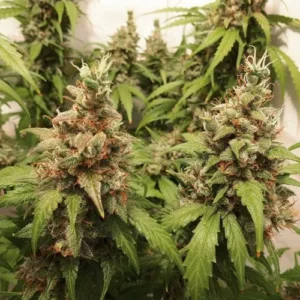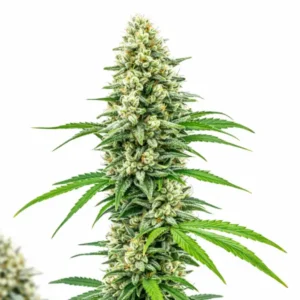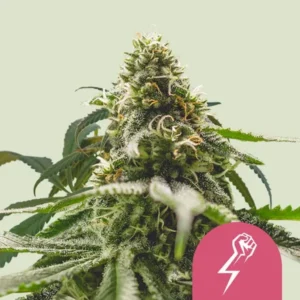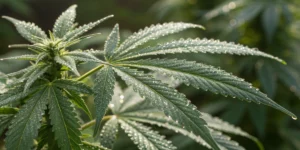


Tropicanna Banana is a high-yielding feminized photoperiod strain from Barney’s Farm created by crossing Tropicanna with Banana Kush. The cultivar combines 60% Sativa and 40% Indica genetics with vigorous growth, strong production potential, and a distinctive flavor profile built around ripe banana and tropical fruit.
Current breeder specifications place Tropicanna Banana at around 26% THC. Indoors, plants generally reach approximately 100–110 cm and can produce 650–750 g/m² under favorable conditions. Outdoors, they can reach around 120–180 cm and produce up to 2,000 g per plant when given enough sunlight, root space, and seasonal development.
Recommended Strains

Tropicanna Banana

|
THC | 26% - 27% (High) |

|
Lineage | Tropicanna x Banana Kush |

|
Type | Feminized |

|
Height | 4.92 ft | 1.5 m |

|
Yield Outdoor | 70.55 oz/plant | 2000 g/plant |

|
Flowering Time | 9 - 10 weeks |

|
Phenotype | 40% Indica / 60% Sativa |

|
Effects | Happy, Uplifted, Relaxed |

|
Flavors | Earthy, Pungent, Banana |

Tropicana Cookies FF
|
|
THC | 28% - 29% (High) |
|
|
Lineage | Tropicana Cookies x Tropicana Cookies Auto |
|
|
Type | Fast Flowering |
|
|
Height | 5.91 ft | 1.8 m |

|
Yield | High |

|
Yield Indoor | 1.47 - 1.97 oz/ft² | 450 - 600 g/m² |
|
|
Flowering Time | 6 - 7 weeks |
|
|
Phenotype | 65% Indica / 35% Sativa |
|
|
Effects | Focused, Creative, Relaxed |
|
|
Flavors | Sweet, Lemon |
The flowering stage lasts approximately 65–70 days indoors, while outdoor plants generally reach maturity during the second or third week of October in the Northern Hemisphere.
You can find Tropicanna Banana seeds and other genetics from Barney’s Farm at Growlantis.
Tropicanna Banana Strain Grow Info
| Trait | Tropicanna Banana |
|---|---|
| Genetics | Tropicanna × Banana Kush |
| Seed type | Feminized photoperiod |
| Sativa / Indica | 60% Sativa / 40% Indica |
| THC | Around 26% |
| Flowering time | 65–70 days |
| Indoor height | 100–110 cm |
| Indoor yield | 650–750 g/m² |
| Outdoor height | 120–180 cm |
| Outdoor yield | Up to 2,000 g/plant |
| Outdoor harvest | 2nd–3rd week of October |
| Taste | Fruity, banana, tropical |
| Aroma | Earthy, pungent, banana |
| Reported effects | Happy, uplifting, relaxing |
These specifications describe the Tropicanna Banana line currently sold through Growlantis. Final plant size, yield, cannabinoid concentration, and finishing time can still vary according to phenotype, vegetative duration, root space, climate, lighting, training, and overall growing conditions.
What Is the Tropicanna Banana Strain?
Tropicanna Banana is a Sativa-dominant hybrid that combines Tropicanna with Banana Kush. Tropicanna itself comes from Girl Scout Cookies and Tangie genetics, while Banana Kush introduces a stronger Indica influence and the characteristic banana profile that gives the cultivar part of its name.
The result is a vigorous but relatively manageable photoperiod plant with a 60% Sativa and 40% Indica ratio. Despite its Sativa majority, Tropicanna Banana does not normally become excessively tall indoors. Current breeder specifications place indoor plants at around 100–110 cm.
Its combination of compact indoor dimensions and very high production potential is one of the strain’s most useful cultivation characteristics. Outdoors, however, plants have considerably more room to expand and can become much larger and more productive.
Tropicanna Banana, Tropicana Banana or Tropical Banana?
The official strain name is Tropicanna Banana, with a double “n” in Tropicanna. However, growers frequently search for the cultivar as Tropicana Banana, Tropical Banana, Banana Tropicana, or similar spelling variations.
Those search variations do not represent different versions of the strain in this guide. The cultivar covered here is specifically the Tropicanna × Banana Kush feminized photoperiod line from Barney’s Farm.
Using the official spelling consistently is important when comparing grow specifications, because similarly named banana or Tropicana-derived strains can have completely different genetics, flowering times, cannabinoid levels, heights, and yields.
Tropicanna Banana Genetics
The official Tropicanna Banana genetics are Tropicanna × Banana Kush.
The Tropicanna side brings Girl Scout Cookies × Tangie ancestry into the cross, contributing much of the cultivar’s tropical fruit character and Sativa influence. Banana Kush adds stronger Indica characteristics together with the ripe banana profile that is particularly noticeable in mature flowers.
The resulting seed line contains approximately 60% Sativa and 40% Indica genetics. This is enough to classify Tropicanna Banana as Sativa dominant, but the ratio remains much more balanced than a traditional narrow-leaf Sativa.
That balance helps explain why the cultivar combines vigorous development with a relatively manageable indoor height and a mixture of uplifting and physically relaxing reported effects.
Is Tropicanna Banana Indica or Sativa?
Tropicanna Banana is a Sativa-dominant hybrid containing approximately 60% Sativa and 40% Indica genetics.
The Sativa majority contributes vigor and an uplifting component to the reported effect profile, while the 40% Indica side helps keep the plant more manageable than many taller Sativa-dominant cultivars.
Indoors, current specifications place plants at only around 100–110 cm despite the Sativa majority. Outdoors, where roots and branches have more space to develop, plants generally reach approximately 120–180 cm.
The breeder describes the effects as happy, uplifting, and relaxing, reflecting characteristics from both sides of the hybrid.
Tropicanna Banana THC
The current structured breeder specification places Tropicanna Banana at approximately 26% THC.
Some current promotional copy from the same breeder still references higher figures, but the technical specification and breeder FAQ consistently use 26% as the primary value. For that reason, around 26% is the most appropriate reference for this grow guide.
The published percentage represents genetic potential and reference testing rather than a guarantee that every harvested plant will measure exactly 26%.
Phenotype, lighting, plant health, environmental conditions, harvest maturity, drying, curing, and laboratory methodology can all influence the cannabinoid concentration measured in finished flowers.
Tropicanna Banana Flowering Time
Tropicanna Banana flowers for approximately 65–70 days indoors, equivalent to roughly nine to ten weeks after the flowering stage begins.
This timeframe does not include germination or vegetative growth. Tropicanna Banana is a photoperiod cultivar, so indoor growers determine when flowering begins by changing the light schedule to 12 hours of light and 12 hours of uninterrupted darkness.
There is therefore no universal seed-to-harvest timeline for this strain. A plant maintained in vegetation for three weeks and another grown vegetatively for six weeks can both require approximately the same 65–70 day flowering period once switched to 12/12.
For a broader explanation of flower development, see the Growlantis guide to the cannabis flowering stage week by week.
Tropicanna Banana Plant Height
Tropicanna Banana remains relatively manageable indoors despite being Sativa dominant.
Current breeder specifications place indoor height at approximately 100–110 cm. This makes the cultivar suitable for many conventional grow tents and controlled environments without requiring the extreme vertical clearance associated with some more strongly Sativa-dominant strains.
Outdoors, plants generally reach approximately 120–180 cm when given sufficient sunlight and root space.
Vegetative duration, container size, training, lighting, and phenotype can still change final dimensions. Indoor growers can further control height by deciding when to initiate flowering and by organizing branches across a wider canopy during vegetation.

Growing Tropicanna Banana Indoors
Tropicanna Banana performs particularly well indoors because it combines high yield potential with relatively moderate final height.
During vegetative growth, a longer photoperiod such as 18/6 allows the plant to establish its root system and productive branch structure. Flowering begins once the light schedule is changed to 12/12.
There is no fixed number of vegetative weeks required before the switch. The correct timing depends on canopy size, available vertical space, root development, plant number, and the training method being used.
Under favorable conditions, indoor production reaches approximately 650–750 g/m². Making good use of the available horizontal canopy is therefore more important than simply allowing the tallest branches to dominate the light.
Growing Tropicanna Banana Outdoors
Tropicanna Banana has particularly strong outdoor production potential when it receives sufficient sunlight, root space, and a long enough season to finish in October.
Outdoor plants generally reach around 120–180 cm, although overall canopy size can become considerable when roots have access to large containers or open soil. The breeder lists outdoor production at up to 2,000 g per plant under favorable conditions.
That upper figure represents exceptional genetic potential rather than an automatic harvest. Achieving very large yields requires a substantial plant with enough direct sunlight, healthy roots, adequate irrigation, and a stable growing season.
Because the harvest window falls during the second or third week of October, growers should also consider autumn rainfall and humidity when planning outdoor cultivation.
Tropicanna Banana Yield
Tropicanna Banana is a high-yielding photoperiod cultivar.
Current breeder specifications place indoor production at approximately 650–750 g/m², while outdoor plants can produce up to 2,000 g each under particularly favorable conditions.
These figures should be used as production potential rather than guaranteed harvest weights. Indoor yield depends on lighting, usable canopy area, vegetative duration, root space, plant density, training, irrigation, nutrition, and environmental stability.
Outdoor production additionally depends on sunlight, soil volume, plant size, climate, planting date, and seasonal weather. A smaller container-grown outdoor specimen should not be expected to match a fully developed plant with unrestricted roots.
Tropicanna Banana Outdoor Harvest Time
Tropicanna Banana generally reaches outdoor maturity during the second to third week of October in the Northern Hemisphere.
This breeder window is more useful than a generic “mid-October” reference because it gives outdoor growers a clearer idea of how long the crop needs suitable autumn conditions.
Latitude, phenotype, temperatures, sunlight, and seasonal weather can still move the precise harvest date slightly.
As October progresses, growers should combine the breeder window with direct observation of flower and trichome maturity. Upcoming rain and humidity can also become important considerations as dense flowers approach their final stage.
Germinating Tropicanna Banana Seeds
Tropicanna Banana does not require a unique strain-specific germination method.
The breeder recommends a warm environment of approximately 21–32°C together with consistent moisture and darkness during early germination. A controlled moist paper-towel method can work when the towels remain damp rather than saturated.
Once a root has emerged, the germinated seed should be transferred carefully into the chosen growing medium with the root facing downward. Young seedlings initially require considerably less irrigation and nutrition than mature plants.
Because Tropicanna Banana is photoperiod dependent, growers can transplant young plants progressively as root development increases instead of being constrained by the fixed biological clock of an autoflower.
For more detailed information, see how long cannabis seeds take to germinate.
Tropicanna Banana Vegetative Growth
Vegetative growth determines how large the Tropicanna Banana canopy becomes before the 65–70 day flowering stage begins.
Indoor growers can maintain an 18/6 photoperiod while the plant develops roots, leaves, and productive branches. There is no biological requirement for vegetation to last four, six, or eight weeks.
A shorter vegetative period creates smaller final plants, while additional vegetative development gives branches and roots more time to occupy the available grow area. The appropriate duration therefore depends on space rather than the age of the plant alone.
This is also the best stage for most structural training because branches remain flexible and the plant has time to respond before heavy flower production begins.
Training Tropicanna Banana
Tropicanna Banana can benefit from Low-Stress Training, topping, or a Screen of Green when these techniques are used to create a more evenly exposed canopy during vegetative growth.
Topping can reduce dominance of the main stem and encourage several productive branches, while LST can gradually spread those branches outward. A screen can then help maintain a relatively even horizontal canopy as the plant approaches flowering.
The cultivar is vigorous, but current breeder specifications do not suggest that indoor plants normally become uncontrollably tall. Training should therefore focus on efficient light distribution rather than treating Tropicanna Banana as a towering Sativa that must be aggressively restrained.
Once flowering becomes established, structural work should become gentler and branch support should gradually take priority.
Tropicanna Banana Grow Diary: What to Expect
A useful Tropicanna Banana grow diary should not assign a fixed number of weeks to vegetative growth because the strain is photoperiod dependent. The grower controls the timing of the switch to 12/12, while the breeder’s 65–70 day flowering period provides a much more reliable chronological framework for documenting development.
Germination and Establishment
Early development should focus on healthy roots and steady seedling growth rather than maximizing nutrient concentration or forcing rapid vertical development. Young plants need stable moisture, sufficient oxygen around the roots, and suitable light while they establish the branch structure that will later become the productive canopy.
Once the seedling is growing steadily, vegetative duration can be adjusted according to the space available. This stage has no universal end date because Tropicanna Banana will remain vegetative indoors until the grower changes the photoperiod.
Vegetative Development
During vegetation, Tropicanna Banana becomes increasingly vigorous and develops the branches that will later carry its heavy flowers. This is the most useful period for topping, LST, or preparing a screen because the plant still has time to recover before reproductive growth becomes the priority.
Rather than switching to 12/12 according to plant age, growers should use canopy coverage, available height, root development, and branch structure to determine when vegetation has reached the right size for the room.
Flowering Days 1–21
After the switch to 12/12, Tropicanna Banana enters its flowering transition and can continue stretching while early flower sites become increasingly visible.
Any final gentle canopy positioning should be completed during this period before flowers gain substantial weight. Branch spacing is also worth reviewing at this stage because an open canopy will make light distribution and airflow easier to manage later.
The plant should not be treated as if flowering started automatically according to age. Day 1 of flowering refers to the photoperiod transition rather than a fixed number of weeks after germination.
Flowering Days 22–49
During the middle of flowering, flower mass and resin production increase substantially. The strain’s banana and tropical fruit characteristics become increasingly pronounced as buds develop, while the canopy requires progressively less structural intervention.
At this stage, stable light exposure, appropriate irrigation, moderate nutrition, and good airflow become more important than further aggressive training. Heavy branches can also begin to benefit from support as flowers increase in size.
Flowering Days 50–70
The final portion of flowering is focused primarily on maturation. Flower density and aroma continue developing as Tropicanna Banana approaches the official 65–70 day breeder window.
Growers should use that range as a guide for when detailed maturity checks become important rather than as an automatic harvest command. Individual phenotype and environment can cause slight differences between plants.
As the expected finishing window approaches, actual flower development and trichome maturity should determine the final cutting date.
Feeding Tropicanna Banana
Tropicanna Banana does not require one universal strain-specific NPK ratio.
During vegetative growth, use a nutrient program appropriate to the chosen medium that supports healthy roots, foliage, and branch development. Once flowering begins, transition toward a suitable bloom-oriented program according to the fertilizer system being used.
There is no reason to treat fixed ratios such as 3:1:2 during vegetation or 1:3:2 during flowering as genetic requirements of Tropicanna Banana.
Nutrient concentration should instead reflect substrate, water quality, plant size, root development, and actual response. High yield potential does not mean that progressively stronger feeding will automatically increase production.
Watering Tropicanna Banana
Tropicanna Banana should be watered according to actual root-zone conditions rather than a predetermined daily or weekly schedule.
Young plants initially consume relatively small amounts of water because their root systems occupy only part of the container. As roots and canopy size increase, water demand naturally becomes greater.
Container volume, substrate, temperature, humidity, lighting, airflow, and plant size all influence irrigation frequency.
Allowing adequate oxygen to return to the root zone between waterings is more useful than maintaining permanently saturated media. Large outdoor plants approaching the upper end of the yield range can consume substantial amounts of water during warm periods.
Airflow and Branch Support During Flowering
Tropicanna Banana can carry a substantial quantity of flowers across its branches, so airflow and structural support become increasingly relevant later in bloom.
Indoor circulation should move air through, above, and below the canopy while ventilation removes accumulated heat and moisture. Training earlier in the cycle can make this easier by preventing branches from becoming excessively crowded.
Outdoor plants also benefit from enough spacing for flowers to dry after rain or heavy morning moisture, particularly as the October harvest window approaches.
Large, heavily loaded branches may require stakes, ties, or trellising so that flower weight does not place unnecessary stress on the stems.
Tropicanna Banana Effects
Barney’s Farm describes Tropicanna Banana as producing happy, uplifting, and relaxing effects.
The 60% Sativa component contributes to the more uplifting side of the reported experience, while Banana Kush adds a stronger relaxing influence as the effects develop.
Individual responses can still vary according to dose, tolerance, phenotype, cannabinoid concentration, and finished flower quality.
These descriptions should therefore be understood as breeder-reported characteristics rather than guaranteed experiences. Tropicanna Banana should not be presented as treating anxiety, depression, stress, pain, or other medical conditions based solely on its strain profile.
Tropicanna Banana Flavor and Aroma
Tropicanna Banana has a flavor profile centered around banana, tropical fruit, and broader fruity sweetness.
The breeder describes the aroma as earthy, pungent, and banana-like, creating a contrast between sweeter tropical flavor and a deeper aromatic background.
Individual plants can express slightly different balances within this profile, while growing conditions, harvest maturity, drying, and curing can all influence how clearly individual characteristics remain in finished flowers.
Because the current breeder data does not provide a quantitative terpene analysis, these verified flavor and aroma descriptors are more useful than assigning one universal dominant-terpene ranking.
Tropicanna Banana Strain Review
From a cultivation perspective, Tropicanna Banana combines unusually strong production potential with relatively manageable indoor dimensions.
Plants remain around 100–110 cm indoors while offering 650–750 g/m² of breeder-listed yield potential. Outdoors, they can reach 120–180 cm and produce exceptionally large harvests where sunlight, root space, climate, and plant health allow full development.
The principal planning considerations are the 65–70 day flowering period and the second-to-third-week-of-October outdoor harvest. Indoor growers should focus on canopy efficiency rather than expecting extreme Sativa height, while outdoor growers need enough seasonal stability to carry heavy flowers through October.

Common Problems When Growing Tropicanna Banana
Using the Wrong Flowering Range
Tropicanna Banana’s current official flowering specification is 65–70 days, or roughly nine to ten weeks. Describing the strain elsewhere as an eight-to-nine-week cultivar creates conflicting expectations. Use the breeder’s day range as the main planning reference while allowing actual plant maturity to determine the final harvest date.
Expecting Excessive Indoor Height
Tropicanna Banana is Sativa dominant, but current specifications place indoor height at only around 100–110 cm. Calling it a towering plant can lead growers to switch to flowering unnecessarily early. Training remains useful, but canopy management should focus on productive light distribution rather than fear of extreme vertical stretch.
Following Fixed NPK Ratios
There is no official Tropicanna Banana nutrient program requiring 3:1:2 during vegetation or 1:3:2 during bloom. Fertilizer requirements depend on medium, water, plant size, root health, and the nutrient system being used. Plant response is a more useful guide than one generic strain-specific ratio.
Treating Outdoor Yield as Guaranteed
The breeder lists outdoor potential of up to 2,000 g per plant, but achieving that figure requires a very large and healthy specimen under favorable conditions. Sunlight, root volume, growing season, climate, irrigation, training, nutrition, and phenotype all influence whether a plant approaches the upper end of its potential.
Confusing Tropicanna Banana With Similar Spellings
The official cultivar is Tropicanna Banana. Search variations such as Tropicana Banana or Tropical Banana frequently refer to the same strain, but similarly named products may have different genetics. Confirm the exact Tropicanna × Banana Kush seed line before applying flowering, yield, height, or potency figures.
FAQs About Tropicanna Banana
What is the Tropicanna Banana flowering time?
Tropicanna Banana flowers for approximately 65–70 days indoors, equivalent to roughly nine to ten weeks after the switch to 12/12. This timeframe covers flowering only, not germination or vegetative growth. Because the strain is photoperiod dependent, growers determine how long the vegetative stage lasts before initiating bloom.
Is Tropicanna Banana indica or sativa?
Tropicanna Banana is a Sativa-dominant hybrid containing approximately 60% Sativa and 40% Indica genetics. Its Tropicanna × Banana Kush lineage combines vigorous, uplifting characteristics with a more relaxing Indica influence. Despite its Sativa majority, current specifications place indoor height at a manageable 100–110 cm.
How much does Tropicanna Banana yield?
Tropicanna Banana can produce approximately 650–750 g/m² indoors and up to 2,000 g per plant outdoors under favorable conditions. These are breeder-listed potential yields rather than guarantees. Lighting, sunlight, root space, vegetative duration, plant size, training, irrigation, nutrition, climate, environment, and phenotype all affect final production.
How tall does Tropicanna Banana grow?
Tropicanna Banana generally reaches approximately 100–110 cm indoors and 120–180 cm outdoors. Its Sativa-dominant genetics produce vigorous growth without the extreme indoor height associated with some traditional Sativas. Vegetative duration, root space, training, lighting, environment, and phenotype can still influence the final dimensions of individual plants.
When is Tropicanna Banana harvested outdoors?
Tropicanna Banana generally reaches outdoor maturity during the second to third week of October in the Northern Hemisphere. Latitude, phenotype, seasonal temperatures, sunlight, and local weather can shift the precise finishing date slightly. Growers should use the breeder window for planning while confirming actual flower and trichome maturity before harvesting.
What is the THC level of Tropicanna Banana?
The current structured breeder specification places Tropicanna Banana at approximately 26% THC. Some promotional breeder copy references higher values, but 26% is the repeated technical figure. Actual measured potency can vary with phenotype, lighting, environment, plant health, harvest maturity, drying, curing, and laboratory testing methodology.