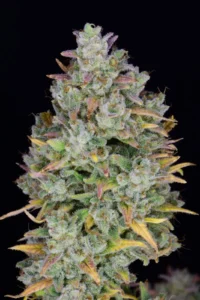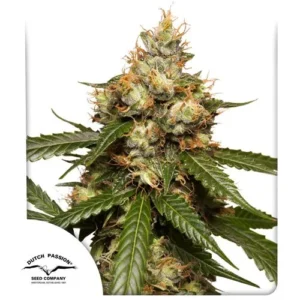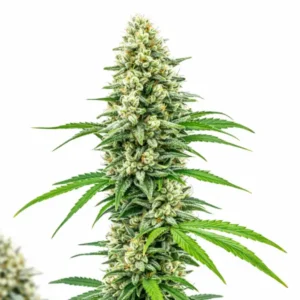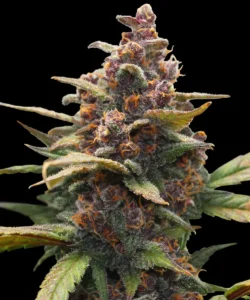


Mint strains are cannabis cultivars associated with cool, herbal, menthol, cookie or dessert-like aroma profiles, often through genetics such as Animal Mints, Kush Mints or Thin Mint GSC. “Mint” is not a botanical cannabis category, and strains sharing the name can differ substantially. Well-known examples include Kush Mints, Animal Mints, Thin Mint GSC, Gush Mints, The Soap and Mint Cake.
Choosing the right mint strain is easier when you match it to your setup and goals. If you grow indoors, our guide to the mint strains for indoor growers is essential reading, breaking down the cultivars that stay compact, control their aroma well and deliver that crisp, menthol-fresh flavour reliably in a tent or grow room.
Recommended Strains
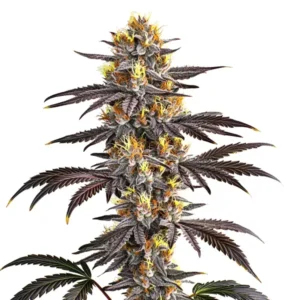
Gelato

|
Type | Feminized |

|
THC | 27% (High) |

|
Lineage | Sunset Sherbet x Thin Mint Girl Scout Cookies |

|
Phenotype | 50% Indica / 50% Sativa |

|
Effects | Happy, Relaxed, Talkative |

|
Flavors | Berry, Citrus, Sweet |

|
Flowering Time | 8 - 10 weeks |

|
Yield | High |

|
Yield Indoor | 1.64 oz/ft² | 500 g/m² |

|
Yield Outdoor | 21.16 - 28.22 oz/plant | 600 - 800 g/plant |

|
Height | 6.56 ft | 2 m |

|
Medical | Arthritis, Insomnia, Pain |
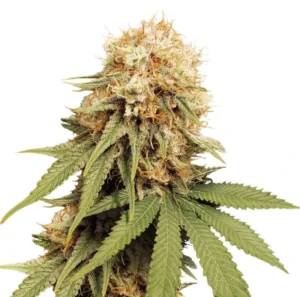
White Widow
|
|
Type | Feminized |
|
|
THC | 24% - 25% (High) |
|
|
Lineage | South American Sativa Landrace x South Indian Indica Landrace |
|
|
Phenotype | 60% Indica / 40% Sativa |
|
|
Effects | Euphoric, Happy, Uplifted |
|
|
Flavors | Earthy, Pungent, Spicy |
|
|
Flowering Time | 9 - 10 weeks |
|
|
Yield | High |
|
|
Yield Indoor | 1.64 - 2.13 oz/ft² | 500 - 650 g/m² |
|
|
Height | 5.25 ft | 1.6 m |
What is a Mint strain?
A mint strain is not a scientifically defined type of cannabis. The term is mainly used for cultivars whose names, lineage or sensory profiles are associated with mint, menthol, cool herbs, cookies or related dessert aromas.
Some of today’s best-known Mint cultivars are also genetically related. Animal Mints, for example, sits behind Kush Mints, while Kush Mints appears in later crosses such as Gush Mints and The Soap. Thin Mint GSC belongs to a different but overlapping Cookies branch and has also contributed genetics to numerous modern hybrids.
That makes “Mint strains” useful as a consumer and genetics category, but not as a formal botanical classification.
Best-known Mint cannabis strains
If someone searches for a mint strain, these are considerably more relevant than generic cultivars that happen to have a faint herbal note.
| Mint strain | Commonly listed lineage | Common flavor descriptions |
|---|---|---|
| Kush Mints | Animal Mints × Bubba Kush | Mint, menthol, kush, pine |
| Animal Mints | Animal Cookies × SinMint Cookies | Menthol, mint, sweet |
| Thin Mint GSC | GSC phenotype/subtype | Mint, menthol, sweet |
| Gush Mints | Kush Mints × F1 Durb/TK41 lineage | Mint, nutty, peppery |
| The Soap | Animal Mints × Kush Mints | Mint, floral, tea |
| Mint Cake | Wedding Cake × Animal Mints | Mint, vanilla, creamy |
These should be treated as broad reference profiles rather than guaranteed chemistry. Commercial cannabis sold under one strain name can vary from producer to producer, and large-scale chemical research has found substantial variation even among products sharing familiar strain labels.
1. Kush Mints
Kush Mints is one of the clearest answers to a search for a mint strain.
It is commonly listed as a cross between Animal Mints and Bubba Kush. Its profile combines the modern Cookies/Mints family with the earthy, kush-heavy character associated with Bubba Kush.
Consumer strain databases commonly describe Kush Mints with mint, menthol and kush-like aromas. Leafly currently lists menthol and mint among its leading flavor descriptors, with limonene, caryophyllene and linalool among the commonly reported terpenes.
Kush Mints has become an important parent in newer genetics, including Gush Mints and numerous other Mints-family crosses.
For someone trying to understand modern mint cannabis genetics, Kush Mints is one of the best places to start.
2. Animal Mints
Animal Mints predates many of the crosses that now carry the Mints name and forms part of the family’s genetic backbone.
It is generally described as Animal Cookies × SinMint Cookies. Leafly lists mint and menthol among its characteristic flavors, alongside a profile commonly containing caryophyllene, myrcene and limonene.
Animal Mints matters mostly because of its descendants. It contributes directly to Kush Mints, while Animal Mints genetics also appear in cultivars including Wedding Cake and several modern Cake/Mints hybrids.
For that reason, someone exploring “Mint strains” will repeatedly encounter Animal Mints even when the final cultivar name no longer contains the word Mint.
3. Thin Mint GSC
Thin Mint, also called Thin Mint GSC, Thin Mints or Thin Mint Cookies, comes from the Girl Scout Cookies family rather than directly from the Animal Mints branch.
It is one of the best-established cannabis cultivars associated explicitly with a mint sensory profile. Leafly describes Thin Mint as a GSC subtype and lists mint, menthol and sweetness among its principal flavor descriptors.
Its genetics also appear in the ancestry of several famous dessert hybrids. Gelato, for example, traces partly through Thin Mint GSC genetics, which explains why the current Growlantis article is not completely wrong to associate Gelato with the wider Mint family.
However, that does not make ordinary Gelato one of the clearest answers to “best mint strain.”
For this page, Thin Mint itself deserves the section, while Gelato is better mentioned as a related descendant.
4. Gush Mints
Gush Mints, also written Gush Mintz, is a later generation of the Mint family.
Leafly lists it as a cross involving Kush Mints with F1 Durb and TK41 genetics and describes mint, nutty and peppery notes in its sensory profile.
Gush Mints shows how breeders have taken Kush Mints beyond the original mint-and-kush combination, layering in other Cookies-family genetics.
The resulting profile is generally described as richer and sweeter than straightforward Kush Mints, while still retaining an obvious connection to the Mints family.
Anyone comparing modern Mint cultivars should therefore distinguish between a foundational strain such as Animal Mints and later descendants such as Gush Mints.
5. The Soap
The Soap has an unusual name, but genetically it belongs squarely in this discussion.
It is listed as a cross between Animal Mints and Kush Mints, meaning both parents come directly from the core Mint family. Leafly’s current profile lists rose, mint and tea among its most commonly reported flavors.
This makes The Soap useful for illustrating another point about “mint strains”: they do not all taste like peppermint candy.
The Mint family can express floral, herbal, creamy, earthy, gassy and cookie-like characteristics alongside the cooler notes that inspired many of the names.
If someone expects every Mint cultivar to taste identical, The Soap is a good counterexample.
6. Mint Cake
Mint Cake, also called Cake Mints or Cake Mintz, crosses Wedding Cake with Animal Mints.
It combines the creamy dessert side of modern cannabis breeding with a direct Animal Mints parent. Leafly currently lists mint, vanilla and floral characteristics among its reported flavor profile.
This cultivar makes more sense on a page targeting mint strain than White Widow or ordinary Gelato because the Mint lineage is explicit rather than inferred from a minor flavor description.
Mint Cake also shows why the category has become so broad. Modern Mints genetics frequently overlap with the Cookies and Cake families, creating cultivars whose aromas may move between cool herbs, vanilla, cream, pepper and sweet baked notes.
Kush Mints vs Animal Mints
These two names are easy to confuse, but they are not interchangeable.
Animal Mints is commonly listed as Animal Cookies crossed with SinMint Cookies. Kush Mints uses Animal Mints as a parent and crosses it with Bubba Kush.
That means Animal Mints sits earlier in the family tree.
The Bubba Kush contribution tends to give Kush Mints a more obvious kush, earthy or gas-associated identity in addition to its mint character, while Animal Mints remains closer to the Cookies side of the family.
When comparing products, however, genetics on the label are more useful than assuming every producer uses exactly the same cut.
Thin Mint GSC vs Kush Mints
Thin Mint GSC and Kush Mints are also separate genetics despite their similar names.
Thin Mint is associated with the GSC family. Kush Mints, meanwhile, descends from Animal Mints crossed with Bubba Kush.
Both can produce mint-associated sensory descriptions, but they reach that point through different breeding histories.
Thin Mint tends to sit conceptually within the older Cookies branch, while Kush Mints became a major parent of a newer Mints family that includes cultivars such as Gush Mints.
This distinction is particularly useful because modern strain names frequently combine “Mint,” “Mintz,” “Cookies,” “Cake” and “Gelato,” making superficially similar names look more genetically related than they actually are.
Is Gelato a Mint strain?
Gelato is related to the Mint genetics through the Cookies family, but it is not usually counted among the core mint strains. Its profile leans sweet and creamy rather than cool and sharp, which is the line most growers draw.
Gelato genetics trace through Thin Mint GSC and Sunset Sherbet, so there is a legitimate Mint-family connection. The current Growlantis article highlights this relationship through Gelato’s Thin Mint GSC ancestry.
However, Gelato is generally recognized more strongly for its sweet, creamy and dessert profile than for being a dedicated mint cultivar.
For a search specifically targeting mint strain, Thin Mint GSC deserves the position currently occupied by Gelato.
Gelato can then appear as an example of how Mint genetics spread into the wider Cookies/Gelato family.
Is White Widow a Mint strain?
Not in any useful sense for this search intent.
White Widow may occasionally be described by individual consumers or producers as having herbal, pine or slightly fresh notes, but it is not part of the major modern Mints genetic family.
The existing Growlantis article admits that White Widow is “not primarily a mint strain” and then includes it anyway.
Stretching the mint label that far makes it less useful, not more. If a strain does not actually present a cool, minty note, calling it a mint strain only makes it harder to find the ones that do.
For a 260-volume keyword, the article does not need to stretch the definition to create a longer list. Six genuinely relevant strains are better than fifteen weak associations.
What makes a cannabis strain taste minty?
There is no single cannabis compound that allows you to look at a terpene panel and automatically declare a product a Mint strain.
Commercial Mint cultivars frequently list common cannabis terpenes such as limonene, caryophyllene, myrcene and linalool. For example, Leafly currently reports different leading combinations for Animal Mints, Thin Mint and Kush Mints despite all three being strongly associated with mint or menthol flavor descriptions.
Aroma comes from a mixture of volatile compounds, not a single dominant terpene acting as a flavor label.
This matters because consumers sometimes assume that a “mint strain” must contain unusually high levels of one specific mint terpene. Commercial cannabis chemistry is more complicated than that.
The practical approach is to look at the actual batch aroma and laboratory profile rather than predicting flavor from one terpene percentage.
Do Mint strains all have the same effects?
No.
Sharing Mint genetics or a mint-associated aroma does not create a standardized psychoactive effect.
Cannabis products sold under strain names can differ in cannabinoid and terpene composition. A large analysis of nearly 90,000 commercial flower samples found that common cannabis labels and strain names vary substantially in chemical consistency, with some names being more reproducible than others.
That means descriptions such as “relaxing Mint strain” or “energizing Mint strain” should be treated as reported tendencies rather than biological rules.
THC dose, individual sensitivity, consumption method and the actual chemical composition of the particular product can matter as much as the name printed on the package.
For the same reason, it is worth being wary of mint strain rankings organized around sleep, anxiety or other medical outcomes. The mint flavor says nothing about those effects, and framing it that way promises something the plant family does not deliver.
Are Mint strains usually high in THC?
Many popular Mint-family cultivars are marketed as THC-dominant cannabis, but there is no THC level that defines a Mint strain.
Current strain databases list examples such as Kush Mints, Thin Mint GSC and Animal Mints as THC-dominant cultivars, but reported percentages differ between products and batches.
A strain name should therefore never substitute for a certificate of analysis when potency matters.
This matters most for consumers with lower tolerance, since two products carrying the same Mint name may contain significantly different cannabinoid concentrations.
Rather than describing one fixed THC number for each strain, the better editorial approach is to explain that batch-specific testing overrides generic strain averages.
Are “Mint,” “Mints” and “Mintz” the same thing?
Not necessarily.
Cannabis naming is informal, and breeders use Mint, Mints and Mintz in many different cultivar names. Sometimes the spelling variation refers to essentially the same strain name, as with Kush Mints/Kush Mintz or Gush Mints/Gush Mintz. In other cases, two similar-looking names refer to completely different crosses.
This is one reason lineage matters.
A 2022 analysis of commercial cannabis chemistry found substantial inconsistency among common market labels and showed that strain names vary in how reliably they correspond to specific chemical profiles.
When buying or researching a Mint cultivar, check the stated parents rather than assuming two strains are related simply because both contain “Mintz.”
Mint Whips, Mint Madness and Other Names You Will See
Search for mint strains and you will quickly run into names that are not in the list above: Mint Whips, Mint Madness, Cool Mint, Mint Tea, Jet Mints, Tropical Mints. Some are regional cuts, some are dispensary names for a local phenotype, and some are marketing applied to whatever minty-smelling batch came in.
That is worth knowing before you go hunting for a specific one. Cannabis strain names are not a regulated system, so the same name can cover genuinely different plants from one breeder to the next, and a name you saw on a menu may not exist as seed at all.
The practical approach is to work backwards from the lineage rather than the name. If a mint strain you liked was Kush Mints crossed with something, look for that cross rather than the nickname. If no lineage is listed anywhere, treat the name as a description of the smell and nothing more.
How to choose a Mint strain
Start by deciding what you actually mean by “mint.”
Someone seeking a strongly recognizable mint or menthol profile may find Thin Mint GSC, Animal Mints or Kush Mints more relevant than a distant descendant with a dessert-heavy aroma.
If genetics matter, look at the parentage. Kush Mints is useful for people exploring the Animal Mints branch, while Thin Mint GSC represents the older Cookies-associated branch.
Then check the actual product.
Aroma, cannabinoid content and terpene composition can vary between cultivators and batches even when the strain name remains the same. The label should therefore be treated as a starting point, not as a chemical guarantee.
Choosing a Mint Strain by Effect: Daytime, Relaxing or Creative
The mint label describes a flavor family, not an effect, which is why two minty strains can feel nothing alike. If you are choosing by how you want to feel rather than how you want it to taste, the genetics behind the mint matter far more than the mint itself.
For daytime use, look for mint strains with a sativa-leaning parent in the cross and a moderate THC figure. The cool, sharp side of the mint profile tends to come through cleaner at lower potency, and nothing ruins a functional afternoon faster than picking a 28% cultivar because the name sounded refreshing.
For relaxing in the evening, the Kush-heavy mints are the obvious direction, since the sedating side comes from the Kush lineage rather than from any minty terpene. Gush Mints and Kush Mints both sit here.
For something more creative or social, the cookie-leaning crosses tend to land in the middle: present enough to notice, not so heavy that you stop doing whatever you were doing. As always, start low with anything unfamiliar, whatever the flavor family promises.
What are the best Mint strains?
There is no objective single “best” Mint strain, but a useful shortlist starts with the cultivars most clearly connected to Mint genetics and mint-associated sensory profiles.
Kush Mints is arguably the strongest all-around reference point because it combines an obvious mint identity with major influence on later breeding. Animal Mints is essential for understanding the family tree, while Thin Mint GSC represents the important Cookies-side Mint lineage.
For newer-generation genetics, Gush Mints, The Soap and Mint Cake provide distinct interpretations of those core families.
That selection is more useful than padding the list with strains such as White Widow whose connection to mint is incidental.
Mint strain: bottom line
“Mint strain” is best understood as an informal cannabis category rather than one specific botanical type.
The most important names include Kush Mints, Animal Mints, Thin Mint GSC, Gush Mints, The Soap and Mint Cake. Some belong directly to the Animal Mints/Kush Mints family, while Thin Mint GSC represents a separate Cookies-associated branch.
Their shared Mint naming does not guarantee identical genetics, chemistry, THC levels or effects.
Commercial cannabis research shows that strain labels have variable chemical consistency, so the most reliable way to evaluate a Mint product is to combine its documented lineage with batch-specific cannabinoid and terpene testing.

Frequently Asked Questions
What is a Mint strain?
A Mint strain is cannabis associated with mint, menthol, herbal or cool dessert-like aromas or with genetics such as Animal Mints, Kush Mints or Thin Mint GSC. It is an informal market and breeding category rather than a scientific cannabis classification, so two strains containing “Mint” in their names can have quite different genetics.
What is the best Mint weed strain?
Kush Mints is one of the strongest general answers because it has a clear mint and menthol reputation and has become influential in modern cannabis breeding. Animal Mints and Thin Mint GSC are equally important if genetics matter, while Gush Mints, The Soap and Mint Cake represent notable newer branches.
Is Kush Mints the same as Animal Mints?
No. Animal Mints is commonly listed as Animal Cookies crossed with SinMint Cookies. Kush Mints is a later cross using Animal Mints together with Bubba Kush. Animal Mints therefore appears directly in Kush Mints’ ancestry, but the two are separate cultivars with different genetic compositions.
Is Thin Mint the same as Kush Mints?
No. Thin Mint GSC belongs to the GSC/Cookies family, while Kush Mints is commonly listed as Animal Mints crossed with Bubba Kush. Both are associated with mint or menthol sensory profiles, but they come from different breeding histories and should not be treated as alternate names for the same cultivar.
What terpenes are common in Mint strains?
Mint-family strains frequently contain common cannabis terpenes such as limonene, caryophyllene, myrcene and linalool, but no single terpene defines the category. Animal Mints, Thin Mint GSC and Kush Mints are all described as mint-forward despite having somewhat different reported terpene profiles. Batch-specific laboratory results are therefore more informative.
Are all Mint strains relaxing?
No. Mint is primarily a flavor, naming and genetics category, not a standardized effects category. Reported effects vary between individual cultivars and users, while products sharing a strain name can also vary chemically. Do not assume that the word Mint predicts sedation, stimulation or a particular medical effect.
Are names like Mint Whips and Mint Madness real strains?
Mint describes a flavor family rather than a single genetic line. Most mint strains trace back to Kush Mints or the Cookies family, but names like Mint Whips or Mint Madness are often regional cuts or dispensary labels rather than stable, widely available genetics.