

Brix readings estimate the soluble solids in cannabis plant sap, much of which consists of sugars, and can be useful for tracking physiological changes over time. However, there is no scientifically established Brix number that tells growers when to flush cannabis. Brix should be treated as a comparative plant-monitoring metric rather than a direct measure of nutrient buildup, harvest readiness or flower quality.
Brix is far more than a flushing cue — read consistently, it becomes a window into overall plant health and quality. If you want to build a full routine around these readings, our guide to a data-driven, Brix-based cultivation method shows how to track, interpret and act on the numbers throughout the entire grow.
Recommended Strains
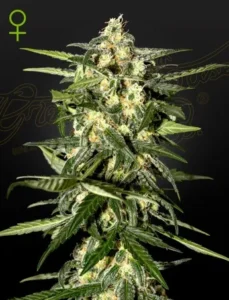
Auto Jack Herer

|
THC | 17% - 18% (Medium) |

|
Lineage | Jack Herer x Ruderalis |

|
Type | Autoflowering |

|
Height | 2.79 ft | 0.85 m |

|
Yield Outdoor | 7.05 oz/plant | 200 g/plant |

|
Life Cycle | 10 - 11 weeks |

|
Phenotype | 50% Indica / 50% Sativa |

|
Effects | Happy, Euphoric, Relaxed |

|
Flavors | Fruity, Skunk, Pine, Spicy |
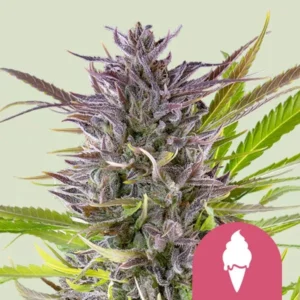
Green Gelato
|
|
THC | 26% - 27% (High) |
|
|
Lineage | Sunset Sherbet x Thin Mint Girl Scout Cookies |
|
|
Type | Feminized |
|
|
Height | 5.74 ft | 1.75 m |

|
Yield | High |

|
Yield Indoor | 1.64 - 2.29 oz/ft² | 500 - 700 g/m² |
|
|
Yield Outdoor | 24.69 - 28.22 oz/plant | 700 - 800 g/plant |
|
|
Flowering Time | 8 - 10 weeks |
|
|
Phenotype | 55% Indica / 45% Sativa |
|
|
Effects | Focused, Relaxed |
|
|
Flavors | Citrus, Earthy, Mint |
Brix is a useful ripeness and health signal, but it works best as part of a wider monitoring routine. Many growers combine it with leaf-sap analysis to track how nutrients actually move through the plant, and with environmental sensors that keep temperature, humidity and VPD inside the range plants need to finish strong.
What Is a Brix Reading?
Brix, usually written as °Bx, is a refractometer measurement of the concentration of soluble material in a liquid. In plant juices and sap, much of that soluble material consists of sugars, although other dissolved compounds can contribute to the reading.
A refractometer works by measuring how much light bends as it passes through the sample. The more dissolved material present, the greater the change in refractive index.
Brix has long been used in fruit and vegetable production because soluble-solids concentration can help track characteristics such as fruit maturity and sweetness. Cannabis growers sometimes apply the same tool to leaf or petiole sap as a quick way of observing changes in plant physiology.
The important limitation is that a cannabis Brix reading is not a direct measurement of plant nutrition, THC, terpene production or flower maturity.
What Does Brix Tell You About a Cannabis Plant?
A Brix reading gives you a snapshot of soluble-solids concentration in the particular plant sample tested at that particular moment.
That number is influenced by photosynthesis and carbohydrate metabolism, but it is also affected by water content. A reading can increase because a plant has produced or accumulated more soluble material, or simply because less water is diluting the same material.
This makes Brix useful for comparisons over time when sampling is standardized.
For example, a grower who repeatedly samples the same type of leaf, at the same position and at approximately the same time of day may be able to identify trends that coincide with changes in irrigation, lighting, nutrition or plant development.
A single isolated reading is much less informative.
Can Brix Tell You When to Flush Cannabis?
Not reliably.
There is currently no validated cannabis Brix threshold at which a plant should begin pre-harvest flushing.
Claims such as “a high Brix reading means the plant has accumulated enough nutrients and is ready to flush” confuse two separate measurements. Brix reflects soluble solids in plant sap; it does not directly measure the concentration of nitrogen, phosphorus, potassium or other mineral nutrients in the root zone or flowers.
Likewise, a falling or rising Brix value does not prove that nutrients have been “used up.”
If flushing is part of a cultivation program, its timing should therefore not be determined from Brix alone.
What Is Cannabis Flushing?
Pre-harvest flushing generally means stopping fertilizer application near the end of flowering and irrigating with water or a very low-nutrient solution until harvest.
Cannabis growers have traditionally proposed several reasons for doing this, including removing excess nutrients, improving flavor, creating smoother smoke or increasing final flower quality.
Those explanations have historically been based more on cultivation convention than controlled scientific evidence.
A 2024 controlled study compared five medical cannabis cultivars that either continued receiving mineral nutrition until harvest or had nutrients discontinued during the final stage of flowering. Researchers found that flushing produced only minor changes in plant physiology, yield, cannabinoid concentrations and terpene profiles.
The study therefore does not support the idea that flushing predictably creates dramatically more potent or aromatic cannabis.
Does Flushing Remove Nutrients From Cannabis Buds?
Not in the simple way often described online.
Once mineral nutrients have been absorbed and incorporated into plant tissues, watering the root zone with plain water does not literally wash those minerals back out of harvested flowers.
Pre-harvest nutrient deprivation can change nutrient uptake and redistribution within the plant, but that is different from rinsing chemical residue from buds.
Research on cannabis nutrient management has found that pre-harvest nutrient deprivation can reduce visible nutrient status in foliage without necessarily creating corresponding reductions in flower nutrient concentrations or improvements in cannabinoid yield.
This distinction matters because Brix cannot tell you whether flowers are “clean” or free from excess fertilizer.
Does Flushing Improve Flavor or Potency?
Current research does not show a consistent major improvement.
The 2024 study examining five cannabis cultivars found only limited effects of flushing on cannabinoids and an especially small effect on terpene concentrations. In most measurements, plants receiving nutrients until harvest and plants that were flushed produced broadly similar chemical outcomes.
A separate controlled-environment nutrient-management study likewise found that pre-harvest nutrient deprivation did not increase flower quality or total cannabinoid yield.
This does not mean growers can never have practical reasons to reduce nutrient inputs near harvest. Avoiding unnecessary fertilizer can reduce input costs and nutrient discharge.
It does mean that statements such as “flushing guarantees smoother, stronger or more flavorful buds” go beyond the available evidence.
How to Measure Brix in Cannabis
Cannabis Brix readings are normally taken with a handheld optical or digital refractometer using plant sap.
The basic principle is simple: collect a consistent sample of plant material, extract enough sap for the refractometer, place the liquid on the measurement surface and record the resulting °Bx value.
The difficult part is not operating the refractometer. It is obtaining comparable samples.
Brix can change according to which leaf is sampled, where that leaf sits on the plant, water status and when the measurement is taken. If those variables change from reading to reading, it becomes difficult to know whether the plant changed or merely the sampling method.
Standardize Your Brix Measurements
Consistency is much more important than trying to find one supposedly perfect cannabis Brix number.
Use the same type of tissue and similar plant position for each measurement. Take samples at approximately the same time of day and under comparable irrigation and lighting conditions whenever possible.
Water on the leaf surface can dilute the sample, while dehydration can concentrate dissolved solids and increase the apparent Brix value without necessarily indicating better plant health.
Record the surrounding conditions along with the measurement. A useful log might include the Brix reading, plant stage, sampling location, irrigation status and any significant recent changes to lighting, nutrition or environment.
Over several weeks, those observations can be much more informative than comparing your plant with a generic internet Brix chart.
Why Brix Changes During the Day
Plants continually produce, transport and consume carbohydrates.
During periods of active photosynthesis, leaves manufacture sugars and export some of those carbohydrates to growing tissues through the phloem. Water movement through the plant changes simultaneously.
As a result, soluble-solids readings can vary throughout the day.
Agricultural extension guidance on Brix therefore emphasizes standardized sampling time rather than claiming that one time is universally the “most accurate.”
The original article recommends early morning as inherently best. That is too categorical. What matters most for tracking trends is measuring under repeatable conditions so that readings can legitimately be compared.
Is Higher Brix Always Better?
No.
One of the most persistent horticultural myths is that a higher leaf-sap Brix reading automatically proves superior plant health, stronger pest resistance or greater crop quality.
That interpretation is overly simplistic.
A high Brix reading can sometimes coincide with active carbohydrate production, but soluble-solids concentration can also increase because tissue contains less water. Nutrient deficiencies and physiological stress can change carbohydrate transport in ways that make a high reading difficult to interpret without additional information.
Washington State University reviewed similar claims in 2026 and found little scientific support for using fixed leaf-Brix thresholds as proof that a plant is healthy or resistant to insects.
For cannabis, there is likewise no validated chart showing that a particular Brix number guarantees high THC, disease resistance, better flavor or harvest readiness.
Is There an Ideal Brix Level for Cannabis?
No scientifically established universal range currently exists.
Cannabis genetics alone make a single threshold problematic. Different cultivars can have different rates of photosynthesis, water use, carbohydrate allocation and leaf composition.
Plant age, flowering stage, light intensity, irrigation and environmental conditions further influence readings.
So a statement such as:
“Cannabis should reach X° Brix before flushing”
should be treated cautiously unless it comes from controlled cultivar-specific research demonstrating that relationship.
At present, Brix is more defensible as an internal benchmarking tool: compare a plant or crop with its own previous readings collected using the same methodology.
Brix vs Root-Zone EC
Brix and electrical conductivity, or EC, answer very different questions.
Brix estimates soluble solids within the plant sap. Root-zone EC estimates the overall ionic concentration of the nutrient solution or growing medium.
If a grower’s concern is that fertilizer salts are accumulating in the root zone, EC is much more directly relevant than leaf Brix.
For example, measuring input and drainage EC can help reveal whether salts are concentrating in a soilless growing medium.
A Brix reading cannot substitute for that information.
The two measurements may be used together, but they should not be interpreted as interchangeable indicators.
Brix vs pH
The same distinction applies to pH.
Root-zone pH influences nutrient availability and uptake, while Brix describes soluble-solids concentration in the sampled sap.
A plant can have an unusual Brix reading while root-zone pH remains normal, or vice versa.
When diagnosing nutritional problems, growers should therefore combine multiple sources of evidence rather than trying to make one refractometer number explain the entire crop.
Root-zone EC, pH, irrigation data, environmental conditions, tissue appearance and, when needed, laboratory tissue analysis all provide different pieces of information.
Can Brix Predict THC or Terpene Levels?
No validated conversion allows a Brix reading to predict final THC or terpene concentration.
Cannabinoid and terpene biosynthesis is genetically and environmentally regulated, but the concentration of soluble solids in leaf sap is not equivalent to the concentration of those secondary metabolites in mature flowers.
A plant with a higher Brix reading does not automatically produce stronger cannabis.
Likewise, deliberately manipulating Brix upward does not establish that resin production or terpene concentration will increase proportionally.
Cannabinoid potency requires chemical testing if an actual concentration is needed.
Can Brix Help Diagnose Nutrient Problems?
It can provide supporting information, but it is not a nutrient test.
Changes in nutrient availability can influence photosynthesis, growth and carbohydrate allocation, so they can indirectly alter Brix readings. However, the same change could also result from water status, light, development or environmental stress.
A low Brix number therefore does not tell you which nutrient is deficient, while a high value does not prove nutrition is balanced.
Controlled cannabis research has shown that individual nutrient deficiencies can substantially reduce plant growth and floral yield, yet visible symptoms and tissue nutrient analysis do not always align perfectly.
For serious nutrient diagnosis, root-zone testing and plant tissue analysis are much more specific than Brix.
How Brix Can Actually Be Useful Before Harvest
The most defensible use of Brix near harvest is as one part of a longitudinal crop record.
If measurements have been collected consistently throughout flowering, changes in Brix may help a grower understand how the plant is responding as irrigation, nutrient demand and metabolism change late in the crop cycle.
That information can be compared with root-zone EC, plant appearance and the cultivation schedule.
What Brix should not do is override those measurements and trigger flushing simply because a reading exceeds an arbitrary threshold.
Think of Brix as observational data, not a harvest countdown.
Should You Flush Cannabis at All?
The evidence suggests the question is more nuanced than either “always flush” or “never flush.”
The 2024 controlled study found that withholding mineral nutrients near harvest generally caused only limited changes in yield and secondary metabolites. The researchers noted that reducing late fertilizer inputs can have environmental and resource-use advantages when it does not compromise production.
Other controlled research has similarly found little evidence that pre-harvest nutrient deprivation increases cannabinoid yield or flower quality.
A grower may therefore decide to reduce fertilizer inputs when continued feeding provides little agronomic benefit.
That is a different rationale from claiming that flushing removes chemicals from buds or guarantees smoother smoke.
Common Brix and Flushing Mistakes
The most common mistake is searching for one magic Brix target and treating it as a universal flush signal. No cannabis research currently validates such a threshold.
Another mistake is assuming that higher Brix always means healthier plants. Water stress alone can raise soluble-solids concentration, while nutrient deficiencies can alter carbohydrate allocation in complicated ways.
Sampling inconsistently is equally problematic. Comparing one upper leaf measured in the afternoon with a lower leaf measured early the following morning creates noise rather than useful trend data.
Finally, do not use Brix to make claims it cannot support. It does not measure THC, mineral residues, terpene concentration or smoke quality.
Brix Readings and Cannabis Flushing: Key Takeaway
Brix readings can be a useful, inexpensive way to track changes in soluble solids within cannabis plant sap, especially when growers collect measurements consistently over time.
They are not a scientifically validated method for determining exactly when cannabis should be flushed.
There is no universal Brix threshold that proves a plant has finished using nutrients, reached maximum potency or is ready for a nutrient-free period.
Research on pre-harvest flushing itself also shows much smaller effects than traditional cannabis advice often claims. Controlled studies have found limited differences in yield, cannabinoids and terpene concentrations between flushed and continuously fertilized plants.
Use Brix as one contextual measurement alongside root-zone EC, pH, environmental data, crop development and plant observations rather than treating it as a standalone flushing decision tool.

FAQs About Brix Readings and Cannabis Flushing
What is the best Brix level for flushing cannabis?
There is no scientifically established Brix level that indicates when cannabis should be flushed. Brix measures soluble solids in plant sap rather than nutrient accumulation in flowers or the root zone. Because readings vary with genetics, tissue sampled, water status, lighting and time of day, trends within the same crop are more meaningful than a universal threshold.
Do high Brix readings mean cannabis is ready to harvest?
No. A high Brix reading indicates a higher concentration of soluble solids in the tested sap sample, but it does not directly measure flower maturity, THC or terpene concentration. Harvest decisions should therefore not be based on Brix alone. Plant development and cultivar-specific maturity remain separate considerations.
Can Brix readings improve cannabis flavor?
There is no good evidence that measuring or increasing Brix directly improves final cannabis flavor. Brix can help growers observe physiological trends, but aroma and flavor depend on genetics, volatile chemistry, cultivation and post-harvest handling. The claim that Brix-guided flushing automatically creates better-tasting flower is not supported by controlled cannabis research.
Does flushing cannabis increase THC?
Controlled research has not found a consistent major increase in THC from pre-harvest flushing. A 2024 study involving five medical cannabis cultivars found only minor overall effects on cannabinoid concentrations, with cultivar-specific increases or decreases in some samples. Flushing should therefore not be presented as a reliable technique for increasing potency.
How often should cannabis Brix readings be taken?
There is no required frequency. If Brix is being used to monitor trends, consistency matters more than measuring frequently. Sampling the same plant tissue at comparable times and under similar irrigation and environmental conditions creates more meaningful data. Weekly or periodic measurements can be useful when accompanied by a clear cultivation log.
What should be measured alongside Brix?
Root-zone EC and pH, irrigation conditions, plant development and environmental data provide useful context for Brix readings. EC is particularly relevant when the question involves fertilizer concentration or salt accumulation. Brix should not replace these measurements because soluble solids in plant sap answer a different physiological question.