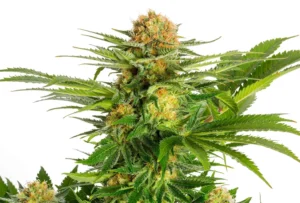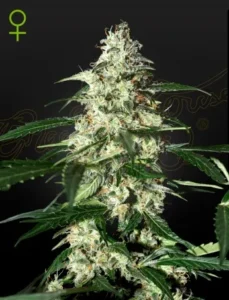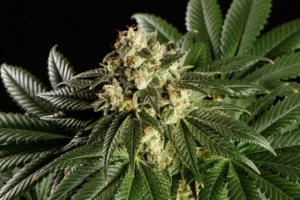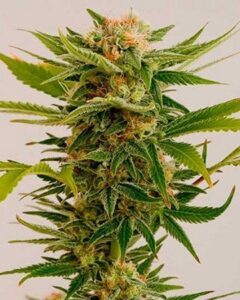
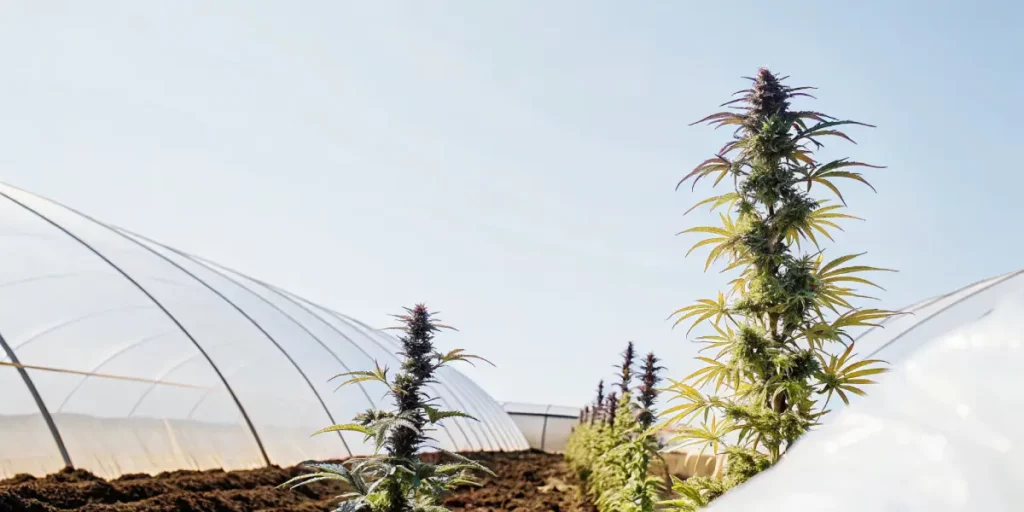

Gushers is an indica-dominant feminized photoperiod strain from Royal Queen Seeds created from Gelato 41 and Triangle Kush. The current seed line is classified as 60% Indica and 40% Sativa, reaches up to 24% THC and flowers in approximately 55–65 days.
Current Gushers seeds reach approximately 70–120 cm indoors and 120–150 cm outdoors. Indoor production is rated at 450–500 g/m², while outdoor plants can produce around 650–700 g each and are generally ready for harvest in early October.
Recommended Strains

Gushers

|
THC | 23% - 24% (High) |

|
Lineage | Gelato 41 x Triangle Kush |

|
Type | Feminized |

|
Height | 4.43 ft | 1.35 m |

|
Yield | High |

|
Yield Indoor | 1.47 - 1.64 oz/ft² | 450 - 500 g/m² |

|
Yield Outdoor | 22.93 - 24.69 oz/plant | 650 - 700 g/plant |

|
Flowering Time | 8 - 10 weeks |

|
Phenotype | 60% Indica / 40% Sativa |

|
Effects | Giggly, Relaxed |

|
Flavors | Cookie, Earthy, Fruity |
Strawberry Banana Auto
|
|
THC | 27% - 28% (High) |
|
|
Lineage | Strawberry Banana x Ruderalis |
|
|
Type | Autoflowering |
|
|
Height | 3.94 ft | 1.2 m |
|
|
Yield | High |
|
|
Yield Indoor | 1.47 - 1.97 oz/ft² | 450 - 600 g/m² |
|
|
Life Cycle | 10 - 11 weeks |
|
|
Phenotype | 55% Indica / 45% Sativa |
|
|
Effects | Relaxed, Happy, Hungry |
|
|
Flavors | Banana, Fruity, Strawberry |
| Gushers Grow Info | Current specification |
|---|---|
| Breeder | Royal Queen Seeds |
| Genetics | Gelato 41 × Triangle Kush |
| Seed type | Feminized photoperiod |
| Indica / Sativa | 60% Indica / 40% Sativa |
| THC | Up to 24% |
| CBD | Low |
| Flowering time | 55–65 days |
| Indoor height | 70–120 cm |
| Outdoor height | 120–150 cm |
| Indoor yield | 450–500 g/m² |
| Outdoor yield | 650–700 g/plant |
| Outdoor harvest | Early October |
| Climate classification | Short Summers |
| Flavor | Cookie, Earthy, Fruity |
| Reported effects | Laughter, Physically Relaxing, Uplifting |
Gushers Genetics
Gushers combines Gelato 41 with Triangle Kush.
This distinction matters because Gelato 41 should not be confused with Blue Gelato 41. Blue Gelato 41 is a separate cultivar with different genetics and should not be presented as a parent of Gushers.
The Gelato 41 side contributes to the modern Gelato and Cookies character of the cultivar, while Triangle Kush adds classic Kush influence to the cross.
Royal Queen Seeds classifies Gushers as a photoperiod strain, meaning indoor growers control when flowering begins by changing the light schedule.
Growers interested in other genetics from the same breeder can explore the wider Royal Queen Seeds collection.
Is Gushers Indica or Sativa?
Gushers is 60% Indica and 40% Sativa, making it an indica-dominant hybrid rather than a perfectly balanced 50/50 cultivar.
Royal Queen Seeds describes the plant as hardy, bushy and vigorous while still maintaining a manageable structure indoors.
The slight Indica dominance is also reflected in its relatively compact dimensions, although the Sativa component remains substantial.
The genetic ratio describes the current commercial seed line rather than guaranteeing one identical phenotype or subjective experience from every seed. Environment, phenotype and individual response can still produce some variation.
How Much THC Does Gushers Have?
Royal Queen Seeds currently lists Gushers at up to 24% THC.
That specification should replace older descriptions using broad 15–25% ranges or presenting 23–24% as though every plant necessarily falls within those two points.
The wording “up to” remains important. Twenty-four percent represents breeder-listed potency potential rather than a guaranteed laboratory result for every harvest.
Phenotype, lighting, plant health, flower maturity and post-harvest handling can all affect the cannabinoid concentration measured in an individual crop.
Gushers Flavor and Aroma
Gushers combines cookie, earthy and fruity flavors.
Royal Queen Seeds describes its aroma as a mixture of bold cookie notes with earthy and fruity undertones. This gives the strain a dessert-like character without requiring a long list of unsupported fruit or candy descriptors.
The current breeder data does not provide a quantitative dominant-terpene hierarchy for the cultivar.
For that reason, describing the verified cookie, earth and fruit profile is more accurate than declaring limonene, caryophyllene or another terpene universally dominant or assigning guaranteed effects to individual aromatic compounds.
Gushers Flowering Time
Gushers has a current breeder-listed flowering time of 55–65 days.
This period begins after an indoor grower changes the light schedule to initiate flowering. It is not the complete amount of time from germination to harvest.
Gushers is photoperiodic, so vegetative duration depends on the grower’s available space, desired canopy size and plant development.
Once the plant reaches an appropriate size, changing to approximately 12 hours of light and 12 hours of uninterrupted darkness initiates the flowering phase.
For broader context on how photoperiod plants develop after the transition, see the cannabis flowering stage guide.

Gushers Height and Plant Structure
Royal Queen Seeds currently lists Gushers at approximately 70–120 cm indoors and 120–150 cm outdoors.
These separate measurements are more useful than describing the cultivar with one universal 1.35 m height.
Gushers develops vigorous vegetative growth and a relatively bushy structure. Indoor growers can further influence final size through vegetative duration, container volume and training.
A plant switched to flowering earlier will normally remain smaller than one given a longer vegetative period.
Outdoor plants have more room for their root systems and branches to expand, allowing them to reach toward the upper end of the breeder’s published range.
Growing Gushers Indoors
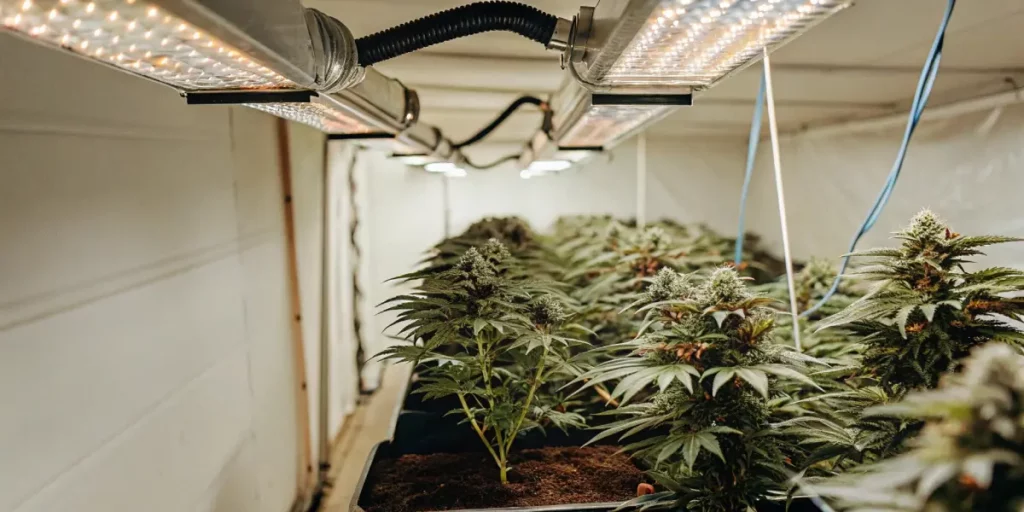
Gushers currently produces approximately 450–500 g/m² indoors.
Its 70–120 cm indoor height and vigorous, bushy structure make it manageable in many controlled grow spaces. However, plant width and canopy density should be considered alongside vertical height.
There is no fixed number of vegetative weeks required before flowering.
Indoor growers can maintain Gushers in vegetation until the canopy is appropriate for the available flowering area, then move to 12/12 to begin the 55–65 day flowering period.
Focus on healthy roots, even light distribution and adequate branch spacing rather than attempting to force production through a rigid nutrient or environmental recipe.
Growing Gushers Outdoors
Outdoor Gushers plants currently reach approximately 120–150 cm and can produce around 650–700 g per plant under favorable conditions.
Royal Queen Seeds lists the cultivar for short summers and gives an outdoor harvest window of early October in the Northern Hemisphere.
This relatively early finish makes Gushers easier to fit into locations where a long late-autumn flowering season is undesirable.
Outdoor production still depends substantially on root space, sunlight, plant health and seasonal conditions.
The 650–700 g breeder range describes production potential rather than a harvest that every individual outdoor plant should automatically achieve.
Gushers Yield
Current breeder specifications list Gushers at 450–500 g/m² indoors and 650–700 g per plant outdoors.
These figures match the main yield data already shown in the Growlantis product card, although the current guide understates outdoor production in its FAQ.
Indoor yield is expressed by canopy area because plant number and vegetative duration vary between setups.
Outdoor production is expressed per plant because individual plants have much greater differences in root and canopy space.
Both figures should be treated as breeder-listed potential. Light, roots, climate, canopy development and overall plant health can all influence final production.
How to Germinate Gushers Seeds
Gushers does not require a unique strain-specific germination method.
Seeds need consistent moisture, suitable warmth and access to oxygen without remaining permanently saturated. A damp paper-towel method allows growers to observe taproot emergence, while direct germination in an appropriate starting medium can reduce handling.
Once the taproot appears, transfer the seed carefully and avoid damaging the developing root.
Early watering should reflect the limited size of the young root system rather than the needs of a mature plant.
For more detailed starting guidance, see the cannabis seed germination guide.
Vegetative Growth
Gushers does not have one fixed vegetative duration.
As a photoperiod strain, it remains in vegetative growth until the indoor grower changes the light schedule.
Royal Queen Seeds describes Gushers as vigorous during vegetation, so growers should monitor both height and canopy width as the plant develops.
Use this stage to establish healthy roots and a productive branch structure rather than attempting to reach an arbitrary number of weeks.
Growers with limited space can initiate flowering sooner, while larger rooms can support additional vegetative development.
Once the canopy reaches the desired size, the 12/12 transition begins the breeder-listed 55–65 day flowering period.
Training Gushers
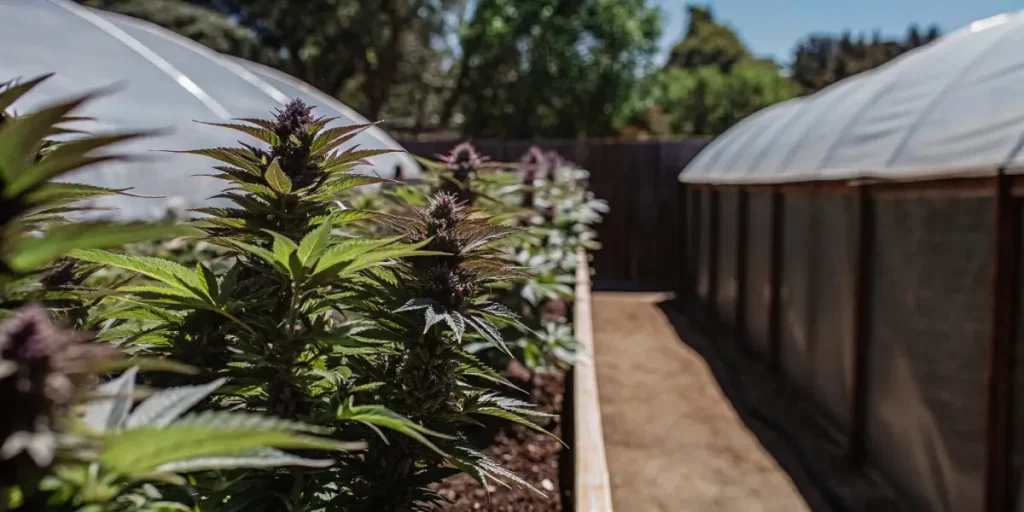
Gushers’ bushy and vigorous structure makes gentle canopy management useful where branches begin competing for space and light.
Low-stress branch positioning can spread growth outward and create a more even canopy. Topping can also be considered during healthy vegetative growth when the plant has sufficient recovery time before flowering.
Selective pruning may help where unnecessary internal growth creates congestion.
None of these techniques should be presented as mandatory or as guarantees of a specific yield.
Training is most useful when it adapts the plant’s natural structure to the available grow space while preserving healthy growth before the flowering transition.
Flowering Development
After the indoor switch to 12/12, Gushers generally needs approximately 55–65 days to complete flowering.
The plant can continue adding some structural growth during the early transition while flowering sites become established.
As bloom progresses, the flowers become dense and resinous and the cookie, earthy and fruity aromatic character becomes more pronounced.
Canopy spacing becomes increasingly important as flower mass increases. Dense plant material can create localized areas where moisture remains higher than elsewhere in the room.
Use the breeder flowering range as the primary planning reference while still assessing the maturity of the individual plant as the expected harvest window approaches.
Feeding Gushers
Gushers does not require one universal strain-specific nutrient formula.
Nutrition should be adapted to the growing medium, fertilizer system, water quality, root volume, plant size and visible response.
There is no need to prescribe a high-phosphorus seedling formula, a nitrogen-heavy vegetative schedule or automatic phosphorus and potassium increases during flowering simply because the plant is Gushers.
Likewise, bloom boosters or organic teas should not be presented as guaranteed methods for increasing potency, resin or flavor.
Follow the feeding program appropriate for the selected medium and make gradual adjustments when actual plant development provides evidence that they are needed.
Watering Gushers
Water demand changes substantially as Gushers develops.
A young plant with a limited root system requires far less water than a mature flowering canopy. This makes one fixed irrigation schedule inappropriate.
In containers, substrate moisture and pot weight can provide useful information about actual demand. Ensure excess water can drain rather than keeping the root zone continuously saturated.
Outdoor irrigation should respond to soil conditions, recent rainfall, temperature and plant size.
Avoid treating deep watering, fixed intervals or a specific volume as universal Gushers requirements. The correct amount depends more on roots, medium and environment than on the strain name itself.
Airflow and Dense Flower Management
Gushers develops a bushy structure and dense flowering sites, so airflow becomes increasingly important as bloom progresses.
The objective is even air movement above, through and below the canopy rather than directing excessive wind at individual plants.
Room-level humidity does not always describe the conditions inside dense mature flowers. Moisture can remain trapped within an inflorescence even when a sensor elsewhere in the room appears acceptable.
Good branch spacing and sensible canopy management can reduce those stagnant areas.
The guide to microbial risk in cannabis growing explains why flower density, persistent moisture and airflow interact during cultivation.
Common Gushers Growing Problems
One of the biggest current content problems is genetic confusion. Gushers is Gelato 41 × Triangle Kush, not Blue Gelato 41 × Triangle Kush.
Another mistake is treating the 55–65 day flowering period as a complete seed-to-harvest lifecycle. Gushers is photoperiodic, so the grower controls how long vegetation lasts.
Overwatering and excessive fertilizer concentration are general cultivation problems rather than documented Gushers-specific weaknesses.
Finally, avoid describing the cultivar as universally mold- or pest-resistant. Royal Queen Seeds describes the plant as hardy and vigorous, but that does not eliminate the need for airflow, sanitation and regular canopy inspection during flowering.
Is Gushers an Autoflower?
Gushers is a photoperiod strain, not an autoflower.
Indoor growers control when flowering begins by changing the light schedule, normally to approximately 12 hours of light and 12 hours of uninterrupted darkness.
This means the breeder-listed 55–65 days describes the flowering stage after that transition.
An autoflowering strain would begin flowering according to age and development without requiring the same photoperiod change.
Grow data from cultivars such as Auto Oh My Gusher or other similarly named autoflowers should therefore never be inserted into this Gushers guide.
When to Harvest Gushers
Indoor Gushers generally reaches its expected harvest window after approximately 55–65 days of flowering.
Outdoors, Royal Queen Seeds currently lists harvest in early October.
These ranges should guide planning rather than act as automatic cutting dates.
As the expected window approaches, inspect actual flower development and trichome maturity on the individual plant.
There is no need to require one fixed percentage of amber trichomes or claim that a specific color ratio guarantees maximum potency or one particular effect.
Drying and curing begin after harvest and should remain separate from the plant’s flowering timeline.
Gushers Effects
Royal Queen Seeds currently describes Gushers with laughter, uplifting and physically relaxing reported effects.
This combination fits its 60% Indica and 40% Sativa classification: the plant is slightly Indica dominant but still retains a substantial Sativa component.
Gushers reaches up to 24% THC, indicating strong potency potential.
However, potency and genetic ratio alone cannot determine exactly how every individual will respond.
Dose, tolerance and the complete chemical composition of a particular harvest can all influence subjective effects, so these descriptions should remain experiential rather than medical claims.
Gushers FAQs
How long does Gushers take to flower?
Royal Queen Seeds currently lists Gushers at 55–65 days of flowering after the indoor light schedule is changed to 12/12. This is not the complete seed-to-harvest timeline because Gushers is photoperiodic. The grower controls how long vegetative growth lasts before initiating the flowering stage.
Is Gushers Indica or Sativa?
Gushers is an indica-dominant hybrid classified as 60% Indica and 40% Sativa. Its genetics combine Gelato 41 with Triangle Kush. The ratio makes it slightly Indica leaning rather than a perfectly balanced hybrid, while phenotype, cultivation conditions and individual response can still influence plant structure and reported effects.
How much THC does Gushers have?
Royal Queen Seeds currently lists Gushers at up to 24% THC. Older Growlantis content uses broader or slightly different ranges, which should be aligned with the breeder specification. The published percentage represents genetic potency potential rather than a guarantee that every individual harvest will test at exactly 24%.
How much does Gushers yield?
Current breeder data lists Gushers at approximately 450–500 g/m² indoors and 650–700 g per plant outdoors. These figures describe production potential rather than guaranteed harvests. Light, root space, vegetative duration, canopy development, outdoor conditions and general plant health can all influence the final weight of an individual crop.
How tall does Gushers grow?
Gushers currently reaches approximately 70–120 cm indoors and 120–150 cm outdoors according to Royal Queen Seeds. Indoor growers can further influence final size through vegetative duration, container volume and training. These environment-specific ranges are more useful than the current Growlantis product card’s single universal 1.35 m height.
Is Gushers an autoflower?
No. Gushers is a feminized photoperiod strain, so indoor flowering is initiated by changing the light schedule rather than by age alone. The current breeder lists 55–65 days of flowering after that transition. Autoflowering cultivars with similar names are separate genetics and should not share Gushers lifecycle or cultivation data.