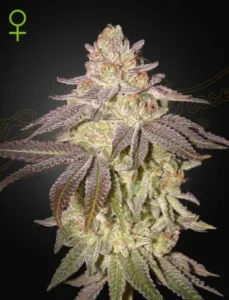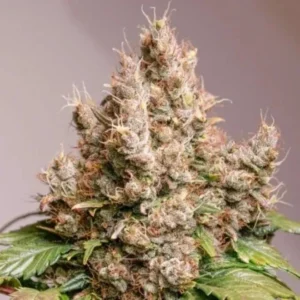


King’s Kush is a feminized, indica-dominant strain from Green House Seed Co., bred from OG Kush × Grape genetics. Also commonly searched as King Kush, Kings Kush and King Kush strain, this cultivar develops a medium-sized, well-branched structure with relatively long internodes and dense, resinous flowers.
Green House Seed Co. describes King’s Kush as 70% indica and 30% sativa, with THC around 22%. Its official specifications list an indoor flowering period of about nine weeks, outdoor harvest around the first week of October in the Northern Hemisphere, and substantial yield potential under favorable conditions.
Recommended Strains
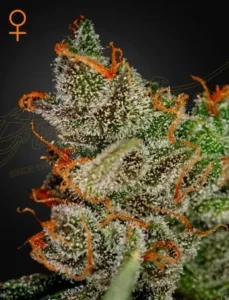
King's Kush Greenhouse Seeds

|
THC | 22% - 23% (Medium) |

|
Lineage | OG Kush x Grape |

|
Type | Feminized |

|
Height | 5.74 ft | 1.75 m |

|
Yield Outdoor | 38.8 oz/plant | 1100 g/plant |

|
Flowering Time | 8 - 9 weeks |

|
Phenotype | 70% Indica / 30% Sativa |

|
Effects | Calming, Hungry, Relaxed |

|
Flavors | Citrus, Sweet, Hashish, Grape |

King's Kush Auto
|
|
THC | 20% - 21% (Medium) |
|
|
Lineage | King´s Kush x Ruderalis |
|
|
Type | Autoflowering |
|
|
Height | 2.79 ft | 0.85 m |
|
|
Yield Outdoor | 3.53 oz/plant | 100 g/plant |
|
|
Life Cycle | 9 - 10 weeks |
|
|
Phenotype | 50% Indica / 50% Sativa |
|
|
Effects | Happy, Talkative, Sedative, Giggly, Relaxed |
|
|
Flavors | Herbal, Earthy, Pine, Citrus |
You can find the current King’s Kush seeds available at Growlantis.
King’s Kush Quick Grow Profile
| Trait | King’s Kush |
|---|---|
| Breeder | Green House Seed Co. |
| Genetics | OG Kush × Grape |
| Seed type | Feminized photoperiod |
| Indica / Sativa | 70% Indica / 30% Sativa |
| THC | Around 22% |
| Indoor flowering | About 9 weeks |
| Outdoor harvest | First week of October in the Northern Hemisphere |
| Outdoor height | Around 170–180 cm |
| Indoor yield | Up to 800 g/m² |
| Outdoor yield | Up to 1,100 g/plant |
| Structure | Medium-sized, compact, branchy, long internodes |
| Flowers | Medium-sized, dense and highly resinous |
King’s Kush comes from Green House Seed Co., and the breeder specifically highlights its production, flavor and resistance.
King’s Kush Genetics, Height and Plant Structure
King’s Kush combines OG Kush with a Grape line. The distinction matters: the breeder identifies the parent simply as Grape, rather than Grape Ape.
The plant is medium-sized and relatively compact overall, but its branches show the longer internodal spacing associated with its OG Kush background. This combination gives growers a plant that does not necessarily become extremely tall but still benefits from enough horizontal room for its branches to develop.
Outdoors, Green House Seed Co. reports an average height of approximately 170–180 cm.
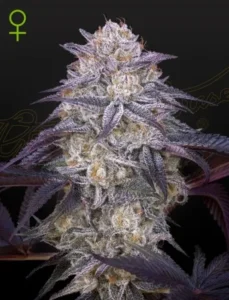
The flowers develop along the longer branches and become dense and heavily coated in trichomes. Some phenotypes can also show purple coloration under suitable conditions.
How King’s Kush Grows Indoors
King’s Kush is manageable indoors because of its medium overall size, but its branching pattern is more important than simply describing it as a compact indica.
Allow enough room between branches for light and air to reach the interior of the canopy. Its relatively long internodes can make selective training useful when a plant begins stretching unevenly.
Managing Its Branching and Long Internodes
Rather than heavily pruning the plant by default, shape the canopy according to the phenotype in front of you. Gentle branch positioning can help distribute growth across the available space while preserving healthy foliage.
If selective pruning becomes necessary later in the cycle, Growlantis has a separate guide to trimming cannabis during flowering.
Airflow Around Dense Flowers
King’s Kush produces dense flowers, so airflow becomes increasingly important as flowering progresses. The objective is not simply to point a powerful fan at the plant, but to avoid persistent humid pockets within and around the canopy.
Growlantis’ guide to cannabis airflow and mold prevention explains the relationship between ventilation, circulation, canopy density and flower-level humidity in more detail.
Growing King’s Kush Outdoors
King’s Kush can also be grown outdoors where the local climate and law permit it.
The breeder describes the plant as relatively easy to manage outdoors and gives an average final height of approximately 170–180 cm. Its branching structure means it needs enough lateral space rather than being crowded between neighboring plants.
Green House Seed Co. lists outdoor maturity around the first week of October in the Northern Hemisphere.
Rain and persistent humidity become more relevant as the flowers gain density near the end of the season. A location with good natural air movement and enough sun exposure is preferable to an enclosed, persistently damp position.
King’s Kush Flowering Time and Yield
Green House Seed Co.’s main technical specification lists an indoor flowering period of approximately nine weeks.
Under favorable indoor conditions, its listed production can reach up to 800 g/m². Outdoors, the breeder lists production of up to 1,100 g per plant.
These figures should be treated as breeder potential rather than guaranteed harvests. Final yield varies with phenotype, plant size before flowering, environment, light, root volume and overall crop management.
The flowers themselves are medium-sized, very dense and highly resinous. Their development along relatively long branches is one of the more distinctive cultivation characteristics of King’s Kush.
For a broader explanation of what changes during bloom, see the Growlantis guide to the cannabis flowering stage week by week.
Feeding King’s Kush
There is no verified breeder-specific nutrient formula that makes King’s Kush require a fundamentally different feeding program from other photoperiod cannabis cultivars.
Use the requirements of the growing medium and the plant’s actual response rather than automatically feeding heavily because the strain is capable of producing large yields.
During active vegetative growth, watch the color and development of new foliage rather than increasing fertilizer on a fixed calendar. During flowering, adjust nutrition as the plant shifts from structural growth toward flower production.
Because individual phenotypes and growing systems differ, signs of nutrient excess or deficiency are more useful than a strain-name-based feeding schedule.

Germinating King’s Kush Seeds
King’s Kush does not require a unique germination method.
The important distinction is therefore not to repeat an entire generic germination tutorial inside this grow guide. Use a consistent method that controls moisture and temperature and handle the emerging root carefully.
For the complete process and typical germination window, see how long cannabis seeds take to germinate.
When to Harvest King’s Kush
For outdoor King’s Kush, the breeder’s calendar places maturity around the first week of October in the Northern Hemisphere.
Indoors, use the breeder’s approximately nine-week flowering period as a reference point rather than an automatic harvest date. Plant development should determine the final decision.
This is why a fixed “Week 12 harvest” schedule is misleading for King’s Kush. It is a photoperiod cultivar, so the amount of time spent in vegetative growth depends on when flowering is initiated.
Is King’s Kush Strain Indica or Sativa?
King’s Kush is an indica-dominant hybrid, listed by Green House Seed Co. as 70% indica and 30% sativa.
That makes queries such as “king kush indica,” “kings kush indica” and “is king kush indica or sativa” straightforward to answer: King’s Kush is predominantly indica, but it is not a pure indica.
The percentage is a breeder classification rather than a laboratory measurement of exactly 70% of the plant’s genome.
King’s Kush Effects and Aroma
Green House Seed Co. describes the King Kush strain effects as heavy, long-lasting and gradual in onset.
The breeder places THC around 22% and describes an acidic, lemony and hearty flavor leaning toward its OG Kush background.
The most strongly expressed terpenes listed by the breeder are alpha-pinene, limonene and alpha-humulene.
These breeder descriptions are more useful than making universal claims about how every King’s Kush plant or harvested product will affect every consumer, since phenotype, cultivation, harvest and individual response can all vary.
Common Problems When Growing King’s Kush
The main issues to watch are better understood from the plant’s actual morphology than from a generic list of cannabis pests.
Its dense flowers make stagnant humidity undesirable late in flowering. Its long internodal structure can also create an uneven canopy if individual branches stretch differently, while a heavily crowded plant can reduce light and airflow through the interior.
Avoid treating every yellow leaf as a nutrient deficiency or every dense flower as proof that mold will develop. Diagnose the actual growing conditions before making corrections.
The breeder describes King’s Kush as one of its stronger genetics for resistance, so the current article should not portray it as inherently fragile or unusually disease-prone without evidence.
FAQs About King’s Kush Strain
How tall does King’s Kush grow?
Green House Seed Co. describes King’s Kush as a medium-sized plant and reports an average outdoor height of approximately 170–180 cm. Indoor height depends heavily on the length of the vegetative stage and how the canopy is managed.
Is King’s Kush Auto the same as King’s Kush?
No. King’s Kush is the feminized photoperiod cultivar covered in this guide. King’s Kush Auto is a separate autoflowering version with Ruderalis genetics and a different lifecycle.
If you are comparing it with other Kush genetics, Growlantis also maintains a collection of Kush seed varieties.